Last updated on 27 August 2026
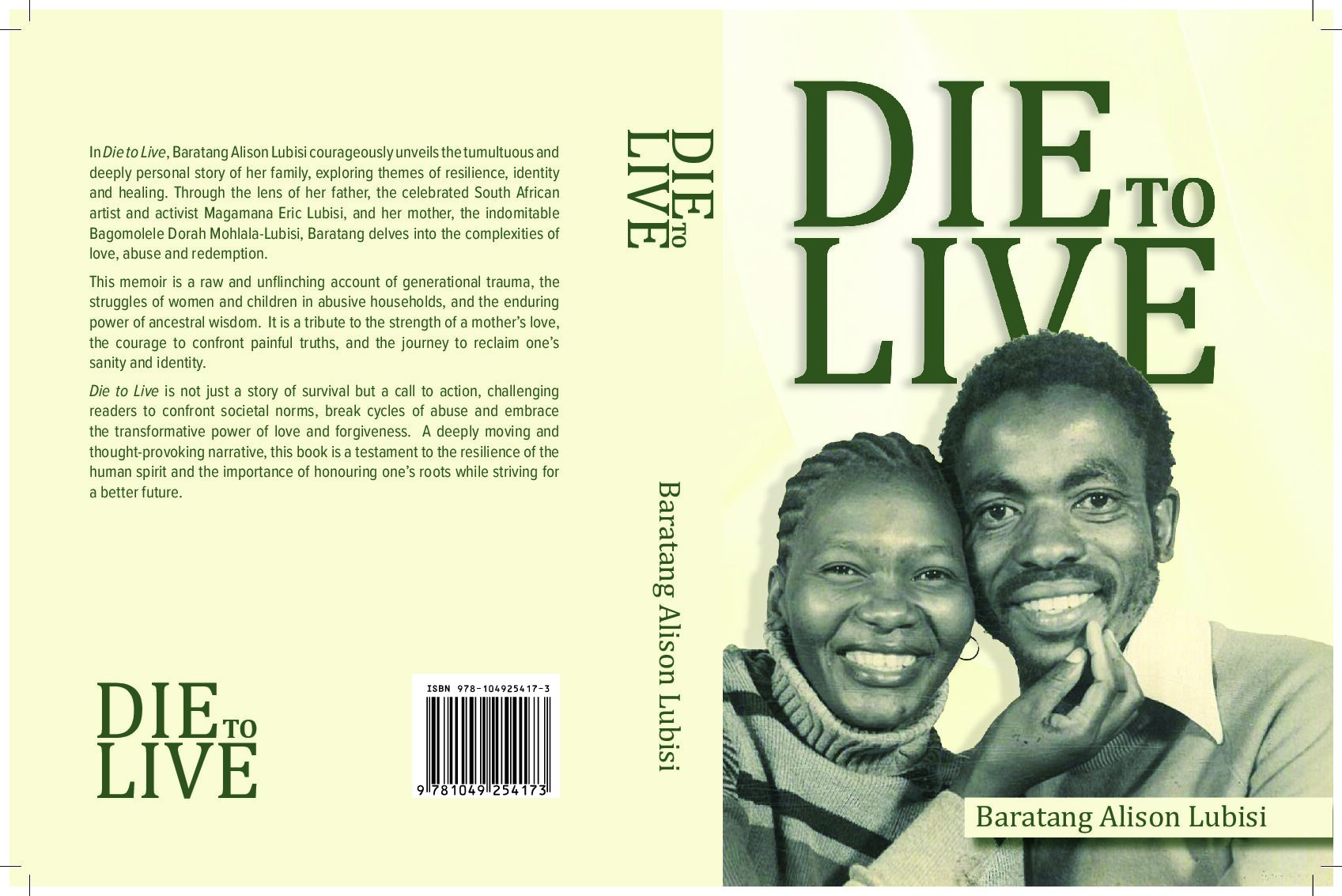
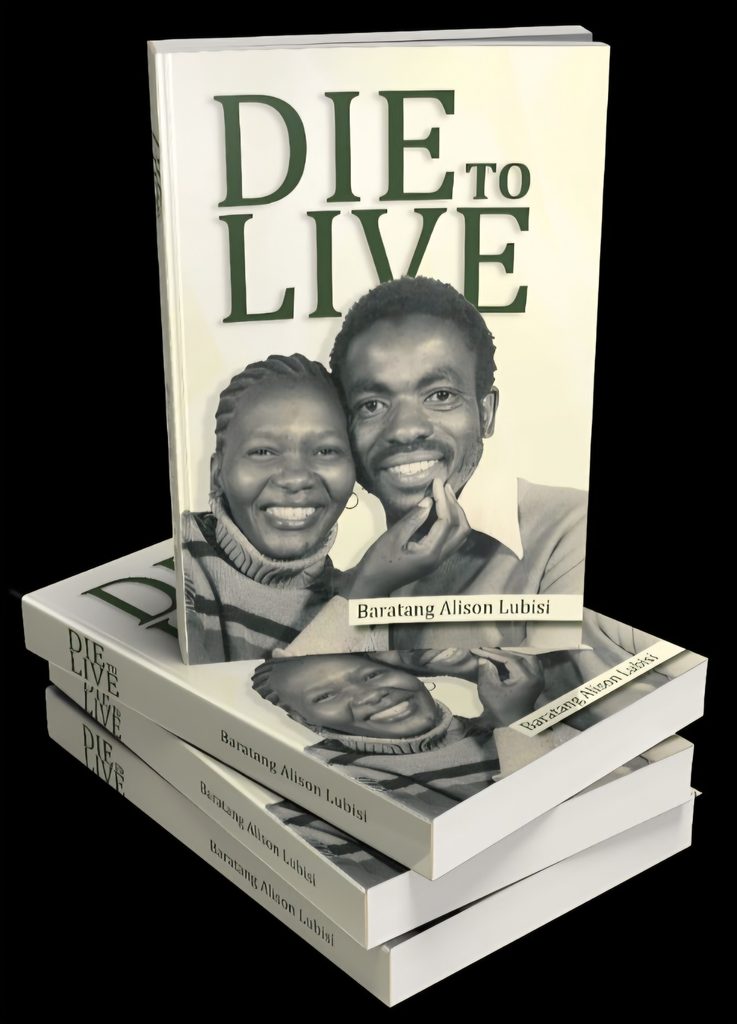
In Die to Live, Baratang Alison Lubisi courageously unveils the tumultuous and deeply personal story of her family, exploring themes of resilience, identity and healing. Through the lens of her father, the celebrated South African artist and activist Magamana Eric Lubisi, and her mother, the indomitable Bagomolele Dorah Mohlala-Lubisi, Baratang delves into the complexities of love, abuse and redemption. In this extract, she looks back on the family’s influence on the local community.
In addition, a much-needed community health clinic was established in nearby Winterveldt, which was part of the Bophuthatswana homeland and one of the apartheid relocation settlements for black people, who were forcibly removed from Tshwane.
During the second half of 1979, events called Communications Weekend were started, and Eric was at the forefront of organising these. They were aimed at bringing together artists from different disciplines in the then Tshwane, Witwatersrand and Vaal (PWV) areas, now known as Gauteng Province.
In the early 1980s, a community newspaper called The Eye, edited collectively by Sibusiso Gunene and comrades, was established. Eric and Sello Cry Malemane were the publication’s cartoonists and they depicted community development endeavours through their captivating illustrations. Charles Lwanga Catholic Church was frankly a place where political and other leaders, artists and other professionals, and the general population converged, and new community-based structures emerged.
At the height of all these activities, Father Mkhatshwa was arrested and sentenced to five years house arrest at number 524 Block F East Soshanguve. He was prohibited from leaving the house before and after six o’clock in the morning and evening respectively. The clergyman was allowed to interact with only one person at a time, and apartheid security forces monitored him religiously to ascertain his subservience. The Lubisi
household, situated only three streets away from the priest’s house, was seen as a gift from above. It was immediately turned into a meeting place for political activists other than those of the Letšema members and anyone who desired to relay a message
to the Father.
Cognizant of the fact that his house was also under surveillance, and remembering the old adage that “walls have ears”, Eric proposed in one of their meetings that they should avoid calling each other by their real names and address each other as mzala (cousin). The sole purpose of that was to mislead the lurking enemy into thinking that they were congregating relatives. From that day onwards, the group of comrades and any new recruits in the struggle referred to each other as mzala.
Political activists other than those belonging to the Letšema movement, comprising characters on various missions and with different capabilities, motives, interests, hopes, dreams and problems, converged at the Lubisi household as well. In addition to being a comrade, my father also served as a mentor and guardian and provided continued political education, guidance, direction, assistance and moral support, especially to the young and impressionable.
Just as he had done back in Mamelodi, Eric continued to be one of the secret agents through which the likes of the late Louis Theko and compatriots had to pass in their long and uncertain journey into political exile and eventual training under the ANC’s uMkhonto weSizwe in foreign countries.
My mother was highly supportive of the liberation cause and was privy to some pertinent information that she held close to her heart due to its sensitive nature. She welcomed all comrades into her humble house with open arms. The mzala title was bestowed upon her as well, and she reciprocated. Cooking, serving and being hospitable was her major role, including selecting suitable hiding places in the house and yard for any goods and materials that were banned by the government.
Many a time some of the comrades, with or without their partners, spent a night or more in the small two-bedroomed house, but Dorah always made a plan that everybody had a sleeping place allocated, with clean blankets. Food was always provided, irrespective of whether the guests had contributed something or not. After all, nobody said the fight for liberation would be easy.
As the popular struggle song they regularly sang said:
Unzima Lomthwalo, Unzima lomthwalo, Ufuna Madoda
Unzima Lomthwalo, Ufuna bafazi
Asikhathali noma siyaboshwa
Sizi misel’ inkululeko
Thina bantwana base Afrika, Sizi misel’ inkululeko.
Apart from political activists, seasoned and aspiring artists seeking company and moral support were another group that brought their creative eccentricities to the house, which was reflected in their dress sense and various forms of expression.
The communities in which they lived didn’t have much understanding of their artistic calling or chosen careers, and they desperately sought the company of like-minded and gifted people. The artists needed guidance, constructive criticism of their works, any information on prospects and opportunities in the challenging world of the arts and, most importantly, the numbers necessary to mobilise for change and recognition. They too were welcomed into the house and were catered for by the very able, compassionate and hospitable Mrs Lubisi.
Artists who converged at number 404 Block F East Soshanguve were not only those specialising in fine arts, but were an amalgam of sculptors, musicians, actors, poets, potters, dancers, writers etcetera. Literally, all sorts of arts were represented. Renowned artists like Enos Makhubedu, Isaac Nkoana, Roy Ndinisa, David Phoshoko, Abbey Cindi, and the late Aaron Pudi, Mike Maapola and Say Mashiangoako, were regulars at the house.
Block F residents once converged at the house to catch a glimpse of celebrated and legendary musicians Caiphus and Letta Mbuli, and Phillip Tabane and his Malombo jazz group members, in the early 1990s. The musicians were en route to perform at Technikon Northern Gauteng, now Tshwane University of Technology (TUT) in Block L, and my father was among the front organisers of the event.
There were no celebrities living in our community at the time and anyone purported or proven to rub shoulders with celebrities was regarded as one too. In his endeavours to bring awareness about the arts, Eric had the privilege of being featured in popular newspapers and magazines, and he was even interviewed right at his house for a television programme by renowned Podu Mamabolo. The latter was at the time a Sepedi actor on a popular TV3 channel soapie, Bophelo ke Semphekgo.
Word of the presence of a television personality in the Lubisi household spread fast, and within minutes the yard was inundated by crowds of admiring locals. My father’s pseudo-celebrity status shot up. With this, and his self-employment position, many unemployed residents of all genders and different backgrounds befriended and passed time with him during the day.
The advent of electricity in the township and the erection of telecommunication lines at a later stage, augmented the situation, since our house was among the few that had a
telephone landline installed. Eric convinced my mother that it was important that they have a landline since it would facilitate his art hustle. Moreover, anyone who wanted to make a call would pay for it, thus unnecessary costs would be avoided and perhaps a little profit made, he added. She did not hesitate to make the upfront payments for the installations.
The noble gesture resulted in perhaps unintentional consequences when a number of people knocked on our door requesting to use the telephone. Some paid, others didn’t, but one thing was for sure: the majority loitered with Eric after making their calls.
Unlike the politicians and artists, all these individuals formed a diverse and nondescript assemblage, without common characteristics or purpose to describe them. All work and no play makes Jabulani a sad boy, it is said. Friends and associates from the various groups, especially the two with a special focus, deliberated, planned, executed, reviewed and redesigned their approaches, celebrated victories and lamented losses at the house, similar to any party with a vision and mission. They would once in a while take much deserved breaks and party.
It was at the first evening braai held at home, attended by friends and comrades, that mayhem erupted, and my father’s full dark colours erupted in a blaze. This sent chills down our spines, forcing us, his children, to take the trip down our terrifying memory lane.
It turned out that not all the meetings at the house during the day were noble, but that there was a lot of fornication going on. My mother caught Eric and a certain trusted female mzala in a compromising position on the evening of the braai, and she angrily charged at her. The culprit screamed and ran for dear life. A fuming Dorah gave chase, insulting her, an angry and embarrassed Eric running behind the two women.
One would imagine that the perpetrator apologised to his wife and lied his way out of it, but he accused her of harassing his whore and fabricating stories, embarrassing him in front of friends and comrades, and severely beat her up. The beautiful and naturally illuminated night turned darker and sombre in an instant, as though the stars resigned out of disappointment at what had just transpired. Mother and children cried until the
break of dawn.
The previous night’s violent incident was a harsh warning to my brothers and me, and perhaps our mother as well, that the Lubisis and Thekos we’d left behind in Mamelodi were not at the root of our problem. The enigma, the obstacle to our success and happiness, the enemy, was right there with us, our very head of the family. – news@mukurukuru.co.za
*The book can be obtained from the author:
Name: BA Lubisi
Bank: CAPITEC
Account No: 1922202280
Type of Account: Savings
Price: R350 (Early bird) – subject to change
WhatsApp Number: 076 583 3326
E-mail: baratanglubisi@yahoo.com
*

Be First to Comment