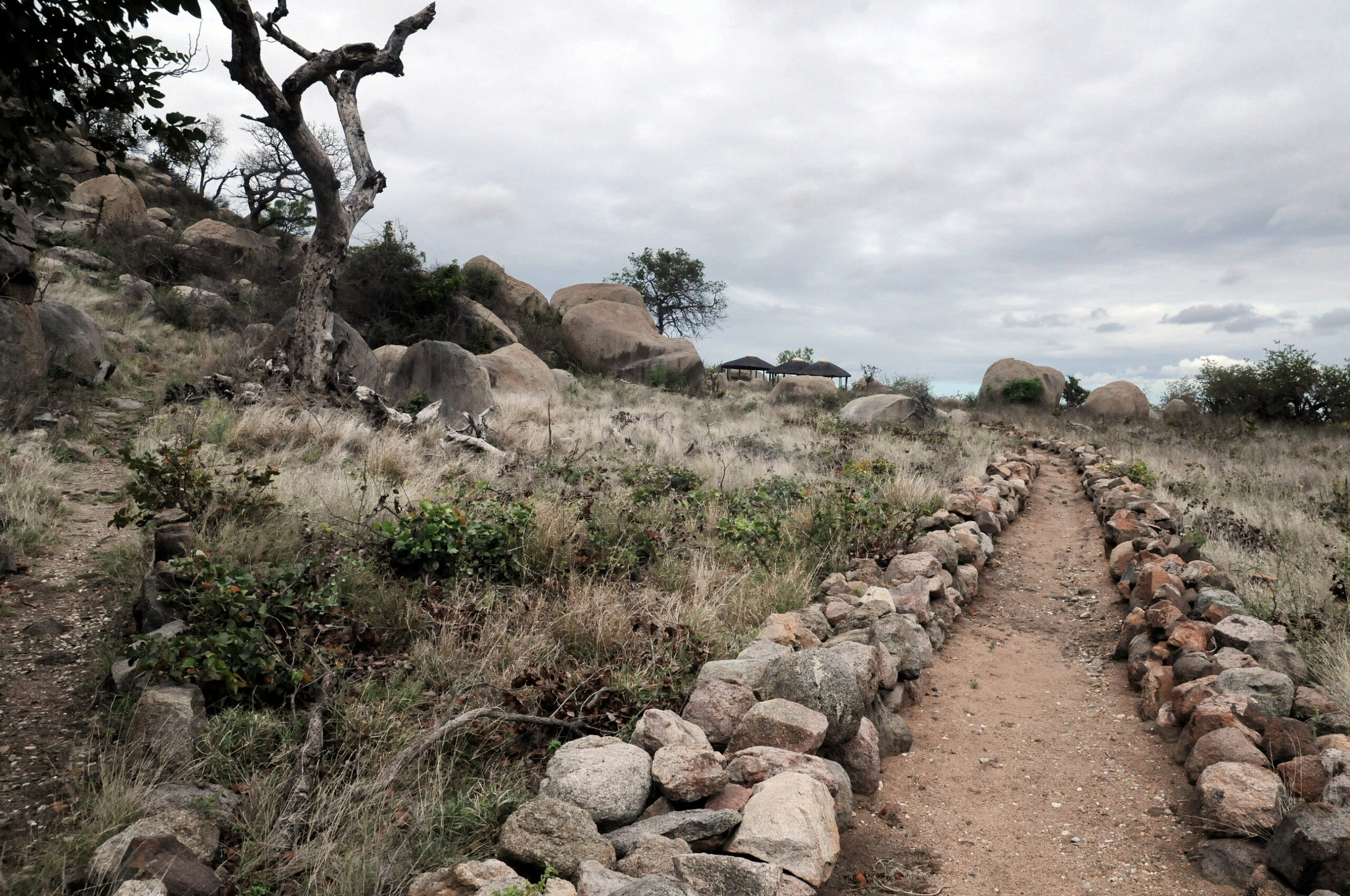
I was already apprehensive when my guide, Enock Malesa, casually mentioned that a leopard and her four cubs had been spotted roaming the rocky hills above the Masorini Ruins in the Kruger National Park.
As we set off on foot along the stone-marked heritage trail that overcast October morning, the thought of encountering a fiercely protective mother cat, far from the safety of a locked car, was daunting.
When I nervously asked about our chances of becoming her next meal, Malesa just laughed.
“Animals have a general fear of humans. They will avoid coming into contact with people. They would rather move away,” he explained in his calm demeanour.
He should know better. He has worked in the Kruger National Park since 1989, first as a labourer assisting to build one of the camps and later as a conservation official.
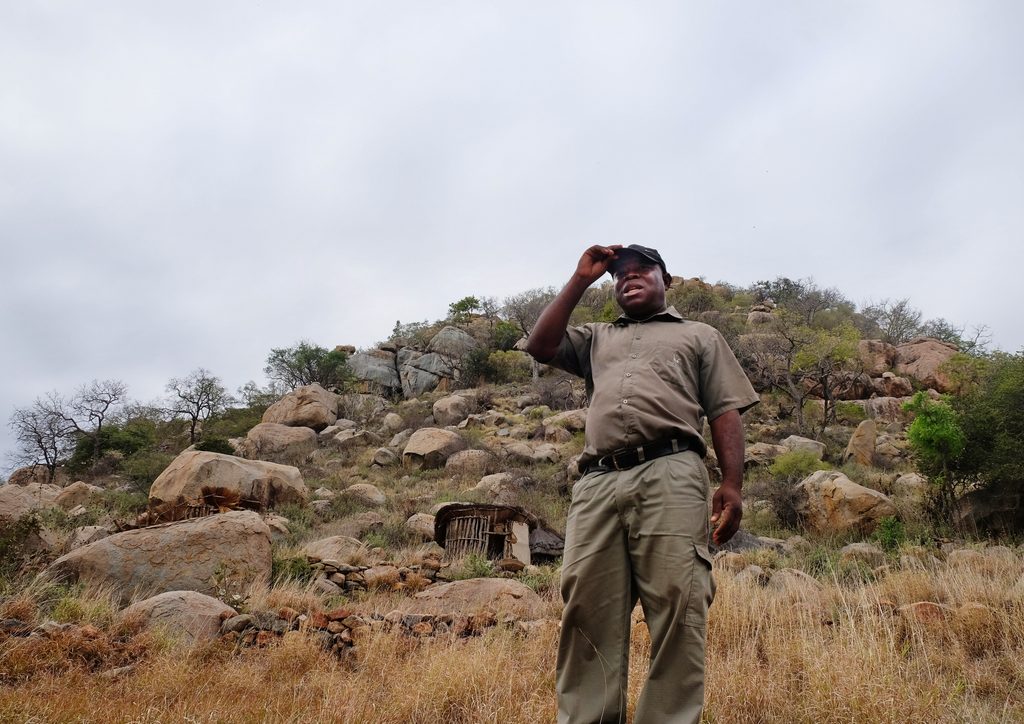
He cited one particular incident when the staff transport meant to pick him up from his post failed to arrive, prompting him to walk back to the temporary staff camp.
On his way, he came across two lions lying on either side of the road. He was no doubt frightened, but for some reason, the kings of the African bush moved away, allowing him to pass without incident.
Once, while sleeping under a tree on a scorching afternoon, he woke up to an elephant observing him from close quarters. The gentle giant too left him alone and sauntered away…
Masorini, which is unfenced, offers visitors the unique thrill and experience of fusing wildlife and cultural heritage.
Malesa tells the fascinating story of Masorini in a calm, thoughtful. Perhaps it’s in his DNA. His ancestors, the Malesa, lived here over 200 years ago, having migrated from central-east Africa.
Here they found the Malatji people working as iron smelters, fashioning farming implements and weapons, which they traded with travellers from distant lands.
The Malatji were part of the BaPhalaborwa Sotho-speaking clans that populated the area before the Kruger National Park was first proclaimed in the late 1890s.
The Kruger was officially proclaimed on May 31, 1926, under the National Parks Act (Act 46 of 1926). The proclamation condemned communities like the BaPhalaborwa to eviction from their land without compensation.
Descendants of those communities now live in diverse human settlements, most of them rural villages mired in poverty, along the western boundary of the park.
In May this year, SANParks signed a Beneficiation Scheme Agreement with such communities that have claimed land as part of the restitution process.
Masorini is an Iron Age site located on a hillside made up of precariously arranged boulders on the H-9, just 12 km from the Phalaborwa Gate towards the Letaba Rest Camp. The hill, so beautiful yet so daunting, offered safe sanctuary for the royals who presided over the land.
https://www.sanparks.org/parks/kruger/explore/cultural-heritage/masorini-ruins
Malesa explained that although many of the commoners lived on the flat landscape below the hill, the Malatji royals settled on the hills for safety. But there was another reason. The hill was considered a sacred space for spiritual rites and ceremonies. It was also the site of the chief’s royal court, where he consulted with diviners, visitors and heard cases.
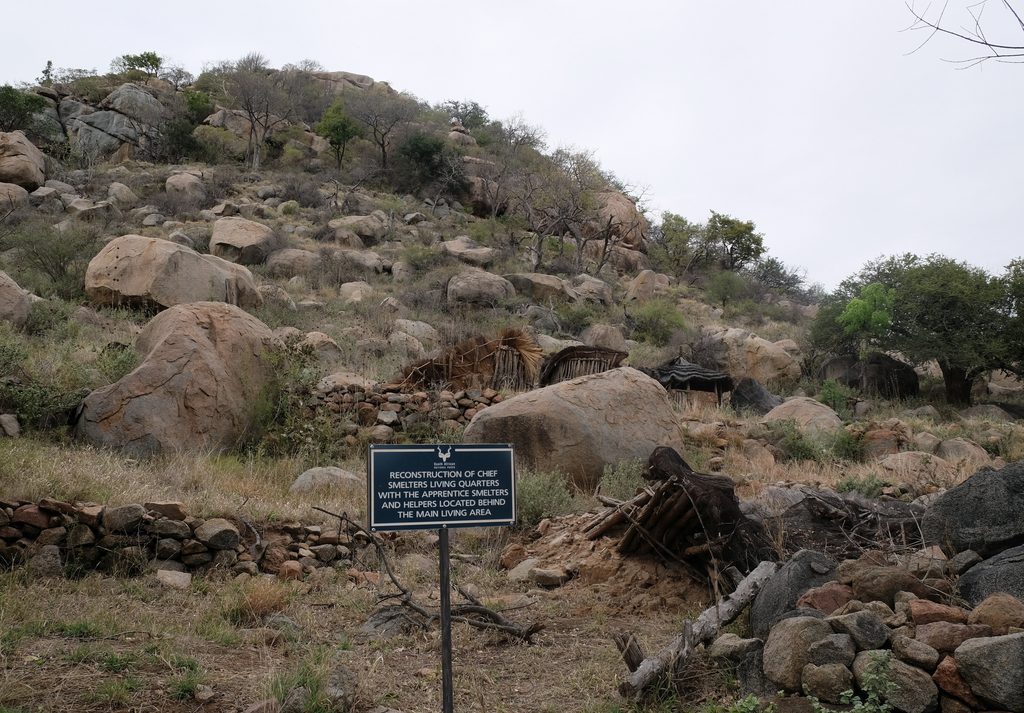
According to SANParks, there are over 255 recorded archaeological sites ranging from the Early Stone Age to various Iron Age settlements in the Kruger National Park.
But only four of these, including Masorini, the Joao Albasini ruins in the south of the park, Thulamela, and Tshikumbu Hill, are open to the public.
Mount Tshikumbu, located 9 km away and visible from Masorini, was restored to the Tongogara clan of the Semitic Bakgalaka clan in 2022. The site comprises an interpretive centre that details the clan’s history dating back to the 1600s.
Malesa weaves the history behind the dome-shaped clay furnaces that were used to smelt iron ore, and the stories of the people that once lived there, with detailed simplicity.
Huge bags fashioned out of cowhide were attached to the end of clay piping and powered as bellows by strong, carefully selected men to stoke fires that separated iron from rock. He mentions that this work of extracting iron from stone was considered sacred and was not undertaken by just about everyone.
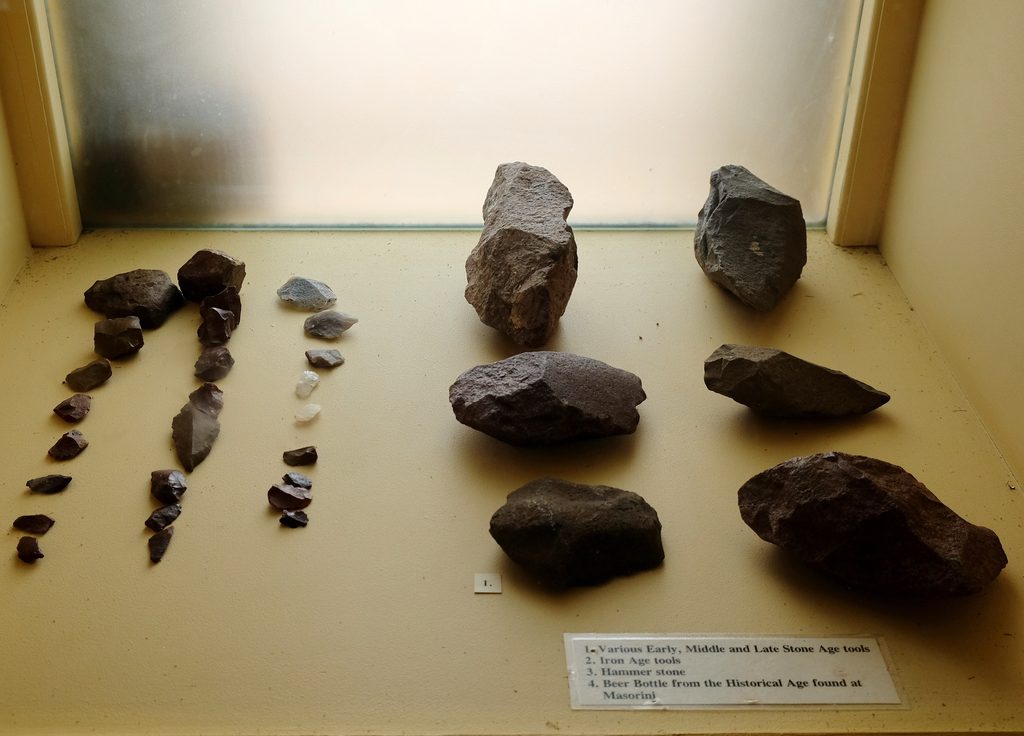
In the rondavel that serves as the museum centre, charts and boards are carefully laid out on the walls overlooking displays of tools and implements resulting from iron smelting.
They detail the area’s history as an integral part of a trading route that stretched from the Indian Ocean coast, facilitating trade between African, Arab, Portuguese, and Chinese for over 1000 years.
Trade between the BaPhalaborwa at Masorini, the VhaVenda in the north, and the Portuguese on the east coast increased smelting and ensured greater independence for the occupants.
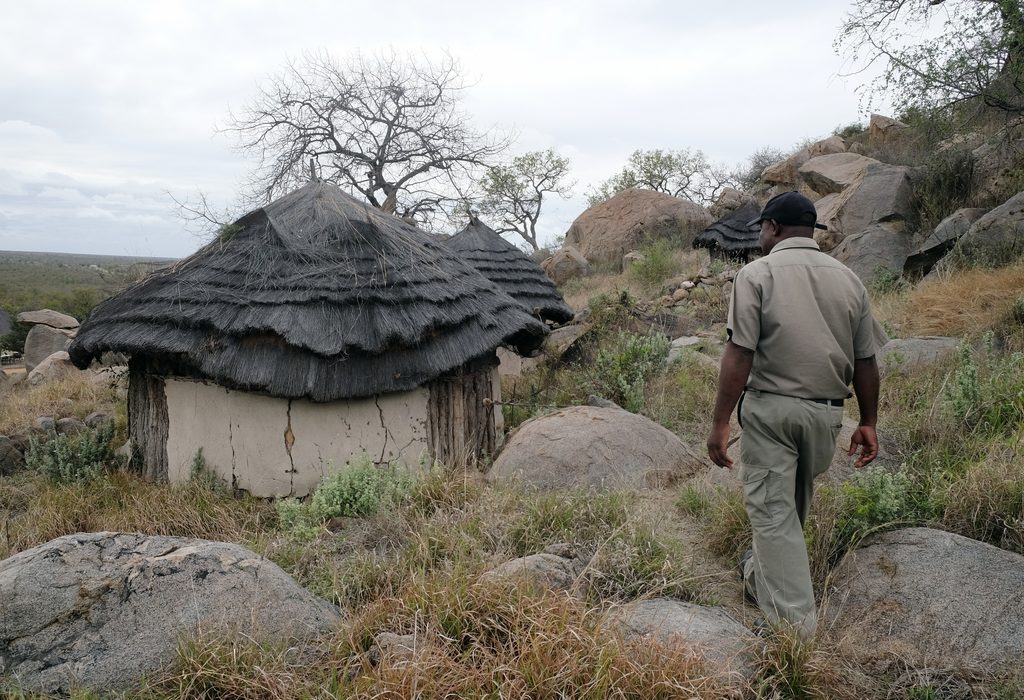
The site includes grass-thatched huts that were reconstructed through archaeological and ethnographic investigations. A quaint, well cared for picnic area at the foot of the hill offers visitors space to often enjoy a well deserved meal and some time to reflect on the tour.
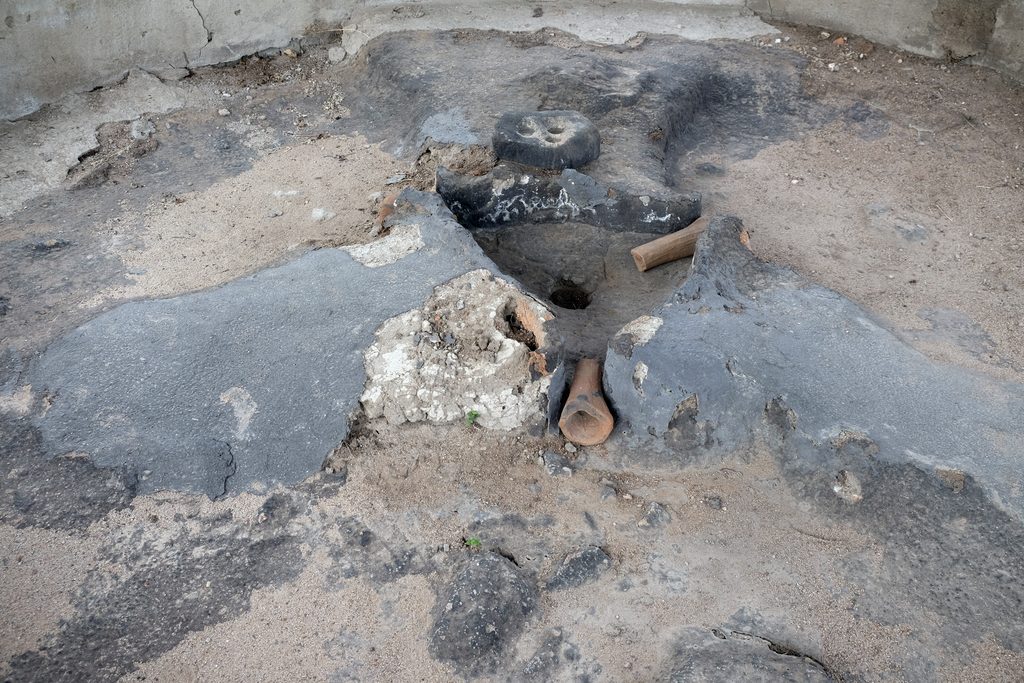
In its 2024/25 annual report, SANParks revealed that terraces damaged by burrowing animals at the site were fully restored with assistance from neighbouring community members.
It further revealed that 114 stone steps and 18 walls at Thulamela, an Iron Age site about 250 km north of Masorini, were reconstructed.
Thulamela was officially declared a National Heritage Site under the National Heritage Resources Act (Act 25 of 1999), a milestone which SANParks says reflects its commitment to cultural preservation.
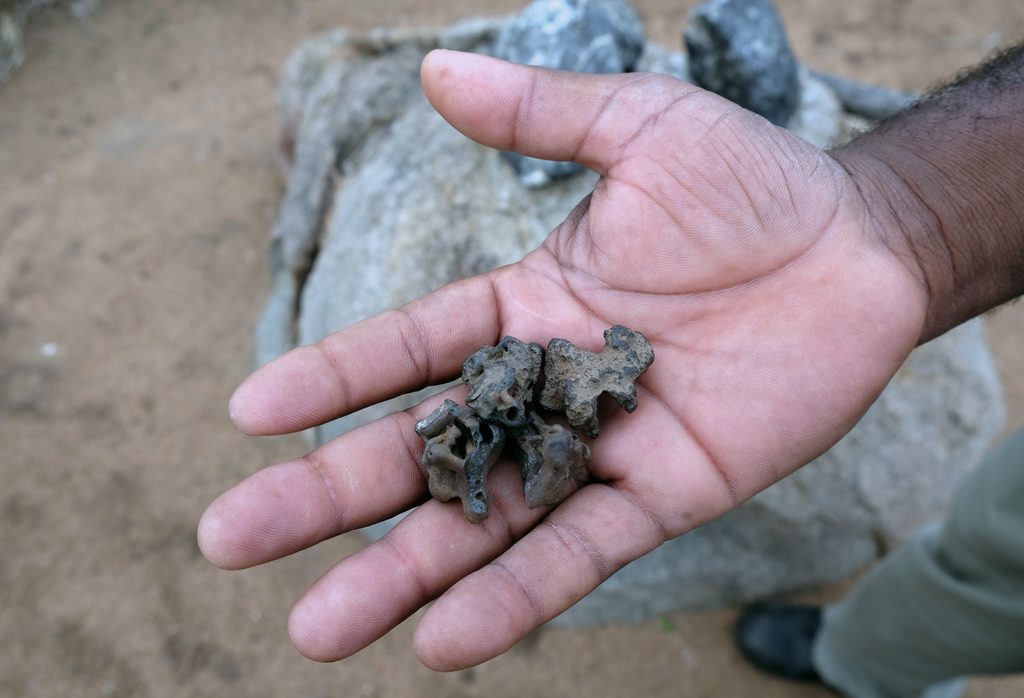
Masorini also benefited from the national audio description initiative, a project bringing Kruger to life through sound, providing visually impaired visitors with vivid descriptions of the landscape, landmarks, and wildlife.
The experience is also expected to appeal to sighted visitors seeking a deeper, guided understanding of the park’s natural and cultural heritage.
As we walked back to the parking area after the tour, the fascinating journey down history had erased the earlier fear sparked by the mention of the resident leopard.
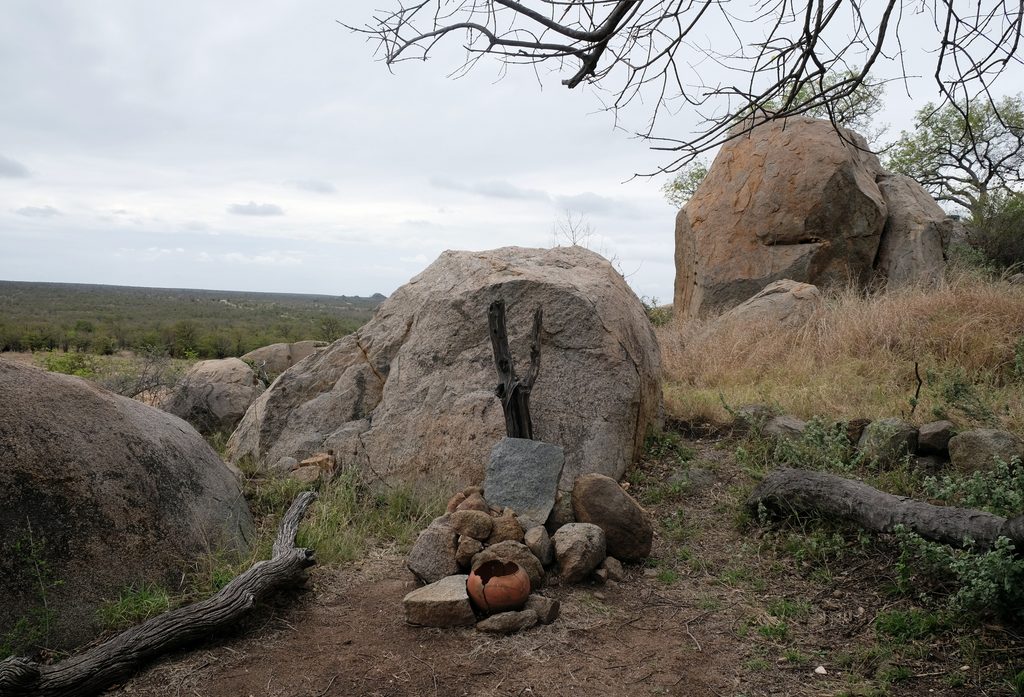
As I stood on an elevated site that used to serve as the royal court of the Malatji, I wondered what this place could have looked like centuries ago.
I could imagine the animated chatter of iron smelters working purposefully under the stars, the flames of their strong fires illuminating the giant boulders on the hills. — news@mukurukuru.co.za

Be First to Comment