
More than two-thirds of Africa’s population could not afford a healthy diet in 2025, while about 309 million people experienced hunger, according to the State of Food Security and Nutrition in the World 2026 report.
The figures highlight the continued pressure on households across the continent as food prices, climate shocks, economic pressures and weaknesses across food systems affect people’s ability to access nutritious food.
The report was produced by five United Nations agencies, including the Food and Agriculture Organization (FAO) and the World Health Organization (WHO).
Speaking at the launch of the report, FAO Chief Economist Máximo Torero said Africa had overtaken Asia as the region with the largest number of undernourished people.
“Africa became the region with the largest number of undernourished people, with approximately 309 million people,” Torero said.
He said population growth was one of the reasons behind the increase in the absolute number of people experiencing hunger.
Sub-Saharan Africa’s population is growing by about 2.4% a year, compared with 0.6% in Asia.
Despite the increase in the number of people affected, Torero said the prevalence of undernourishment in Africa declined by 0.3 percentage points between 2024 and 2025.
Healthy food remains out of reach
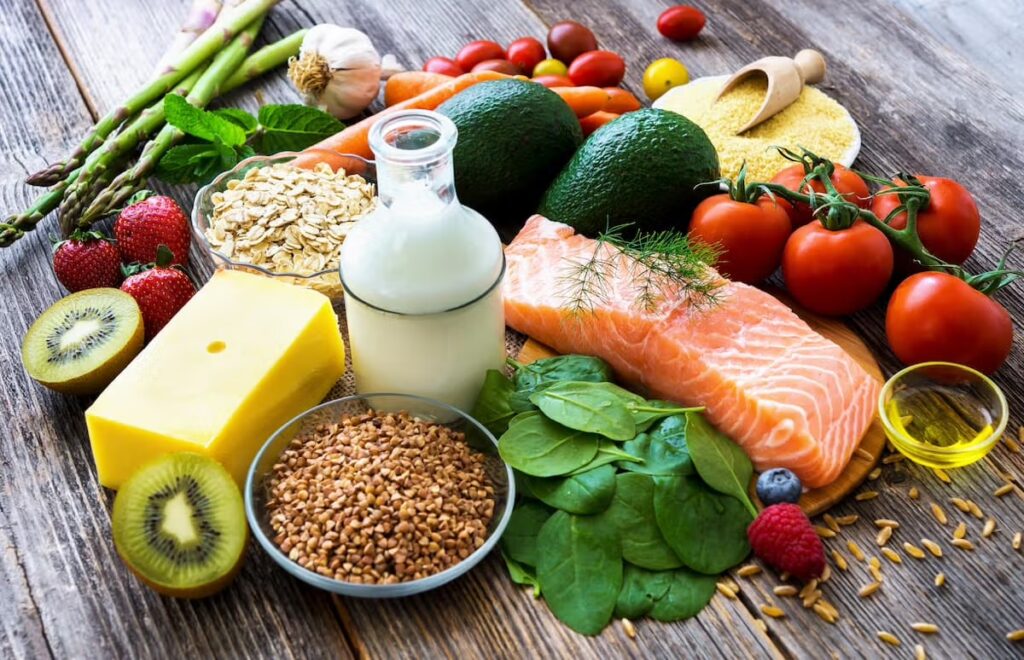
The report found that 66.6% of Africa’s population could not afford a healthy diet in 2025.
Globally, 2.7 billion people, or 32.7% of the world’s population, could not afford a healthy diet. Africa had the highest proportion among the regions covered by the report and was the only region where the proportion increased compared with 2021.
Torero said the cost of a healthy diet reached an average of $4.28 per person per day globally in 2025, measured using purchasing power parity. That was 25% higher than in 2021.
The figure is significant because the international extreme poverty line is $3 per person per day.
A healthy diet is not simply about having enough food. FAO defines it as a diet made up of the least expensive combination of locally available foods that meets dietary recommendations.
The healthy diet basket includes starchy staples, animal-source foods, legumes, nuts and seeds, vegetables, fruits, and oils and fats.
When household budgets are under pressure, families may have to rely more heavily on cheaper foods while buying foods such as fruit, vegetables and animal-source products less often.
Food insecurity affects millions
Africa also recorded high levels of moderate or severe food insecurity.
The report found that 56.6% of Africa’s population experienced moderate or severe food insecurity in 2025.
This was an improvement from previous years and marked the first decline in Africa since the adoption of the 2030 Agenda, according to Torero.
However, the level remains significantly higher than in other regions. Moderate or severe food insecurity affected 20.3% of people in Asia, 22.9% in Latin America and the Caribbean, and 8.7% in Northern America and Europe.
Globally, 2.1 billion people, or 25.8% of the population, experienced moderate or severe food insecurity in 2025.
The report measures food insecurity through the Food Insecurity Experience Scale, which looks at people’s experiences when they struggle to access food because they lack enough money or other resources.
Moderate food insecurity can mean uncertainty about getting food and having to reduce the quality or quantity of meals.
Severe food insecurity can involve running out of food, experiencing hunger and, in the most extreme cases, going days without eating.
Why food remains expensive
Food affordability is affected by more than what happens on farms.
The report points to low agricultural productivity, expensive farming inputs, poor infrastructure and weak links between markets as factors that can increase the cost of food.
Energy prices also play a role. Higher fuel and electricity costs can raise expenses for farmers, food processors, storage facilities and transporters. These costs can eventually be passed on to consumers.
Climate shocks add further pressure. Droughts, floods and other extreme weather events can damage crops, reduce production and contribute to changes in food prices.
Torero also pointed to economic pressures affecting parts of Africa.
In West Asia, for example, he said rising hunger was being driven by conflict and displacement, alongside high prices, macroeconomic instability, currency depreciation and dependence on food imports.
The report also notes that economic shocks can affect both food production and household purchasing power.
Food systems need to work better
Producing more food alone will not solve Africa’s food affordability problem.
Agrifood systems cover the entire journey of food from farms to consumers. This includes production, harvesting, processing, packaging, transportation, distribution, trading, buying, preparing and eating food.
Problems at any stage can affect the price or availability of food.
The report therefore points to the need for investment across food systems, including agricultural productivity, rural infrastructure, storage, processing and cold-chain facilities.
Reducing food losses could also help. Food lost during production, storage, transportation or processing does not reach consumers, even though resources have already been used to produce it.
This is particularly important for fruit and vegetables, which can spoil quickly when storage and transport conditions are poor.
The report also highlights the importance of competition in food markets. Where a small number of companies control a large share of a market, they can have greater influence over prices and supply.
Better-functioning markets and stronger competition can help improve the movement of food and support more affordable options for consumers.
Building resilience across Africa
Africa’s food security challenge is taking place alongside rapid population growth, climate risks and economic uncertainty.
When food prices rise suddenly, households with limited incomes have less room to adjust their spending.
Farmers and others working in food production face similar pressures. Higher input costs, extreme weather and market disruptions can affect both production and income.
Building resilience is therefore important for households and food producers.
The report points to social protection as one way of helping vulnerable households manage shocks. Cash transfers and food assistance can help people meet basic needs during difficult periods.
Improving employment opportunities, strengthening rural livelihoods and helping households develop different sources of income can also make it easier to cope with rising costs.
The report also highlights the role of official development assistance.
Torero said development assistance to Africa declined by about 24% to 26% in 2025.
He cautioned that it is difficult to determine the direct impact of the reduction because countries are also adapting and finding other sources of funding.
However, he said the decline represents a loss of resources that could otherwise have supported efforts to address food insecurity.
The challenge goes beyond agriculture
Food security depends on four areas: availability, access, utilisation and stability.
Food needs to be available, but people must also be able to afford and physically reach it.
What people eat must provide adequate nutrition. Clean water, sanitation, healthcare and proper food preparation also affect how the body uses nutrients.
These conditions must remain stable. A household that can afford nutritious food today may struggle if its income falls or food prices suddenly increase.
The report also highlights gaps in dietary diversity.
Only 30.8% of children aged six to 23 months consumed a minimum diverse diet, meaning 69.2% did not meet the measure.
Among women aged 15 to 49, 62.7% achieved minimum dietary diversity, while 37.3% did not.
Globally, the report found that the average cost of a healthy diet reached $4.28 in purchasing power parity terms per person per day in 2025. This was 25% higher than in 2021 and about 40% above the international extreme poverty line of $3 per person per day.
Torero said the cost of healthy diets matters because unaffordable diets can contribute to both undernutrition and overnutrition.
A challenge that cannot be solved by food production alone
Africa’s food security challenge is not simply about producing more food.
It is also about whether food can move efficiently from producers to consumers and whether households have enough income to buy nutritious food.
The report shows that while the prevalence of hunger has started to decline, Africa still faces a much larger challenge because of population growth, conflict, economic pressures and other shocks.
Behind the millions counted in the statistics are households making daily decisions about what they can afford to put on the table.
With the 2030 deadline for the Sustainable Development Goals approaching, improving access to affordable, nutritious food will require stronger food systems, greater resilience to shocks and policies that help households maintain access to healthy diets.

Be First to Comment