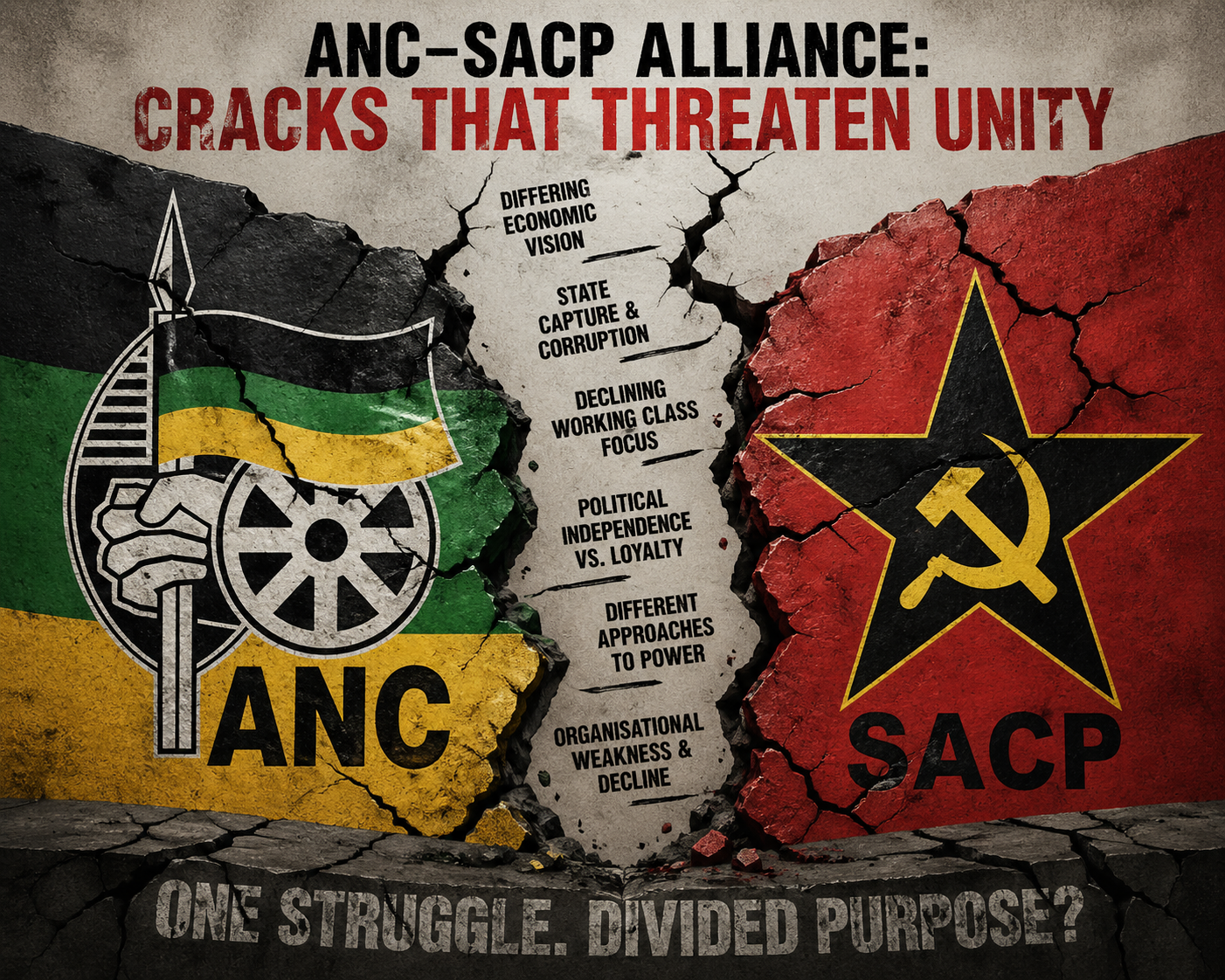
Is the ANC–SACP alliance facing its own apocalypse? Are we witnessing the draft of an endgame that could redefine South African politics, asks Thabiso Teffo
The ANC National Executive Committee has traversed the country to explain to its members the deteriorating relationship between the ruling party and the SACP. However, before addressing the impending separation between the two, I must consult the Holy Book, specifically the Book of Revelation 1, which states: “Look, he comes with the clouds of heaven and everyone will see him, even those who pierced him.”
According to the Book of Revelations, we are told that we will see the Son of Man, signalling the end of time. This brings to mind the words of former President Jacob Zuma, now the founder of MKP, who stated that the ANC will rule until Jesus returns.
The relationship between the ANC and the SACP has its roots in a long-standing combined struggle and common programme of action, despite ideological differences between the two organisations.
Although the SACP played a critical role since its formation in 1921, certain ANC groupings opposed its founding. However, under Josiah Gumede’s leadership from 1927 to 1930, the relationship improved, demonstrating the challenges the CPSA faced in establishing a partnership with the ANC.
In reality, the apartheid regime viewed the alliance between the SACP and the ANC as a significant threat, which led them to accuse the ANC of being controlled by communist forces, including describing the Freedom Charter as a socialist agenda.
To drive a wedge further between the allies, they produced the document, Talking with the ANC, to give the appearance that the liberation movement was neglecting to collaborate with its partners on strategies to dismantle apartheid.
This 1986 document provides valuable insight into the regime’s perception of the alliance, highlighting the SACP’s impact on the ANC’s relationships globally, such as with the PLO in Palestine and Cuba, and featuring handwritten notes from Nelson Mandela on the SACP and his views on communism during his imprisonment and the Rivonia trial.
The recent ANC statement requiring SACP members to choose between their SACP membership and supporting the ANC in the upcoming elections is intriguing. Given their long-standing partnership, which has seen them collaborate in elections since 1994 and run separate ANC campaign efforts, this development raises important questions.
Furthermore, SACP members have been appointed to various government positions since the advent of democracy. Although their relationship has been marked by confrontation, particularly regarding policy and ideological issues, they have managed to maintain their alliance.
The SACP’s formation was not without its internal and external challenges. The crucial question is: have those who opposed the alliance ultimately succeeded in dividing the SACP and ANC 100 years later?
Is this indeed the end of the alliance? As those who have experienced divorce can attest, its consequences can be far-reaching, especially for families with children. The ultimatum presents an intriguing scenario, prompting introspection among members of both organisations as they contemplate the question, who will make the selection?
Logically, the choice rests with those in leadership positions and government officials. The forthcoming week promises to be captivating, with South Africans anxiously awaiting the decision of the SACP leaders.
It is reasonable to assume that no one should make a choice, considering they were absent during the formation of the alliance. Moreover, why make a choice when the guidelines governing the alliance provide a pathway to parliamentary membership?
The 2024 elections resulted in the ANC’s majority decreasing to 40%. The strained relationship with its long-standing alliance partner is expected to intensify tensions. Conversely, some argue that the SACP has failed to make significant contributions to the elections.
Notably, the SACP secured a mere 1% of the vote, an impressive performance considering the confusion among members and voters regarding the alliance. By-elections in several wards have also highlighted the SACP’s internal divisions, with senior members defecting to the ruling party.
The SACP’s departure will undoubtedly have a significant impact on the ANC’s election campaign. Despite performing well in by-elections, the organisation’s internal issues, including divisions, lack of discipline, and poor service delivery, may hinder its overall performance.
The movement has been advocating for renewal, but the current atmosphere suggests that meaningful change is unlikely. Furthermore, members have resorted to legal action, citing the organisation’s failure to adhere to established processes and guidelines. The upcoming elections will be intriguing, as allies will be competing for the same votes nationwide.
The relationship between the two organisations appears to have reached an irreparable breakdown, with both parties potentially requiring external intervention to revive it. Regrettably, the impending elections will likely hinder the resolution of the current issues, as various individuals will exploit the situation to serve their own interests.
It is crucial that both organisations approach the challenges with caution and sobriety during this period. One wonders whether the appropriate analytical tools were employed to address this matter.
It is essential for all parties to engage in introspection, examining the factors that led to the formation of this alliance in the first place.
Perhaps it is critical to pose this question: ‘Who are our friends and enemies?’ as Lenin astutely observed.
While we have been taught that communist ideology provides clarity and guidance in pursuing the National Democratic Revolution, it is necessary to ask: have they fulfilled this role?
Have we observed a significant shift in ideology, both in form and content? Have we improved the lives of our people? Have we successfully asserted the hegemony of the ruling class as the driving force of our revolution?

- Thabiso Teffo is a Polokwane based political commentator.

Political commentatariat. Point well made. 🎯👍