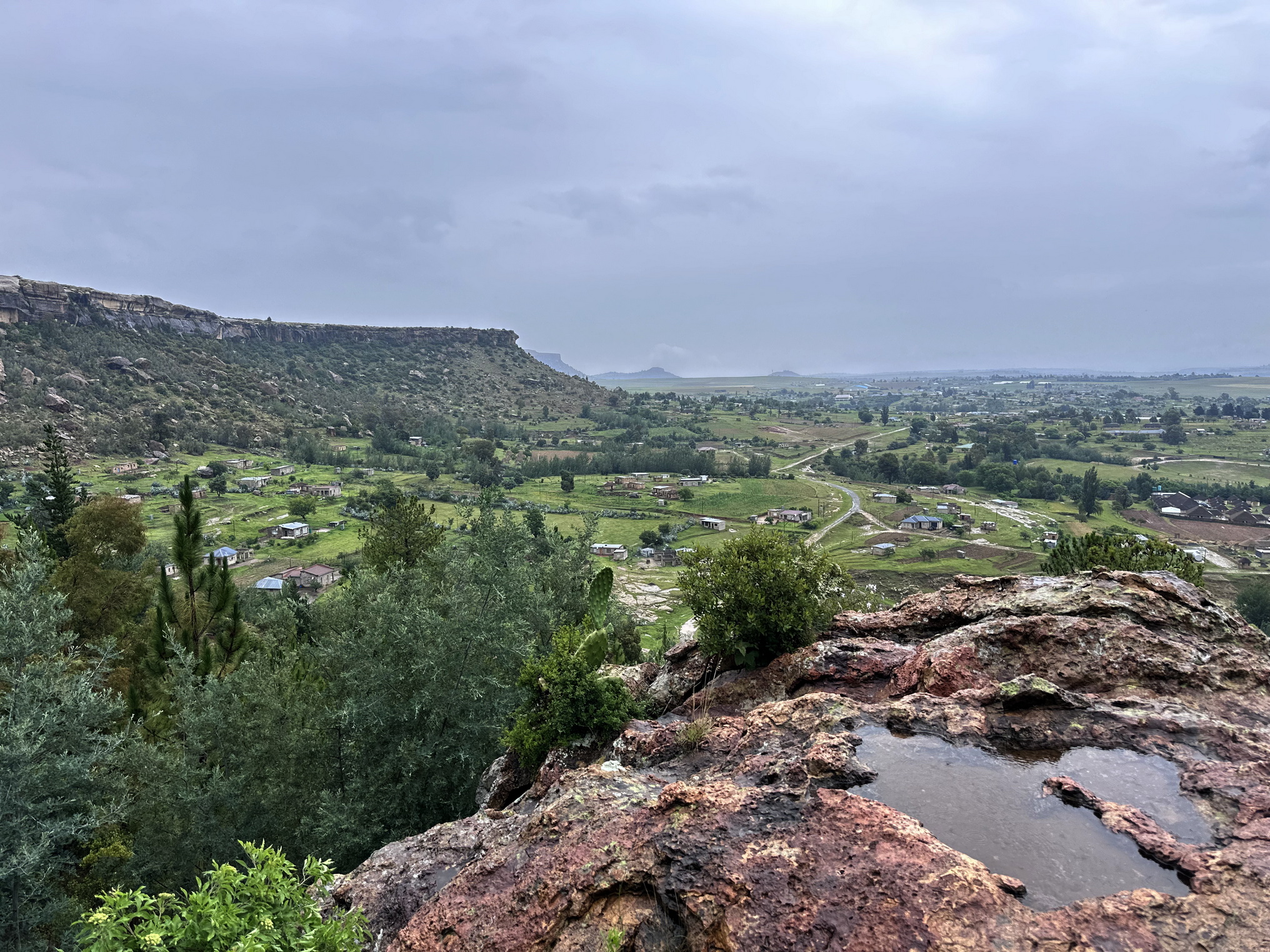
As hundreds of hiking enthusiasts set out on the 116km Moshoeshoe Walk in Lesotho this weekend, Shoks Mnisi Mzolo delves into the enduring legacy of the nation’s founder
Beyond luscious hills, neat fields upon neat fields of vegetables and Lesotho’s achingly beautiful landscape is a story of little known 19th-century founder king who forged alliances to maintain peace but humbled each attacker.
The sound of accordion-based Famo music is insistent. The music wafts from some yellow-striped taxis and shops dotting Maputsoe’s CBD in Lesotho’s Leribe district.
Tau ea Mats’ekha, Famo genre’s old apostles, blessed music lovers with Ha Peete, now playing in a car nearby. Many of Tau’s gems would make a stiff John shake it like a Helen or a Jacob. How low can power-hungry elders stoop? Strangely, Tau received insignificant airplay in neighbouring South Africa.
Back there, music stations shun sounds from the region but bristle with music from the States. A young Southern African cried “cultural imperialism”, the Mail & Guardian reported. Local DJs choose oblivion.
Meanwhile, talk radio tackles everything but the core. Logic is relegated, and social ills barely get a mention, let alone attention. Just tune in. Xenophobic politicians stoke fires.
Extreme fringes do so on social media networks. Don’t log on. For its part, Johannesburg’s weather is stuck between iffy and miserable even in the middle of summer. For days on end, shy sunshine contested with cats and dogs, monkey weddings and a bit of drizzle.
Being one with nature
Now, in Lesotho, generous servings of Vitamin D reign. This time, I’m here with two friends – a South Asian farmer now based in the scorching Namibia and an artist from the wintry North Europe, in a part where mountains are rare.
The pair, visiting the country for the first time, gush as the road knits a mix of picture-perfect vistas, vast plains, rugged topography, and awe-inspiring sights galore.
Also enchanted is Zula Zula Adventure’s Jerry Ngobese, who likens his time here to “being one with nature” and, on occasion, seeing “mountains touching the clouds”. Just one gripe, though, the Mountain Kingdom is not a place to visit in a hurry, he warns with a smile.
Neat fields and mountains that kiss the sky
Strictly for geography nerds: the country has the highest lowest point on earth. That’s right. It sits entirely above 1,000m (elevation).
The highest, nearly 3,500m, is the snow-capped Thabana Ntlenyana to the east. Thaba Bosiu, the cradle of Lesotho, and a short drive from Maseru, flirts with 1,800m, though it’s interestingly in the Lowlands.
“The highlights for me are the destinations and the drive there,” says Ngobese, who ordinarily leads tours across the subcontinent. “The views are spectacular and uplifting to the point of being spiritual. I love the fact that the people are real, no pretence. I can’t get enough of the streams and rivers, the cliffs, the countryside feel and the vistas. In Lesotho, you’re bound to drive on some roads that cut through the mountains. It’s such a great feeling.”
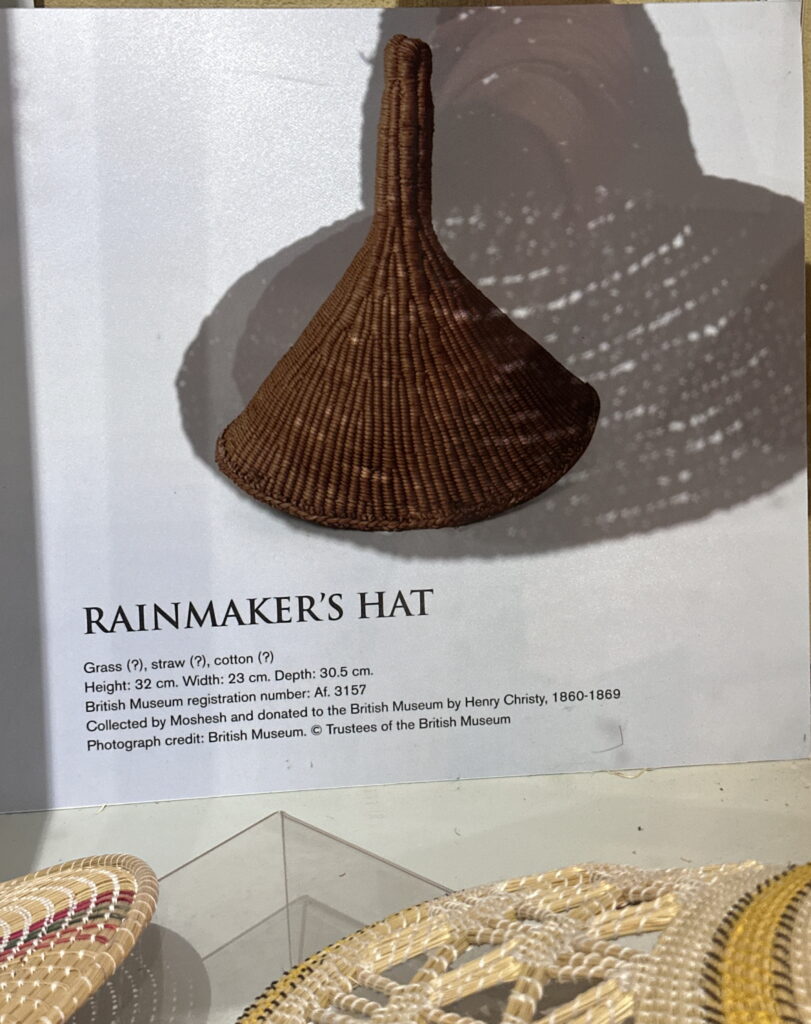
Neat fields upon neat fields of vegetables claim the terrain along the A1, the main road that links the kingdom’s east and north to Maseru. The road traces the Mohokare River, hemming Lesotho’s north on its journey to Atlantic-bound Senqu, also known as !Gariep and iGqili. Dutch scions re-named it Oranje for their royal family and their scions, and those of French Huguenots, in the dying days of apartheid, founded a town they named Orania.
Cut to this moment. Lush hills spool past as do cattle, horses, livestock and country views. Contrast these sights with the swathes of land, flanking roads to Gauteng and across the land of Madiba, still standing forlorn and showing little by way of life. Hello Donald.
Maputsoe’s textile sector and dinosaur footprints
Enter the global maelstrom, thanks to the 79-year-old sheriff’s tariff machinations. Leribe district’s jean-making Maputsoe is deflated. The textile sector brings jobs and forex. But don’t forget its adverse environmental impact.
The sector guzzles water and pollutes rivers, compromising health for animals and humans. Unemployment has, in five years, deteriorated seven percentage points to a scary 30%, yanking the kingdom to SA’s worrisome bracket. Lesotho has since declared joblessness a national disaster. The United States is its top importer. SACU, a customs bloc, protracts colonial-era economic stunting. Alas, we’re not here for economics but to forage history and heritage.
Let’s start here, in Leribe, a place immortalised in Bhudaza’s timeless Bo-Mapefane (the jazz artist’s ode to his clan, and one of the tunes that Spotify coincidentally selected on our way to this town). The landscape, as if straight out of a storybook, features luscious ridges, networks of water bodies, sandstone houses reflecting indigenous masonry, and mountains. Not to be left behind, paleontology point at dinosaur footprints dating to hundreds of millions of years.
King Moshoeshoe’s birthplace and the historic walk
The district’s Menkhoaneng was the birthplace of would-be monarch Moshoeshoe, the eldest son of Princess Kholu and Chief Mokhachane oa Peete of Bakoena ba Mokoteli. Today, Menkhoaneng marks the starting point of the annual Moshoeshoe Walk, a three-day pilgrimage that ends at Thaba Bosiu, across the Phuthiatsana River. It retraces the footsteps of the exodus led by the founder king in 1824.
Retraced by King Moshoeshoe II and thousands of his compatriots in 1986, a troubled time in Lesotho, this walk has – since 2007 – become an annual pilgrimage. Wits-trained Nqobile Mkhatshwa, who answers to eSwatini’s hills and Joburg’s concrete jungle, is one of the multitudes who make their way each March.
There’s no better way to meld hiking, history and the beauty of Lesotho, she says, readying for her fourth round.
“The soil we walk on carries so much history, and the walk is a special way to access that, and to experience the stunning views that nourish the spirit. The walk is also a fun getaway, good for the mind and helps people reconnect with nature and with other people.”
The heritage walk’s resonance with lots of people has made it the biggest in Africa, says founder Thabo Maretlane, recalling the 2007 edition which drew 40 people – including expats from the Netherlands and SA. “We now have more than a thousand people from several countries.”
While on the A1 road to Maseru, via Berea, I see, in the deep recesses of my mind, the build-up to the scrap between the Anglo and Basotho and hear the exasperated Moshoeshoe warning colonists: “Do not tell me about war”.
War folklore in these climes abounds with the Basotho’s triumphs. Across the ocean, Britain goes mute when it comes to the 1850s. Prince Letsie I – who’d ascend to the throne upon his father’s demise – and generals like Mokoanyane served with distinction. Pity, the dogs of war and marauding gangs were too arrogant. So, they kept coming. Basotho kept crushing them. Prince Molapo, among other monarch’s sons, fought valiantly.
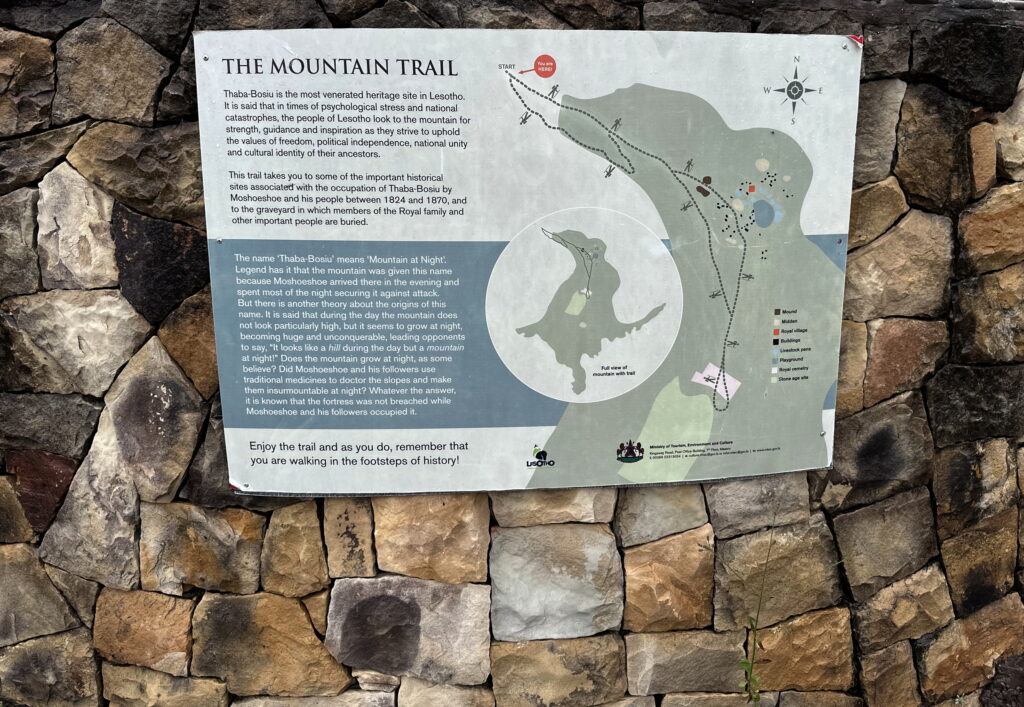
On our arrival at Thaba Bosiu, guarded by stoic basalt boulders, we feast on magical sights. Fog and mist add their flavour to the frame as the sun plays second fiddle to the drizzle. Towering there is the iconic conical mountain. “That’s the copy of Qiloane,” chuckles Moiloa Rantauleng, noting the image of the national flag-adorning mokorotlo, the national hat.
Rantauleng, a curator at the Thaba Bosiu museum, at the foot of the eponymous legendary plateau, turns out to be a forager for heritage stories. This becomes clear when he retraces the nation’s history, dating to July 1824, with the long walk.
Under the tutelage of Chief Mohlomi, Moshoeshoe learned to embrace and defend peace. Thus, the hegira to this plateau – identified for its size, safety and wells, ensuring water security – was in pursuit of peace as his fortress near Menkhoaneng had become prone to raids. Moshoeshoe’s 4,000-strong Bakoena arrived here one night after a walk that had taken nine days.
Next, though exhausted and still saddled with livestock, they summited the plateau. We do the same this lazy Wednesday, 200-and-some-change years later. Incredibly, that group had braved treacherous cliffs, cannibals, rivers and snow, Rantauleng says in a voice that spells overcoming. “So, see, you haven’t been to Lesotho until you come to Thaba Bosiu. This is the foundation.”
As part of the foundation, Moshoeshoe, despite ceaseless attacks, now fostered peace. His legacy is coded in Lesotho’s motto (Khotso, Pula, Nala) and Khotso, the greeting popularised by Chief Mohlomi, Moshoeshoe’s mentor and one of the region’s sharpest brains at the time. What about farewell? Tsamaea ka Khotso.
A haven for freedom fighters fleeing apartheid SA
Activists fleeing persecution in SA deemed Lesotho a sanctuary. But, in the 1980s, Pieter Botha’s gang, under the pretext of searching for political opponents, freedom fighters in exile, spilt blood in Maseru via cross-border massacres. Pretoria also facilitated regime change back then, replacing a vagabond with a vagabond.
Moshoeshoe’s peers included Queen MmaNthatisi and King Hintsa (killed by the Brits in 1835 after supposed peace talks). There was also King Sebetoane oa Mongoane, who had led the Bafokeng on a migration to the Zambezi to avoid being “eaten” (or murdered). That’s how his community, whose tongue is known as Chilozi, could name the stunning waterfall Mosi-oa-Tunya.
The subcontinent began to take pain from colonial violence as early as the 1600s, but had deteriorated markedly by the 1800s, when a new nation was born: destruction of polities, human trafficking, theft of heritage objects and land dispossession.
Kings were often declared “paramount chiefs”, exiled or, like Hintsa, killed. Though newish, having been founded merely decades earlier, Basotho humbled old redcoats – beating them in each of the two battles that they fought, explains Rantuleng, sporting a beige hat and a navy blue sweater.
The last one, Battle of Berea, was an ambush, insists the museum curator. It’s a notable coincidence that a Ntsu Mokhehle-led party was formed on the 100th anniversary of Berea. But a coup powered by Nazi-leaning vagabond-in-power named John Vorster forced Mokhehle, winner of the 1970 polls, into exile. Chief Leabua Jonathan, who’d become a stooge, ushered in terror. Such was the start of a two-decade tyranny that battered the founder’s legacy.
Though peaceful, the Basotho, in the first few decades as a nation, stuffed invaders with humble pie. In what seems a case study in magnanimity, Morena e Moholo, steeped in diplomacy and pacifism, routinely placated losers.
“Why do you think the British want 1851 or 1852 remembered? They’re embarrassed. They cook crises, promise to teach ‘insolent’ Basotho a lesson, then ambush them, kill women and children. The British pretended to talk peace while planning to attack,” says Rantauleng. The story, unfamiliar outside Lesotho, brings to mind the Italians’ gamble-turned-fumble in Ethiopia.
“Morena Moshoeshoe was a diplomat. He was a man of peace. So it didn’t matter to him who won because wars brought death. Wars always bring death. He forged alliances to water peace. That’s why he led Bakoena ba Mokoteli to Thaba Bosiu. It was to avoid conflict and loss of lives. That’s why he built alliances with King Shaka, with Queen Victoria.”
However, the road to alliances could be bumpy. Or bloody. For one, ahead of Berea, Moshoeshoe had, as the Financial Mail recalled on the battle’s 170th anniversary, warned the redcoats: “A dog when beaten (would) show its teeth”.
Alas, bully belligerents believed they were invincible. But, razor-sharp Moshoeshoe defeated all invaders: AmaHlubi and Anglo, Batlokwa and the Boers, Griqua and all. “He cut the English forces to ribbons… and while [George Cathcart, Victoria’s representative] was in a state of bewilderment and humiliation, sued for peace!” wrote Robert Sobukwe to pal Benjamin Pogrund, listing an episode of magnanimity from Chartchai Chionoi, a boxing champ who was beating Walter McGowan for the second time, in September 1967.
Chionoi then went “to McGowan’s corner – and they say McGowan was in tears – and knelt before him,” Sobukwe wrote, in a letter republished by The Guardian when Israel attacked Palestine, admiring the grand gesture.
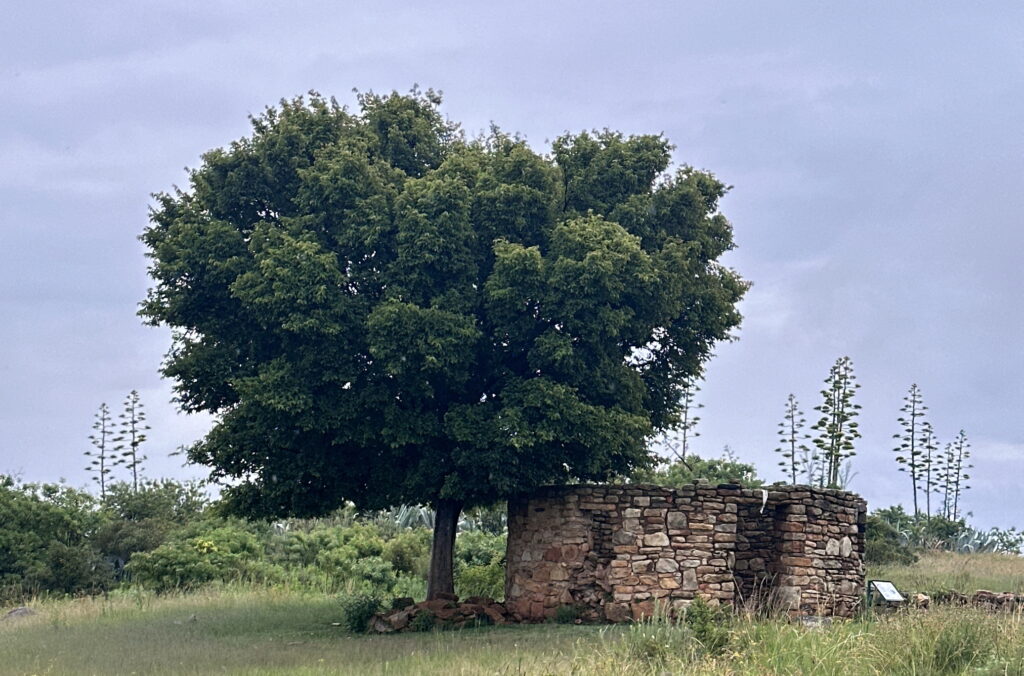
Summiting Thaba Bosiu is tiring but emotionally fulfilling. Famo star Thope tse Khang’s invoking of Nkhono Mantsopa, a Moshoeshoe-era prophetess, is a solemn call to commune with the founder monarch. The song plays in my head on my way to the top. The ruins of Moshoeshoe’s sandstone house watch the present. It’s peaceful. The founder would nod. Khotso. The mood on the plateau brings to mind Sipho Hotstix Mabuse’s painfully beautiful and elegiac tribute to Thaba Bosiu – the cradle of the nation. Sweet birdsong never fails to colour the moment of reflection from up here. – news@mukurukuru.co.za

Be First to Comment