
Last updated on 18 March 2026
The Embassy of the Federal Democratic Republic of Ethiopia recently hosted an event at the country club in Pretoria to mark the 130th anniversary of the Battle of Adawa. The victory at Adawa is a phenomenon and a light. History was made. A clear message was carved once again: Black people could defeat colonisers if they stood as one, writes Fira kumela Shonge
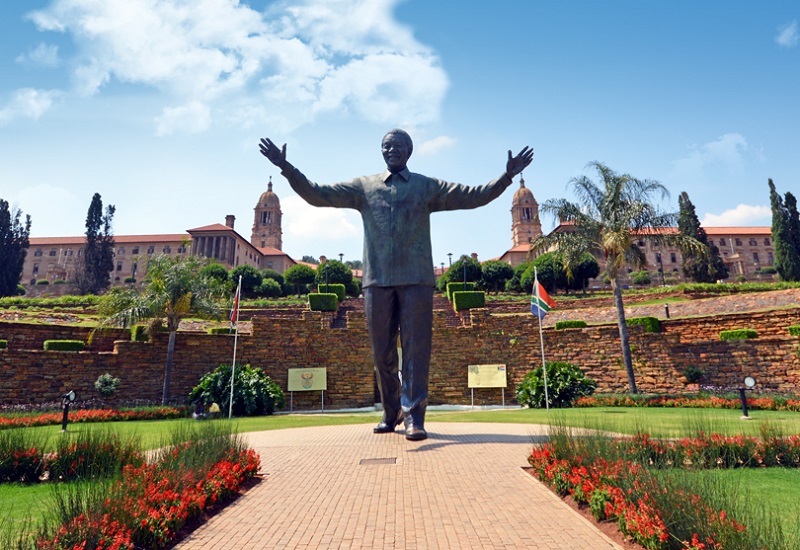
“To the north of Pretoria Country Club is the Union Buildings, a UNESCO World Heritage site where history was made in 1994 with Nelson Mandela’s inauguration.
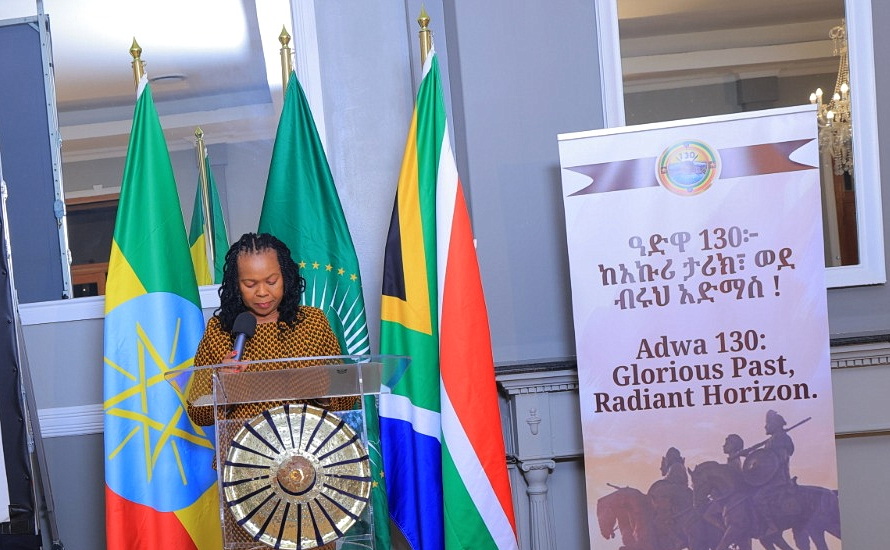
The Embassy of Ethiopia in Pretoria this month hosted an event at the country club to mark the 130th anniversary of the Battle of Adawa [commonly referred to as Adwa].
The spirit of Adawa galvanised freedom fighters in Africa and abroad.
Long before the ANC’s struggle, it was Emperor Haile Selassie who provided Madiba, then an underground activist, his first passport.
The seeds of Pan-Africanism, which culminated in the democratic elections in 1994, were planted in Adawa. Almost a hundred years later, the Union Buildings were the site of that momentous event, witnessed by the very many people, including world leaders, who watched Madiba take the oath of office. In March 2026, the theme for the 130th anniversary is Glorious Past. Radiant Future is well-timed.
Adawa a turning point to remember for generations
Ethiopia is championing environmental initiatives such as Green Legacy, an ambitious reforestation programme to increase forest coverage, notable in the era of climate change.
Through this programme, Ethiopia has since 2019 planted 48-billion trees. Forest coverage has grown from 17.2% in 2019 to, at last count, 23.6%. That is just the beginning. The honourable mention in environmental protection also includes the ban on fossil fuels cars and the ban of plastic bags.
Adawa was a turning point that should be remembered for generations. That is why we gathered once again. This year’s event was graced by ambassadors, diplomats, religious leaders, community leaders, academics and students, members of the media, and other stakeholders.
“The victory of Adwa was not only for Ethiopia. It was for Africa,” remarked Dessie Alebachew Maru, Charge d’Affaires of the Embassy of the Federal Democratic Republic of Ethiopia.
“That victory inspired freedom movements across this continent and beyond. Adwa became the foundation of Pan-Africanism.”
In the late 19th century, Ethiopia was considered “weak” simply because it was an African nation, while Italy was “strong” by virtue of being European. This idea was fueled by “the scramble for Africa” by Europeans at the Berlin conference.
Having control over some of the eastern parts of Africa, Italy wished to expand further to control the whole of East Africa. This didn’t go as planned for the Italians; it became the birth of Pan-Africanism.
As a prelude to the battle, Italy signed the Wechale Treaty with Emperor Minilik II in 1889. In their underestimation of the Ethiopians, the Italians mistranslated the treaty.
Article 17 of the mistranslated version, in Italian, claimed that Ethiopia “must” use Italy for its foreign relations and projected the African country as a protectorate.
The original version, written in Amharic, stated that Ethiopia “can” use Italy for its foreign relations. That version also asserted that Ethiopia would maintain its sovereignty.
Italy’s failed attempt to claim Ethiopia as its own
Italy had other ideas. After the signing and mistranslation of the treaty, Italy, led by King Umberto I, notified Europe that Ethiopia had become an Italian protectorate. The lie was accepted by many European nations.
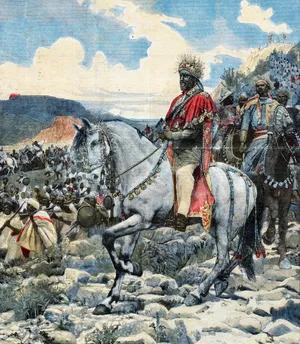
Thus, after discovering the offensive mistranslation, the Ethiopian Emperor Menelik II, denounced the treaty. He called on the Italian representative Pietro Antonelli to explain himself. Antonelli argued Italy would lose face for backing from Wechale.
He insisted that sticking to that lie was a matter of national dignity but failed to explain the real problem: mistranslation. After the battle, Umberti, far from apologising for the war, vowed to avenge his defeat.
“I am the King, and you are the envoy, and the King doesn’t talk to an envoy about his crown,” Menelik said in a heated conversation with Umberti’s envoy.
Empress Taytu stepped in with her famous ultimatum. “I am a woman. I do not like war. However, I would rather die rather than accept your deal. Don’t ever think that we are not willing to sacrifice our comfort and die for our country,” she vowed. “Giving one’s life for the country is an honorable death.” The emperor thus officially denounced the treaty in that year.
Swords went to work
A full-scale war was inevitable. In 1896, the emperor issued a proclamation of war calling for all Ethiopians to defend their faith and country. Despite the fact that Ethiopia was in the midst of civil wars, all parties put their differences aside to fight the enemy – in accordance with the emperor’s call.
“They were fighting for their land, their freedom, and their own dignity, and for the national flag,” Dessie Alebachew Maru reminded people who graced the 130th anniversary celebrations in Pretoria.
Most of the Ethiopian soldiers were barefoot and had no modern gear but a strong will to defend their home, their religion and most importantly their nation.
Making their way to Adawa, on the Ethiopian Highlands, they were armed with national pride, courage, and the ultimate will not to surrender. The Italians, attacking from the northern side, were armed in modern weapons and their arrogant belief that they would crush the Ethiopians. Two other points, often left unsaid, stand out: the battleground and the timing.
The emperor’s choice of date was strategic. The invader didn’t expect many people would turn out because the date coincided with one of the biggest religious holidays, a day when people wouldn’t fight but spend more time at church. This was a wrapped explosive surprise for the Italians.
The battleground, Adawa, was also strategic. The mountainous terrain proved a challenge for the attacker. Finally came the moment. March 1st, 1896. Gun smoke filled the air. Shields did their work.
Swords did their work. Screams and shouts pierced the air. Men fell. Women fell. More men and women fell. The battleground was soaked in blood. Ethiopians fought clearly in their belief that they had to win.
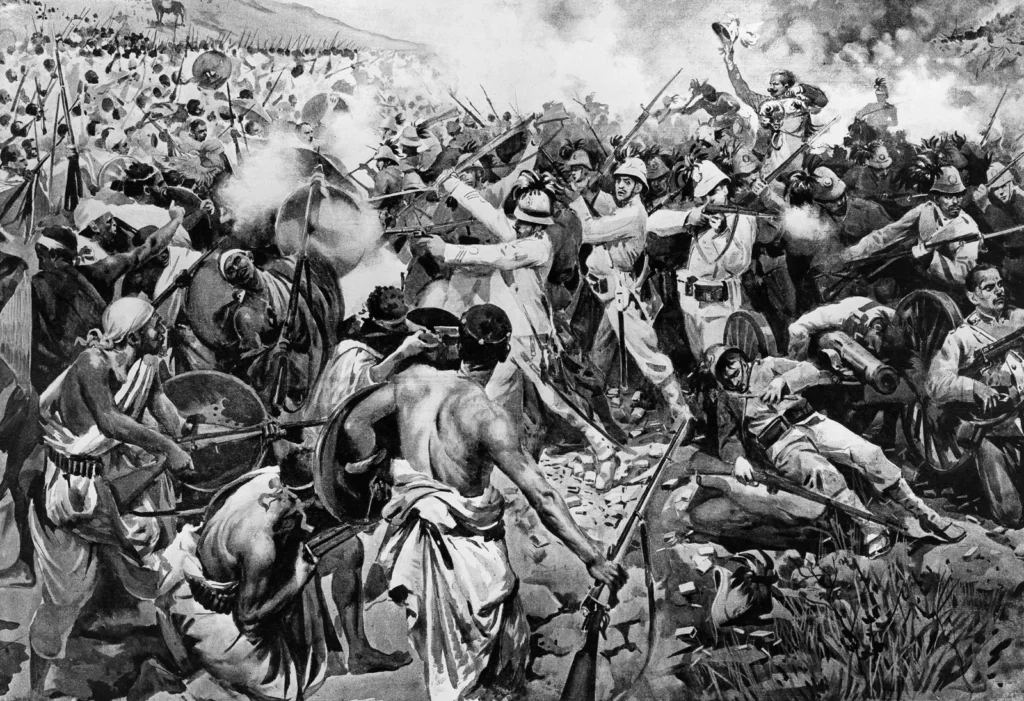
The scenes went on for hours: screams, blood, gunshots. As the sun rose, barefoot soldiers, armed with bravery, were closing in. National pride was their cloaks. Their trust in the Lord was their shield. Gun smoke. Gunshots and swords. Bloodshed.
With the Ethiopians closing in, the Italians scattered all over. The attacker, who had come in arrogantly, was overwhelmed and defeated. Sure, both sides lost soldiers. The Ethiopians died for a just cause – defending their motherland, as Empress Taytu had vowed. The Ethiopians earned their victory through blood and sweat, unity and love.
The battle was quick and short-lived, all over before midday. The Adwa Mountains saw it all: sovereignty and national pride peaked.
Adwa – a phenomenon and a light
Adwa is a phenomenon and a light. History was made. A clear message was carved once again: Black people could defeat colonisers if they stood as one.
After Adwa, the Italians were forced to abrogate the Wechale Treaty and recognise Ethiopia as an independent state, which was later followed by it opening an embassy in Addis Ababa.
This made it the first embassy in Addis, followed by Britain and France. Since most of the African states were still oppressed, none had representation in Addis for decades thereafter. Today, the capital, named by Emperor Minilik II, hosts 134 embassies from around the world. Further, more than 130 International and regional organisations have offices in Addis.
Over time, Adwa became the “proof of concept” for African liberation. The OAU was established in Addis Ababa to unite African nations to fight colonialism, with Adwa Victory Memorial director Dr. Yosef Beco Dubi linking that triumph to the unity.
The organisation reformed to AU in 2002, after the fall of colonialism and apartheid. Marking a new era to increase cooperation and integration of African states and drive the continent’s growth and economic development. Ethiopia’s role in diplomacy is a pioneer to Africa, as a founding member of the UN and the AU. In the 21st century, Adwa is not only a history but a way of life, and it is happening every day.
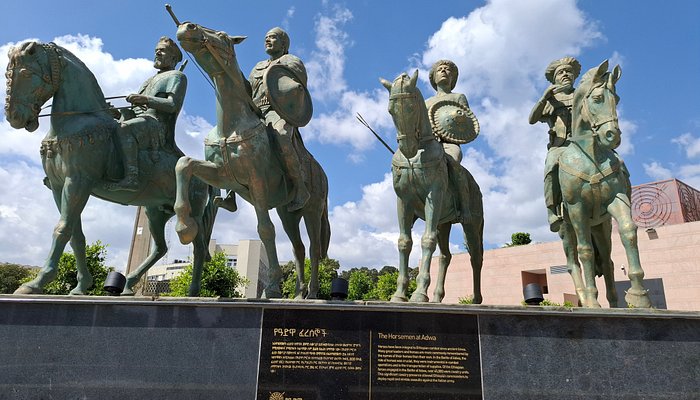
Today’s generation is making one Adawa after another. I remembered the price, through the many struggles and sacrifices, paid for me to be here. It is thanks to the past sacrifices that I can today keep my head high.
This time, the enemy is poverty and backwardness. As the emperor and the empress led their people to the battlefield and secured victory, today people march on poverty through education and mega projects that spin narratives like GERD – Africa’s largest hydroelectric dam. Further, there are oil refineries, a nuclear programme for peaceful purposes, and other initiatives.
A corridor development to make Addis Ababa look like “Addis” (Amharic for “new”) and the development of Urea fertiliser plants are among the many “Adawas”.
Ethiopia’s advancements in technology are also worth mentioning. Registering 29-million citizens to a fayda ID system, which is also a homegrown technology and to launch the world’s second-ever AI university by 2027.”
*Fira kumela Shonge is the Second Secretary for Public diplomacy and Communication Affairs at the Embassy of the Federal Democratic Republic of Ethiopia, Pretoria

Be First to Comment