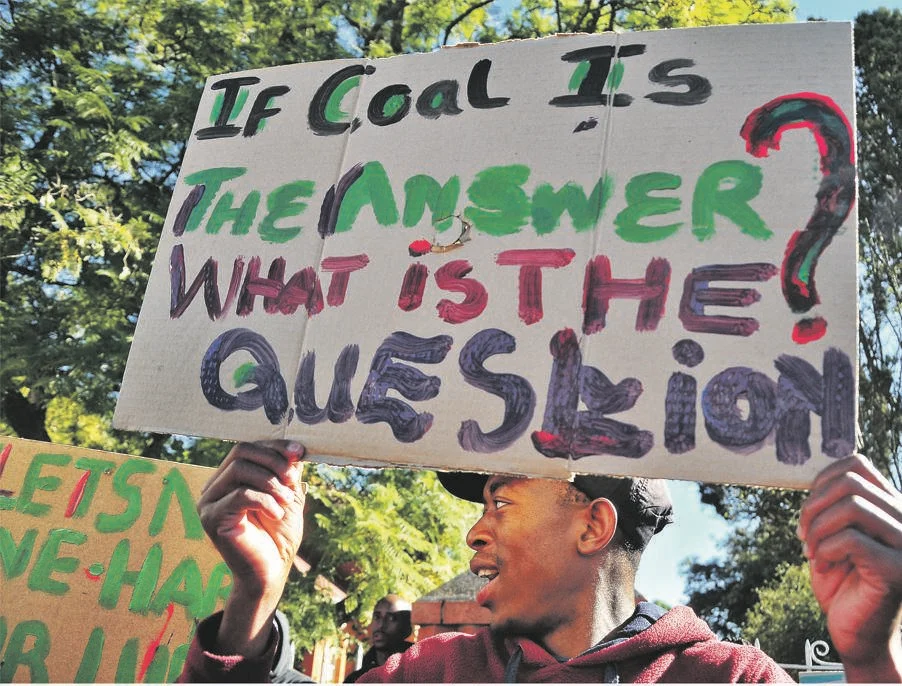
As night falls over Kriel in Mpumalanga, some families who once lived in homes tied to the mining economy now find themselves living with uncertainty, displacement and fear about what comes next.
For many residents, the crisis is about far more than housing. It is about a long history of mining wealth built alongside poverty, environmental damage and fragile communities that say they have repeatedly been abandoned once extraction and profit take priority.
In 2013, Anglo American served 34 families living on the properties with two-month eviction notices, ordering them to vacate homes that they had been occupying as far back as 1976.
Anglo American argued that they did not own the houses occupied by these families but had instead leased them from Eskom, and since the families no longer worked for the company, they had to move in order to create space for the employees of Anglo American Coal.
Anglo American was granted an eviction on August 2, 2016, but the Lawyers for Human Rights (LHR), which represented the families, argued that the order was given without ensuring that the 34 families were provided with suitable alternative accommodation.
The LHR further argued that the order was also made without any consideration of whether it would be just and equitable to render 34 families homeless.
The Pretoria High Court granted the LHR families an appeal on the eviction, meaning the families will stay there until a solution is found.
The Mining Affected Communities United in Action (MACUA), together with affected mining communities and civil society groups, has formally written to Parliament and relevant state institutions, demanding urgent intervention over what it describes as worsening humanitarian conditions and systemic failures in mining governance.
At the centre of the organisation’s concerns is a petition submitted to Parliament in November 2025. The petition raised issues including mining-related displacement, failures in Social and Labour Plans (SLPs), environmental liabilities, weak regulatory oversight and the exclusion of communities from decisions affecting their land and livelihoods.
Despite indications that the petition had been referred to Parliament’s Portfolio Committee on Mineral and Petroleum Resources, MACUA says the issues raised have not been meaningfully addressed.
For MACUA National Coordinator Sabelo Mnguni, the crisis unfolding in Kriel reflects a pattern that stretches back decades.
“Kriel is not an isolated crisis. It reflects a much deeper historical pattern in South Africa’s mining economy,” Mnguni told Mukurukuru Media.
He said the housing arrangements and social conditions in Kriel originated under Anglo American’s ownership of the colliery, during which generations of mineworkers and their families were settled as part of the mine’s labour system.
“When the mine was transferred to Seriti Resources, the asset changed hands, but the social obligations and human consequences did not disappear,” he said.
“The Kriel evictions expose how weak regulation, poor oversight, and the failure to enforce social obligations allow mining-linked communities to be treated as disposable,” Mnguni said.
The humanitarian impact on affected families has become increasingly severe.
According to MACUA, more than 50 households, including former mineworkers, elderly residents, women-headed households, children and surviving dependants of deceased workers, were left homeless or living in deeply insecure conditions following eviction and demolition operations carried out in November 2025.
“Many families were forced to sleep in open fields or rely on temporary rental
arrangements without meaningful state support,” Mnguni said.
He said repeated attempts by the community and MACUA to secure intervention from local authorities and relevant stakeholders had received little or no meaningful response.
“This means families are dealing with trauma, financial insecurity and the collapse of social stability,” he said.
Recent research has also highlighted growing concern over the treatment of mining-affected communities in South Africa.
Research by the University of the Witwatersrand Centre for Applied Legal Studies found that many mining companies continue to fail in properly implementing Social and Labour Plans despite these being legally binding commitments intended to benefit communities surrounding mining operations.
The research identified recurring problems, including poor implementation, weak accountability and limited community participation in mining decisions.
For MACUA, the Kriel crisis also reflects broader failures in political oversight and accountability.
“At a minimum, we expected Parliament to acknowledge the petition and call the responsible departments and companies to account,” Mnguni said. “Parliament should not treat mining-affected communities as an administrative inconvenience.”
MACUA is now calling for urgent parliamentary engagement with affected communities, public hearings into the issues raised in the petition, humanitarian intervention in Kriel and an oversight visit to Ga-Nala.
The organisation is also demanding stronger protections for mining-affected communities in future mining legislation and warned against regulatory processes that prioritise extraction over constitutional rights and environmental accountability.
“Without changing the underlying governance model, the cycle will simply repeat itself: extraction, profit, abandonment, and crisis,” Mnguni added.

Be First to Comment