Last updated on 5 June 2026
Beneficiation projects and shared prosperity are reshaping relationships between the Kruger National Park and its neighbours, writes Lucas Ledwaba
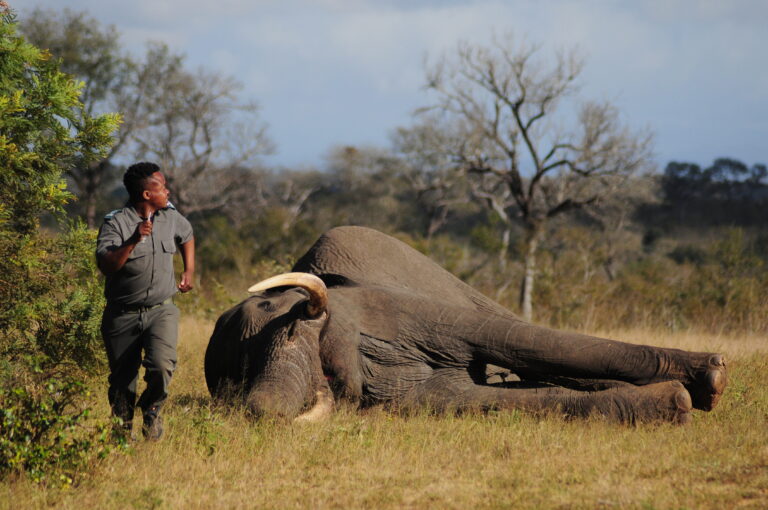
Villagers broke out in celebration one afternoon after rangers culled four elephants that had escaped from the Kruger National Park’s northernmost area of Pafuri in Limpopo province.
It was early July 2020 – the gentle giants of Africa had destroyed crops, fences and helped themselves to water sources in the rural Gumbu community of small commercial farmers bordering the park. When the word that the elephants had been shot reached the nearby villages, residents rushed to the spot where the four giants lay dead in a heap.
After rangers had removed the tusks for safekeeping in line with the law, knives, axes and saws went to work as excited villagers skinned the animals and cut off chunks of meat. People sliced the meat into pieces, salted it, and hung it to dry on fences in anticipation of the days of plenty ahead.
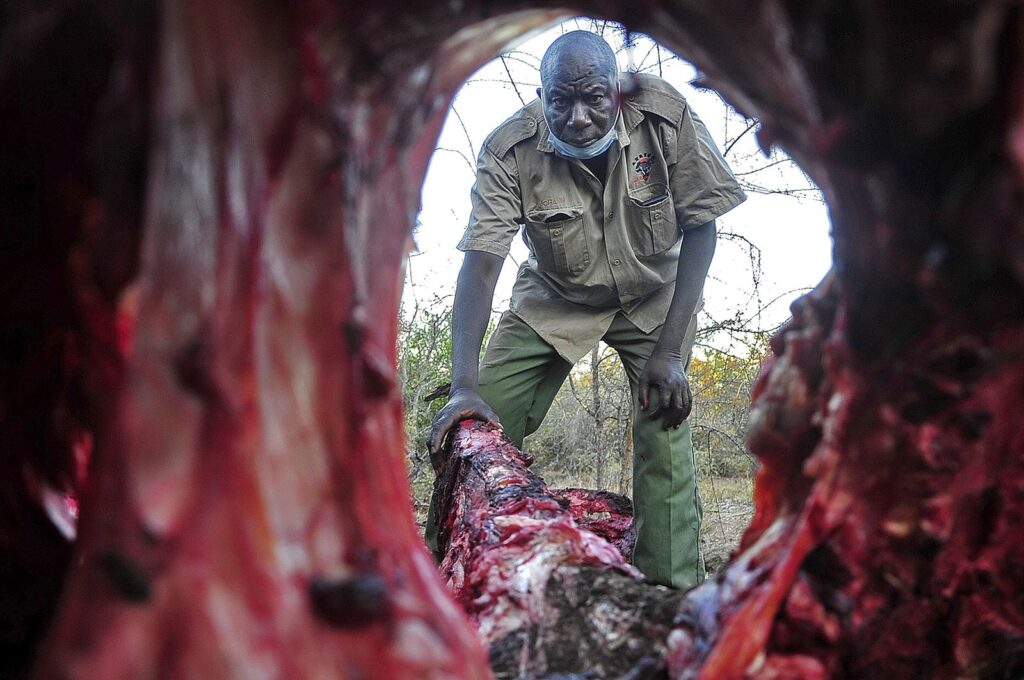
For many in the village, where poverty levels are high and residents survive on state social grants, this presented a rare opportunity to include meat in their regular diet. This scenario, unfortunately, represents the love-hate relationship that has prevailed between the conservation authorities and communities bordering the park.
At least 2,9 million people, most of them living in poverty and unemployment, live along the border of the Kruger National Park in both Limpopo and Mpumalanga. Their relationship with the park has always been complex, characterised by hostility, incidents of human-wildlife conflict, poaching and wildlife crime fuelled by various factors, including a feeling of exclusion among others.
A legacy of land dispossession
But last week, a celebration of a different kind that seeks to change this complex relationship took place at the park’s main camp, Skukuza in Mpumalanga.
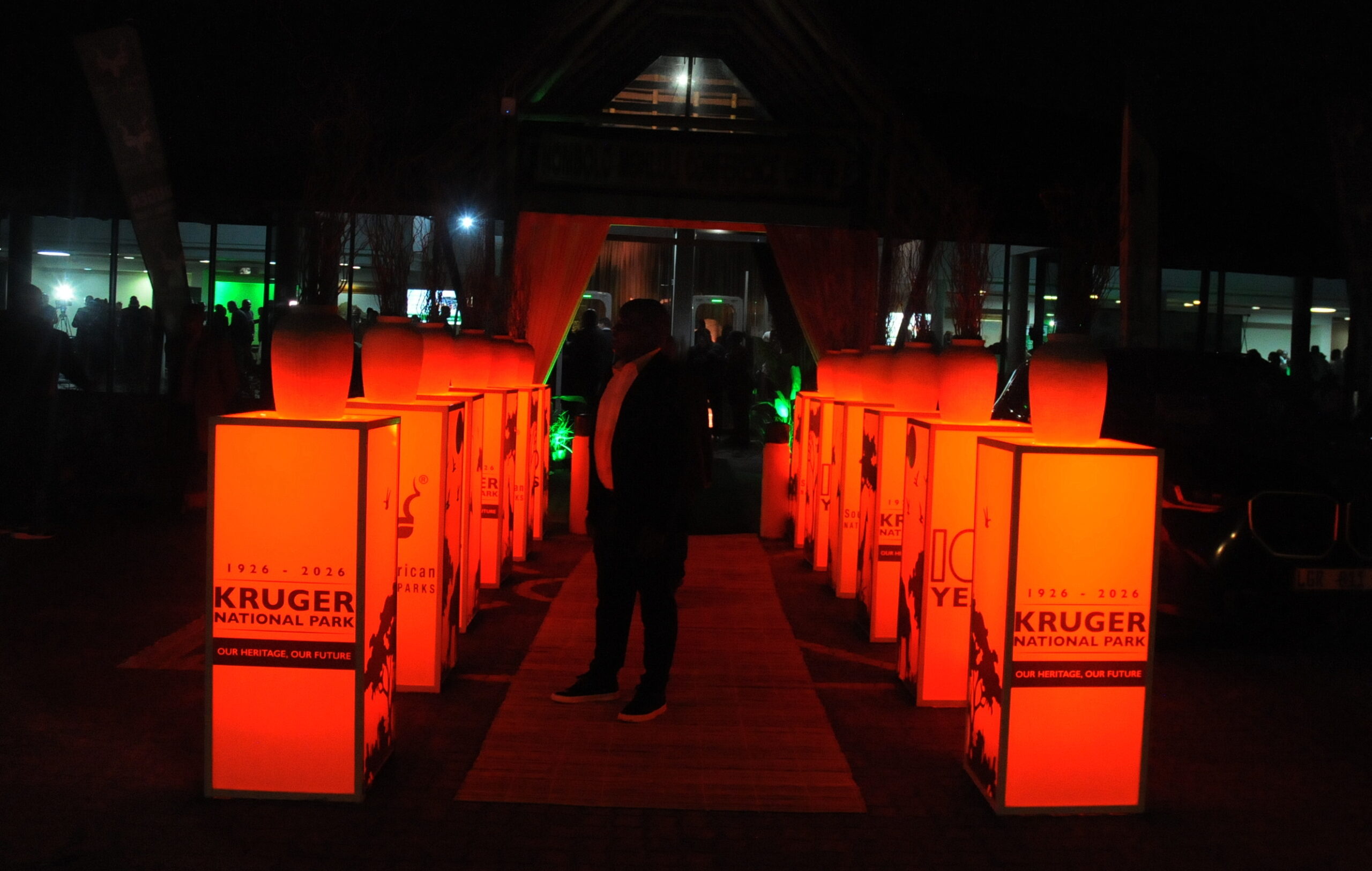
The South African National Parks (SANParks) signed a Beneficiation Scheme Agreement with communities that have claimed land as part of the restitution process. The park, which celebrates 100 years this year, was built on a brutal legacy of land dispossession and displacement of indigenous communities.
The forced removal of communities resulted in high levels of poverty among the people who were later dumped to resettle along the park’s western and southern borders. It further led to a love-hate relationship between the communities and the park, creating resentment which has led to the ongoing challenge of snaring and poaching for game, medicinal plants and firewood. However, the Kruger, probably the biggest employer of people from these very communities, is also a source of pride among those who regard it as a valuable contributor to the local economy through jobs and other projects.
A study by Christo Fabricius and Chris De Wet offers deep insight into the impact of this land dispossession. The study titled The Influence of Forced Removals and Land Restitution on Conservation in South Africa found that “the main negative conservation impacts of forced removals from protected areas are that they contributed to unsustainable resource use outside protected areas, because of increased pressure on natural resources in areas already degraded due to over-population.”
It further noted that “people’s expulsion from biodiversity-rich areas led to their attitudes to conservation and conservationists becoming increasingly negative, with a measurable increase in poaching and unprecedented incidents of natural resources being vandalised, often accompanied by land invasions.”
In another study published by the journal Biological Conservation in September 2025, Moorhouse et al submitted that “the vast majority of respondents indicated support for protecting and safeguarding wildlife, support for non-consumptive wildlife use, and opposition to the consumptive hunting of wildlife either for cultural reasons or commercial gain.”
The researchers interviewed respondents from 1551 households across 12 communities along the Kruger National Park’s northern border for the study titled Attitudes of local communities to wildlife conservation and non-consumptive, alternative income sources, near Kruger National Park, South Africa.
It further found that principal sources of income among respondents drawn from these communities were social grants, followed by private sector employment, crops or livestock farming, firewood sales, and government employment.
“In addition, 11.6% of respondents stated that community members were employed in legal trophy hunting, 6.8 % stated that they personally hunted wild animals to sell, and 15.1 % [stated] that they hunted for subsistence,” the study noted.
The Beneficiation Agreement and new approach to conservation
The beneficiation scheme agreement signed last week included the finalisation of land claims involving the park. Minister of Forestry, Fisheries and Environment, Willie Aucamp, said the signing marked the culmination of over a decade of work, with land claims dating back to 2008 and agreements signed from 2012. Aucamp said that as part of the agreement, communities acknowledged they will not be able to live inside Kruger National Park, as it remains a national conservation area.
“This Beneficiation Scheme affirms that conservation must deliver value not only for biodiversity, but for people,” Aucamp said.
“Importantly, we also recognise freedom and inclusive economic growth while recognising traditional knowledge, practices and restoration of access,” he said.
“As government, we are clear, the future of conservation in South Africa is one of inclusive stewardship. A model where communities are partners, not spectators. Where benefits are shared. Where development and biodiversity protection reinforce each other,” Aucamp said.
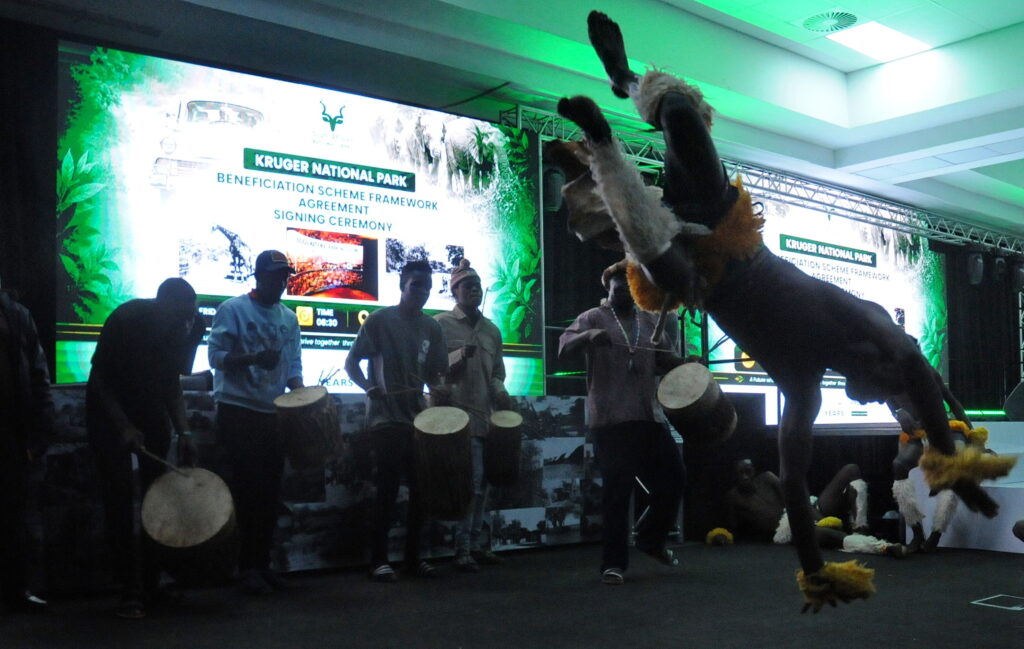
The scheme is designed to provide significant benefits for both the communities and Kruger National Park.
“…when you get communities involved, and you know your people are not going to go to bed hungry, and they are part of the solution, then I can promise you they will also be part of the solution with regards to conservation,” Aucamp reflected.
The scheme aims for “real empowerment” by involving communities in the park’s economy, including ownership of tourism facilities, retail shops, and other services.
This means moving beyond basic jobs to train individuals for leadership roles, potentially even future CEOs of SanParks, Aucamp said.
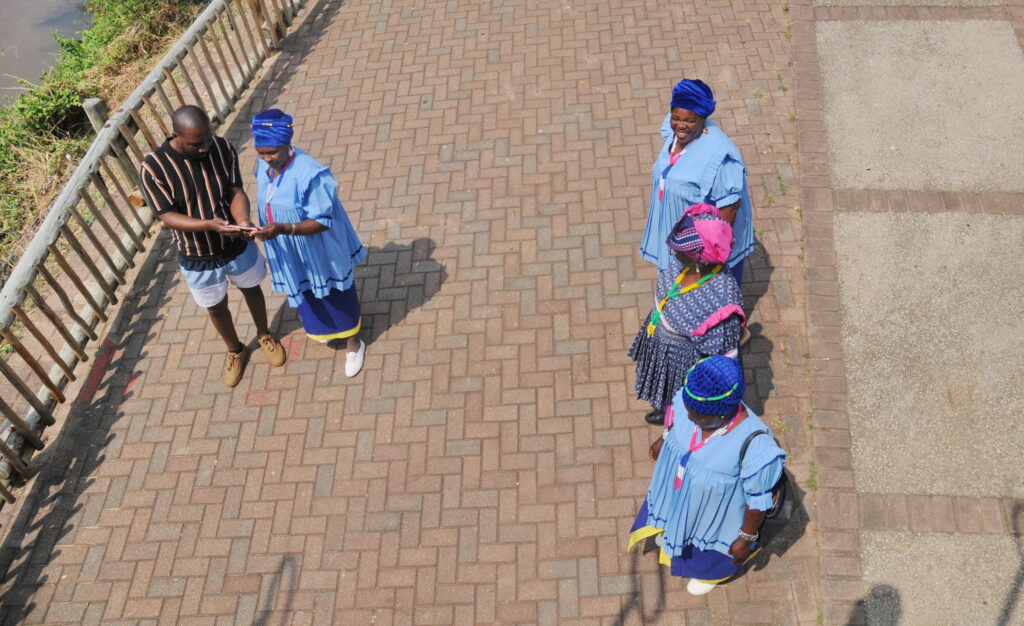
A job creation and economic upliftment scheme linked to the project aims to absorb unemployment and ensure a flow of revenue into communities, with an estimated 1,500 breadwinners expected to benefit initially.
But leaders representing the claimant communities were clear in their call that empowerment needed to go beyond creating jobs only in the lower ranks of maintenance and service provision.
Communities call for change and a departure from the past
Risimati Chauke, speaking on behalf of the Madonsi community of claimants, called for radical change to how things have been done in the past and stated that they were not going to settle for crumbs.
“We did not agree that the jobs should only be jobs for cleaners, for people who are digging trenches here. We said we have got children and grandchildren who are well educated in many fields,” Chauke said.
“They should not be ignored. In fact, they must receive priority in the land of their ancestors. What we are saying is that we know that sustainable conservation here in the Kruger National Park will only be possible and successful when we, whose forefathers were pushed out of this area, are involved,” he said.
Sanparks board member Chief Livhuwani Matsila, who worked with communities to finalise the land claims, said in total 17 land claims were lodged on the Kruger. Of these, 14 were lodged by communities and one by a single family. In total, 15 of the 17 land claims were approved at a cost of R120 million in financial settlements. Matsila said R450 million was then set aside and locked away for use in the implementation of post-settlement support projects.
“It is unacceptable that the money has been sitting for 10 years,” Matsila remarked, saying the funds should be unlocked to help the communities.
Chauke called for a change in attitudes.
“So now, what we are asking from KNP is that they should not work the old way. People of Kruger National Park [Sanparks], you must change your ways because when you see our people, you must not view us as poor people who are unable to evolve. It can’t be that we fill our bellies with food and be happy while the owners of the land are dying of hunger. There’s a huge change that needs to happen here,” Chauke said.
Chauke, a pensioner, has lived with the pain of dispossession.
“When I was born here, when my grandparents were forcefully removed here, I wasn’t born yet, but my mother was married. I was born just as they were removed. So I don’t like to talk about it. When I talk about it, it always sounds like I’m lamenting,” he said.
Murder of tourists and ongoing challenges of poaching
A dark cloud hung over the centenary celebrations following the murder of two tourists, Ernst (71) and Dina (73) Marais, who were murdered in the northern park of Kruger in May.
Their bodies were discovered with multiple stab wounds in the Levubu River near Crooks Corner on May 22. The couple had failed to report to their camp two days earlier, sparking an extensive search.
At the time of the centenary celebrations, there had been no breakthrough in the case, but this week, the SA Police Service (SAPS) announced they had arrested two suspects aged 23 and 33 in Mozambique.
The Kruger shares its eastern border with Mozambique and the northern border with Zimbabwe, which forms part of the Great Limpopo Transfrontier Park established in 2002.
The move involved the bringing down of fences between the three countries to allow for the free movement of animals and closer cooperation.
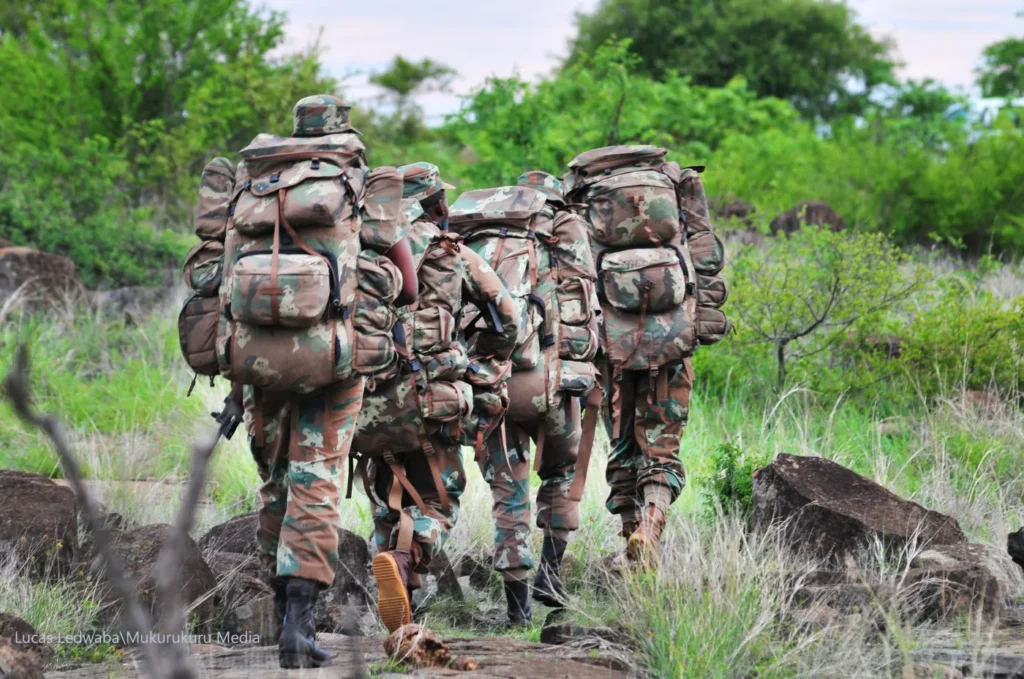
The three countries have bilateral cooperation agreements aimed at improving conservation, security and combating cross-border crime.
These include collaboration with the SAPS, SA National Defence Force and the Greater Kruger Environmental Protection Foundation (GKEPF).
The GKEPF is a collaborative non-profit organisation established in 2016 to combat environmental crime and coordinate conservation security across the Greater Kruger landscape.
This cooperation saw Mozambican authorities assist in tracing and arresting the suspects involved in the murders of the Marais couple and the recovery of their vehicle, which was stolen during the attack.
Aucamp described the assistance by the Mozambican authorities as “fantastic.”
The couple’s murder was the first such incident in the park’s history. But it underlines the ongoing challenges of crime in the park.
While Sanparks has introduced various crime-combating measures, including the use of drones, the Kruger continues to face persistent challenges.
In its 2024\25 annual report, Sanparks revealed that snaring, poisoning of lions, vultures, and cross-border incursions continue to haunt its conservation efforts.
It was further noted in the report that snaring incidents and theft of fencing materials had increased across several parks, including the Kruger.
The authority said these crimes are interconnected in that snaring is often linked to bushmeat poaching and fence theft enables livestock incursions and wildlife escapes.
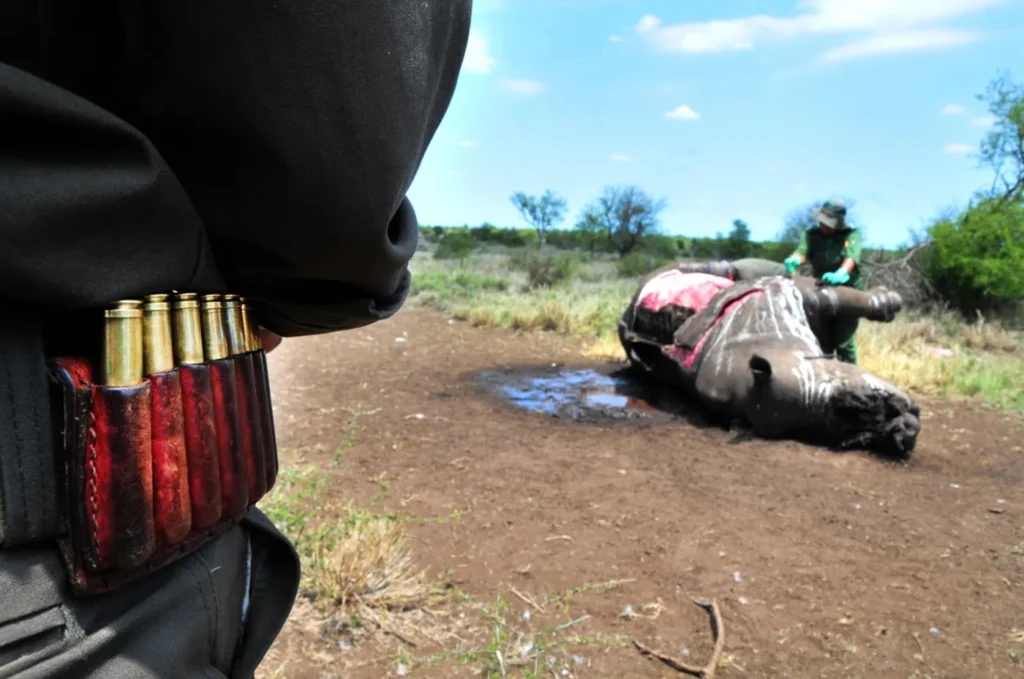
In February 2026, Sanparks revealed that 175 rhinos were killed in the park the previous year, nearly double the number of 88 animals poached in 2024
Changing face of the Kruger and community engagement
Once the preserve of white visitors in safari suits, where during the era of racial segregation and exclusion, black people were only allowed as servants and not tourists, the Kruger’s visitor profile has undergone a massive transition in the last three decades.
In its 2024\25 annual report, Sanparks recorded that a total of 544 031 black tourists visited the park between April 2024 and March last year.
Sanparks has also revealed that it has invested R50 million through the Environmental Protection and Infrastructure Programme (EPIP) to initiate economic beneficiation projects for communities.
The organisation noted that the interventions directly benefited about 2,000 community members by improving access to the game meat supply chain and enhancing local capacity to participate meaningfully in the wildlife economy.
As part of its Vision 2040 commitment to equitable access to biodiversity resources, Sanparks says “the Skukuza Abattoir in Kruger National Park processed 20,000 kilograms of sustainably sourced game meat through ecological harvesting practices designed to support conservation objectives.”
“This meat, along with by-products, was distributed to land claimants, local communities, and food relief partners, ensuring that biodiversity resources directly benefited those living closest to the park.”
“The initiative reached more than 10,000 households across Limpopo and Mpumalanga, making a tangible impact on community well-being. Importantly, 70% of beneficiaries reported improved access to protein-rich nutrition, highlighting the programme’s role in addressing food insecurity. By combining conservation-driven harvesting with equitable distribution, SANParks not only advanced its biodiversity economy but also reinforced community support for conservation through direct, meaningful benefits.”
With such initiatives, perhaps in the not too distant future, communities neighbouring the park will no longer celebrate the unnecessary culling of an elephant or any other animal, but will play a proactive role in protecting the wildlife as part owners and beneficiaries of the Kruger. – news@mukurukurumedia.co.za

I’m very proud of you mogaetsho. Your work is remarkable.
Thank you