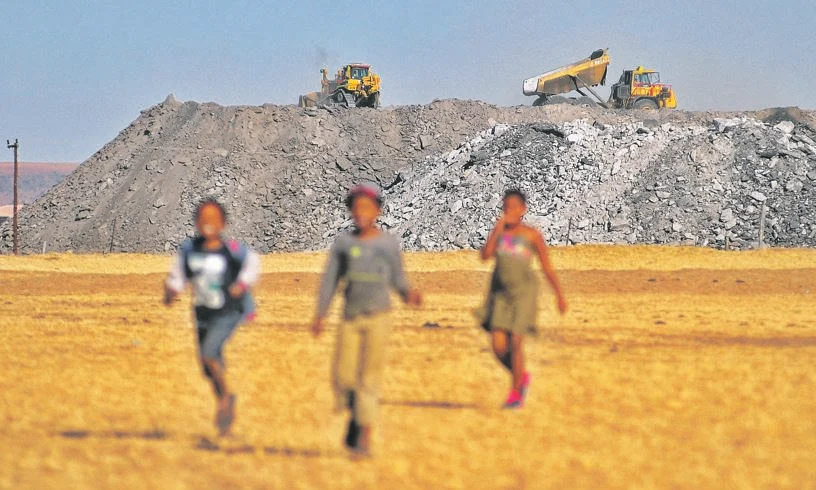
Every day, trucks loaded with coal leave the Amajuba District, carrying one of KwaZulu-Natal’s most valuable natural resources to power industries and support the economy. Yet for many communities living in the shadow of the mines, the wealth beneath their feet has not translated into development above ground.
Traditional leaders say they are often left to manage the consequences of mining without being included in the decisions that shape their land, livelihoods and communities. While companies extract resources from traditional land, residents continue to see limited benefits.
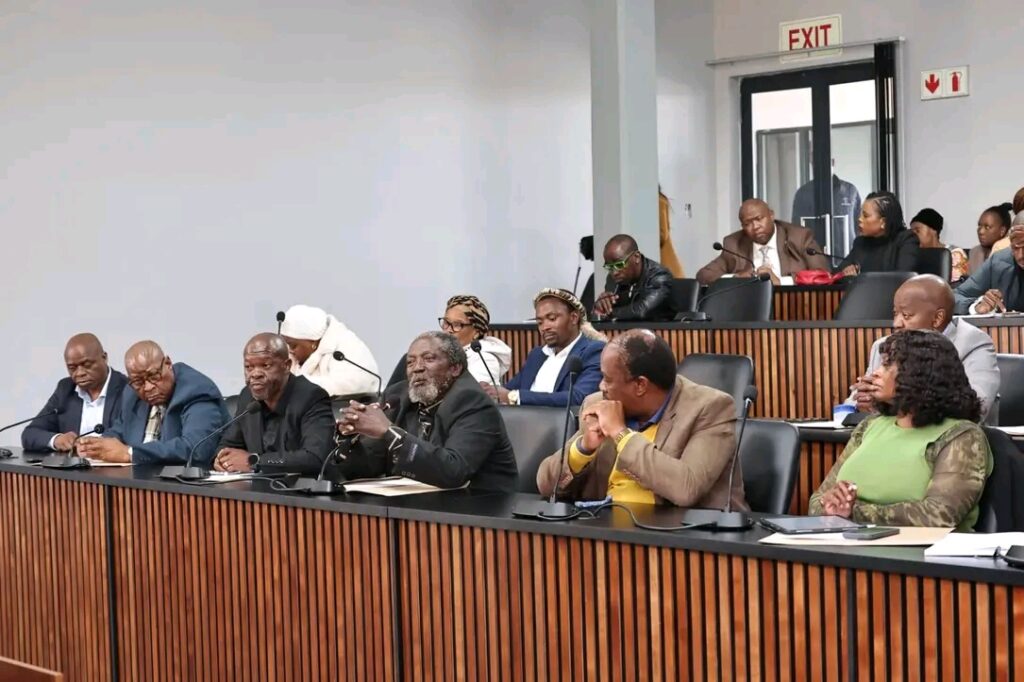
That frustration came into sharp focus during a recent engagement in Dannhauser, where all 11 amakhosi from the Amajuba District met KwaZulu-Natal MEC for Cooperative Governance and Traditional Affairs (CoGTA), Reverend Thulasizwe Buthelezi. Led by inkosi Zwane, the traditional leaders presented a united front and raised what they described as longstanding governance failures by mining companies operating in their jurisdictions.
For the amakhosi, the issue goes beyond consultation. They argue that communities who have lived on and cared for the land for generations deserve a meaningful voice in how natural resources are used and how the benefits of mining are shared.
The Amajuba District comprising Newcastle, Dannhauser and eMadlangeni is one of KwaZulu-Natal’s major coal-producing regions. Mining remains an important contributor to the local economy, yet traditional leaders say the industry’s success has not been matched by tangible improvements in many surrounding communities.
A central concern is the exclusion of traditional leaders from the mining licensing process. Amakhosi say companies frequently begin operations without informing or consulting local leadership, leaving them unable to address community concerns or ensure residents’ interests are represented.
The law offers some protection, but it is not absolute. Under the Mineral and Petroleum Resources Development Act (MPRDA), a mining-right applicant must conduct a public participation process with “interested and affected parties.” Traditional communities clearly qualify, yet the Act does not explicitly grant traditional councils a consent right.
A separate statute, the Interim Protection of Informal Land Rights Act (IPILRA), requires communities holding informal rights to land to give consent before those rights can be deprived, including through mining. The landmark 2018 Constitutional Court judgment in the Maledu case affirmed that mining cannot lawfully proceed on such land without the valid consent of the affected community.
Despite this ruling, the Amakhosi say little has changed on the ground. The Department of Mineral Resources and Energy, which processes licence applications, has faced sustained criticism from civil society and the Auditor-General for weak monitoring of compliance.
A 2022 performance audit by the Auditor-General found the department lacked the capacity to verify whether proper consultation had taken place or whether social and labour plans were implemented effectively.
iNkosi Gule argued that traditional leadership must be formally recognised as a stakeholder in mining decisions.
“No mining licences should be issued without explicit consultation with the local iNkosi,” he said.
He added that mining companies place traditional leaders in conflict with their communities “because we are not informed about their activities, despite the law stating we should be on these companies’ boards to keep communities informed,” added Gule.
Gule also highlighted environmental damage. Unregulated operations, he said, continue to degrade land that communities depend on for agriculture and for future generations.
Mining-affected communities in the Amajuba District and across the upper Thukela catchment have long documented the effects of coal extraction on water and soil. Acid mine drainage, produced when sulphide minerals in exposed rock react with air and water to form sulphuric acid, remains a persistent problem.
Contaminated water, often laden with heavy metals and elevated sulphate levels, seeps into rivers and boreholes. A 2016 report by the Centre for Environmental Rights, Full Disclosure: The Truth About Acid Mine Drainage in South Africa, found that numerous collieries in KwaZulu-Natal were discharging polluted water into communal sources, in some cases at levels significantly exceeding human-health guidelines.
Local small-scale farmers who rely on communal grazing land and small vegetable plots have reported declining livestock health and failing crops, though many are reluctant to speak publicly for fear of reprisal.
The MPRDA requires mining-right holders to set aside financial provision for rehabilitation and mine closure, but the Auditor-General has repeatedly noted that the department cannot account for whether these funds are sufficient or even exist in many cases.
The discussion in Dannhauser extended beyond mining. iNkosi Mabaso called for stronger unity among Amakhosi and appealed for government support to strengthen agriculture, saying limited access to resources has made it difficult for traditional leaders to promote community farming initiatives despite their willingness.
The call reflects a broader critique by rural advocacy groups: mining social and labour plans have too often funded top-down projects that fail to align with community priorities.
The Bench Marks Foundation has published multiple reports highlighting the gap between mining companies’ social-investment claims and the lived experience of mining-affected communities.

Responding to the concerns, MEC Buthelezi acknowledged that many communities have not benefited sufficiently from mining on their land.
“It is unacceptable that mining companies extract wealth from the land while leaving the traditional council and the community with nothing. We need total unity among Amakhosi and must actively discourage associations that seek to divide the traditional leadership,” he said.
Buthelezi outlined proposals aimed at strengthening traditional leadership. These include advocating for constitutional amendments to better define the role and powers of Amakhosi, integrating traditional councils into municipal budget processes, and ensuring dedicated resources are allocated to support their work.
Such changes would require significant legislative effort. The Traditional and Khoi-San Leadership Act of 2019 already sought to clarify the role of traditional councils but has faced implementation challenges and remains contested by some community groups.
Amending the Constitution would need a two-thirds majority in the National Assembly, while integrating traditional councils into municipal budgets would require revisions to the Municipal Finance Management Act and the annual Division of Revenue Act, and complex political negotiations.
Recognising the need to diversify economic opportunities, the MEC also committed to supporting agriculture and youth development. He instructed the Mayor of Amajuba to provide equipment, including grass cutters and other tools, to help unemployed young people establish small businesses and build sustainable livelihoods.
Looking ahead, Buthelezi said he would convene a comprehensive follow-up meeting involving Amakhosi, mining companies, government departments and other stakeholders to develop a transparent and legally binding framework for engagement between mining companies and traditional communities.
The discussions in Dannhauser reflect a broader conversation across South Africa’s mining regions, where communities are increasingly demanding greater accountability, environmental protection and a fairer share of the benefits generated from the country’s mineral wealth. news@mukurukuru.co.za

Be First to Comment