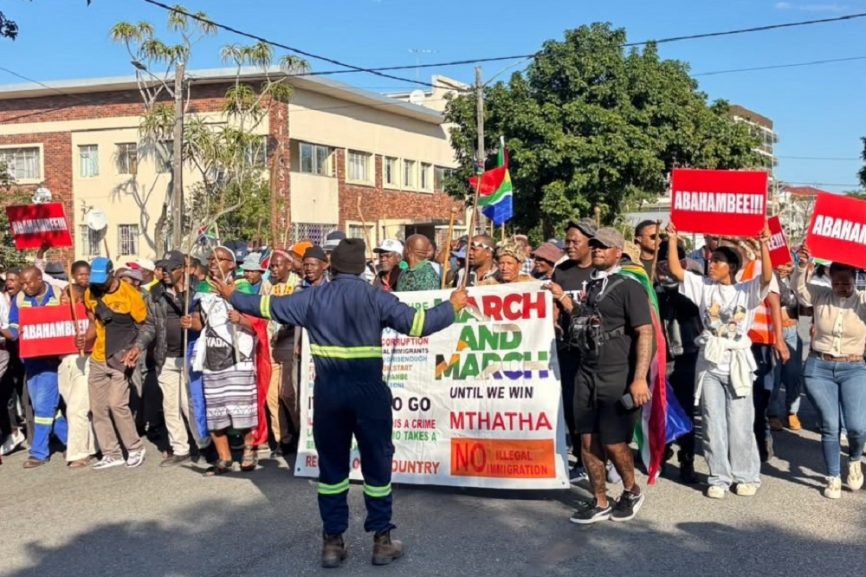
The activities of March and March and like-minded organisations have shaken the government of South Africa out of its long slumber over the burning issue of illegal immigration.
Suddenly, the state has found R600m to bolster security forces ahead of the planned June 30 deadline set by anti-illegal immigration organisations for undocumented migrants to exit
the country.
The government has at last seemingly found its voice and rediscovered its purpose to uphold and maintain the law. Top cops have been sent out to warn would-be troublemakers of the consequences should they engage in violence or any act of illegality. The state has rightly warned against people taking the law into their own hands such as demanding proof of identity or documentation from others.
The government has also found the energy to outline plans of action to deal with any form of lawlessness around the June 30 deadline that has seen thousands of illegal immigrants and those legally in the country choosing to leave out of fear of possible attacks.
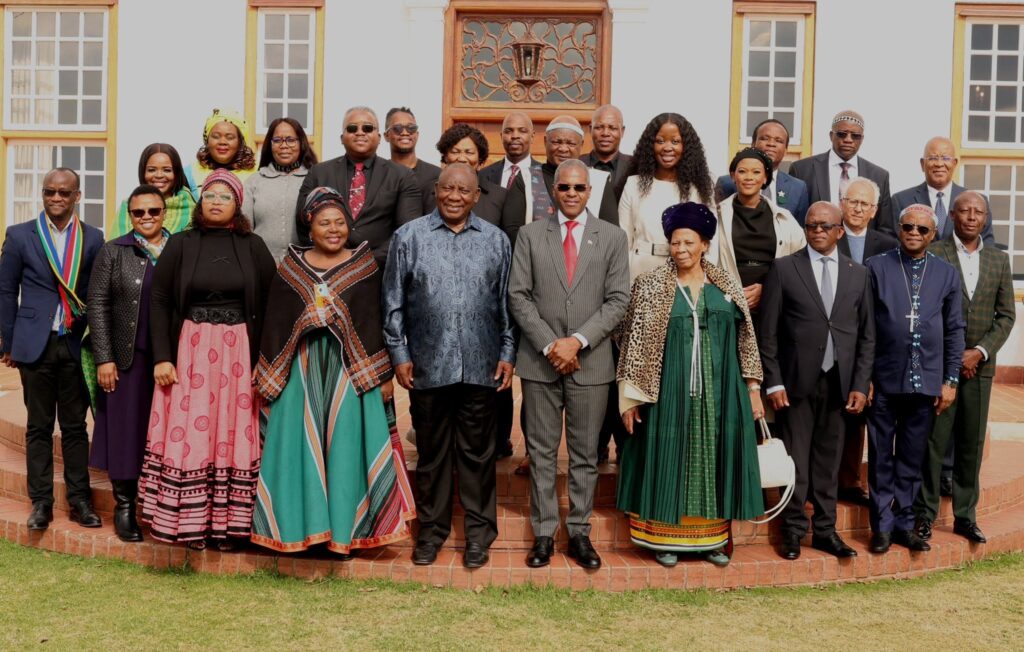
Just yesterday President Cyril Ramaphosa met with traditional leaders in the capital Tshwane in one of many such last ditch, desperate behind the scenes gatherings with various formations, including taxi associations, religious leaders and arms of state to discuss the planned June 30 protests.
Perhaps authorities, with the abundance of resources and the intelligence at their disposal know much more about the planned protests than ordinary people in South Africa do.
So, in the absence of such information for citizens and other interested parties, maybe the government should be given the benefit of the doubt on its decision to mobilise such an array of resources.
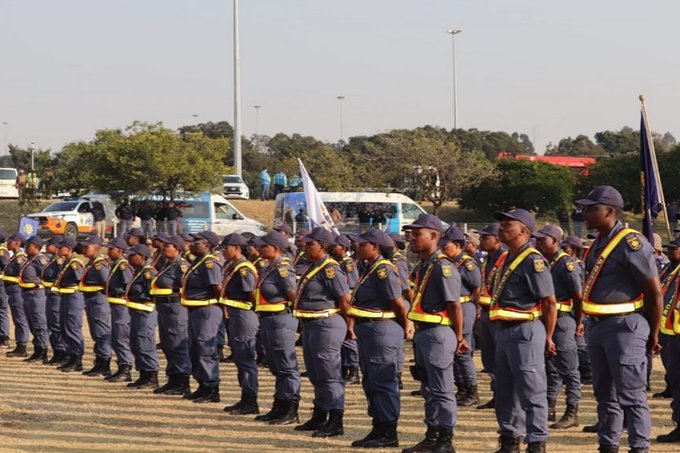
Extra-ordinary measures such as the cancellation of leave in the police service and engaging the might of the private security sector, which by far outnumbers the police, to collaborate with the SAPS on the day suggest something much bigger is in the offing.
The Private Security Industry Regulatory Authority (PSIRA) has previously indicated that there were 586 042 registered active security officers and more than 11 000 active registered private security businesses. In its 2024\25 annual report, the SAPS said it “maintained a workforce establishment of 187 681 personnel”.
Given its failure to respond timeously to the July 2021 violent uprising that left an estimated 350 people dead in KwaZulu-Natal and Gauteng, it might be reasonable to conclude the state deemed it fit to take such drastic steps so as not to be caught napping again.
This is despite the fact that the organisations calling for the deportation of illegal immigrants under the tagline Abahambe! [Let them go!] have not called for violence, and have publicly expressed their intentions to proceed with their protests peacefully and within the ambit of the law.
Yet, the state should be commended for at least showing that it can be proactive. But a lingering question remains – why now? Why was there no such flexing of the muscle and mobilisation of financial resources before to fight and counter illegal immigration and its impact on South African communities?
Why have authorities not dealt with the issue of illegal immigration through raids, roadblocks and other means that empower police to act under the law? Would we have witnessed any such statement of intent had March and March, Operation Dudula and their multitudes of followers not taken to the streets in protest?
Would it have been business as usual with the state continuing to treat the issue of illegal immigration as an insignificant matter to be treated as a sideshow in a run-up to elections?
Was the government planning to just let it be, as it has done on many other critical issues, including rampant violent and organised crime, drug and human trafficking, high levels of poverty and unemployment?
Or was the state wishing that, just like after the attacks in 2008 that left more than 60 people dead, the issue of illegal immigrants and related issues would simply be forgotten and disappear?
It appears, however, from the government’s reaction to the latest calls for action on the issue that it’s finally reached a realisation that this is no trivial matter and there’s a revolution brewing. Even the ANC, the majority party since May 1994, this week came out openly through its secretary-general, Fikile Mbalula, to acknowledge the challenge of illegal immigration, and that it has been a thorn in the flesh for a long time.
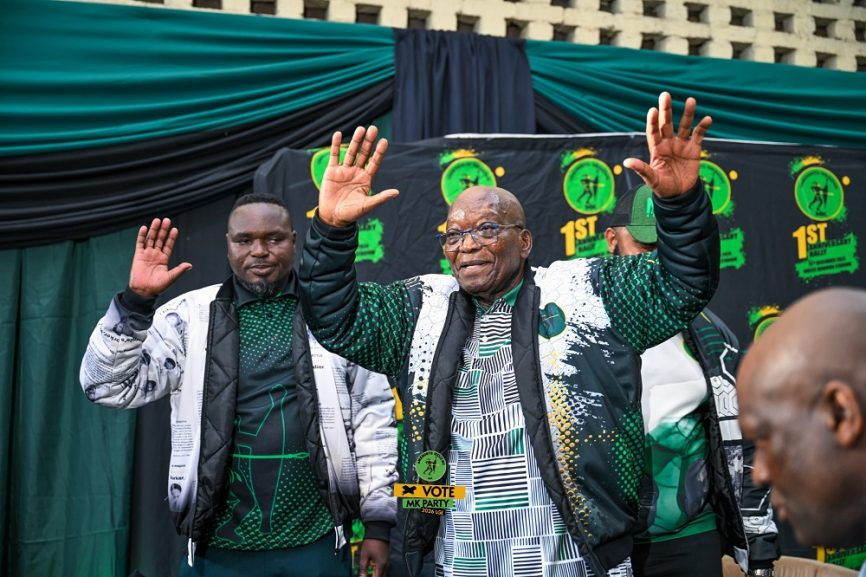
Mbalula used the opportunity to throw a salvo at the party’s former leader and ex-state president, Jacob Zuma, accusing him of fanning the flames of violence around immigration issues, citing his public support of the Abahambe! campaign.
Whether publicly saying one supports the campaign equates to calling for violence, is debatable. Unless Mbalula provides evidence to the effect that Zuma is planning or advocating for bloodshed, the accusation should be treated with caution.
Linking Zuma to what the ANC and the state suggest are plans for violence is rather tricky might be a ploy by the party to discredit the man, whose arrest for contempt of court was the match stick that ignited the July 2021 gunpowder keg.
The riots that broke out in Gauteng and KwaZulu-Natal caused damage to infrastructure and businesses, resulting in the loss of millions of jobs. The economy also lost an estimated R50-billion.
The SA Human Rights Commission (SAHRC) in its report on the causes of the July 2021 unrest found that “the violence and destruction were symptomatic of unresolved systemic conditions, including post-COVID-19 economic recovery, high unemployment, lawlessness, discrimination, socio-economic divides, and issues within the security sector.”
But it went further to add that “organised groups and individuals opportunistically exploited these conditions to attempt to usurp the rule of law”.
Releasing the report into the violence in January 2024, SAHRC commissioner Philile Ntuli remarked: “Two types of actors were identified during the unrest: primary actors, who led and executed widespread destruction, and secondary actors, who participated in theft. The timing of the events coincided with the incarceration of former president Jacob Zuma, leading to a perception that the two were related.”
Was Zuma a part of these organised groups or individuals? Six years later, there has been no evidence presented to support the allegation or suggestion that Zuma was at all behind the protests. So suggestions or insinuations that he may be behind whatever acts of violence the state and the ANC seem to suggest have been planned for June 30 should be dealt with extreme caution. Is it perhaps a ploy to divert attention from the main issue at hand – illegal immigration?
The acts of March and March, Operation Dudula and their supporters have divided South Africans along the lines of those who support action against illegal immigrants and those against it. Critics have raised questions around the source of funding for these organisations and their activities, the tribal origins of their leaders and whether their actions are fuelled by Afrophobia and xenophobia. Perhaps these questions should be left to March and March to deal with and address.
But the critical question remains: how does calling for the law to take its course against illegal immigrants and illegal immigration equate to xenophobia or Afrophobia?
Would the South African government, by implementing the Immigration Act 13 of 2002, amended in 2024, which empowers the state to arrest, prosecute and deport undocumented migrants, be considered xenophobic or Afrophobic in doing so?
Is South Africa the only country on the continent that has laws governing immigration? Is it the only country in Africa that’s taking action against illegal immigrants? If not, why are calls by some South African citizens for the state to implement its own laws presented by some as xenophobia or Afrophobia?
Are South African citizens, including those who support March and March and Operation Dudula, not entitled to raise such issues? Indeed, the statutes are very clear about citizens taking the law into their own hands.
Apart from that, allowing people or organised groups to go around doing the work of the police and immigration officials, randomly demanding identity documents from people in the streets, is unlawful and can lead to anarchy.
But why have some South African citizens resorted to such action? Is this not perhaps a vote of no confidence in the law enforcement agencies and the government that have clearly failed, dismally at that, in dealing with the issue of illegal immigrants and immigration in general? There are no clear or credible statistics on the number of illegal immigrants in the country. I guess getting the exercise of getting such a figure would no doubt be a daunting one.
But Statistics SA says in its report on migration statistics based on various data sources that “South Africa’s immigrant population has seen a steady rise over the past few decades, increasing from 2,1% of the total population in 1996 to 3,9% in 2022. By 2022, the number of immigrants in the country had reached 2,4 million, with women making up just over one million of that total.”
According to the report, most immigrants in South Africa come from the Southern African Development Community (SADC) region, with men making up 47,0% and women 36,5%. Notably, immigration from the rest of Africa is male-dominated, with three men for every one woman. The authority doesn’t state whether all these are illegal or legal immigrants.
Apart from questions regarding the source of their funding, whether they are driven by xenophobia, Afrophobia or other ulterior motives, the anti-illegal immigration groups have made their mark and forced the state to catch a long-awaited wake-up call. They are effectively forcing South Africa and the rest of the continent to press the reset button. It can no longer be business as usual for South Africa to ignore the cries of its citizens.
It can also not be the norm that African governments mutilate the economic and political fabric of their countries, forcing their desperate citizens to risk life and limb drowning in the Mediteranean while trying to reach Europe for better opportunities. It can also no longer be acceptable that South Africa, with all its internal troubles, should be the sanctuary of all African citizens fleeing the impact of collapsed economies, healthcare, public services and political systems in their own countries.
If heeded, lessons from the developments in South Africa today may change the course of history and ensure that no citizen is forced to flee their country of birth to become a fugitive selling oranges in the streets of a foreign country. The key lesson, I guess, is that citizens have to stand up and hold their governments accountable, just like March and March, Operation Dudula and their supporters are doing.
If they don’t, then change will remain a dream, a mirage that keeps most of Africa in its current rotten state, a continent governed by leaders and parties that do not care about the welfare of their citizens; a continent that’s so rich in mineral resources it can eradicate poverty within a few years if properly governed.
African citizens, instead of blaming South Africans for standing up and fighting for their country, should take the fight to their leaders and governments, just like people here did during the dark days of apartheid rule. Then, some South Africans fled their homes to become refugees in some African states that offered them sanctuary to continue the fight against apartheid.
They did not settle in the comfort of the limited freedoms and comforts they were afforded as refugees, but used the hospitality of their hosts to continue a relentless onslaught against the might of the apartheid state until they attained their freedom in 1994.
As it stands, given the high number of people fleeing their countries in Africa, heading either to South Africa or Europe, it appears Africans have accepted that their governments have failed and their countries can no longer be fixed, and have, by extension, accepted that they will forever be on the run from poor governance, corruption and strife. It is clear, except for those benefitting from this illegal immigration scourge through various means, including the provision of a rich source of cheap labour, that South Africa cannot afford to continue to carry the troubles and people of a failed continent.
For its part, South Africa should extend assistance to fellow Africans engaging in a just struggle against oppressive, corrupt regimes to help make the continent a better and liveable place for all. It should also play a bigger role in helping to elevate the economic fortunes of its neighbours and fellow African states.
Most critically, South Africa needs to adopt a tough stance and play a lead in holding its neighbours and other African leaders accountable. A case in point is the recent decision by Zimbabwean President Emmerson Mnangangwa to extend his term of office by amending the country’s constitution. Has South Africa come out publicly to criticise this development?
No it hasn’t. Like it’s been for decades now, politicians continue to hide behind the line that they can’t meddle in the internal affairs of sovereign states. Well, some of these states whose citizens are in South Africa battling to run informal businesses that are reserved only for citizens in their own countries, got their independence over 60 years ago.
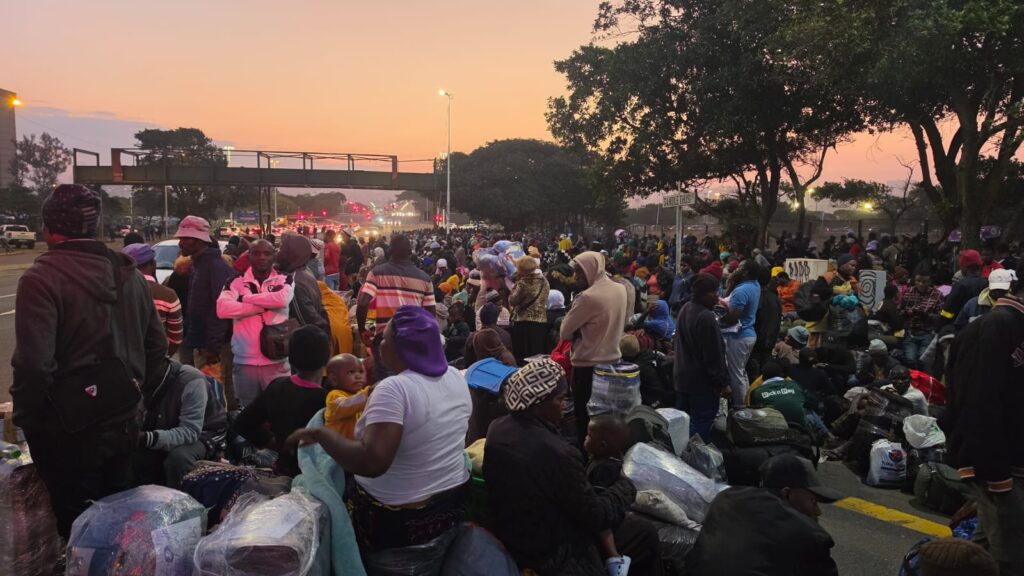
The current developments in South Africa, which have seen scores of foreign nationals lining up to exit the country ahead of June 30, should force the governments of Malawi, Zimbabwe, Mozambique, Ghana, Nigeria and many others, to do serious introspection about why their citizens are leaving their countries of birth to fight for crumbs in a country thousands of kilometres away?
Not only that, it should force African leaders to come together and find solutions to the problems afflicting their countries, to stop patting each other in the back for a job well done even in the face of glaring failures. As South Africa stands at the precipice ahead of June 30, it is worth noting that its citizens enjoy the right to protest without fear of being jailed, maimed or killed by the state.
These rights came at a price, a huge price where so many people lost their lives. What is stopping the rest of the continent to adopt that spirit of resilience? Until Africans, including here in the south, stop elevating political leaders to godly status, treating them as untouchables who are privileged to do with their countries as they please regardless of the consequences, then the continent is doomed.
Whether certain sections of our society disagree, truth is the anti illegal immigration protests are raising genuine concerns from South Africans and the government should listen. Citizens too have to keep their end of the bargain, that in raising their concerns, they do so without resorting to violence or intimidation, for doing so would only blight and undermine the legitimacy of their struggle.
In his 1980s resistance poem, The Last Struggle, celebrated Struggle poet Mzwakhe Mbuli recited that “…Africa shall know no peace, until we in the south are free.”
Right now though, it is clear South Africa will not enjoy its freedom until the rest of Africa fixes its mess, and strives to free itself from corruption, poverty, misgovernance and strife. This will not be achieved by fleeing to South Africa or Europe or elsewhere in the world. Only Africans can fix their countries and continent. – news@mukurukuru.co.za

Well written and balanced article. Good job👍