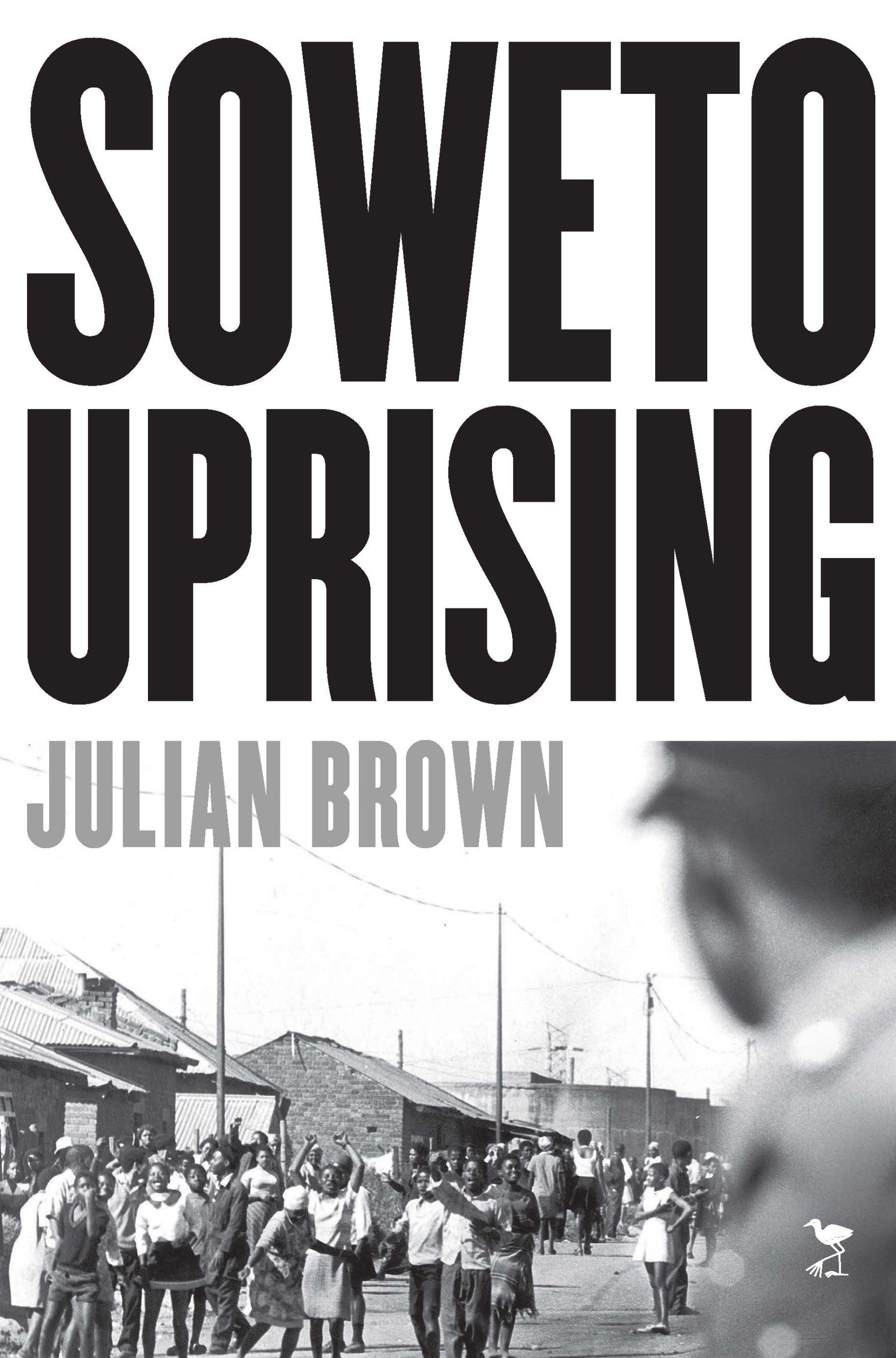
In this extract from the book SOWETO UPRISING author Julian Brown offers insights into the afermath of the protests that began in Soweto on 16 June 1976.
In June and July of 1976, mass protests were centred on the townships of the Witwatersrand, but these were not the only forms of resistance and rebellion that took place. In these months, smaller explosions followed across the country: in the north of the Transvaal, in universities across Natal and the Cape Province, and in the townships
that surrounded secondary industrial and port cities.
No part of South Africa was left untouched. And although few of these protests persisted for as long as those on the Witwatersrand did, they kept recurring spontaneously and unpredictably. In August, though, the pattern changed again. After months of intermittent protests, students and communities in and around Cape Town took to the streets.
For a period, the centre of the uprising shifted. Instead of the Witwatersrand, the Cape Peninsula now
seemed primed to explode, and the forces that the state had put in place to quell the uprising in and around Johannesburg were suddenly in the wrong place.
These events demonstrated that the insurgency sparked by the uprising in Soweto had transitioned into something new: after all, there had been no effort to impose a language policy on schools in Cape Town, and the causes of these protests were now largely removed from those that had led to the first march.
In an interview conducted to mark the thirtieth anniversary of the uprising, Fitzroy Ngcukana – a student at Langa High School in 1976 – provides a neat explanation of the timing of the eruption on the Peninsula: the school terms differed between the two provinces, and the students in Cape Town were already on vacation. Without the ability to meet centrally at schools, Cape-based students were too isolated to respond to the uprising in Soweto as a collective.
It was only in August, when the mid-year break was over and classes had resumed, that these students began to congregate and discuss ways of expressing their solidarity with the students of Soweto. They were guided by the information that had come their way both through official reports – in the media, for example – and unofficial ones, conveyed by ‘visitors and migrant workers’.
At Ngcukana’s school, the students met to discuss tactics and rapidly decided to march to the police station to register their dissatisfaction with the response to their fellow students’ protests two months earlier. Surprisingly, their march appears to have been peaceful. Ngcukana remembers marching to the police station and back to school without incident. According to him, violence only broke out in the evening and was linked to the return of adults to the area. Their presence catalysed a night of looting and riot, and a new police presence.
When the students attempted to repeat their actions of the previous day, the police were waiting. This time, the students were met with violence, and one of their peers died. This tragedy led to an intensification of the struggle, rather than a de-escalation. The next few days played out as a mirror image of what had taken place in Soweto in
June: more marches to protest the murder of the youth in question; a dispute about custody of his body; and the banning of the planned funeral as a political event – which succeeded in keeping the funeral private, but failed to contain the spread and incendiary nature of the protest.
The student protest then transitioned into a more general insurgency in the townships of Cape Town. The centre of the disruption was the Coloured township of Bonteheuwel, which was soon wracked by the now-expected clashes between protestors and police.
In a newspaper article from the time, the fear that the protests would spread beyond the boundaries of the township is made explicit. While the first half of the article focuses on the upheavals within Bonteheuwel – the violence by both the protestors and the police – the second half focuses on the threat that these protests posed to the White suburbs of Cape Town. Two of the major roads running into and past the city centre – Vanguard
Drive (now Jakes Gerwel Drive) and Settlers Way – ran past Bonteheuwel.
Unsurprisingly, the protestors took advantage of the relatively high levels of traffic going past to draw attention to their ongoing struggles against the state. One of the key tactics in this regard was throwing stones at passing cars – an act of protest that immediately disrupted the ordinary routines of those who did not live in the township. It is striking how rapidly the police acted to try to contain the protest: while Bonteheuwel burned, the traffic department assured commuters that the roads were being kept clear, and that the disruption was limited to the township area itself.
Sometimes it is easier to remember a single moment of protest – a day, an action, a single dead soul – than it is to remember the ways in which that protest continued, changed, mutated, and developed into something new. Sometimes, too, the way we commemorate an event tends to limit the ways we think about it. Commemorating the events of 16 June 1976 as a single day in our memory can have the inadvertent effect of obscuring the weeks and months of protest, defiance, and death that followed – in Soweto itself, but also beyond its boundaries and across the country.
As these months of resistance unspooled, it became clear that despite the state’s capacity for violence, that capacity was not infinite. The police and the army struggled to contain and suppress the protests. As soon as one area had settled down, another exploded. The uprising became a national phenomenon that opened up the possibility of a new kind of resistance – one that did not depend on an institutionalised opposition but instead manifested spontaneously and unpredictably, pushing the state beyond its available capacity and eroding its power from within.
Book title: Soweto Uprising: A Documentary History
Author: Julian Brown
Publisher: Jacana

Be First to Comment