Rofhiwa Sadiki from Dzwerani village in Limpopo has not been able to find work since graduating in marketing studies two years ago.
“I thought that once I had my qualification, I would at least have a better chance of finding a job, but it has been difficult,” Sadiki said.
“Sometimes I even question whether I chose the wrong course or whether the economy is simply not creating enough opportunities. You spend years studying and working towards getting a qualification, only to finish and find yourself back at home looking for opportunities. It can be discouraging because you start asking yourself what the point of studying is if there are no opportunities afterwards,” she told Mukurukuru Media.
Her experience highlights the difficulty graduates can face when moving from education into the labour market, particularly when the economy is not generating enough opportunities across different fields.
Limpopo’s latest unemployment figures show a difficult labour market, but the numbers do not fully capture the conditions facing people trying to find work in the province.
The province’s official unemployment rate increased slightly from 31.7% in the first quarter of 2026 to 32% in the second quarter, according to Statistics South Africa’s (Stats SA) Quarterly Labour Force Survey. Nationally, unemployment increased from 32.7% to 33.6% during the same period.
Limpopo recorded the third-lowest official unemployment rate among the nine provinces, after the Western Cape at 19.5% and the Northern Cape at 28.7%. However, the province’s expanded unemployment rate stood at 46.7%. This measure includes people who are available to work but have stopped actively looking for employment.
The difference between the two figures is important because it shows that the official unemployment rate does not capture everyone struggling to find work.
Limpopo also had the lowest labour-force participation rate in the country at 53.9%, compared with 59.6% nationally. Its absorption rate, which measures the proportion of the working-age population that is employed, was 36.6%, below the national rate of 39.6%.
The figures point to a labour market in which many working-age residents are not participating, whether because they are studying, involved in household or subsistence activities, unable to access opportunities or have become discouraged after unsuccessful attempts to find employment.
This is particularly relevant in Limpopo, where many communities are in rural areas and far from major economic centres. Access to work can depend on transport, roads and other infrastructure, while unreliable basic services can also affect the ability of businesses to operate and create jobs.
Jobs are being created, but opportunities remain uneven
Limpopo added 3,000 jobs between the first and second quarters of 2026, taking total employment in the province to about 1.512 million. The increase came while national employment declined by 16,000 during the same period.
However, most of Limpopo’s employment growth came from the informal sector, which added 33,000 jobs. The formal sector lost 16,000 jobs, while employment in private households declined by 13,000.
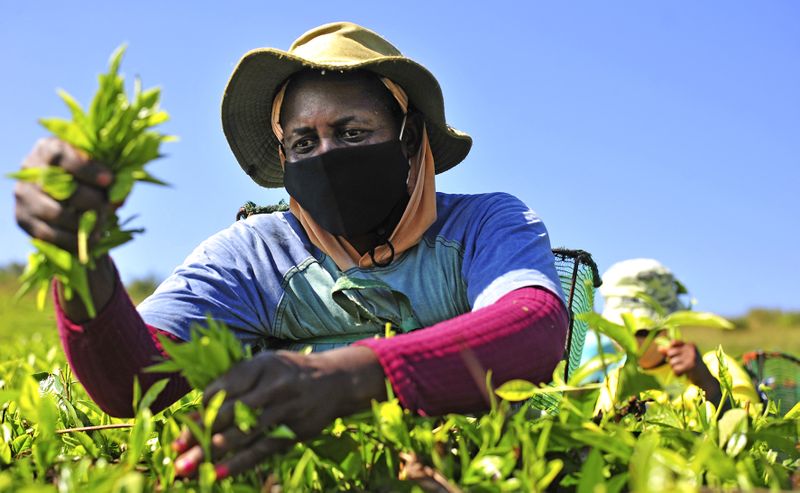
Agriculture recorded a significant increase, adding 19,000 jobs, while finance added 21,000 and construction gained 18,000.
The gains were partly offset by losses in other industries. Mining shed 24,000 jobs during the quarter, while community and social services lost 15,000 and manufacturing declined by 14,000.
The figures reflect the uneven nature of the provincial economy. Agriculture remains an important source of employment, particularly in rural communities, while mining has historically provided jobs and supported local economies in several parts of the province.
The increase in informal employment also highlights how people continue to find alternative ways of earning an income when formal employment is difficult to access.
Stats SA recorded about 550,000 people in Limpopo involved in at least one non-market activity during the second quarter. This included about 229,000 people involved in subsistence farming.
Another 419,000 people reported fetching water or collecting wood or dung for household use.

These activities are particularly relevant in rural communities, where households may depend on subsistence activities to meet some of their basic needs. However, they do not provide the regular income associated with formal employment.
Young people face an additional challenge when entering the labour market.
Nationally, 4.7 million people aged between 15 and 34 were unemployed in the first quarter of 2026, while 10.6 million were outside the labour force. The unemployment rate among people aged 15 to 24 was 60.9%, while it stood at 40.6% among those aged 25 to 34.
Limpopo’s youth figures were lower than the national rates, but the province still had a substantial number of young people outside employment, education or training.
The NEET rate among Limpopo residents aged 15 to 24 stood at 33%, compared with 36.4% nationally. Among those aged 15 to 34, it was 43.4%.
What needs to change after the elections
The unemployment figures come as communities prepare for the local government elections, bringing renewed attention to whether municipalities are creating conditions that allow local economies to grow and employment opportunities to develop.
Municipalities cannot create every job directly, but their performance can influence the environment in which businesses operate and whether investment and economic activity can take place.
In rural Limpopo, this includes access to reliable water, roads, waste management, infrastructure and local economic development programmes. Where these services are unreliable, residents can face additional barriers to accessing work, while businesses may struggle to operate and expand.
Abby Lehola, secretary of the Makhado Business Forum, said the lack of meaningful support from municipal local economic development departments remains a concern for businesses.
“The biggest challenge facing SMMEs is lack of support for SMMEs, particularly from the LED department. The lack of information sharing and unequal distribution of business opportunities to all SMMEs across the board,” Lehola said.
He said poor service delivery also affects confidence in local economies and questioned whether some problems only receive attention during election periods.
“If waste is not collected on time, sewerage is left unattended for a long time but only gets dealt with during election times, what happens afterwards? Does this mean it will only be given attention again in the next elections?” he asked.
Lehola said municipalities should give greater attention to township and village economies by ensuring that local entrepreneurs have access to information, opportunities and development programmes.
“The LED must share information with business. Nothing must be done for us without us,” he said.
His concerns also point to the wider relationship between local economic conditions and employment. When businesses struggle to operate or expand, fewer opportunities may be available to people looking for work.
Leo Gama, spokesperson for the Limpopo Economic Development Agency (LEDA), said municipalities play an important role in creating opportunities for businesses and supporting economic growth.
“The municipalities play a critical role in ensuring that SMMEs thrive in all aspects of economic growth. They are the ones providing access to a variety of opportunities within and outside their platforms. Their influence to SMMEs growth is a top priority,” Gama said.
He acknowledged that municipalities face challenges in maintaining infrastructure, including budget constraints.
“Critically, municipalities struggle on maintaining infrastructure within their spaces due to various reasons including budget constraints. But they are trying to mitigate some of the infrastructure challenges through various interventions,” he said.
Gama said LEDA works with municipalities on several projects, including Special Economic Zones, where small businesses can gain access to opportunities.
“LEDA collaborate with the municipalities on many projects. We have the SEZs which is driven at municipal level and that is where SMMEs get to understand and get access to available opportunities,” he said.
He said municipalities have Local Economic Development programmes aligned with LEDA’s economic activities and that SEZs could provide opportunities for small businesses.
“The SEZs is one activity that will benefit small businesses in the province,” Gama said.
He encouraged businesses to continue engaging with both LEDA and municipalities.
“Local government plays a critical role in SMMEs support and we will encourage small business to constantly engage LEDA and the municipalities to grow their businesses,” he said.
The provincial government has also identified water, roads and job creation among the priorities facing Limpopo.
Limpopo Premier Phophi Ramathuba previously said, “All what the people of Limpopo want is water, roads and jobs.”
She acknowledged the province’s infrastructure backlog following recent floods and said 21 road projects had been appointed, with another 17 expected to begin during the financial year.
For unemployed youths like Sadiki, the upcoming elections present an opportunity for the government to tackle these concerns.
“Going into the elections, I hope the government takes unemployment seriously and creates more opportunities for young people. There are graduates from different fields who are sitting at home, and it feels like there should be a plan to make sure that the skills we have are actually being used. We need opportunities across different departments and sectors, not just promises,” she said.
“I don’t expect the government to give everyone a job, but I do hope it can create an economy where there are more opportunities for people who have studied and are ready to work. Young people need to feel that there is a future for them here.” – news@mukurukurumedia.co.za

Be First to Comment