In this open letter, AFRA’s Siya Sithole challenges whether South Africa’s laws are truly protecting vulnerable rural citizens who face daily human rights violations, landlessness, and trauma.
Dear Mr President,
South Africa prides itself on having one of the most progressive Constitutions in the world. We celebrate a Bill of Rights that promises dignity, equality, and justice for all citizens, regardless of background or socioeconomic status.
We routinely speak proudly of our national land reform programme as a primary mechanism for correcting the deep, systemic, and historical injustices of our past.
Yet, for millions of rural citizens, labour tenants, and farm dwellers, these constitutional promises exist only on paper. On the ground, the law is increasingly experienced not as a shield of protection, but as a source of fear, trauma, landlessness, and deep humiliation.
We write this open letter publicly because we believe these realities must be heard by the nation. We write because we are no longer convinced that submitting quiet representations to bureaucratic state institutions yields meaningful change. We write because somewhere between our Constitution, our legal processes, our courts, and the institutions entrusted with protecting vulnerable people, basic human empathy has been lost.
We ask one simple but uncomfortable question: are the laws of this country truly intended to operate in this manner?
Are they meant to leave children traumatised after watching their family homes invaded and dismantled? Are they meant to leave grieving families standing helplessly while the graves of their ancestors are excavated by heavy machinery?
Are they meant to convince elderly citizens that the basic human dignity guaranteed by Section 10 of the Constitution ends where private land ownership begins? Or have we collectively forgotten that legal frameworks were created to serve and protect human beings, rather than merely enforce cold, procedural compliance?

The human reality: two case studies of systemic trauma
The Nkosi Family (Buitenzorg Farm, Mpumalanga)
Recently, on Buitenzorg Farm in Mpumalanga, the Nkosi family endured an event that highlights the severe human cost of legal proceduralism. The family received written notice stating that the buried remains of their deceased brother were scheduled to be exhumed within days. Unsure of how to defend their rights, they sought help from the Department of Land Reform and Rural Development (DLRRD) in Piet Retief, where they were directed to Legal-Aid South Africa.
What followed was an agonising journey through state bureaucracy. The family travelled to Ermelo, only to be informed that their case file had been transferred elsewhere. They then travelled to Newcastle, where officials stated no file existed and a new application would need to be opened. Ultimately, they were informed that Legal-Aid SA could not assist because the private landowner had already obtained a High Court exhumation order.
Although an order had allegedly been granted years prior, the family believed legal challenges were ongoing, and because no action had been taken in the intervening years, they understood the matter to be settled. Crucially, despite repeated requests, the family was never provided access to or sight of the court order that authorised the disturbance of their brother’s resting place.
On 22 July 2026, the landowner arrived at the homestead accompanied by members of the South African Police Service (SAPS), an exhumation team, and heavy machinery (a TLB). The family did not attempt to defy the law; they pleaded for basic dignity. They requested that if the remains were to be removed, they be allowed to retain them or transfer them to a nearby mortuary while pursuing further options. That request was flatly denied.
While family members attempted to assist relatives who were prevented from entering the property, the exhumation proceeded. By the time they returned to the site, the grave had been dug up and the remains removed. Two young family members were subsequently arrested and allegedly assaulted after attempting to record the event on their mobile phones.
As a grieving relative reflected:
“Bengicabanga ukuthi umuntu uyaphumula mase eshonile, uyahlonishwa futhi, bagubhe ithuna ngathi bagubha inja, asisoze sakhohlwa.”
(“I thought that when a person dies, they finally rest. They are respected. Instead, they dug up the grave as if they were digging up a dog. We will never forget it.”) — Nkosi, 2026
The Sibisi Family (Martinsdrift, eDumbe, KwaZulu-Natal)
A similarly disturbing situation unfolded with the Sibisi family from Martinsdrift in eDumbe, KwaZulu-Natal. What began as a minor livestock dispute—where the landowner claimed family goats had damaged a tree on his property—escalated into a long-standing campaign of harassment to force the family off the land they call home.
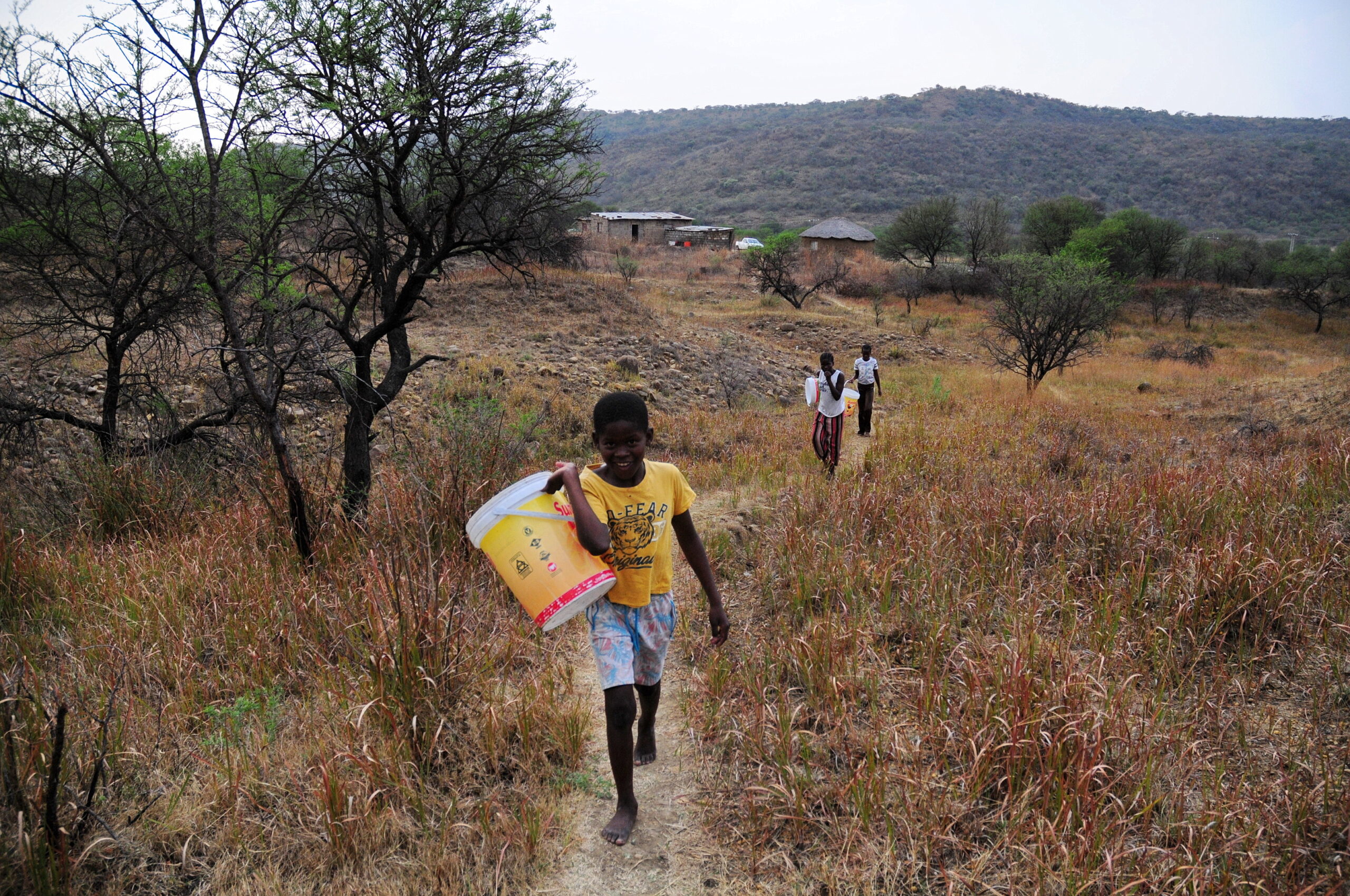
Over several years, the Sibisi family faced repeated attempts to end their occupation. Their primary water supply was cut off, forcing them to collect water from a local dam. While washing at the dam, Mrs Sibisi was violently threatened with a firearm by the landowner. Despite lodging multiple formal complaints with the police, no criminal investigations or protective actions resulted. Their grazing land was subsequently burned, and they were offered R300,000.00 to vacate—an offer they rejected, as the farm represents their ancestral home and sole livelihood.
The crisis peaked on 21 July 2026, when the landowner arrived at their home accompanied by an individual claiming to represent the sheriff’s office and a group of prospective buyers. Without clear documentation, these individuals prepared to seize and sell everything the family owned—cattle, goats, furniture, motor vehicles, and personal household items—while children watched their home being prepared for liquidation.
The eviction and seizure were halted only through the emergency intervention of community neighbours and local traditional leaders. The individual claiming to be from the sheriff’s office refused to provide proper identification, stating only that they were from Mtubatuba, and departed in an unmarked vehicle lacking registration plates or licence discs.
Mrs Sibisi captured the psychological toll of this encounter:
“Lomlungu ungibulele ngiphila, ngosuku lwesigameko ngangifonela wonke umuntu engimaziyo ngikhala ngithi nakho ngizolala phandle nezingane zami nabantwana babantwana bami.”
(“This white man has killed me while I am still alive. On the day it happened, I called everyone I knew, crying, saying today I would be sleeping outside with my children and my grandchildren.”) — Sibisi, 2026
The root cause: administrative failure and broken legislation
These incidents are not isolated occurrences. They are the direct result of systemic failures within state administration. Both the Nkosi and Sibisi families submitted formal labour tenant land acquisition claims under the Land Reform (Labour Tenants) Act 3 of 1996 many years ago. Both families have spent decades waiting for the state to investigate, process, and finalise their claims.
Had these land claims been processed and settled in a timely manner, these disputes would not exist today. The families would be title holders of their portions of land—operating as secure neighbours to commercial landowners rather than remaining vulnerable, perpetual subjects on the land of their birth. The state’s failure to settle land claims is not merely an administrative delay; it is a structural failure with severe human rights consequences. It creates fertile ground for intimidation, forced evictions, litigation, and emotional trauma.
This state of paralysis was explicitly highlighted in the Research Report on the Tenure Security of Labour Tenants and Former Labour Tenants in South Africa (Cowling, Hornby & Oettlé, 2017), commissioned by the High-Level Panel on the Assessment of Key Legislation chaired by former President Kgalema Motlanthe. The report concluded that:
- Adversarial Litigation: The Land Reform (Labour Tenants) Act has become inherently litigious, driving low-income rural families into long, expensive court battles against well-resourced landowners.
- Underutilised Mediation: Statutorily provided mediation mechanisms under the Act have never been systematically implemented or funded by the state.
- Broad Definition of Tenure: Security of tenure cannot be defined solely by physical occupancy; it is inextricably linked to cultural heritage, family identity, and the protection of ancestral burial sites.
A similar government investigation in 1998 made almost identical recommendations regarding state-backed mediation, rural legal aid, and local dispute-resolution forums. Nearly three decades later, those recommendations remain largely unfulfilled.
A Call for Structural Reform and Action
Legality without humanity cannot deliver justice. Procedural compliance that ignores human dignity fails the baseline standard established by our Constitution. To address these ongoing systemic failures, the Association For Rural Advancement (AFRA) calls upon the President and the national executive to implement the following core measures:
1. Rapid Expansion of Pre-Referral Mediation Infrastructure
While we welcome the Land Court’s establishment of a Mediation Committee and post-referral mediation panels, court-based mediation occurs too late in the life-cycle of a dispute. The Department of Land Reform and Rural Development (DLRRD) must immediately establish operational, fully funded provincial panels of mediators to resolve land, grazing, and burial disputes before they enter formal litigation.
2. Comprehensive Support via Legal Aid South Africa
Legal Aid SA must receive designated state funding to ensure farm dwellers and labour tenants receive equitable, qualified legal representation during mediation and court proceedings. No family should lose their land rights or ancestral graves due to an inability to navigate complex judicial administrative procedures.
3. Statutory Protection of Ancestral Graves and Burial Rights
Insecure land tenure must not be allowed to compromise the dignity of the deceased or the spiritual well-being of surviving families. National policy must enforce strict protective guidelines regarding family graves, ensuring mandatory, independent mediation and alternative settlement procedures before any exhumation or relocation order can be sought or executed.
4. Inclusion of Community-Based Organisations (CBOs)
Rural communities have organised themselves into effective structures, such as the Alliance for Rural Democracy (ARD) and the Farm Dweller & Labour Tenants Alliance of South Africa (FLASA). Government departments must formally include these representative bodies in land reform policy design, monitoring, and implementation. Excluding affected communities undermines democratic participation and weakens the legitimacy of land reform initiatives.
Conclusion
Mr President, state institutions routinely count files, record statistics, and issue compliance reports. But who measures the emotional and psychological trauma experienced by rural families? Who tracks the long-term impact on children who watch their parents humiliated, or families who witness the desecration of their ancestral graves?
If our democracy is truly anchored in human dignity, then our legal frameworks, administrative departments, and law enforcement agencies must protect that dignity in daily practice, not merely in legal theory.
The time for administrative delay has passed. Decisive executive action is required to ensure that the law functions as an instrument of constitutional justice rather than a source of ongoing vulnerability.
Lafa elihle sibheke ngawo womabili.
“A nation should not be judged by how it treats its highest citizens, but by its lowest ones.”
— Dr. Nelson Mandela
- *Siya Sithole is Strategy Manager at the Association For Rural Advancement (AFRA)

Be First to Comment