Home Affairs has until 10 November to introduce an online asylum registration system after withdrawing a directive that overwhelmed refugee reception offices, but the government still needs to clarify how the new process will work, whether it has the capacity to manage applications and what happens if its plans conflict with ongoing court proceedings.
The announcement comes amid public frustration over migration management, protests in Soweto and Durban, and uncertainty following the Constitutional Court’s ruling on asylum applications. Cooperative Governance and Traditional Affairs Minister Mmamoloko Kubayi said the government was seeking a way to implement the ruling while responding to public concerns.
“The objective is not to delay compliance, but to ensure effective and sustainable compliance that serves both the administration of justice and the broader public interest,” Kubayi said at the Inter-Ministerial Committee on Migration briefing on 11 October.
The immediate challenge follows Home Affairs’ withdrawal on 9 October of a directive issued on 28 September to implement the Constitutional Court’s 7 July judgment. The ruling struck down provisions of the Refugees Act that created procedural barriers to asylum applications, including for some people who entered the country irregularly or failed to report to a refugee reception office within the prescribed period.
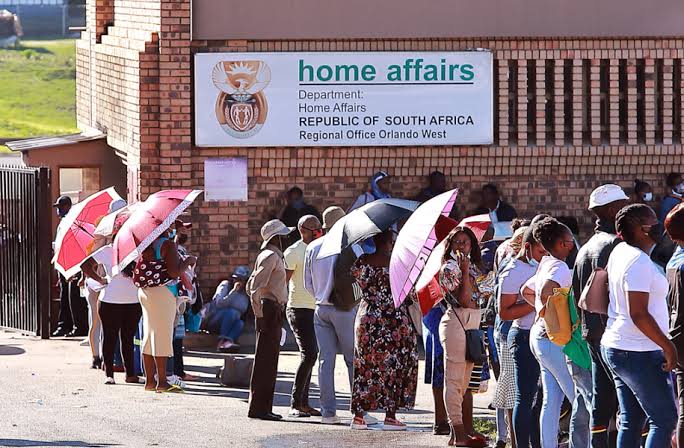
The directive allowed reception offices to accept people who indicated they wanted to apply for asylum, but the offices became overwhelmed within days.
The withdrawal came amid protests in Soweto and Durban on 8 October over undocumented migration. The protests involved looting, vehicles being torched and people being injured. Government reported 30 arrests in Gauteng and KwaZulu-Natal over alleged offences including public violence, illegal gathering, obstruction and resisting arrest. The events added to pressure on government to explain how it intends to manage asylum applications while complying with the court ruling.
Court proceedings could affect the next steps
The government intends to approach the Constitutional Court for a supervisory order and further guidance on implementing the judgment. It may request additional time to strengthen staffing, infrastructure and processing capacity. However, the current court order remains binding unless the Constitutional Court grants further relief, so the government cannot assume it will receive an extension.
Kubayi said the government was trying to balance the court’s requirements with concerns raised by communities.
“We are in a situation where the IMC must find a balance between Compliance with the court order and listening to the concerns of many South Africans,” she said.
A separate Gauteng High Court hearing scheduled for 29 October will consider conflicting judgments involving asylum seekers, including questions about their release from detention and whether Home Affairs must interview them before taking certain actions. A panel of judges appointed by the Judge President is expected to consider issues affecting the administration of the July judgment.
The outcome of the hearings could shape how the department proceeds, but the government has announced that the online registration model will be introduced in phases by 10 November. Home Affairs still needs to explain how that deadline will be met while the legal questions remain before the courts.
The online system must address practical barriers
The proposed platform will allow people to submit personal details and biometrics, declare their intention to apply for asylum and receive a reference number and appointment. The receipt will not be a section 22 visa or confirmation of refugee status. Applicants will still need to lodge formal applications and have their claims assessed.
Government says people unable to register online will be assisted at refugee reception offices. Assistance will also be available on request to people in police or immigration detention, with officials, legal representatives and civil society partners expected to provide support in major languages.
The announcement leaves important operational questions unanswered. Home Affairs has not yet set out in detail how appointments will be allocated, how people without reliable internet access will register, what happens when applicants miss appointments or what additional resources will be available at reception offices. The department has also promised privacy safeguards, service standards, a complaints process and statistics that can be made available to courts.
These arrangements will need to work beyond the initial online declaration. Officials will still have to manage appointments, receive formal applications and assess claims. The department’s ability to handle these stages will be central to whether the new process avoids the congestion that led to the previous directive being withdrawn.
Deportations and asylum protections remain distinct
Home Affairs has also sought to clarify that the court ruling does not mean every person who declares an intention to seek asylum will be granted refugee status or that immigration enforcement has stopped.
“The ConCourt did not remove our right as Home Affairs to adjudicate a refugee application. If someone doesn’t qualify, it is our job to say you don’t qualify and you must be deported,” Home Affairs Minister Leon Schreiber said.
According to the government’s explanation, people who declare an intention to make a first asylum application are protected by the principle of non-refoulement. Those with valid receipts should not be removed, arrested or detained solely because they lack a visa while waiting to lodge their applications and receive a final decision.
People whose claims have been finally rejected after review or appeal will continue to face deportation where the law requires it. The government has also said that someone who raises a genuinely new claim that removal would expose them to persecution or serious harm should be referred for legal advice before removal.
Kubayi said deportations and other immigration enforcement measures had not stopped.
“They haven’t, so protection applies only to people who have asked to make a first application for asylum,” she said.
The distinction will require officials to identify first-time applications, previously rejected claims and cases involving allegations of new risks. How these cases are handled will be an important part of implementing the registration system.
Wider immigration changes remain pending
The online system forms part of broader changes being developed by Home Affairs. The department is drafting legislation aligned with the Revised White Paper on Citizenship, Immigration and Refugee Protection, which Cabinet has approved. The proposed legislation is intended to go through Parliament in the next financial year and is expected to address remote asylum applications and the first safe country principle.
The department is also working to establish refugee reception centres at ports of entry, with the first planned at Beitbridge by December 2026. Proposals from civil society and the public about refugee camps remain under consideration, but government has not announced a decision and says the legal and financial implications must first be assessed.
The next milestones are the Gauteng High Court hearing on 29 October, the government’s planned approach to the Constitutional Court and the 10 November registration deadline. Home Affairs will need to explain how people can access the system, how appointments and formal applications will be managed, and how the department will prevent another breakdown at reception offices.

Be First to Comment