Last updated on 1 November 2026
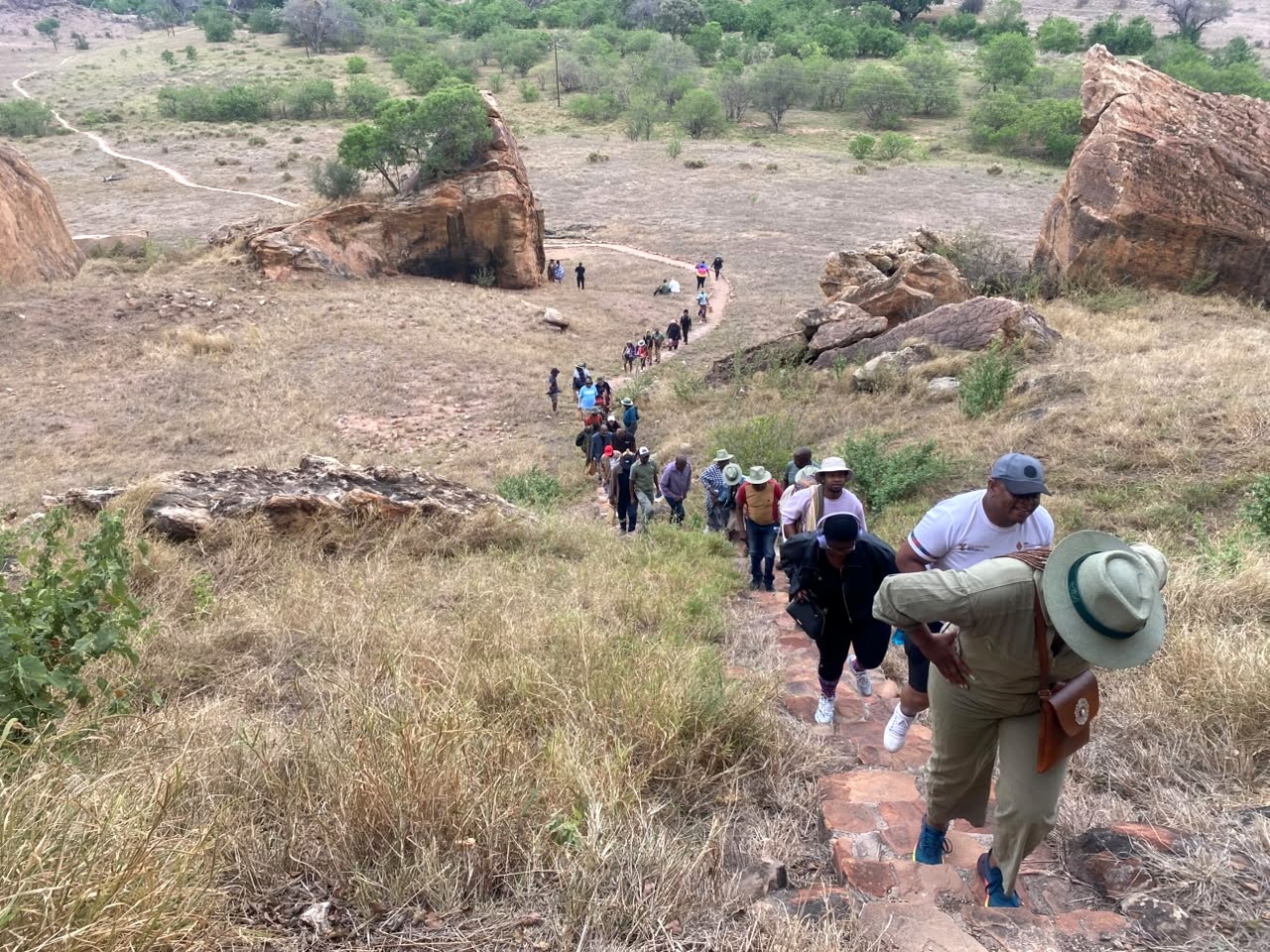
Standing on Mapungubwe Hill for the first time, I found myself thinking about the people who had walked these paths centuries before us. Around me was a rocky landscape that had witnessed the rise of an ancient African kingdom.
It is one thing to read about Mapungubwe in history books, but being there brought the story closer. The hill was no longer just a place associated with archaeological discoveries, it was a place where people had lived, built a society and left traces of their existence.
As we made our way around the hill, tour guide Leonard Luula brought some of that history to life. He pointed out areas associated with the kingdom’s royal court and explained the discoveries made by archaeologists, including burial sites, pottery fragments, beads and gold artefacts. His explanations helped me picture the lives of the people who once occupied the settlement and the society they had built.
But the longer I listened, the more I realised that there was much more to Mapungubwe than what could be seen on the hill. The archaeological remains tell part of its story, but the memories, traditions and knowledge held by descendant communities offer another way of understanding the place. They also bring difficult questions into the present, particularly about the treatment of ancestral remains, whose histories are documented and who gets to have a say in preserving this heritage.
These questions were central to SANParks’ Mapungubwe The Beginning Lecture Series in Limpopo. Through conversations with descendants, cultural representatives, academics and conservation practitioners, I began to understand that preserving Mapungubwe is not simply about protecting an ancient site. It is also about recognising the people connected to it and ensuring that their stories and knowledge remain part of its history.
Walking through the remains of an ancient kingdom
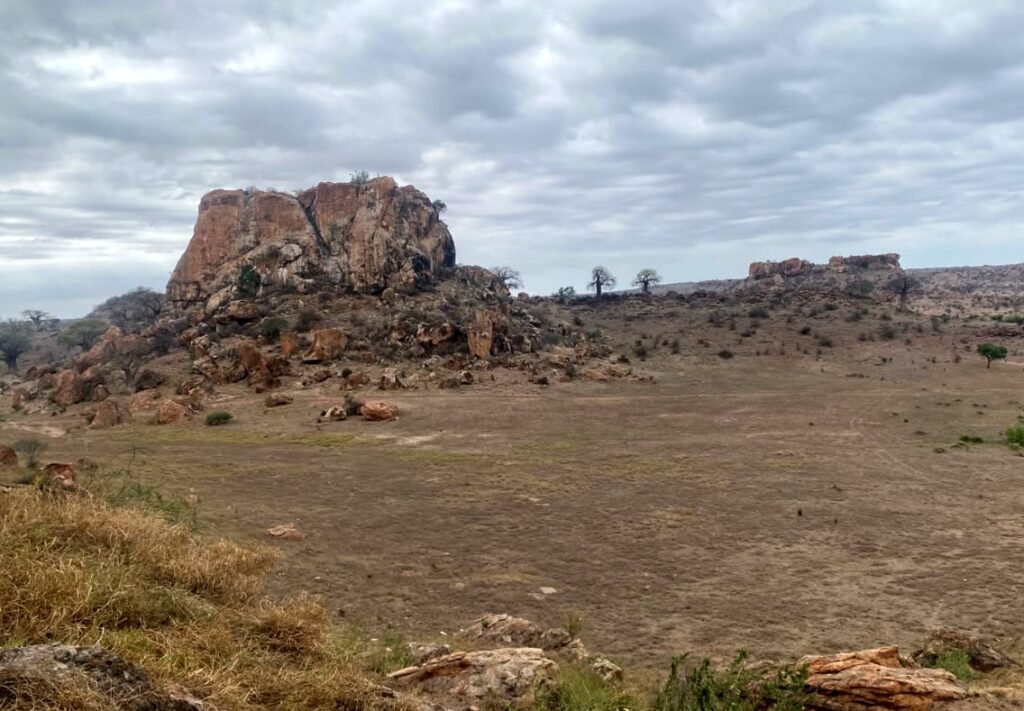
As we moved around Mapungubwe Hill, Luula explained how the discoveries made there have helped researchers piece together the lives of the people who once occupied the kingdom.
“This is the main area of Mapungubwe where you will find the king,” Luula told visitors as he pointed out the section associated with the royal court.
He explained that the hill stretches across a much larger area than the section excavated by archaeologists, meaning the discoveries made so far offer only part of the picture of life at the settlement. He also pointed out a stone enclosure associated with the king’s court, explaining that access to this central area would have been restricted to certain people.
It was as he spoke about the burial areas that the history of the hill became particularly striking. Luula recalled that approximately 23 human remains had been uncovered in an area believed to have been a cemetery.
Three individuals, two men and a woman, were found inside a large clay pot in positions that appeared to suggest they had been sitting or kneeling. Other remains were found lying on the ground, with containers placed over them.
The difference in how the individuals were buried raised questions about their status and the practices of the society that once lived there.
Luula suggested that the three individuals may have held a special position in the community, possibly within the royal family. He even raised the possibility that one of the men could have been the king.
“Maybe one of those men be the king himself?” he asked.
The identities and status of the individuals have not been established by Luula’s account, so the possibility that one was a king remains an interpretation rather than a confirmed archaeological finding.
Luula also referred to gold artefacts, pottery fragments and beads discovered at the site. These objects, together with the burial sites and other archaeological evidence, help researchers understand the material culture and social organisation of the people who lived here.
Mapungubwe flourished between approximately AD 900 and 1300, becoming an important centre of political power and trade in southern Africa. According to UNESCO, it became the largest kingdom in the subcontinent before its decline. Its position at the confluence of the Limpopo and Shashe rivers connected it to trading networks across southern Africa and towards the Indian Ocean.
The Mapungubwe Cultural Landscape was inscribed on the UNESCO World Heritage List in 2003. The protected property covers approximately 28,168.66 hectares.
Standing on the hill and listening to Luula explain these discoveries made me realise how much of the kingdom’s history has been pieced together from what remains. The archaeological evidence tells us about trade, burial practices and social organisation, but it cannot tell every part of the story.
Beyond the objects and remains, another part of Mapungubwe’s history survives through the memories, oral traditions and cultural practices of the communities connected to the area.
The stories that live beyond the hill
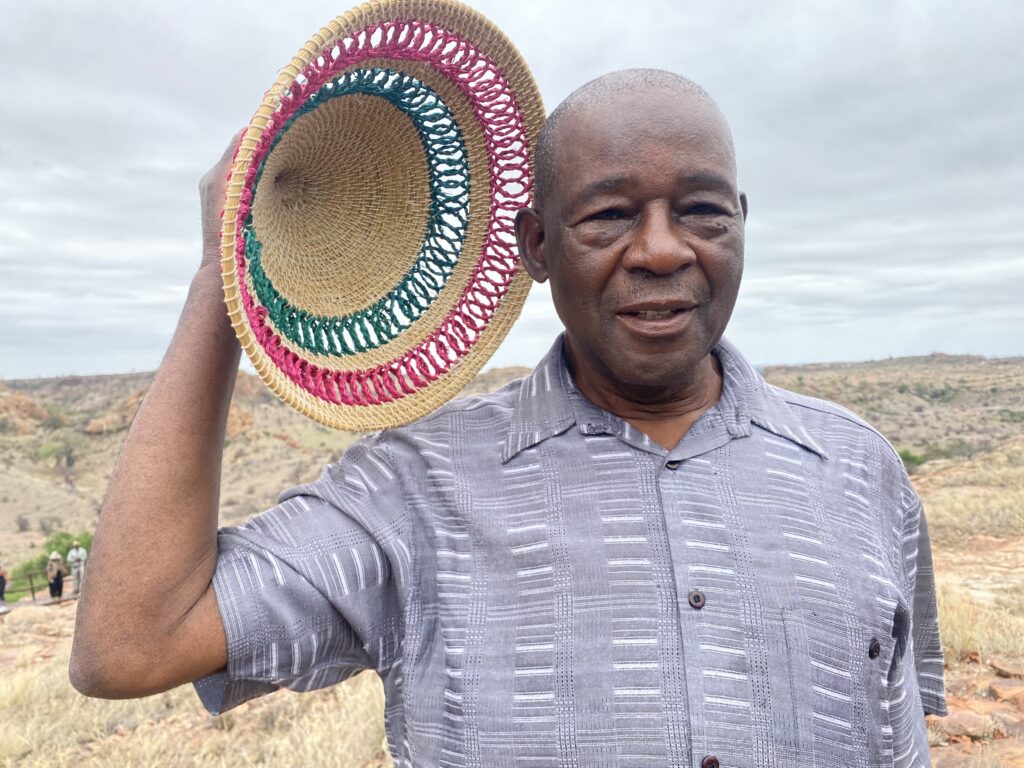
For Nchabeni Chance Masebe, Mapungubwe is connected to more than the archaeological remains visitors come to see.
Masebe, who said he represents the Machete family and is involved in a forum for descendants, shared family stories connected to the surrounding landscape. His connection to the area comes through his mother, and he grew up nearby.
He recalled a time when there was no school close to where he lived, meaning children had to travel to Musina to attend classes. His account brought the surrounding communities into the story, showing that Mapungubwe is not only a place associated with an ancient kingdom but also part of the lives and memories of people who live in the area.
One of the stories passed down through his family concerns Mbambe pool, near the mountain. According to the oral account he shared, the pool was associated with the punishment of people accused of serious wrongdoing.
Masebe also mentioned pools known as Masubelele, Masibundi and Masidopye, describing traditions connected to the landscape. These accounts have not been independently verified, but they illustrate how knowledge about a place can be preserved through stories passed from one generation to another.
When asked to explain more about some of the traditions associated with the pools, Masebe declined, saying: “I cannot disclose that. Secret of women.”
His response was a reminder that not all cultural knowledge is necessarily meant to be shared publicly. Preserving heritage also requires respecting the people who hold that knowledge and recognising that they have a say in how their stories are told.
Chief Livhuwani Matsila similarly called for greater recognition of African heritage and the communities connected to it.
“The confluence of rivers is not just a confluence of water. It’s a confluence of cultures, traditions, practices, and spirituality,” Matsila said.
His words offered another way of understanding Mapungubwe: not simply as an archaeological site, but as a place where history, culture, spirituality and community connections meet.
For descendant communities, preserving Mapungubwe also means ensuring that their histories are not lost or separated from the place to which they belong.
The question of ancestral remains is not settled
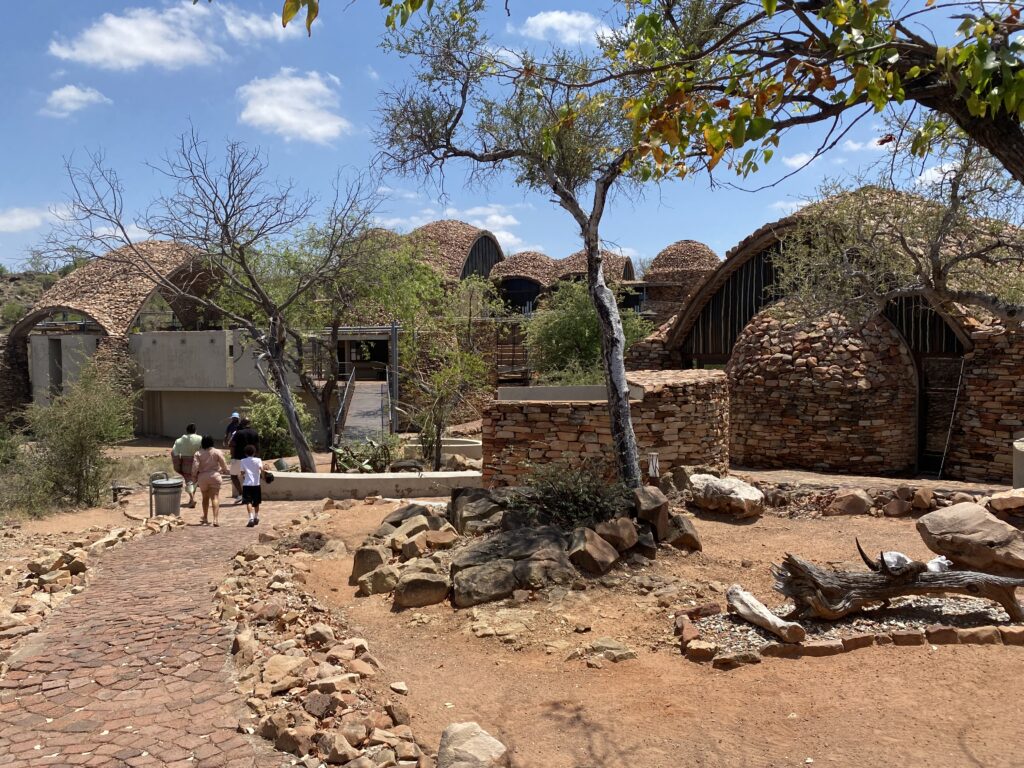
One of the most significant issues raised by Matsila concerned human remains excavated at Mapungubwe during the apartheid era.
He said 143 ancestral remains were reburied in November 2007 following a process involving descendants. He described the reburial as an important step towards restoring dignity to the people whose remains had been removed.
“It was about restoring our dignity, reclaiming our history, ensuring that our forefathers are treated with respect and dignity,” he said.
However, Matsila indicated that questions remain about whether the information provided to descendants at the time accurately accounted for all the remains that could have been available for reburial.
“We did not trust the integrity of the information that was provided to us,” he said.
He warned that another phase of reburial might be necessary, although he could not confirm when it would happen or how many additional remains might be involved.
Matsila said the descendants wanted the history of the reburial process to be properly documented so that future generations could learn from the experience.
His remarks raise questions about the records held by institutions involved in archaeological research and the information available to descendants. They also highlight the importance of consultation when decisions are made about ancestral remains.
The details of any possible second reburial process would need to be confirmed with the relevant institutions. Matsila’s account, however, makes clear that the work of preserving Mapungubwe’s heritage involves addressing past practices as well as protecting the physical site.
The question is not only what archaeological discoveries can teach researchers, but also how the people whose ancestors are part of that history are treated today.
Keeping heritage alive through language
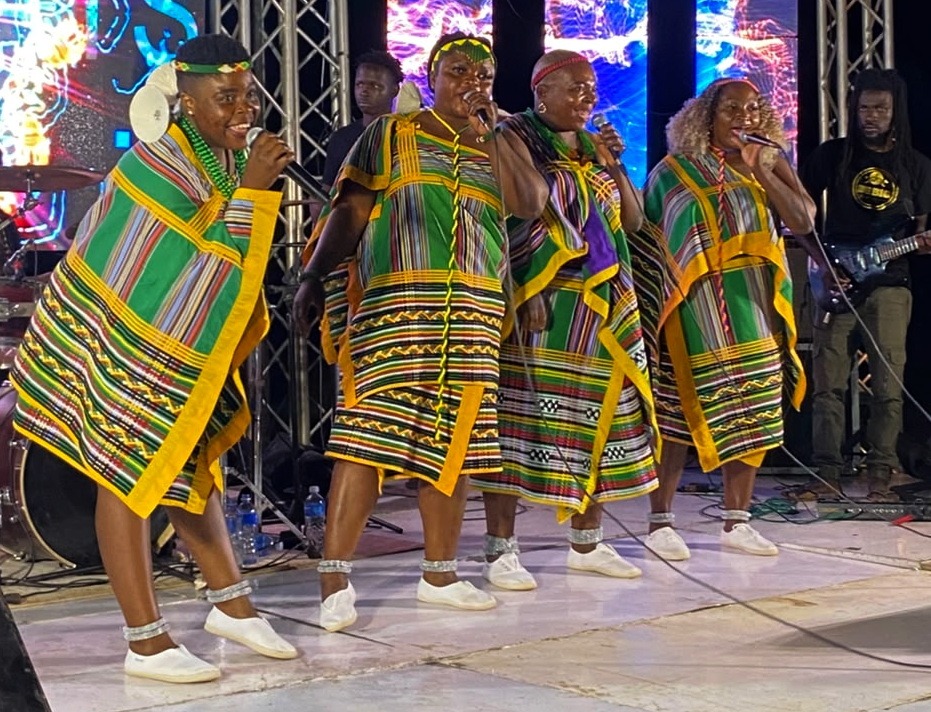
Preserving Mapungubwe’s heritage also means recognising the role of African languages in keeping cultural knowledge alive. This was explored by Professor Mkhacani Thomas Chauke of the University of Venda’s Department of African Languages during the lecture series.
In his presentation, Exploring the Role of African Languages in Nature Conservation: Myth or Reality?, Chauke examined how language connects people to their cultural identity and the natural environment.
“African languages serve as vital tools for articulating the deep connections between cultural identity and the natural world,” his presentation states.
His contribution added another perspective to the discussions about preserving Mapungubwe. While archaeological discoveries help researchers understand the kingdom’s history, language can preserve knowledge about the landscape, plants, animals, traditions and the relationship between communities and their surroundings.
This knowledge is often passed from one generation to another through names, stories and everyday conversations. When languages are overlooked or no longer passed on, some of the knowledge connected to places such as Mapungubwe can also be lost.
Chauke’s presentation highlighted the need to recognise African languages in conservation and in spaces where knowledge is shared, including education and broadcasting.
His contribution showed that protecting a heritage site involves more than looking after its physical remains. It also requires recognising the languages and cultural knowledge through which communities understand and relate to the land.
At Mapungubwe, language and oral traditions provide another way of understanding the landscape alongside archaeology. They do not replace scientific research, but they can add context and perspectives that might otherwise be missed.
What preserving Mapungubwe means today
Looking back on my visit, Mapungubwe came to represent more than the remains of an ancient kingdom. The hill holds archaeological evidence of a society that flourished centuries ago, but the stories shared during the lecture series showed how its history continues through descendant communities, cultural traditions and the languages used to pass on knowledge.
Preserving this heritage means protecting the physical site and documenting its discoveries. It also means listening to descendants, respecting the knowledge they choose to share and addressing concerns about how ancestral remains have been treated.
The questions raised by Chief Livhuwani Matsila show that some parts of this work remain unresolved. Professor Mkhacani Thomas Chauke’s presentation highlighted the role of African languages in keeping cultural knowledge alive, while Nchabeni Chance Masebe’s stories demonstrated how memories of a place can continue beyond what is recorded in official accounts.
My visit also showed how interest in Mapungubwe can support businesses in the surrounding area. During the lecture series, accommodation providers in and around Musina were fully booked, and I had to travel approximately 30 kilometres to find an accomadation. Caroline Ramautswa Azwidovhiwi, a receptionist at Dei Gratia Guest House, confirmed that the establishment was fully booked. She said the busy weekend benefited its restaurant, increased purchases from local suppliers and required additional casual staff.
She added that organisers could help more local businesses benefit by announcing event dates earlier and sharing accommodation lists with delegates. While the event’s total economic impact could not be established, the experience showed how visitors can create demand for accommodation, food, transport and other local services.
Statistics South Africa reported that tourism contributed 4.9% to the country’s gross domestic product and supported 953,981 direct jobs in 2024. Although these national figures do not measure the specific contribution of the lecture series, they provide context for the role tourism can play in supporting livelihoods.
Leaving the hill, I was reminded that a place can tell its story in different ways. Some of it is visible in the archaeological remains; some is carried through the voices of people whose families have connections to the area; and some still needs to be documented, questioned and understood.
Mapungubwe’s heritage cannot be preserved through the protection of stone, pottery and burial sites alone. It also depends on how its history is recorded, how its descendants are recognised, how cultural knowledge is passed on and whether the communities around it can benefit from the interest it attracts. – news@mukurukuru.co.za

Be First to Comment