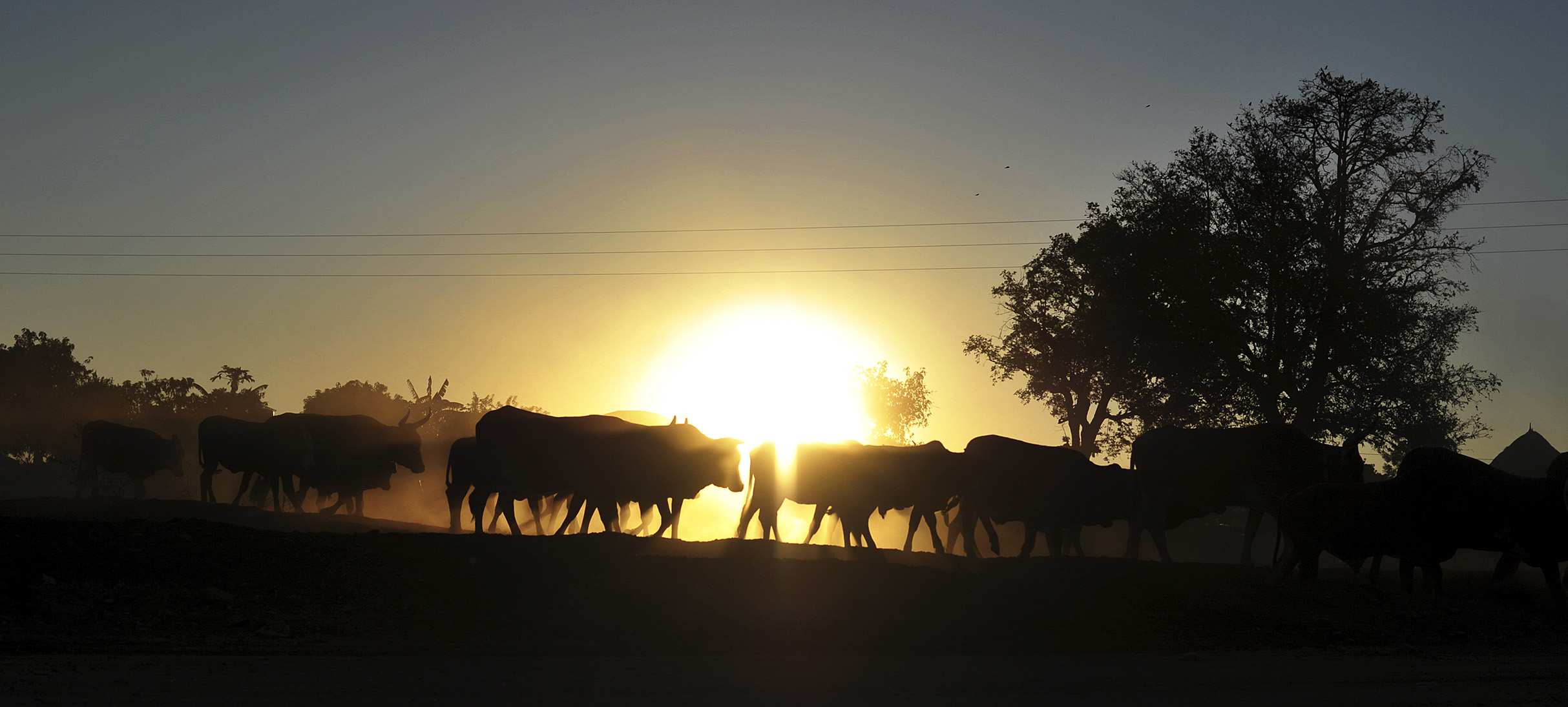
A cattle farmer can spend years building a herd, only to lose a large part of it in one night. In some rural communities, livestock is more than an asset. It pays school fees, puts food on the table and provides families with an income when formal employment is difficult to find.
The loss of cattle can also leave farmers with little to fall back on, particularly those who depend on livestock as their main source of income.
This was among the issues highlighted in a recent Limpopo High Court judgment involving farmer Lesetja Rakutu Mokgotho, who was sentenced to an effective 10 years in prison after his appeal against convictions for stock theft and fraud was dismissed.
The case dates back to September and October 2018, when cattle belonging to two farmers, Erasmus Kwena Mashishi and Abel Mabusha Matlatla, went missing from their farms in the Waterberg area.
The investigation eventually led the owners to farms where their animals had been sold. Some of the cattle were identified through their brand marks and ear tags.
The court heard that Mokgotho had sold the animals to other farmers with whom he had previously conducted business. One buyer testified that he had paid R76 448 for 13 cattle sold by Mokgotho, while the animals were later identified as belonging to Mashishi.
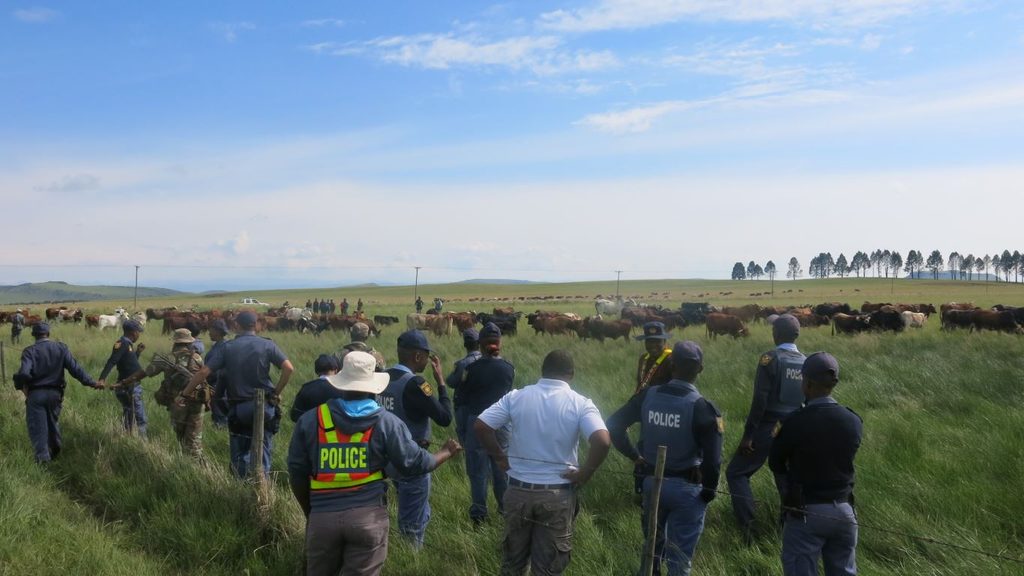
In the second incident, 24 cattle belonging to Matlatla were reported missing. The animals were later traced to different farms where they had been sold.
Mokgotho denied stealing the animals, but the High Court found that the evidence supported the State’s case. Although nobody had witnessed him physically removing the cattle, the court found that the evidence linking him to their sale was sufficient to sustain the convictions.
The court also found that he had failed to provide the required brand mark certificates during the transactions.
His original 15-year sentences for the two stock theft convictions were reduced to 10 years each, with a three-year sentence for fraud. The sentences run concurrently, leaving him with an effective 10-year prison term, backdated to 10 November 2022.
The case shows how livestock theft can move beyond the disappearance of animals and involve the sale of stolen property through established farming relationships.
But the problem is not limited to courtrooms.
The losses continue long after the animals disappear
Limpopo farmers have repeatedly raised concerns about livestock disappearing from grazing fields, kraals and farms, with some communities having to organise their own searches when animals go missing.
In Ga-Mashashane, outside Polokwane, livestock farmer Masenya Rafapa lost 11 cows in one day.
He estimated that the animals could have brought him more than R110 000 if he had sold them.
“I have lost eleven cows and by estimation, had I sold them, I would have made over R110 000. This money would have been used to support my family financially,” Rafapa said.
His experience illustrates the economic consequences of losing livestock, particularly for families that depend on farming rather than a monthly salary.
The problem has also affected farmers in Vhembe.
In 2023, farmers around Tshitale raised concerns after 10 cattle were found slaughtered in a maize field in Tshivhangani.
One of the affected farmers, Edward Mulaudzi, lost five cattle.
“When we report these cases, the police don’t act fast, and the perpetrators are never arrested,” he said.
Another farmer, Hangwani Rambau, raised concerns about the lack of feedback after reporting livestock theft cases to the police.
These complaints point to a problem that extends beyond the initial theft. Farmers also need to know whether investigations are progressing, whether stolen animals are being traced and whether those responsible are being brought to court.
The figures also show the scale of the problem.
During the fourth quarter of the 2024/25 financial year, between January and March 2025, Limpopo recorded 2 946 stolen cattle, 463 sheep and 2 078 goats in police crime statistics.
Only 306 of the stolen cattle were recovered during that period. The recovery figures for sheep and goats were 112 and 378 respectively.
The numbers raise questions about how many livestock owners are left without their animals and how much of the financial loss can actually be recovered.
The Limpopo Department of Agriculture and Rural Development also recorded approximately 49 006 livestock stolen during the 2023/24 period. This included 13 427 cattle, 22 845 sheep and 13 094 goats.
These figures cover different reporting periods and should not be added together, but they demonstrate the scale of livestock theft affecting the province.
Branding cattle is not enough if farmers are not supported
One of the recurring concerns raised by police and agricultural organisations is the identification of livestock.
Brand marks, tattoos and ear tags help establish ownership when animals are stolen, sold or recovered. Without proper identification, investigators can struggle to establish who owns an animal.
Limpopo police spokesperson Malesela Ledwaba has warned that the lack of identification marks makes investigations difficult. Thieves can also place their own marks on animals after stealing them, making it harder to trace their original owners.
During an awareness session in Ga-Nkwana in the Sekhukhune East Agroecological Zone, Douw Pelser, chairperson of the Provincial Stock Theft Prevention Forum, identified brand marking as one of the first lines of defence against livestock theft.
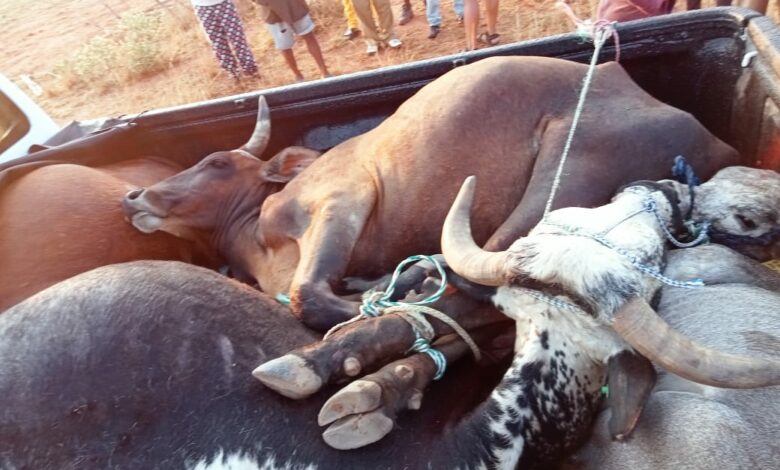
The measures promoted included keeping updated livestock registers, securing kraals, maintaining fences and controlling access to farms.
Farmers were also encouraged to work together through neighbourhood watch groups, share information through communication networks and report suspicious movements of livestock.
The Red Meat Industry Services (RMIS) introduced a pilot programme in 2024 to support communal and small-scale farmers in Limpopo.
Supported through AgriSeta funding, the programme worked with farmers at four dip tanks and promoted animal identification through branding and ear tagging.
The initiative followed concerns raised by the National Stock Theft Prevention Forum about the need to improve awareness of livestock identification and theft prevention among smaller farming communities.
This is particularly important in areas where cattle are kept in communal grazing fields, sometimes far from their owners’ homes. Farmers may not immediately notice when animals disappear, making it difficult to establish when and where the theft happened.
However, awareness alone cannot address every challenge facing farmers. Identification needs to be accompanied by access to services, consistent policing and cooperation between communities, buyers and authorities.
The question of accountability remains
Limpopo police have previously acknowledged the seriousness of the problem.
In December 2024, police spokesperson Brigadier Venetia Masingi said the province was strengthening its Stock Theft Unit by increasing its personnel and vehicles.
The announcement followed concerns from communal farmers in Molemole and Blouberg, who said they had lost livestock to theft and slaughtering.
Jonathan Kubjane, chairperson of the Molemole Farmers Association, explained how deeply livestock losses affected households in rural communities.
“Most of the people around here are not working, they depend solely on animals especially cattle. This business feeds them. It takes their children to school, so it is their bread and butter, it is a very serious economic impact to these people,” Kubjane said.
He added that losing 50 cattle could effectively put a farmer out of business.
The concern is also about the market into which stolen livestock can disappear. Animals can be moved between farms, sold to buyers or slaughtered before their owners have an opportunity to trace them.
In August 2025, the Marble Hall Stock Theft and Endangered Species Unit conducted inspections at butcheries as part of efforts to address illegal meat distribution. Eight goat carcasses and two cow heads were seized during the operation.
Kgalape Puoane, secretary of the Barui ba Sekhukhune Anti-Livestock Theft and Prevention Forum, argued that enforcement should also take into account farmers who have not complied with branding requirements.
“The unbranded animals don’t necessarily mean they are ownerless. It could be that the farmer failed to comply with branding regulations. Police should engage farmers and circulate skins of slaughtered animals for identification,” Puoane said.
His comments raise an important issue: how can authorities distinguish between animals that genuinely have no identification and animals whose ownership is being concealed?
The Mokgotho judgment demonstrates that buyers and sellers cannot rely on previous business relationships as a substitute for proper livestock documentation. Buyers need to establish ownership before paying for animals, while farmers must keep their identification records up to date.
But there are also questions that require answers from those responsible for fighting stock theft. Are the additional police personnel and vehicles announced in 2024 making a difference? Are farmers in communal areas receiving enough support to brand and register their animals? How many reported cases are resulting in arrests, convictions and the recovery of livestock?
For families whose cattle are their main source of income, recovering a stolen animal is not simply about getting property back. It can mean being able to continue farming, support children and maintain a livelihood.
The challenge is not only to punish those found guilty of stealing livestock, but to prevent more farmers from losing animals they have spent years raising. – news@mukurukuru.co.za

Be First to Comment