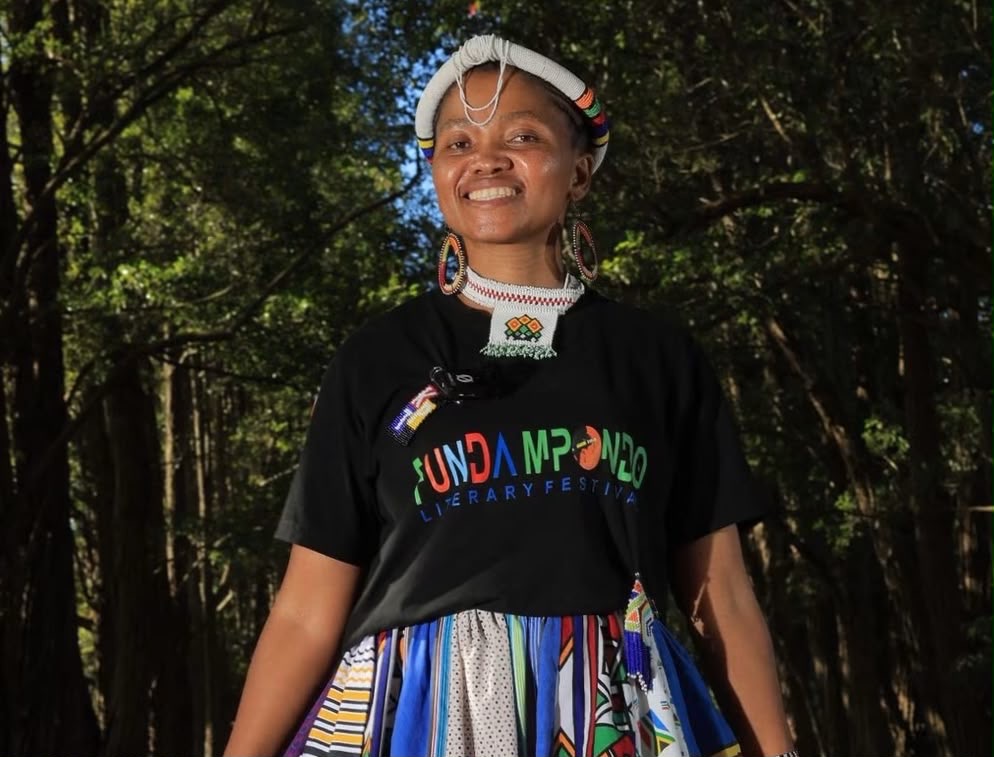
What began with a vision written on a whiteboard in 2022 has grown into an international literary festival bringing together stories, languages, heritage, artists and people from across Africa and beyond.
In Luqoqweni village in the Eastern Cape, Nomawele Njongo is preparing to welcome the world to Mpondoland as the fifth edition of the Funda Mpondo International Literary Festival takes place from 1 to 4 September 2026.
The four-day festival will bring together writers, academics, artists, young people, cultural practitioners and visitors from South Africa and other parts of the world.
This year’s festival carries the theme African Stories in Conversation with the World.
The words come from a philosophy that has followed Njongo through much of her work, Let Africa Tell Her Stories.
She wants African people to tell their stories in their own voices while protecting the history, language and cultural knowledge carried within them.
That vision has turned a festival that started with only R3 000 into a growing meeting place for African storytelling.
It started with a whiteboard and R3 000
On 29 June 2022, Nomawele Njongo wrote the idea of a literary festival on her whiteboard. She had R3 000 in her pocket and a vision to create something Mpondoland had never had before. After seeing literary festivals elsewhere, she wondered why her own community did not have one.
She decided to fill that gap herself.
Less than three months later, on 8 September 2022, coinciding with International Literacy Day, the first Funda Mpondo Literary Festival was held.
Njongo had expected the festival to serve people in the region, but the response went beyond what she had imagined. About 196 people attended, with visitors coming from various parts of South Africa.
The festival has continued to grow since then. What started as a two-day event became three days in 2023 and has now expanded to four days.
Its reach has also moved beyond South Africa, with participants and contributors coming from countries including Malawi, Ghana, Kenya, Lesotho, and Australia.
The festival has also evolved beyond books.
It now brings together literature, language, history, heritage, music, film, academia, poetry, and conversations about the value of African stories.
Four days of stories, language, and heritage
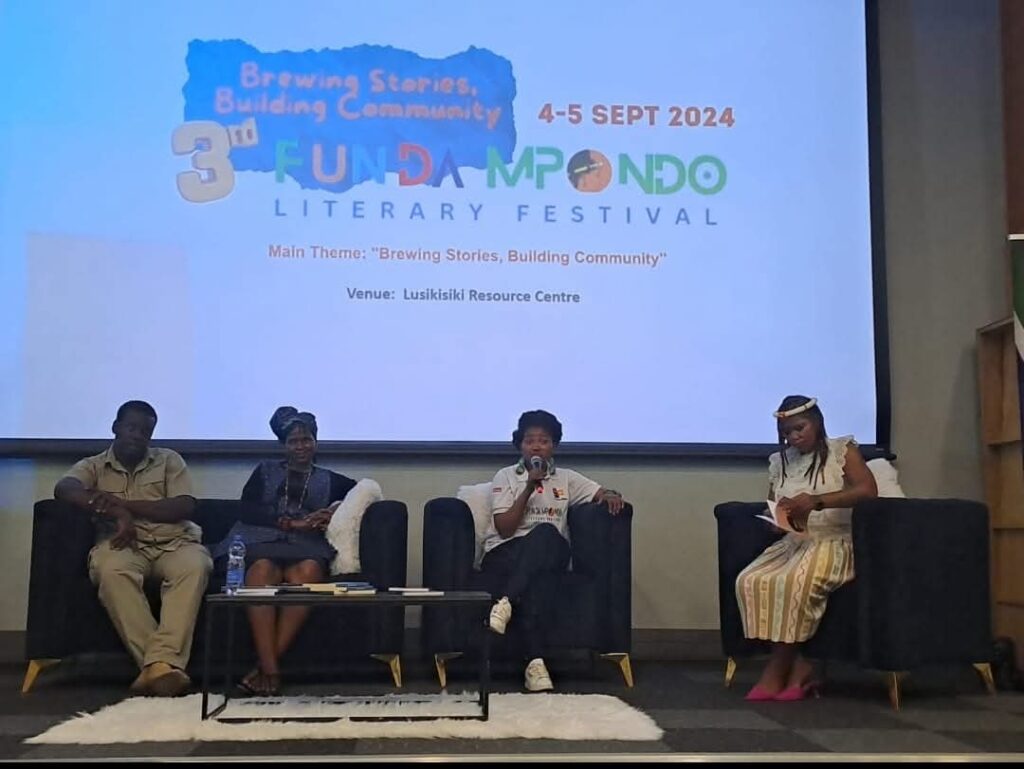
The first day will focus on research, with a three-day film and television scriptwriting programme also beginning in Lusikisiki.
The second day belongs to the language, history, culture, and heritage of AmaMpondo.
An isiMpondo language session will be held alongside the pre-launch of an isiMpondo dictionary and a review of a book on Mpondoland’s history.
The programme will also feature an Imbola indigenous performance and an AmaMpondo documentary screening.
A sign-language interpreter will be available as part of the proceedings.
The third day moves into conversations about the creative sector, citizenship, and nation-building.
The National Arts Council will hold a guidance workshop aimed at helping people understand how to access funding in the creative sector.
A children’s corner will introduce younger members of the community to the festival, while an active citizenship and nation-building programme will bring another dimension to the gathering.
A nation-building poetry competition, supported by Brand South Africa, will also form part of the day.
The auditorium will host several panels bringing together voices from different creative fields.
One of the main conversations is Bank Your Story, a multidisciplinary art dialogue bringing together people from literature, academia, culture, film, and music.
The discussion will explore what connects these different creative space, the story.
Other panels will ask how the world banks on African stories and whether African storytellers are receiving help from the value of those stories.
Another will look at why corporates should rely on African stories rather than simply buy into them.
A further discussion will examine political will and the economy of storytelling, with political leaders expected to take part.
Participants from Kenya, Ghana, Malawi, Lesotho, and Australia are expected alongside South African contributors.
The final day will return to books, with launches, reviews, and exhibitions.
Authors from Mpumalanga, Limpopo, Gauteng, KwaZulu-Natal and the Eastern Cape are expected to participate.
Building the festival, one partnership at a time
Keeping the festival alive has not been an easy journey. Much of the work has rested on Njongo’s shoulders, without a large permanent team behind her.
There are times when she jokes that she needs three versions of herself at once, one to call people and send invitations, another to handle profiling and another to prepare presentations.
Over the years, the demands of the festival have pushed her to learn skills she did not have when she started.
She taught herself graphic design so she could create the festival’s posters. She also designed the festival logo herself, drawing from the colours of AmaMpondo culture because she wanted the festival to carry the identity of the people and the land where it was born.
Even the first festival banner became part of that learning.
When a supplier produced a design that did not look the way she had imagined, Njongo asked them not to print it. She designed it herself instead, even though it was her first attempt.
Her belief is simple, every expert was once an amateur.
That same spirit has shaped how she has built support around Funda Mpondo.
Njongo does not walk into an organisation simply asking it to fund the festival. She first looks at what the festival needs, studies what the organisation does and then finds where the two can meet.
“I do not approach partners asking them to help me. I approach them saying, Let us see how we can work together.
That way of thinking has brought many hands into the festival.
The Eastern Cape Provincial Arts & Culture Council is the main partner behind this year’s edition, with Walter Sisulu University, O.R. Tambo District Municipality, Ingquza Hill Local Municipality and Brand South Africa’s Play Your Part initiative also part of the 2026 partnership network.
https://www.brandsouthafrica.com/play-your-part/?utm_source=chatgpt.com
Other partners include Sasol, Magwa Tea, the Lusikisiki IsiMpondo Language Board, the Eastern Cape Department of Education, Lusikisiki Lindaba, Message Media Film, Inkonjane Community Radio, Pondoland Times, Exclusive Furniture, Eastern Cape Post and Publish’d Afrika Magazine.
Some partnerships have also carried the festival through earlier editions. The National Heritage Council supported the festival during a previous edition, while businesses such as SPAR and Boxer have also contributed to its growth. SANRAL previously aided with transport, helping move guests between accommodation, the festival venue, and airports.
https://www.nhc.org.za/?utm_source=chatgpt.com
The partnerships stretch beyond money.
A heritage organisation can find a place within the heritage programme. A university can contribute knowledge and academic voices. A transport partner can help people reach the festival. A media organisation can carry its stories beyond Mpondoland.
Even Magwa Tea, rooted in the heritage of the area, has become part of the festival experience, with tea served to festival attendees.
This is how Njongo has kept the festival moving, not waiting for one organisation to carry the whole load, but finding different hands to carry various parts of the work.
She has also chosen not to apply for a National Arts Council grant while serving on its literature advisory panel, because doing so would create a conflict of interest.
Instead, she continues to build through collaboration.
One festival. Many hands. One story.
A village economy grows around the festival
Visitors do not only arrive with an interest in books, culture, and storytelling. Their arrival also brings activity to the local economy.
People travelling to the festival need places to stay, transport to move around and food during their visit. This creates work for local accommodation providers, transport operators, and caterers, while photographers and videographers also get opportunities to provide their services.
Young people are brought in and paid to aid during the festival. Last year, about 11 people were involved in providing different services.
In the early years, some people supported the festival simply by volunteering their time. Community radio stations also travelled to the area and broadcast live from the festival, helping take the event beyond the people gathered at the venue.
But perhaps one of the clearest signs that the festival is growing comes from the people who keep coming back.
Some visitors who attended previous editions have already bought their flights to return this year. Guests from Malawi are returning, while people from various parts of South Africa continue to make the journey to Mpondoland.
Njongo pays attention to those familiar faces.
Their return tells her that the festival is becoming more than an annual gathering. People are making a connection with the place, the stories, and the experience, and they want to come back.
Something is slowly taking root.
Building something while life keeps happening
The work behind Funda Mpondo has not always happened during easy seasons.
While preparing one of the festival editions, Njongo received devastating news. Her sister had been hit by a car and was in a coma. The festival was only days away, but the programme had already been planned and people were expecting to arrive.
Njongo continued with the work.
She did not tell people what she was going through until the final day of the festival. Her sister died 20 days later.
Last year brought another difficult period. Njongo’s teenage son became seriously ill after going to initiation school. He spent three weeks in hospital and, at one point, needed oxygen.
Even then, the festival preparations did not stop.
She would attend meetings, present proposals, work on securing support and carry her laptop with her before going to the hospital to see her son. At night, she returned to the work that still needed to be done.
During the same period, she produced a 33-page traditional magazine from beginning to end, handling the writing, curation, and design herself.
The experiences tested her, but they also revealed something about the way she carries responsibility.
Njongo says people may not always see what someone is carrying because life still expects them to show up and do what needs to be done.
Her philosophy has grown from those experiences: never hold your future hostage because of what is happening in the present.
The woman behind the vision
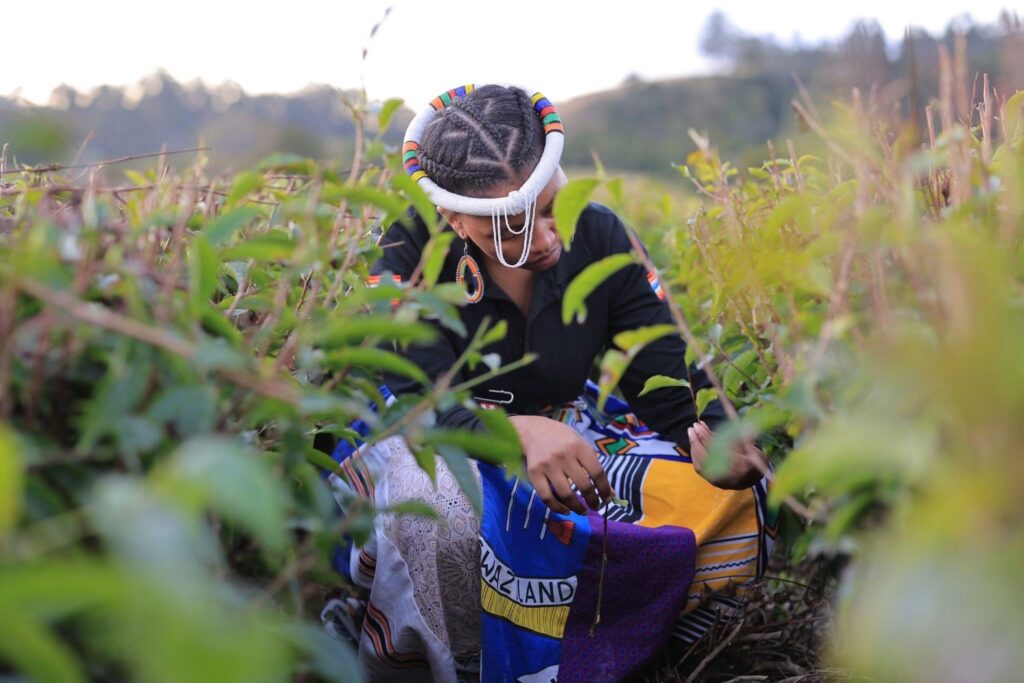
The story of Funda Mpondo cannot be separated from the woman who started it.
Njongo was born in Lusikisiki on 5 August 1985 and grew up between Lusikisiki and Durban. She is also a twin.
Her relationship with writing began before she even went to school.
While her twin sister and friends were playing, Njongo would use her forefinger to write in the air. At home, she was called umabalani — the one who writes.
That early connection with words stayed with her. As a young person, she became involved in student activism, poetry, short-story writing, school leadership, and community work.
At 21, while working at Parliament, she experienced gender-based abuse. Speaking out changed the course of her life. She later left the institution and went through years of unemployment while dealing with the effects of what had happened.
Healing was not immediate.
She says she eventually had to learn to forgive, accept what she could not change and stop allowing her past to decide what her future would become.
“I have no power over the past. I cannot undo the past. I cannot erase the past. I have power over the future.”
Her return to writing eventually opened another path.
She became the founding member and sole director of KwaziThina Publishers, a name connected to her two sons, Thina and Kwazi.
The boys also found their own relationship with writing. As teenagers, they wrote books of their own, an experience that later helped inspire Njongo’s work with young African writers.
Her Africa Teen Authors Book Initiative grew into a platform connecting young writers across African countries and the diaspora. She has published anthologies, supported young authors, and created opportunities for people whose stories might otherwise have still been unheard.
Her work has since taken her beyond the Eastern Cape. She has taken part in literary, cultural, and educational programmes internationally, including engagements in Italy, Morocco, and Russia. She has also received recognition through initiatives such as Brand South Africa’s Play Your Part, the Voice of Heritage Awards, and the Muhler Forte African Literature Awards.
Yet much of the work still happens from her home in Luqoqweni.
Let Africa tell her stories
Njongo says she has always wanted to make an impact. As a young woman, she did not know what that impact would look like, but she knew she wanted her life to mean something beyond herself.
Today, she sees art as one of the ways she can make that contribution.
She believes stories shape communities, preserve memory, and help build nations. That belief sits at the heart of Funda Mpondo.
The festival remains free this year because Njongo wants people in the community to experience literature, culture and heritage without the cost of a ticket becoming a barrier.
Children have a special place in that vision.
She wants young people to encounter books, culture and storytelling while they are still young, believing that children who are empowered early can grow into people who understand their own worth and the value of where they come from.
The bigger dream is therefore not simply to hold another festival.
It is to leave behind people who know their stories, value their heritage and are confident enough to tell those stories in their own voices.
Njongo’s own journey began with R3 000, a whiteboard and an idea that existed only in her mind.
“Dreams do not cost money. You just must dream.”
But she also knows that dreaming alone is not enough. A dream must be walked, one small step at a time.
She calls it being stubborn with your dreams.
The little girl who once wrote invisible words in the air could not have known where those words would take her.
Today, they have become books, young authors, a publishing house, partnerships, international connections, and a festival that brings people back to Mpondoland year after year.
The idea that once sat on a whiteboard has now become something people can see, touch, and take part in. – news@mukurukuru.co.za

We await our feet to touch the blessed soil
What a beautiful & inspiring journey zIm about to witness. “Let Africa Tell Her Stories” ….. your words, your vision and the way you have stubbornly walked your dream into reality resonate deeply with me. Congratulations, Nomawele, on seeing the vision come to pass. I’m grateful that our paths have crossed, and I look forward to the possibility of collaborating and sharing space with you and other authors at the Authors Retreat in St Francis Bay next September. Here’s to many more stories, connections and possibilities.