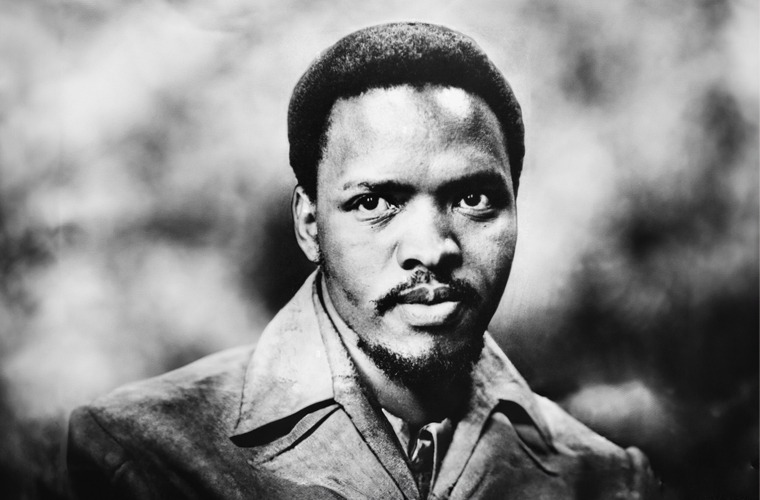
The reopened inquest into the death of Steve Biko has already been marked by a fight over legal funding, a request to subpoena a former apartheid spy and a decision by the court that could now lead the Biko family to seek the judge’s recusal.
The proceedings began this week at the Gqeberha High Court, nearly 49 years after Biko died in police custody. The inquest was reopened last year to examine whether any person’s actions or omissions amounted to a criminal offence in connection with his death.
Instead of immediately hearing evidence, the opening days were dominated by the Biko family’s legal representation and its request to have more time to prepare.
Legal funding delays start
The family entered the week without confirmed legal representation after Legal Aid South Africa found that Biko’s widow, Nontsikelelo Biko, did not qualify under its means test.
Justice and Constitutional Development Minister Mmamoloko Kubayi later approved state funding, allowing the family to secure lawyer Ngqiqo Sakhela. But Sakhela told the court that the legal team had only been appointed on Monday and needed time to work through thousands of pages of documents from the original inquest and the Truth and Reconciliation Commission process.
Some of the records are in Afrikaans and still need to be translated into English. The legal team also raised concerns that some documents from the original inquest and TRC hearings are missing.
Nkosinathi Biko, Steve Biko’s son, criticised the situation, saying the family should not have had to spend the opening day of such an important case discussing money.
He said the family’s priority was to ensure that the inquest properly examines what happened to his father.
Family wants former apartheid spy in court
The family is also pushing to have former apartheid spy Craig Williamson testify.
Sakhela has asked the court to subpoena Williamson, who worked as a spy for the apartheid government and infiltrated anti-apartheid organisations before his cover was exposed in 1980.
Williamson testified last year during the third inquest into the deaths of the Cradock Four. During those proceedings, he said he had surveilled Biko.
The Biko family believes his knowledge of the apartheid security system and his surveillance of Biko could help the court understand what happened before and after Biko’s arrest.
The family also wants witnesses who were not properly questioned during the first inquest to be considered.
This comes as the court deals with two surviving former police officers identified as persons of interest in Biko’s death, Daniel Petrus Siebert and Jacobus Johannes Oosthuysen Benecke.
Several other former Security Branch members had applied for amnesty through the TRC in connection with Biko’s death, but their applications were refused.
Judge rejects postponement
The biggest development came on Wednesday when Judge Isaac Madondo rejected the family’s request to postpone the inquest.
Madondo said the matter could not continue to be delayed because only two of the eight witnesses linked to the events surrounding Biko’s interrogation are still alive and available to testify.
He warned that their memories could fade if the case was pushed back further and said the inquest needed to hear oral evidence while the witnesses were still able to give it.
The decision has now opened another dispute between the family and the court.
Nkosinathi said the family is considering all its legal options, including an application asking Madondo to recuse himself.
He questioned the judge’s approach to the witnesses, saying the court should also hear people who can speak about the wider circumstances surrounding Biko and the apartheid security system.
“The inquest itself is a possible basis for a prosecution. And because we are dealing with elderly people, we have a diminished chance at prosecution. So the inquest is everything. It’s everything,” Nkosinathi said.
He said the family was not simply trying to delay the proceedings.
“Biko’s right to life was taken. And what we are here to do is to defend his dignity,” he said.
A death still seeking answers
Biko was arrested at a roadblock near Makhanda on 18 August 1977 after breaching a banning order that restricted his movement to Qonce, then known as King William’s Town.
He was taken to Walmer police station in Gqeberha, where he was detained by members of the apartheid Security Branch.
Biko was allegedly tortured while in custody. He was later transported, unconscious and shackled, to Pretoria in a police vehicle.
He died at Pretoria Central Prison on 12 September 1977, aged 30.
The original inquest later that year accepted the Security Branch’s version that Biko had injured himself by banging his head against a wall. No one was held criminally responsible for his death.
The reopened inquest is now attempting to examine that history again.
The next stage will focus on evidence from witnesses who could shed light on Biko’s treatment in detention and the actions of those around him.
With the family challenging the judge’s approach and pushing to bring Williamson into the proceedings, the case has already become more than a reopening of an old file.
It is now a legal battle over what evidence should be heard, who should testify and whether the court can finally establish what happened to Steve Biko. – news@mukurukuru.co.za

Be First to Comment