The death of a suspected poacher who allegedly encountered a herd of elephants in the north of the Kruger National Park this week has once again shone the spotlight on illegal incursions into the reserve and whether tourists have cause for concern. The incident comes a few months after two tourists, Dina and Ernst Marais, were allegedly murdered in the park in May.
On Friday, 11 September, two suspected poachers allegedly entered the reserve illegally in the Pafuri area. They encountered a herd of elephants and fled in different directions before losing contact. One of the men later returned home and reported his accomplice missing, saying he had heard him screaming. The missing man was later found dead about six kilometres inside the park.
SANParks received information about the suspected poachers on Saturday, 12 September. Preliminary information indicated that the pair encountered a herd of elephants while inside the park and fled in different directions, losing contact with one another.
“Preliminary information suggests that the two suspects encountered a herd of elephants while inside the Park and fled in different directions, subsequently losing contact with one another,” said SANParks Head of Communication and Spokesperson JP Louw.
The matter was reported to the South African Police Service (SAPS). With assistance from members of the local community, the suspect who had returned home was arrested.
Louw said the arrested suspect admitted to participating in the unlawful entry and accompanied SANParks rangers from the Pafuri Ranger Post to the area where the incident reportedly occurred.
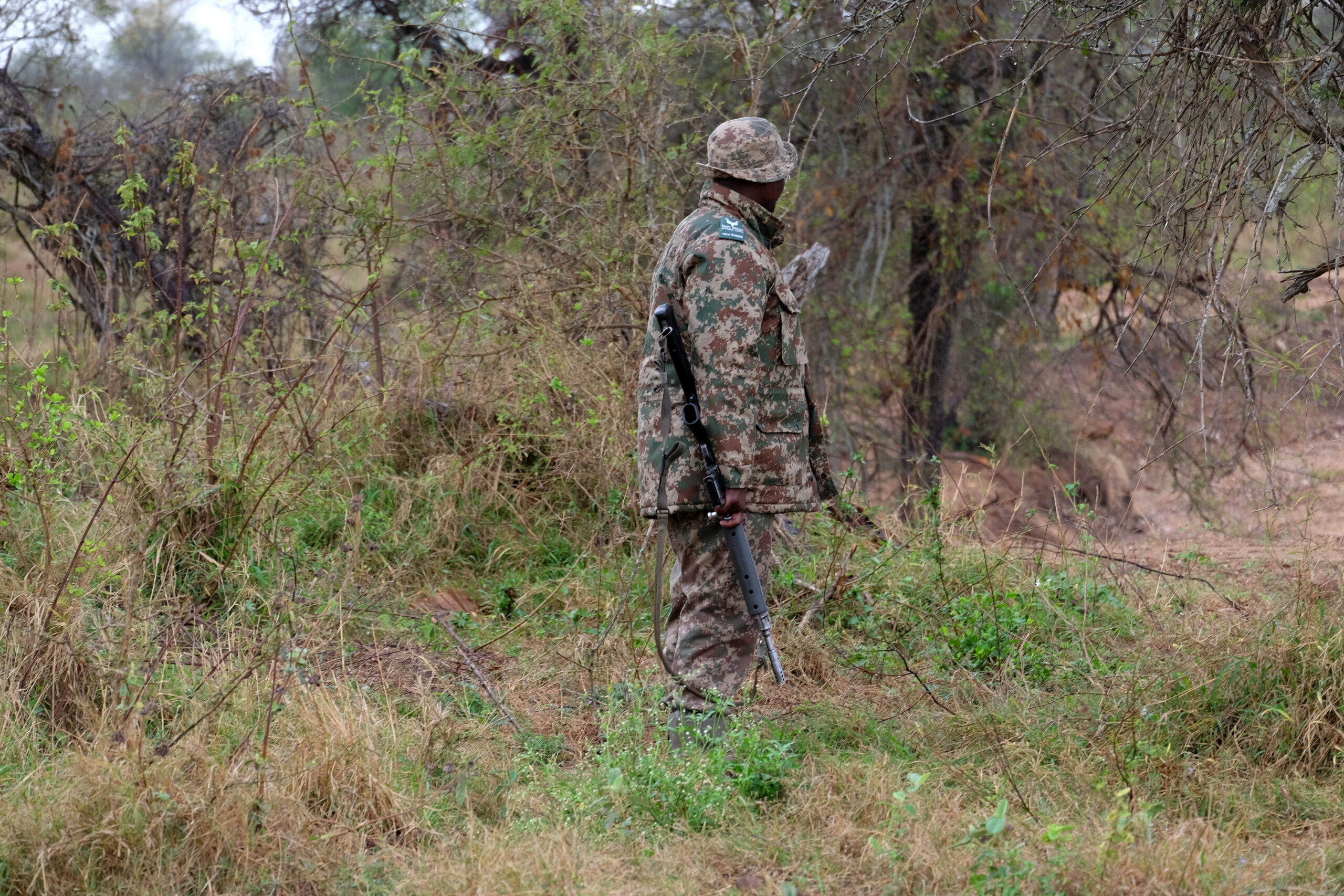
Rangers followed tracks from the Luvuvhu River for approximately six kilometres into the park before finding the body of the missing suspect.
During the search, they also found the remains of a buffalo believed to have been illegally hunted.
SAPS was informed and will conduct the necessary investigative and forensic processes.
The circumstances surrounding the suspect’s death have not yet been established. SANParks has not confirmed that the man was killed by elephants.
In its 2024\25 annual report, SANParks revealed that snaring, poisoning of lions, vultures, and cross-border incursions continue to haunt its conservation efforts.
Securing a two-million-hectare park
The case has also highlighted the challenge of policing a protected area that stretches across roughly two million hectares in Limpopo and Mpumalanga.
SANParks General Manager of Communications and Marketing at Kruger National Park, Rey T. Thakhuli, said the size of the reserve makes it impossible to have law-enforcement officers covering every part of the park at all times.
“The Kruger National Park covers about 2 million hectares of land across two provinces (Limpopo and Mpumalanga). This means law enforcement cannot cover the entire area,” Thakhuli said.
He said technology is being used where possible to help detect people entering the park illegally, while rangers continue to patrol different areas.
“Our rangers are on patrol throughout the park but as indicated, covering the entire park is impossible,” he said.
SANParks also works with other law-enforcement agencies, traditional authorities and communities living around the reserve.
Thakhuli said members of the public are encouraged to report suspected wrongdoing, pointing to the arrest in the latest case as an example of how community cooperation can assist law enforcement.
“All this has proven some level of success as it has illustrated in this latest incident – community members assisted in the arrest of the suspect,” he said.
The role of surrounding communities is also part of SANParks’ wider conservation strategy. Its 2024/25 annual report says the organisation has moved away from an earlier fortress conservation approach towards a more people-centred model that includes communities in conservation and benefit-sharing.
SANParks says it is working with neighbouring communities through co-management and benefit-sharing arrangements, while creating opportunities for small, medium and micro-enterprises through tourism-related activities, procurement and public-private partnerships.
The annual report says 1% of tourism-generated income from accommodation bookings is allocated to Corporate Social Investment projects in neighbouring communities. These include early childhood development infrastructure, food gardens, school greening projects and skills training.
Tourism is also an important part of the organisation’s ability to operate. SANParks says about 80% of its operating budget comes from ecotourism.
This means keeping national parks operational, protecting wildlife and maintaining visitor confidence are linked not only to conservation but also to economic activity in and around the parks.
SANParks’ Vision 2040 strategy seeks to strengthen this relationship through its Mega Living Landscapes approach, which brings protected areas, surrounding communities, private land and biodiversity corridors into a broader conservation model.

The organisation reported progress in several areas during the 2024/25 financial year. It achieved 86% of its annual performance targets, secured more than 28,000 hectares into protected areas, rehabilitated 28 wetlands and supplied 745 game animals to emerging game farmers.
It also reported 6,410 employment opportunities through the Expanded Public Works Programme, 263 training beneficiaries and 796 school learner groups reached through environmental education programmes.
SANParks generated R4.1 billion in revenue during the year and received an unqualified audit opinion from the Auditor-General of South Africa.
These figures show the size of the organisation’s conservation and tourism operation, but they do not remove the security challenge faced in a park as large as Kruger.
Poaching remains a serious threat
The latest rhino-poaching figures show that wildlife crime remains a major challenge despite improvements at national level.
South Africa recorded a 16% decline in rhino poaching in 2025, with 352 rhinos killed compared with 420 in 2024. Kruger, however, recorded a sharp increase. The number of rhinos poached in the park nearly doubled, from 88 in 2024 to 174 in 2025, according to figures released by the Department of Forestry, Fisheries and the Environment.
The figures show the uneven nature of the fight against wildlife crime. While national losses declined, Kruger continued to face significant pressure from organised criminal networks involved in the illegal rhino-horn trade.
South Africa’s response includes cooperation between the Directorate of Priority Crime Investigations, the National Prosecuting Authority, the Stock Theft and Endangered Species Unit and Environmental Management Inspectors, known as the Green Scorpions.
The private sector and conservation organisations are also involved in anti-poaching work, including dehorning, intelligence and community initiatives.
SANParks’ 2024/25 annual report records some positive developments in rhino conservation. Rhino numbers across SANParks’ national parks reached 3,342, exceeding the organisation’s target of 2,600.
In Kruger, dehorning remains a major part of the anti-poaching strategy. The annual report says that, for the first time in more than a decade, rhino births exceeded the combined losses from poaching and natural mortality.
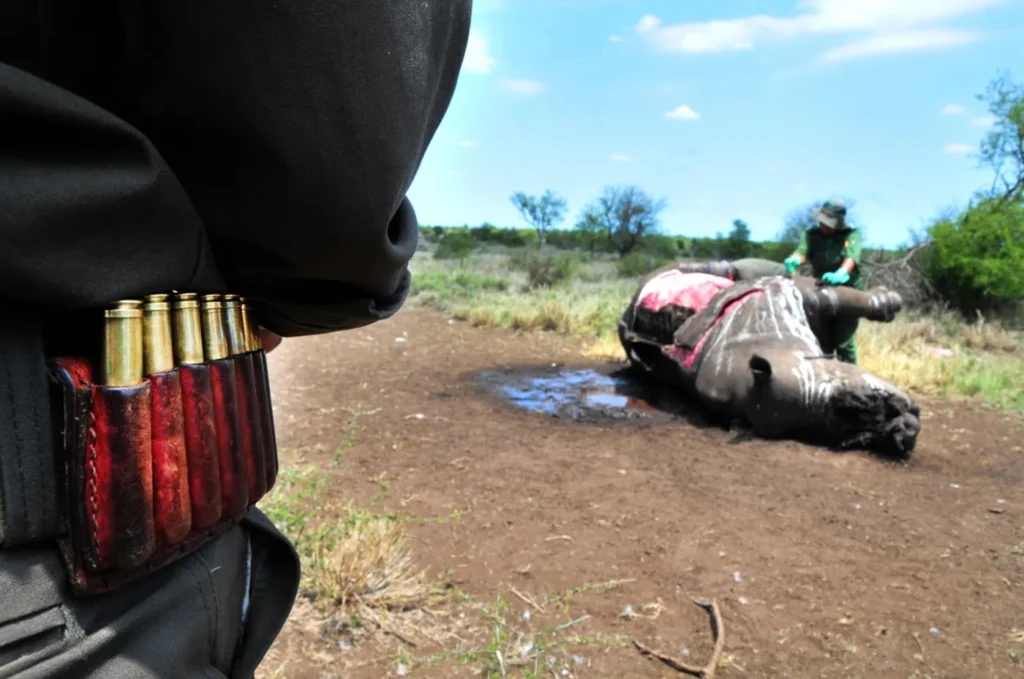
SANParks says the expanded dehorning programme has shown clear results and likely played an important role in helping the Kruger rhino population stabilise.
However, the report also shows the scale of the losses suffered by the park. More than 465 rhinos have been lost to poaching in the Kruger landscape over the past decade.
SANParks is supporting the Greater Kruger Environmental Protection Foundation in developing a landscape-level rhino rewilding strategy. The initiative aims to use reserves linked to the Greater Kruger landscape as rewilding nodes to gradually reintroduce rhinos and rebuild populations towards 2016 levels.
The report says sustained investment in dehorning, intensive monitoring, community partnerships and adaptive management will be needed to maintain the recovery.
The latest suspected poaching case also shows that wildlife crime in Kruger extends beyond rhino horn. During the search for the missing suspect, rangers found the remains of a buffalo believed to have been illegally hunted.
SANParks has dealt with other suspected poaching incidents in the park this year, including cases involving suspected illegal hunting equipment. The latest discovery therefore forms part of a wider challenge of preventing people from entering the park to hunt wildlife illegally.
Managing wildlife in a changing Kruger
The size of Kruger also means SANParks has to manage the movement and protection of large wildlife populations across a vast landscape.
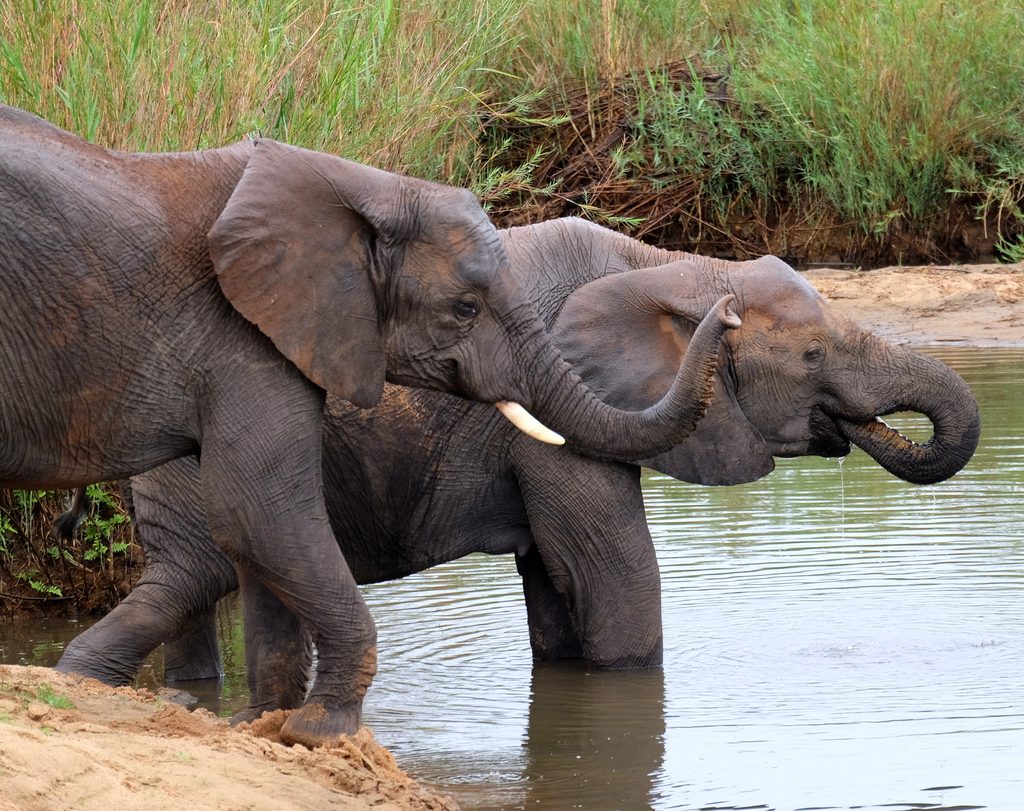
According to the 2024/25 annual report, Kruger has about 30,500 elephants. The report says elephant numbers remained stable during the reporting period, but movement patterns, particularly among bulls, presented management challenges.
In southern Kruger, elephants have increasingly concentrated along parts of the park boundary, including areas near the Crocodile River. SANParks says this has created areas of heavy use and increased tensions with neighbouring communities.
Elephants also move across borders between Kruger and neighbouring countries and conservation areas. SANParks said it was working with partners in Mozambique and Eswatini to manage high-risk areas and reduce human-elephant conflict.
The park’s elephant-management work is therefore not simply about the number of elephants. It also involves understanding where they move, how their movements affect ecosystems and how to reduce conflict with people living around the park.
The annual report says SANParks has also been using monitoring and research to better understand elephant behaviour, including work around Skukuza looking at movement patterns and ways of influencing elephant behaviour in sensitive areas.
This provides context to the latest suspected poacher case, but it does not establish what caused the man’s death.
SANParks has not confirmed that the man was trampled by elephants. The available information only establishes that the two men allegedly encountered a herd before fleeing in different directions, after which one man disappeared and was later found dead.
The latest case, the Marais murders and other incidents involving illegal activity inside Kruger occurred under different circumstances and have not been linked by authorities.
The Marais couple, aged 73 and 71 respectively, were from Mossel Bay and had entered the park to celebrate Dina’s birthday. They were reported missing after failing to return to their accommodation, and their bodies were later found near Crooks Corner, where the Luvuvhu and Limpopo rivers meet. Their vehicle was also reported missing.
Three suspects have since been arrested in connection with the Marais murders. Two suspects were arrested in Mozambique in early June after the couple’s stolen vehicle was recovered there, while a third suspect was arrested in Zimbabwe on 12 June. Authorities said the suspects would be processed through the applicable cross-border legal procedures. No conviction or trial outcome has been reported.
Another recent incident involved a person who drowned in the Pretoriuskop section of the park after allegedly being caught fishing illegally. That incident occurred in southern Kruger, separate from the latest Pafuri case in the north.
For SANParks, the challenge is therefore spread across a park covering about two million hectares, with rangers having to deal with illegal entry, wildlife poaching, human-wildlife conflict and the movement of animals across a large and sometimes difficult landscape.
In the latest case, the involvement of local community members in the arrest of the surviving suspect shows the importance SANParks places on cooperation beyond ranger patrols.
SAPS will continue with the necessary investigative and forensic processes to establish what happened to the missing man after the two suspects became separated.
For now, the cause of his death remains unconfirmed. – news@mukurukuru.co.za

Be First to Comment