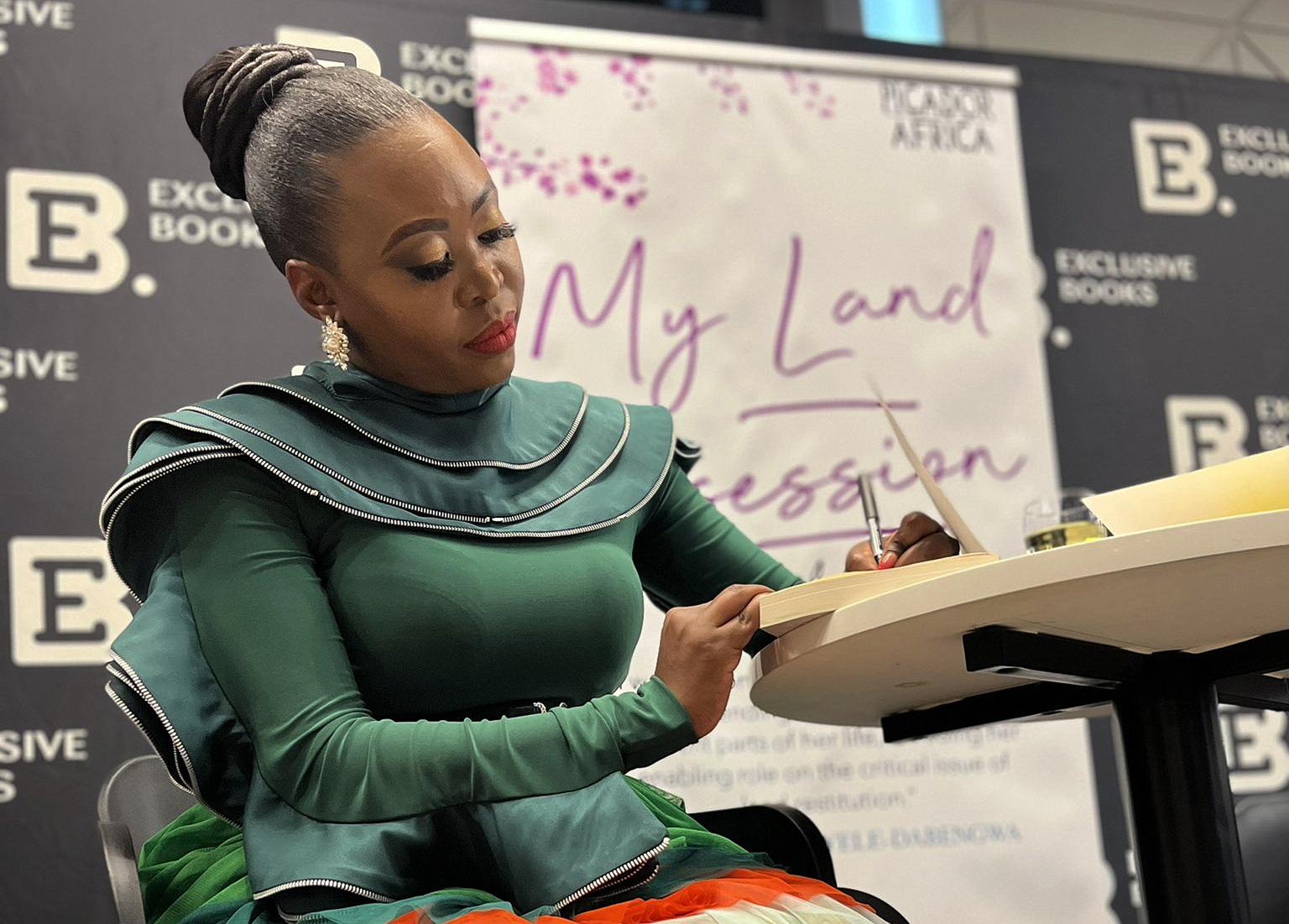
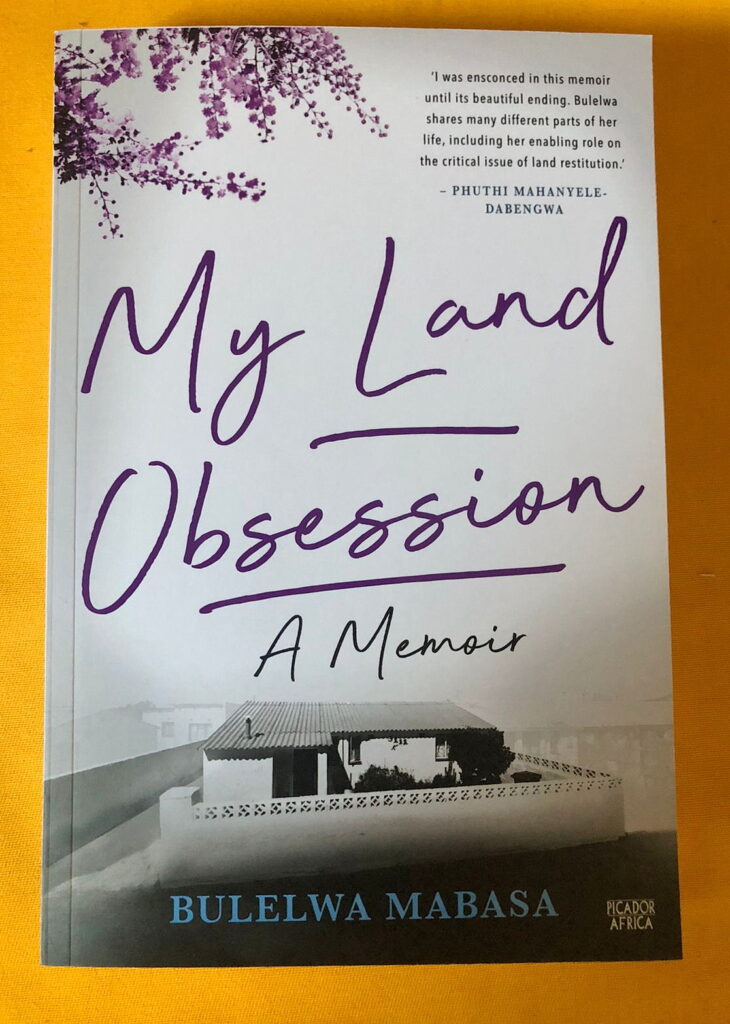
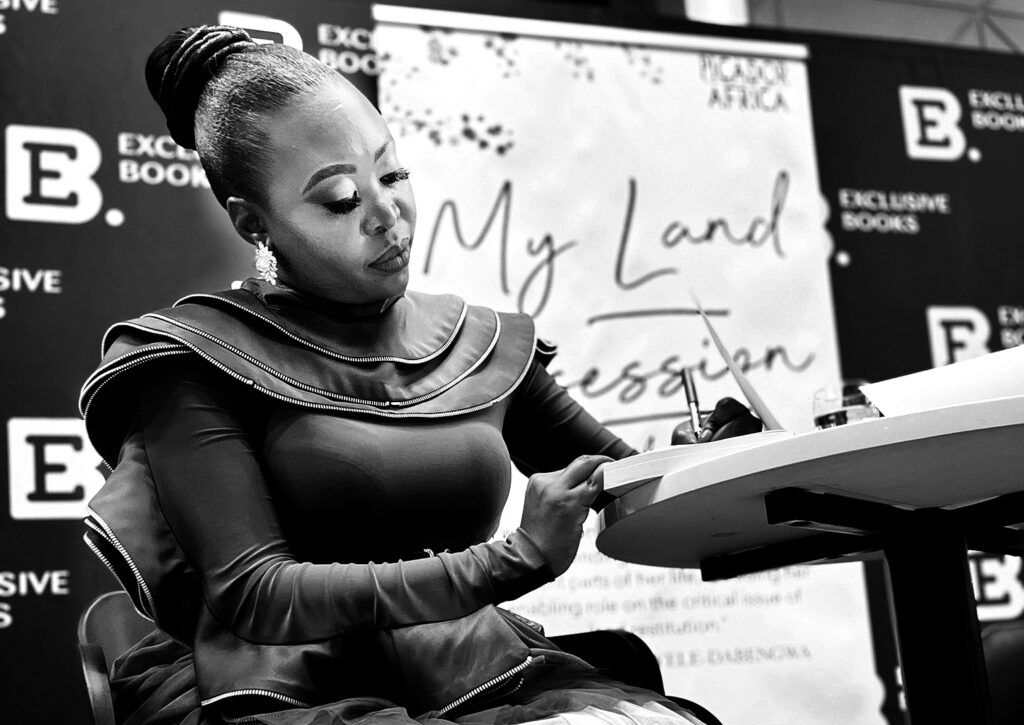
Books on the land question are often entrenched in academic and legal language in exploring this complex and sensitive issue. Bulelwa Mabasa’s memoir My Land Obsession (Picador Africa 2022) provides a personal perspective on the issue of land justice and restoration. Rather than being a legal analysis or a prescriptive approach, Mabaso’s memoir offers a relatable, personal perspective on this contentious issue. Her writing style is as relaxed as her personality writes Rolland Simpi Motaung
Rolland Simpi Motaung (RSM): You are a mother of four, a wife, a sister, director and head of the Land Reform, Restitution and Tenure practice at Werksmans Attorneys (congratulations on your 21 work anniversary by the way), now an author. Phewww…how do you manage to find balance between all these demanding roles particularly as you were writing the book?
Bulelwa Mabasa (BM):It sounds extremely daunting when you mention each individual role, but the truth is that for me, in each and every role you describe I bring my true and authentic self. It does not feel daunting in the moment because I do not wear different masks for each role. I am driven by my passion everyday and my core values. If something does not align with my personal values, it weighs heavily on my spirit and that is the barometer I use to determine where I need to be, what I need to be doing, with whom and for what purpose. I find out the latter questions help me to filter out what does not resonate with me. When I was writing the book, I did so in different settings. I would be writing while on holiday with my family, or in isolation on my study, and sometimes while travelling on the plane. Writing was part and parcel of my life. It was not separate from who I am. Many, many times, I wrote in our marital bed while my poor husband was sleeping, sometimes it happened when I was relaxed with my sisters visiting me, or when I was visiting them. I took my writing everywhere with me. Because I loved writing it so much, it never felt like a chore. It was a way of honouring my ancestry.
RSM: With youth unemployment currently setting at worst levels and graduates demoralized, in your view how could land restoration assist in empowering these young South Africans?
BM: Access to land for housing, agriculture and business opportunities is critical for our economy especially for youth development. The work I was part that we did in the Presidential Advisory Panel for Land Reform and Agriculture advocated for and recommended for the introduction of a Beneficiary Selection and Allocation of Land Policy. This was eventually introduced by government. Young people rank prominently as people that must be preferred for land allocation for housing, agriculture and commercial purposes. Unfortunately, this policy and the allocation of land to young people is not done in a transparent fashion, nor is it tracked for the public. This does not assist young people with awareness and education about the policy. On a broader lever, we also advocated and recommended for the introduction of the Redistribution Bill that will set out how those who need land will be awarded the land, under what circumstances, for how long, and also to set out who qualifies for land and for what purpose? The lack of a Redistribution Bill fuels the mystery around the land question. This is an area that could benefit many young people of Parliament introduces the Bill and the relevant institutions implement it to the letter.
RSM: In your book you have strong views on how South African law is taught. You argue on how it is bias, archaic and lacks flexibility in addressing contemporary issues particularly in relation to African black people’s issues, tell us more why this decolonization of law studies and policies is a point of concern for you?
BM: The decolonization of tertiary education is not necessary only in the legal space. Decolonization to me, is about teaching, preparing and producing intellectuals, professionals and academics that will have not only thoroughly engaged with their subjects, but who are going to be placed in a position to transform our country and to form part of solutions that will find meaning and relevance in the South African context. For instance, in my space which is land reform, I find that most law schools do not have land reform as a stand-alone and focused subject. Typically, it is a chapter or sub-set as part of property law or a small module in constitutional law. If South Africa agrees that the land question requires urgent resolution, we should at the very least, hone future lawyers, historians, land surveyors, spatial planners that are honed and prepared to form part of the solution. There is therefore a disjuncture between the important nature of the issue, and the resources placed in universities to produce sufficient knowledge and research on the ground.
RSM: You wrote a lot about indigenous African knowledge systems, African spirituality and beliefs in ancestors, why was this theme important for you to showcase in the book?
BM: Being raised mainly by grandparents who did not access formal education in the way that I did, I marveled at how they had solutions for my ailments growing up through the use of herbs, how African spirituality (along with Christianity) held them together and how they continued to thrive and build a family with joy despite the apartheid system that almost crippled them – I witnessed how their values of Ubuntu and shared community, environmental awareness, attachment and reverence for land and space almost shielded them from the pain of a cruel system. In them, I found a world replete with intergenerational wisdom passed down from their forefathers that I did not come across in formal education. This was an important theme to raise their voices, wisdom, intelligence and contribution to black lives that is largely not recognized in formal, Western-influenced spaces. It was perhaps also an ambitious attempt to answer the gap that was formed through separatist development between South African races. I give space to their lives and voices because theirs was a generation that is hardly spoken of. They were ordinary folk who bore the brunt of apartheid daily. They were not political or freedom fighters or exiled. They were simple folk who were held together by their African spirituality and belief systems passed down from their forefathers, and I believed that this was important in the land question.
RSM: In regard to townships being a crude strategy to dehumanize black people, evidently like a seven colors Sunday lunch, the township became a place of emancipating colorful culture and community, why was the theme of township living important for you to showcase in the book?
BM: It was important to demonstrate that as much as townships were places created almost to ‘bury’ black people into irrelevance and obscurity away from economic opportunities – the apartheid system did not envisage that black people would give life and colour to their lives, such that they found joy, they were not just black bodies who were dehumanised – they had dreams and aspirations – some fulfilled, others deferred, and others unaccomplished. I was also deliberate to speak of love and family values because even in a matchbox house – love, warmth and all the human elements attached to happiness happened in those homes. I was sure to capture the mood, the feelings and human elements in homes and on the streets in a way that is not dogmatically what we have come to know about township stories that often only capture violence and strife. This becomes important when we think about the broader land debate, because it forces us to understand the land question beyond political rhetoric and an academic undertaking, but rather as a personal subject that must be owned by all.
RSM: Politicians, unions and even citizens speak of how if we have the land, it will end hunger and be economically liberated. What is your view to this, particularly in regards to post-land restoration, is there enough education, skills development on what citizens could do with the land after they eventually do get it?
BM: Land restoration without a deliberate, focused, coherent and clear post settlement support framework is counterintuitive. In my previous work published by MISTRA co-edited with Dr Khwezi Mabasa in “Land in South Africa: Contested Meanings and Nation-Formation, I lament to the lack of legislative obligation by the state to support those awarded with land post settlement. My work as an n attorney in practice bears this out. Most of the challenges I encounter from communities occur after land has been awarded in Communal Property Associations and Trusts. The Restitution of Land Rights Commission is under-capacitated to give meaningful support to communities awarded with land. I set out some examples of these failures in the last part of my book. Communities require the active support of government, lending institutions and corporates to assist in post settlement support.//
An ode to her ancestors, My Land Obsession is a melancholy melody evocative of Brenda Mthabo’s Umhlaba Wethu. As we wrap up Human Rights months, we still left to wonder if land ownership and restoration is a privilege reserved for a few or if it is a basic human right that our forefathers and mothers fought for. The issue of land ownership and distribution is a complex and emotionally charged one, and it’s important to have voices like Bulelwa Mabasa contributing to the conversation.
Rolland Simpi Motaung 2023 ©
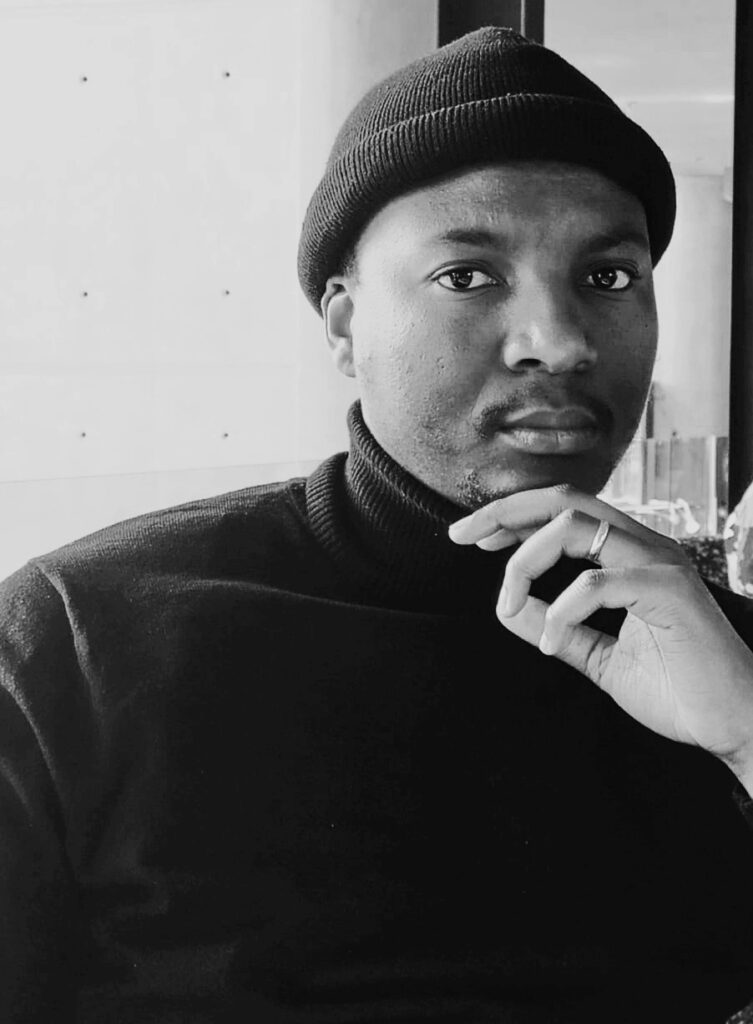
About Rolland Simpi Motaung: A rural boy at heart, Johannesburg-based Rolland Simpi Motaung is passionate about entrepreneurship, education, creative arts, media and gender studies particularly from an African context. Backed by a decade of facilitator and entrepreneurial experience, Rolland is founder at Trymph Education, an education company that offers private tutorials to tertiary students and business consultancy. Rolland’s drive is to raise the level of critical thinking in business pedagogy and foster student confidence right from the learning sphere, into the work space, and then the business world. A former content creator for UNISA Radio, Rolland- popularly known as Simpi in Gauteng’s arts and cultural spaces- pens book and movie reviews for various online publications including CityLife Arts, Culture Review and Mail & Guardian. Rolland holds qualifications in Basic Entrepreneurship and Small Business Management from the University of Pretoria, Advanced Facilitation Skills and Assessor certificates and a BCom Honours in Business Management from UNISA. This doting husband and father of one, is currently pursuing his Master of Commerce in Business Management focusing on township-based SMMEs.
About Bulelwa Mabasa:
Bulelwa Mabasa was born into a ‘matchbox’ family home in Meadowlands, Soweto, at the height of apartheid. In My Land Obsession, she shares her colourful Christian upbringing, framed by the lived experiences of her grandparents, who endured land dispossession in the form of the Group Areas Act and the migrant labour system. Bulelwa’s world was irrevocably altered when she encountered the disparities of life in a white-dominated school. Her ongoing interest in land justice informed her choice to study law at Wits, with the land question becoming central in her postgraduate studies. When Bulelwa joined the practice of law in the early 2000s as an attorney, she felt a strong need to build on her curiosity around land reform, moving on to form and lead a practice centred on land reform at Werksmans Attorneys. She describes the role played by her mentors and the professional and personal challenges she faced. My Land Obsession sets out notable legal cases Bulelwa has led and lessons that may be drawn from them, as well as detailing her contributions to national policy on land reform and her views on how the land question must be inhabited and owned by all South Africans. source: https://www.panmacmillan.co.za/authors/bulelwa-mabasa/my-land-obsession/9781770107960

Be First to Comment