
With 17 days to go before the 4 November local government elections, Gauteng residents are being asked to vote while paying the price of unreliable water services. Municipalities reported R14.89 billion in water losses nationally in 2023/24, while residents in Sunnyside, Pretoria, recently spent three days without water and communities in Hammanskraal are still demanding safe drinking water years after a cholera outbreak claimed lives.
The pressure is not expected to ease as the country moves deeper into the summer season. Johannesburg Water has scheduled a 10-hour interruption in Village Deep, south of the Johannesburg CBD, on Tuesday, 27 October, from 07:00 to 17:00. The planned work will affect Eloff Street, Bitcon Road, Inglestone Road, Baldwin Road, Wright-Boag Road and Colyn Road, as the utility connects a newly installed 110mm pipeline to the existing 100mm water network.
Johannesburg Water says the work is intended to integrate and commission the upgraded infrastructure, with the aim of improving continuity of supply and service delivery. While planned maintenance is necessary to upgrade ageing infrastructure, residents and businesses in the affected streets will still have to make arrangements to get through most of the working day without running water.
That interruption comes as residents face hot conditions and warnings of a potentially hotter, drier summer. The South African Weather Service has forecast above-normal temperatures and a greater likelihood of below-normal rainfall across much of the country as El Niño strengthens during the 2026/27 summer season. The pattern does not mean that every area will experience drought or that no rain will fall, but it raises concerns about water availability when temperatures are high and demand increases.
In Hammanskraal, north of Pretoria, the issue goes beyond the inconvenience of dry taps. Residents have lived with concerns about water safety since the 2023 cholera outbreak claimed lives. For families who lost loved ones, assurances about infrastructure projects do not erase the fear of unsafe water or the cost of finding alternatives.
Community leader Wilson said residents needed safe drinking water from their taps rather than having to remain anxious about their families’ exposure to unsafe water.
“The solution is that we need drinkable water from our taps because you cannot guard your kids while they are playing outside,” Wilson said.
His concern speaks to the daily choices parents face when they cannot be certain about water quality. Buying bottled water is not a sustainable option for every family, particularly when an entire household needs water for drinking, cooking and washing. A local businesswoman has been selling water to neighbours at R1 a litre to help them cope, showing how residents are stepping in to support one another when reliable supply is lacking.
The wider question is why communities continue to carry so much of the burden while public authorities work on repairs, maintenance and long-term projects. The Auditor-General has documented serious weaknesses in water infrastructure management, including delayed projects and inadequate maintenance, while Parliament has warned that municipalities are failing to implement corrective plans. The R14.89 billion in reported water losses is a national figure rather than a Gauteng-only total, but it illustrates the scale of the challenge facing water services authorities.
With the election approaching and another hot summer ahead, residents need more than promises that projects are under way. They need to know what is causing interruptions, what municipalities are doing to reduce water losses, how safe drinking water will be protected and when communities can expect a dependable supply.
Years of maintenance failures are taking their toll
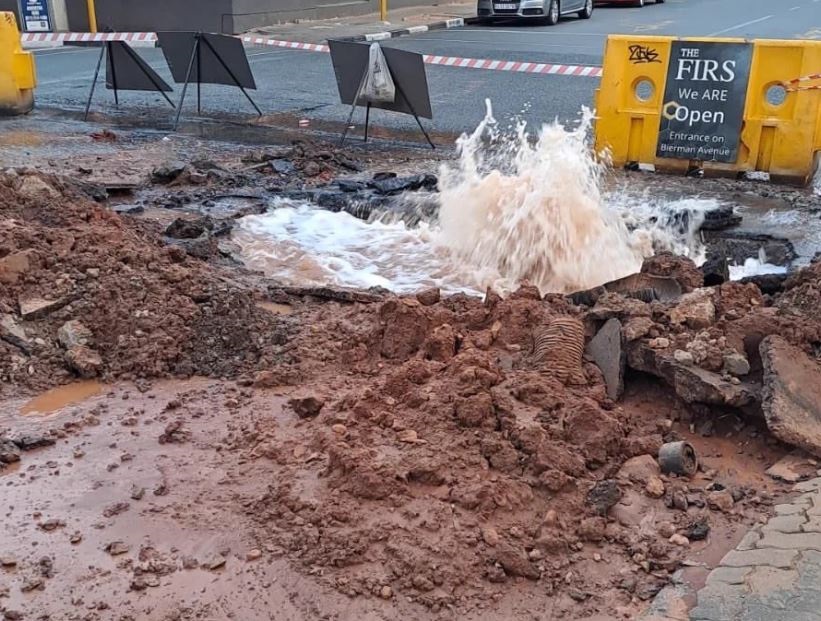
The Auditor-General’s report, Source to Supply: A Shared Responsibility for a Water-Resilient Future, points to weaknesses in planning, maintenance, project delivery and oversight across the water sector. These failures matter because water systems depend on more than the amount of water available from dams and bulk suppliers. Pipes, reservoirs, pumps and treatment works must also be maintained and operated properly.
Of 57 infrastructure projects worth R24.35 billion examined by the Auditor-General, findings were raised on 47 projects, or 82%. More than half were delayed, with an average delay of 32 months. Thirty-four water services authorities either lacked maintenance plans or could not provide evidence that they had them.
The report also found that 130 water services authorities, or 96%, spent below National Treasury’s recommended norm of 8% on repairs and maintenance. Average spending was about 3%.
When maintenance is delayed, small faults can become larger failures. A leaking pipe can waste treated water, while a major break can interrupt supply to homes and businesses. Repairs may also take longer when municipalities lack technical staff, reliable records or effective systems for identifying problems before they become emergencies.
The Auditor-General found that 74 water services authorities, 56% of those reporting, lost more than the accepted norm of 30% of their water. The losses can include leaks, theft and water that is supplied but not properly measured or billed. These figures are national and do not establish the amount lost by Gauteng municipalities specifically.
The report also found that 59 water services authorities spent R2.32 billion on water tankering during 2023/24. Of this, R419.49 million was deemed irregular because of unfair or uncompetitive procurement.
Tankers are essential when communities have no water, but they are meant to provide relief rather than become a long-term substitute for functioning infrastructure. Their cost also raises questions about whether money is being spent effectively and whether permanent repairs are being prioritised.
The cost reaches businesses and workers
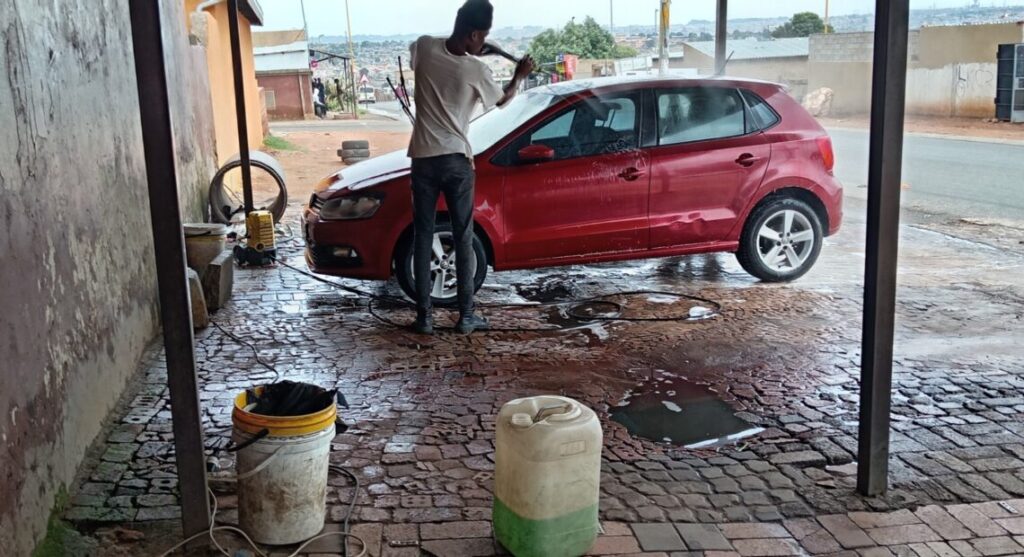
Unreliable supply affects businesses that need water to operate, from restaurants and salons to laundries, car washes and accommodation providers. When taps run dry, owners may have to buy water, arrange deliveries, reduce services or close temporarily.
Gauteng MPL Nico De Jager said the consequences extend beyond inconvenience.
“For businesses, a dry tap is not only an inconvenience. It costs money. Production stops, and staff cannot work. Businesses must buy and transport water to continue operations,” De Jager said.
Small businesses can be particularly vulnerable because they often have limited cash reserves. The money spent buying water is money that cannot be used for stock, rent, wages or other operating costs. Workers can also lose income if their employers cannot trade as usual.
Luyanda Semoyi, a car wash operator near a Midrand taxi rank, normally earns between R300 and R400 a day. When supply is interrupted, he still needs to buy water to keep washing cars.
“I don’t know what is causing it or how long we will have water. I still need to buy water so that I can wash cars and make money,” Semoyi said.
He also questioned the value of election promises when residents continue to experience the same difficulties.
“Sometimes I ask myself what the point of voting is when we keep hearing promises, but the problems are still there. I need water to run my business, not promises,” he said.
His experience illustrates how a municipal service problem can become an immediate business expense. For an operator who earns money day by day, the cost of buying water can cut into earnings even when the business remains open.
Ravin Singh, co-convenor of the Water Crisis Committee in Johannesburg, questioned whether authorities were doing enough to maintain existing infrastructure while pursuing additional water sources.
“So is there value for money chasing after new supply, or new sources of supply, when we are not taking good care of existing supply?” Singh asked.
“Something has to be done, but we need to know whether we are making the right decision.”
Lambert de Klerk, AfriForum’s manager of environmental affairs, said municipalities already had legal options to work with private and community-based organisations to deliver or support services.
“The biggest obstacle is not necessarily the law, but the willingness to implement alternatives. The Municipal Systems Act already provides for private and community-based organisations to deliver municipal services or assist municipalities in delivering these services. There are procurement consultations and regulatory requirements, but these should be used to enable solutions, not unnecessarily delay them,” de Klerk said.
Such partnerships may help in certain circumstances, but they do not remove municipalities’ responsibility to manage infrastructure, spend public money properly and provide reliable services. Any arrangement also needs clear oversight so residents can see what is being delivered and who is accountable when it fails.
Parliament warns that corrective plans are not enough
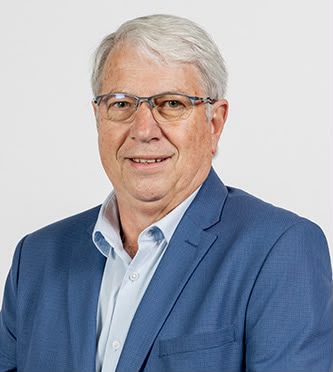
The Portfolio Committee on Water and Sanitation raised concerns in June 2026 about water services authorities failing to submit and implement corrective action plans, despite commitments made at the National Water and Sanitation Indaba.
The committee’s review of the 2025 Green Drop, Blue Drop and No Drop progress reports showed that serious weaknesses remained across the water system.
The number of wastewater systems classified as being in a critical state rose from 39% in 2022 to 47% in 2025. At the same time, the share of systems rated excellent or good fell from 14% to 8%.
The national average for non-revenue water also remained almost unchanged at 47.3%, compared with 47.4% in the 2023 full No Drop report. Non-revenue water includes water lost through leaks and theft, as well as water that does not generate revenue because of metering or billing problems.
Committee chairperson Leon Basson warned that the failure to implement corrective measures was undermining efforts to repair infrastructure and restore wastewater systems.
“This points to a system that remains in crisis and requires a hands-on approach to turn it around,” Basson said.
He also warned that failure to address identified weaknesses could result in “the complete collapse of the water value chain”.
The committee highlighted a shortage of skilled process controllers needed to operate wastewater treatment systems. Nationally, 2,431 were required, but only 1,151 were employed, leaving a shortfall of 1,280.
These findings show why building or upgrading infrastructure is only part of the solution. Treatment plants need trained workers, maintenance schedules must be followed, and water services authorities must act on problems identified by regulators and auditors.
The committee said the Department of Water and Sanitation was pursuing amendments through the Water Services Amendment Bill that are intended to strengthen its ability to act against authorities that fail to implement corrective measures. The committee expected the next full assessment report in 2027, but communities facing interruptions need improvements before the next assessment is published.
Municipal plans face the test of accountability
The City of Tshwane says its water problems stem largely from ageing infrastructure, leaks and inefficiencies rather than a general lack of bulk water. In its 2026 State of the Capital Address, the city reported daily demand of between 800 million and 900 million litres, with most of its supply purchased from Rand Water.
Its Water Stabilisation Plan aims to repair leaks, improve reservoirs and pump stations, manage water pressure and address illegal connections. The city has reported interventions in Mamelodi, Winterveld, Olievenhoutbosch, Mabopane and Bronkhorstspruit.
The Gauteng government has also identified ageing infrastructure, high demand, power interruptions and maintenance backlogs as causes of water disruptions across the province. It has announced a provincial operations centre to coordinate responses with municipalities, Rand Water and national departments.
However, residents need evidence that these plans are improving supply, reducing water losses and ensuring repairs are completed on time.
With local elections approaching, political analyst Roland Henwood, a University of Pretoria political science lecturer, cautioned against making water the only issue voters consider.
“The election is not only about water. It’s a simplistic message, and to my mind, if that’s the only message you’re giving people, you’re playing into their fears and hopes, but you’re also misleading them,” Henwood said.
He argued that coalition arrangements should prioritise expertise and stability rather than simply keeping a party in power.
Water remains a basic service voters have every reason to scrutinise. Candidates should explain how they plan to repair infrastructure, reduce losses, fund projects and hold officials accountable.
Residents who go days without water and businesses paying extra to keep operating need more than election promises. They need reliable water supplies and clear answers from the officials responsible for delivering them. – news@mukurukuru.co.za

Be First to Comment