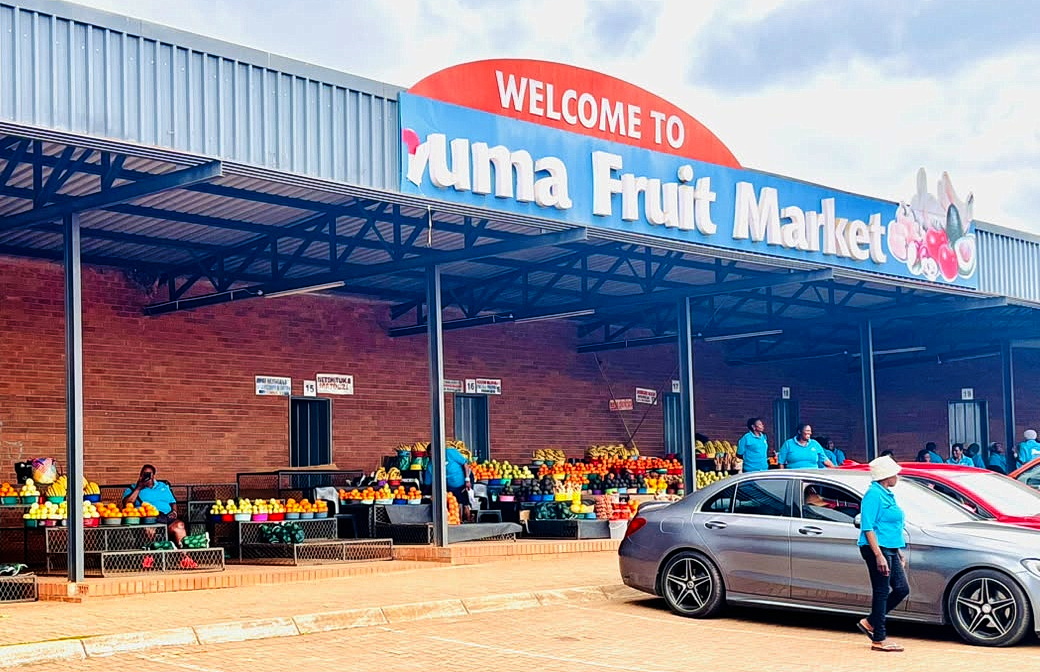
The Tshakhuma area comprises citrus farms of varying sizes and orchards that stretch further towards the Levubu Valley, sprawled across lush, rolling green hills.
It is renowned for producing bananas, sweet potatoes and other fruit and vegetables. It is celebrated as the home of South Africa’s only 24-hour fruit market – the Tshakhuma Fruit Market, a popular stopover for tourists and travellers on the R524 that connects the town of Louis Trichardt in the west to the Kruger National Park’s Punda Maria gate in the east.
Despite its popularity, traders at the bustling market say times are tough. Farmers now have less produce available, forcing traders to travel to other areas to find stock that in the past was easily accessible from nearby.
Additional transport costs and rising produce costs are making it increasingly difficult to protect their profits, with some now being forced to travel to areas far afield to source stock that was once readily available from local farmers.
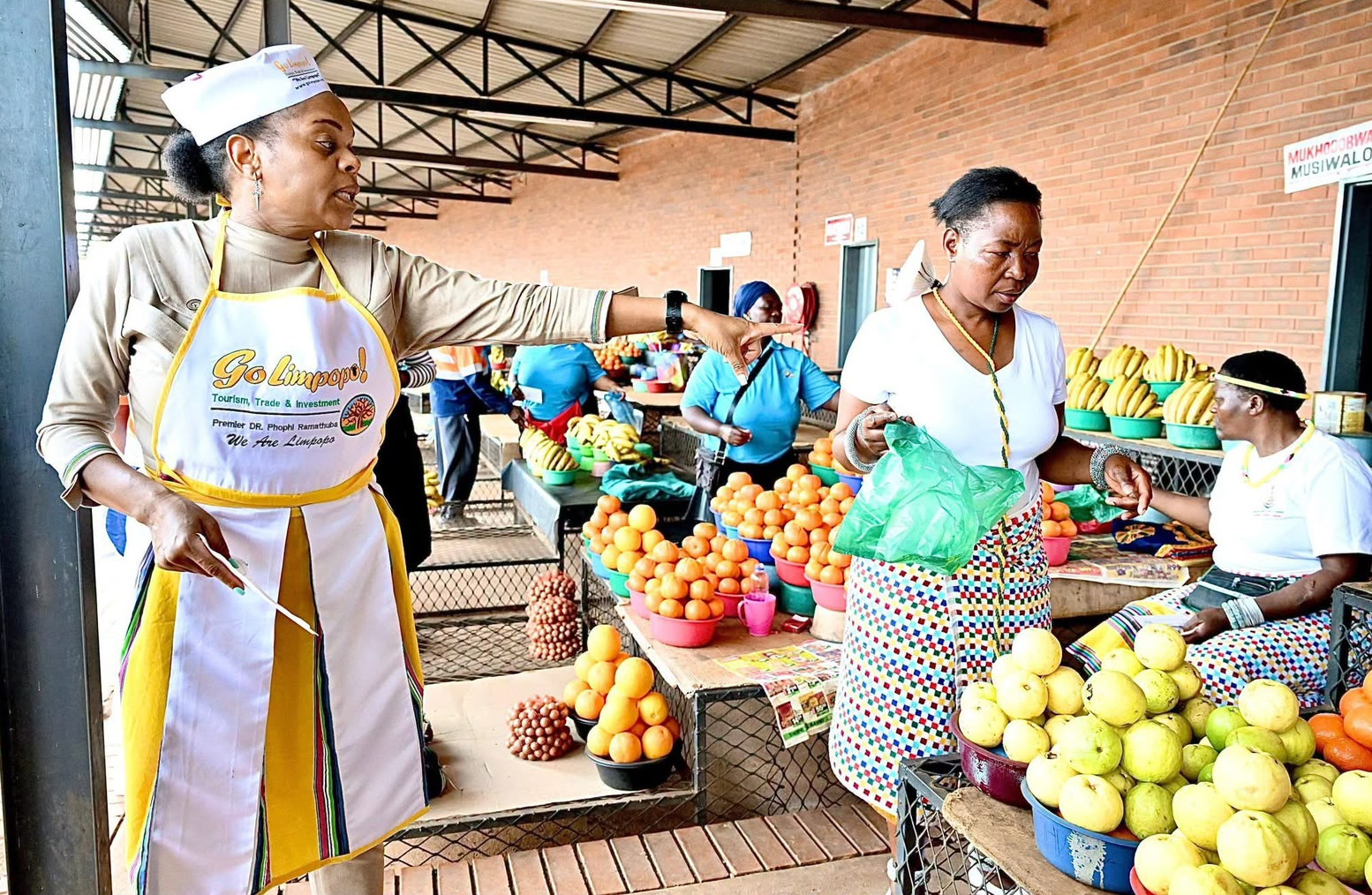
Limpopo Premier Dr Phophi Ramathuba hosted a Heritage Month luncheon for the women traders at the market on Tuesday, under the theme Our Living Cultural Heritage: Strengthening the Ties That Bind Us.
She described the Market, which was established in 1968 when the area was still under apartheid’s Transvaal Provincial Administration, as a masterclass in endurance.
Ramathuba said the early traders sold their produce while shielding from the elements under trees. But those were not easy times. The women were repeatedly harassed and chased away by the authorities. Yet after each confrontation, they returned to continue trading.
“They refused to bow down,” Ramathuba noted.
The traders now line up their stock on tables carefully laid out on stalls under modern zinc shelters, a far cry from the days of old. The raids from the authorities are now only a memory in the minds of those who still recall the early days. They now face new challenges…
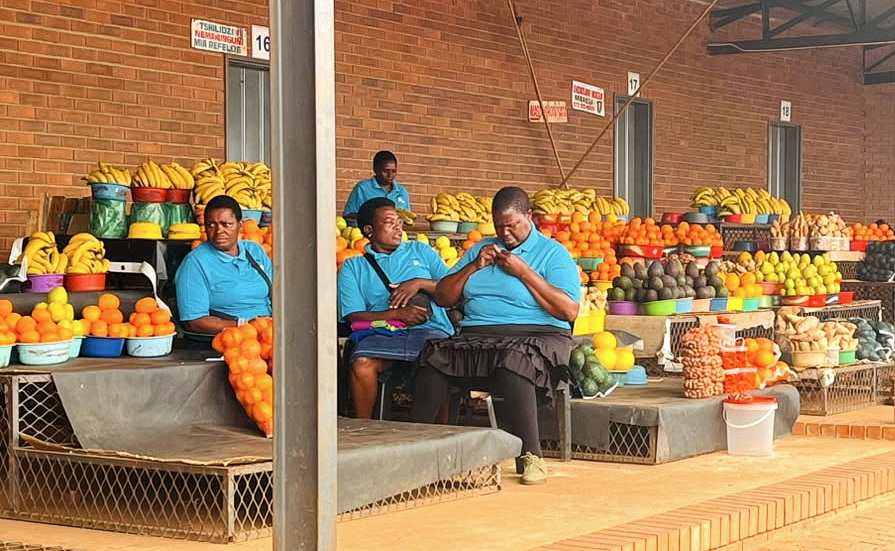
The market is in Masindi Mudau’s blood. Born into a generation of traders that followed the market’s founding, the Tshakhuma Fruit Market chairperson is watching a new economic reality unfold along the R524.
Rising transport fees and higher stock prices—like those for sweet potatoes—force vendors to hike their shelf prices just to make a slim profit, leaving customers disgruntled.
The root of the problem lies at the farm gate. Farmers increasingly favour high-volume buyers capable of taking 50 crates in one go. For Tshakhuma’s smaller traders, who can only afford a crate or two, buying directly from farms is becoming nearly impossible. Instead, they are forced to buy through larger middleman buyers at markup rates, squeezing their already fragile livelihoods.
“If they overcharge us, it kills our profit,” Mudau said.

She said the traders want farmers to have enough produce available so they can buy directly rather than relying on other buyers. This, she said, would help them control their costs and keep their selling prices manageable.
Customers also contribute to the pressure on traders, according to Mudau. She said some customers demand extra fruit from traders after a purchase, a practice known as bhasela, without paying more.
Ramathuba addressed the issue during the luncheon, questioning why customers would expect the women at Tshakhuma to give them extra produce while paying the full price at retail supermarkets.
“This must stop! We must respect, support and value the dignity of our mothers who toil through freezing winters and scorching summers,” Ramathuba said.
Traders ask government to address outstanding problems
Mudau appealed to the government and the Department of Small Business Development to assist the traders with funding, donations and other support.
She also raised concerns about money that Makhado Local Municipality has allegedly asked the traders to pay from the Covid-19 lockdown period.
Mudau said the traders were not operating during the lockdown and relied on the R350 social relief grant, questioning how they could be expected to settle amounts allegedly accumulated while they were unable to trade.
She called on the municipality to address the matter and erase the debt so the traders can start afresh.
Mudau also said the market has never had an official opening. She wants government to formally open the market so that the traders can operate from a recognised trading space instead of selling on the street.
She said the lack of an official opening creates uncertainty among the traders, particularly about who would be held responsible if an incident occurred at the market.
R60,000 contribution and market commitments
Ramathuba said a total of R60,000 in birthday contributions would go to the women traders.
She said she had received a R50,000 voucher as a birthday gift, while Phalaphala Royal Heritage contributed R5,000 and additional contributions brought the total to R60,000.
She also announced new umbrellas to protect the traders and their produce from rain and hot weather.
Ramathuba said her team inspected the market and found that the lights were not working, but that the problem had since been addressed. She also said Tshakhuma residents would have water by 20 October.
The Premier called on Capitec Bank to assist the traders with Speedpoint machines so they can accept electronic payments. She said tourists visit the market and may arrive with dollars, pounds and other foreign currencies, while electronic payment facilities could make it easier to receive payments.
Ramathuba said the chairperson would meet with representatives of the bank and added that Capitec had agreed to paint the market.
MEC for Limpopo Economic Development, Environment and Tourism Dr Tshitereke Matibe, who was the programme director, said government should return to Tshakhuma to engage with the women instead of making the gathering a once-off event.
Matibe said the government wants the market to look different from what people have known.
“We want it to be unique,” he said, adding that the necessary processes would have to be followed.
The announcements come as traders continue to deal with the cost of sourcing stock, transport and selling their produce in a market that has been part of Tshakhuma’s community life across generations.
With Heritage Day being marked on 24 September, the discussion at Tshakhuma has brought the market’s history into the current conversation about the women who trade there and the conditions they need to continue making a living. – news@mukurukuru.co.za

Be First to Comment