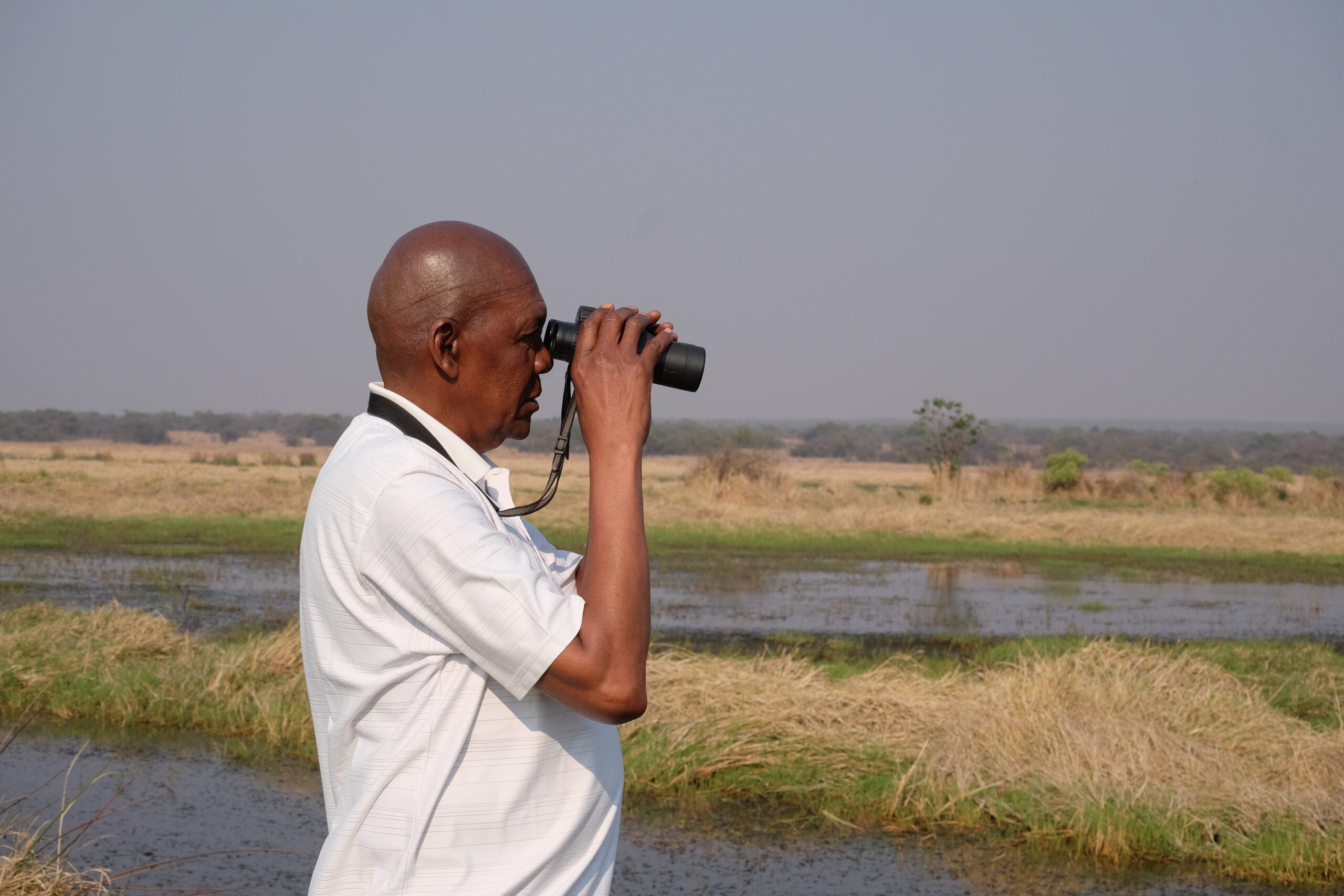
Deep in the Nylsvley Nature Reserve near Mookgophong, Limpopo, guide Patrick Mello reads the bush by ear—distinguishing bird calls with the effortless precision of a conductor leading a choir.
Growing up in Mahwelereng location near Mokopane, his understanding and interest in birds were minimal.
In fact, he, too, like his naughty peers, often engaged in the deplorable act of throwing stones at these harmless feathered species.
But that is now all in the past.
Mello, who spent years working at the post office and later at a hospital, began his flight into birding after taking up a course with the Friends of Nylsvley in 2011.
The course included lessons in the conservation of various species, including reptiles, fauna, amphibians and birds. He fell in love with birds and bird guiding.
Friends of Nylsvley is an organisation affiliated to the Wildlife and Environment Society of South Africa and BirdLife South Africa.
It works with the reserve management to facilitate work parties and nature-based courses and assists in the preservation of the reserve and its surroundings.
“It was a very good experience, a great experience,” Mello says about the course that led to scales falling from his eyes regarding his attitude to birds. “It taught me to have patience, because without patience and appreciation, I don’t think you’ll be able to work in this field.”
On a recent excursion, Mello led a group of journalists on an early morning game drive to various bird hides in the reserve.
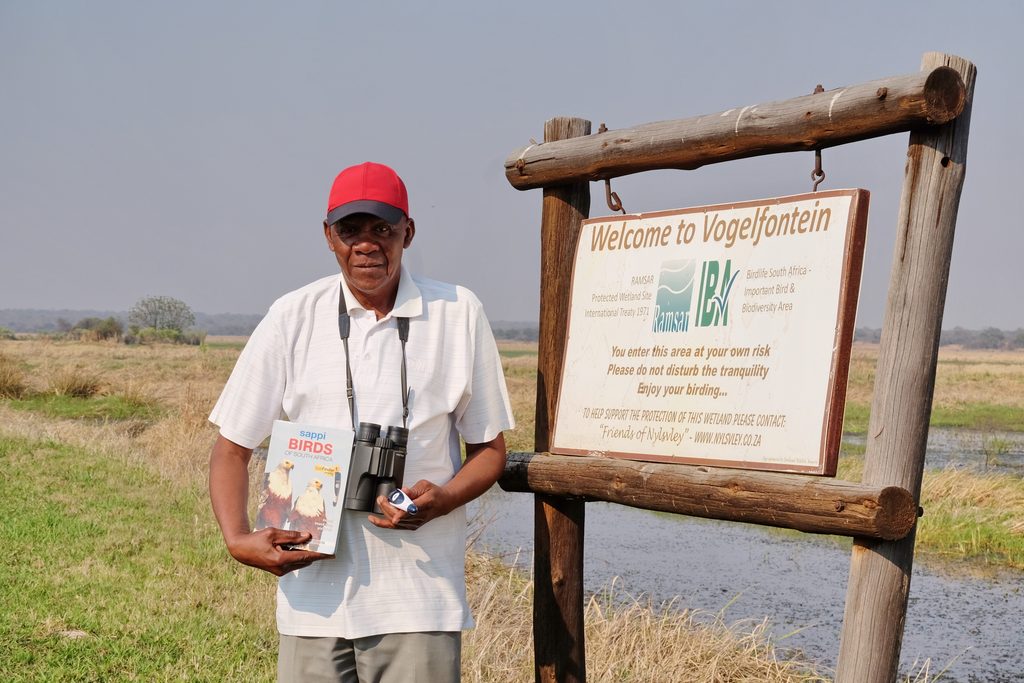
This was part of a drive by the Limpopo Department of Economic Development, Environment and Tourism (Ledet) to promote the province’s nature reserves.
The province has 54 nature reserves, 11 of which, including Nylsvley, are administered by the Limpopo Wildlife Resorts, a division of Ledet. In his budget vote speech early this year, Ledet MEC Tshitereke Matibe said in 2025/26, the Department was allocated R40 million for infrastructure development across Masebe, Nwanedi, D’Nyala, Wolkberg, and Nylsvlei Nature Reserves.
Matibe said at Nylsvley, access and ring roads were paved, carports and streetlights installed at the 20-unit chalet facility, creating over 19 jobs and benefiting three MSMEs. He said an allocation of R61 million has been secured for 2026/27 to complete infrastructure at Nylsvley, including staff accommodation, a conference centre, dormitories, a swimming pool, and rehabilitation of the boma area.
Although Nylsvley is not Big Five country, it offers a breathtaking experience of watching game grazing in the wetland and open plains, particularly in the early morning when a blanket of mist still covers the vast land.
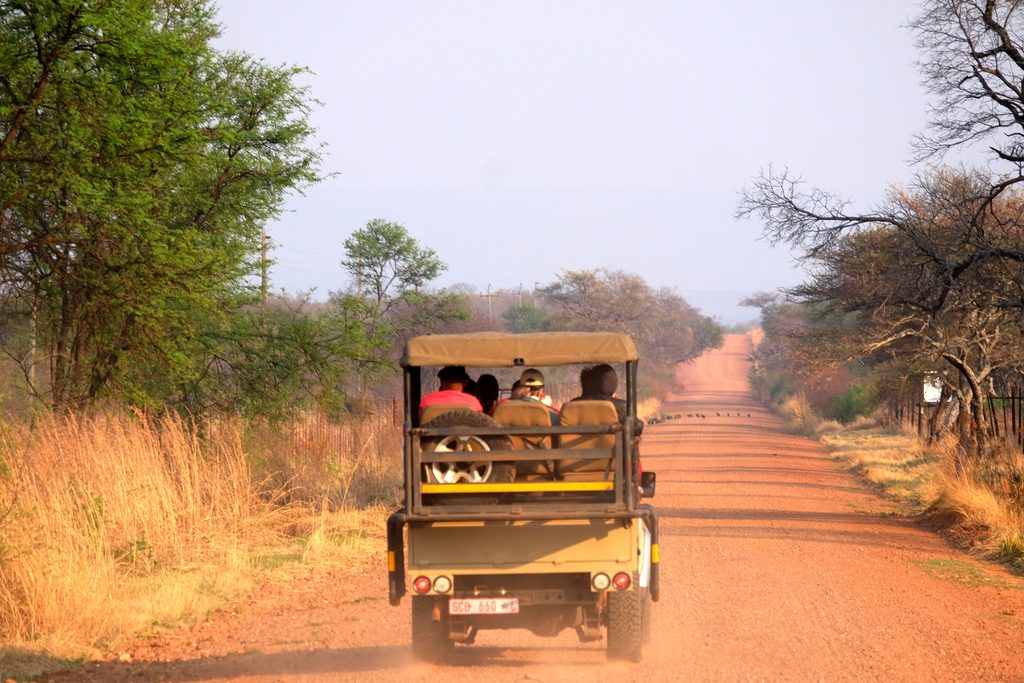
Nylsvley Nature Reserve is an internationally recognised Ramsar wetland [a wetland site designated of international importance under the Ramsar Convention].
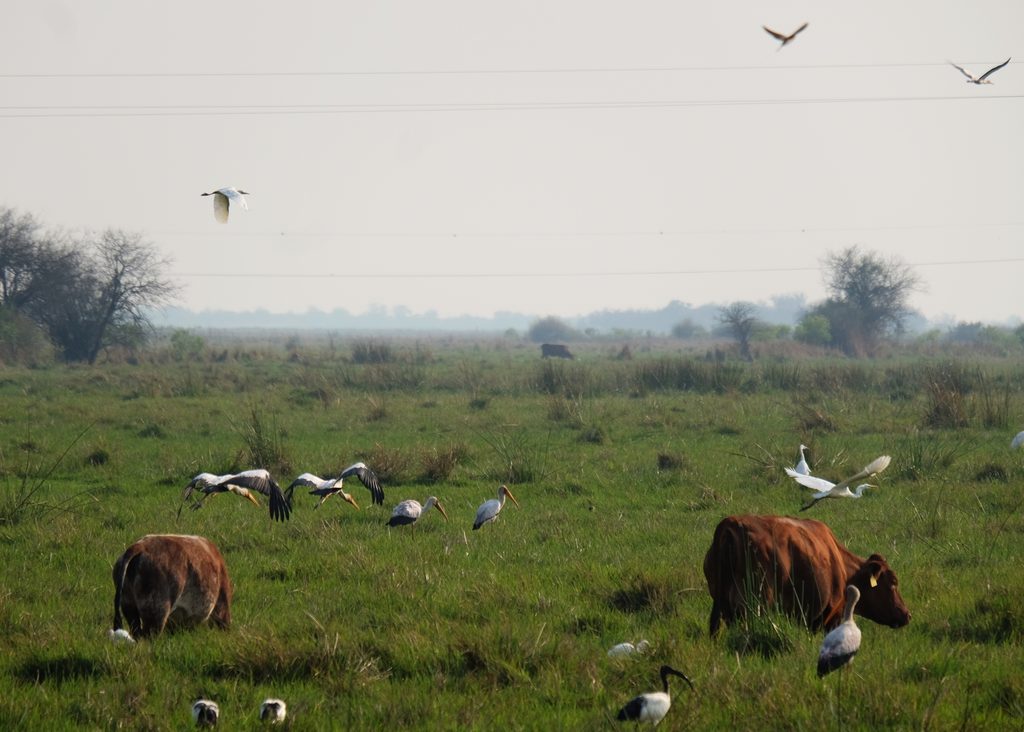
It is renowned for its extraordinary avifaunal diversity, which hosts over 365 recorded bird species.
Nylsvley’s birdlife is heavily dictated by seasonal flooding. As many as 80, 000 waterbirds converge in the area during major flood events, and the environment serves as a vital stopover and breeding sanctuary for a wide array of migratory birds.
Antelope such as red hartebeest, tsessebe, waterbuck, wildebeest and giraffe roam freely across the plains where we are told predators such as black-backed jackal, hyena, aardwolf and leopard lurk in the shadows, often emerging at night to hunt.
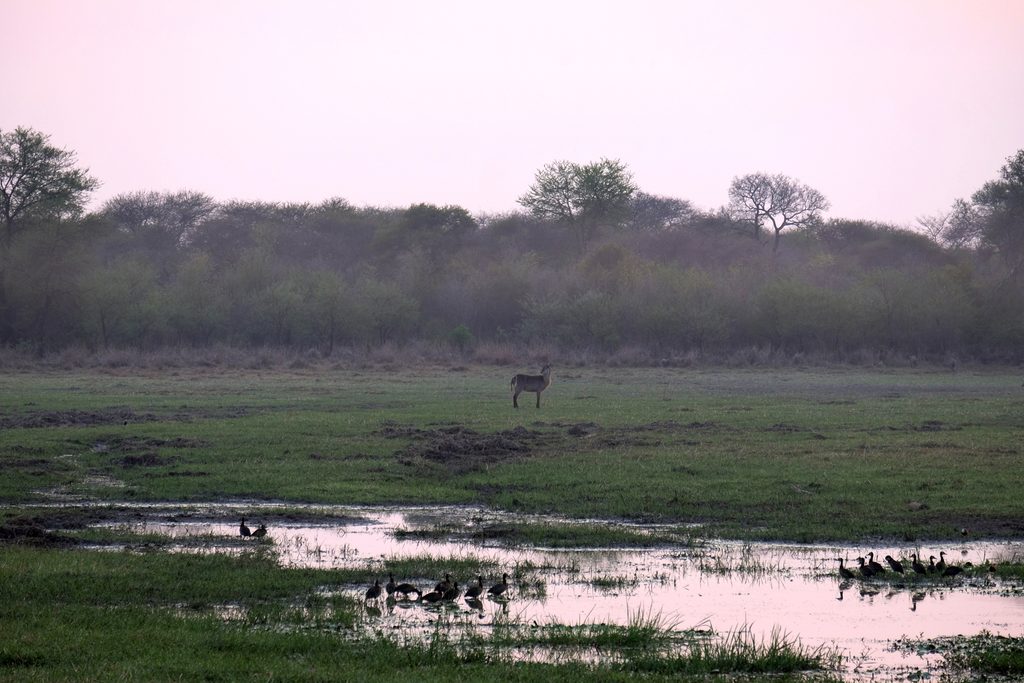
Mello, carrying his valued tools of the trade, a pair of binoculars, a bird guide book and a call finder, walked purposefully ahead as he led the delegation of over a dozen along a narrow path leading to a bird hide on the Wolgefontein wetland.
The hide offers visitors an opportunity to sit quietly while observing birds feeding in the shallow waters and while serenaded by the natural orchestra from Mother Nature.
The call finder is a small handheld gadget which features a sound identity tool that enables the holder to identify and link calls to birds by scanning their images in the birding guidebook.
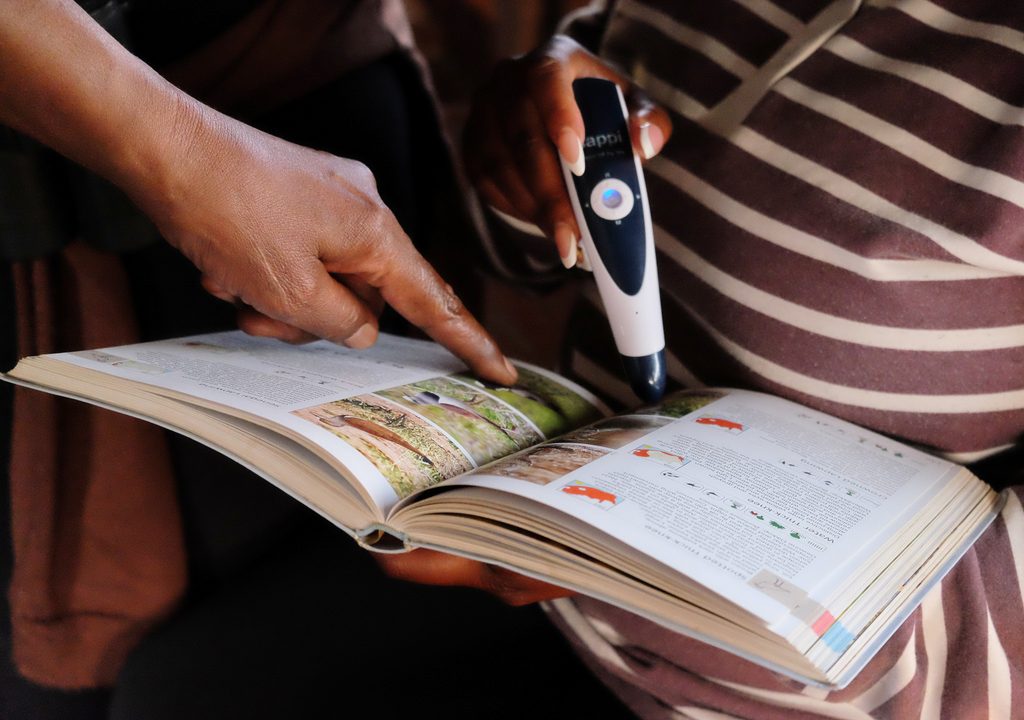
He speaks passionately about birds in the same manner a farmer talks about his flock, or a parent about his offspring, their behaviours, their mannerisms and intelligence.
“Number one, the interaction of birds themselves,” he says about his fascination with birds. “How they feed, how they breed, how they build their nests, you know, how they communicate.”
He speaks animatedly about the meaning behind their different calls, singing to attract a mating partner, to warn of imminent danger or to simply celebrate life.
“…that will just be, you know, morning calls, you know, just singing, enjoying themselves, then enjoying the rising sun and the breeze and [that] kind of stuff,” he explains.
His face lights up when he speaks passionately about his observations, from how a weaver bird carefully constructs its nest to attract a female, to how a male hornbill carves out a hole in a tree trunk to prepare a sanctuary for its female to lay eggs and raise their chicks in relative safety and warmth, and many more stories about his feathery friends.
When guiding birdwatchers, Mello emphasises silence, attentiveness, and patience, highlighting that birds perform “fascinating things that need concentration.”
These include how males often wear the more colourful feathers, which they use to attract females through displays like dancing or feeding them as a good gesture during their courtship.
He notes that while bird watching attracts more white visitors, he has observed a changing pattern of a growing interest among black people and advocates for introducing nature and birding education to younger generations.
He suggests this can be done by integrating such subjects into the school curriculum, through youth clubs and utilising facilities such as zoos and wildlife sanctuaries.
The World Meteorological Organisation has warned that the extreme weather phenomenon El Niño is firmly established and will intensify into a very strong event in the coming months.
This will manifest with big impacts on rainfall and temperature patterns and associated risks of floods, drought and extreme heat.
Mello says they have already noted a shift in the migratory patterns of birds, which he believes is associated with climate change and global warming.
“Number one, the colder the area is, the less migration. They [birds] would rather concentrate where, even though it might be cold, but not as cold as other areas,” he says.
“If it rains, then it’s a bit difficult for them to move from one area to the other. They would rather congregate on a tree that has got thicker leaves than this one, even though rain doesn’t bother them that much, because their feathers produce a certain liquid which is oily,” he says.
The culling of trees and destruction of forests as a result of the rapid population growth that leads to urbanisation and creation of human settlements is also impacting bird habitat, leading to them building nests in inadequate areas such as building rooftops and bridges.
In December 2024, the Convention on the Conservation of Migratory Species of Wild Animals indicated strong evidence that global increases in temperature have affected most migratory species groups, and these impacts are mostly negative.
The Convention noted that rising temperatures are impacting migratory species distribution and timing of migration.
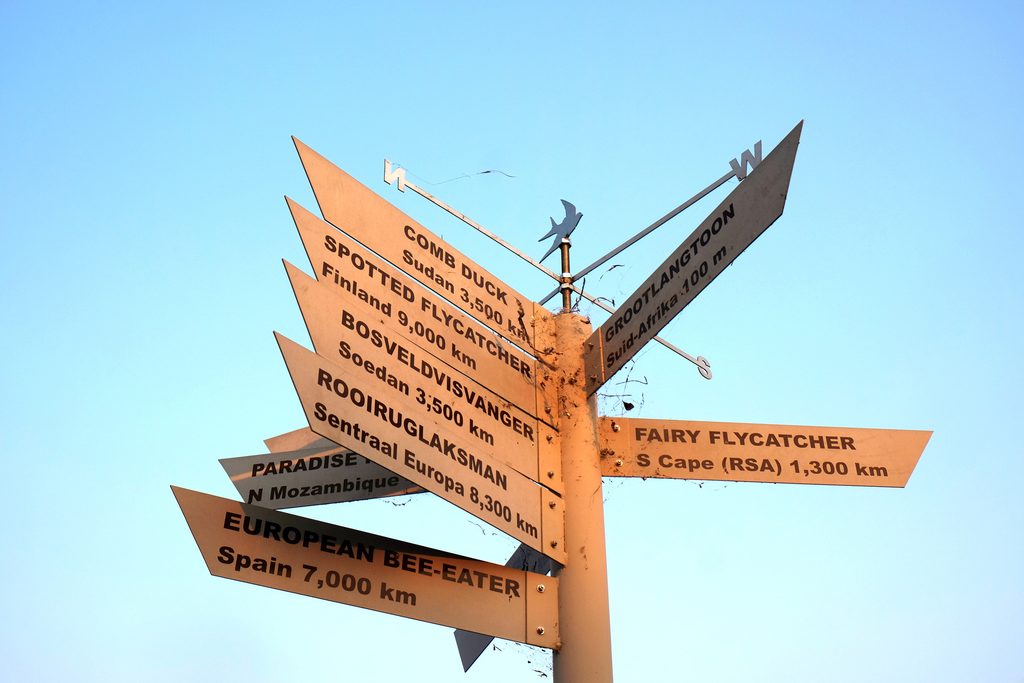
“In particular, temperature increases are driving poleward range shifts and earlier migration and breeding. In some species, such as wading birds, there is a risk this will cause a mismatch between the timing of breeding and the time when prey species are most abundant.”
The Department of Forestry, Fisheries and Environment noted on World Migratory Bird Day in May this year that reliable scientific data is essential to inform conservation action and that community-based bird monitoring, from local bird counts to larger monitoring programmes, helps provide information on species distribution, population trends, migration patterns and breeding success.
When he is not sharing his vast knowledge with bird watchers, Mello returns to his happy place, the serenity of the bush. Nothing gives him greater satisfaction.
“You know, honestly speaking, I would rather spend close to three, four or five hours in the reserve watching birds, listening to how they sing, watching them flying from one tree to the other, watching animals running after each other and you know…” he pauses as if to find the right words to express his deep love.
“It really makes me very, very, very happy and very content,” Mello says, gazing into the distance, his eyes wandering above the treetops where birds dance and sing merrily in the warm afternoon. – news@mukurukuru.co.za
About Nylsvley

Be First to Comment