Last updated on 1 September 2026
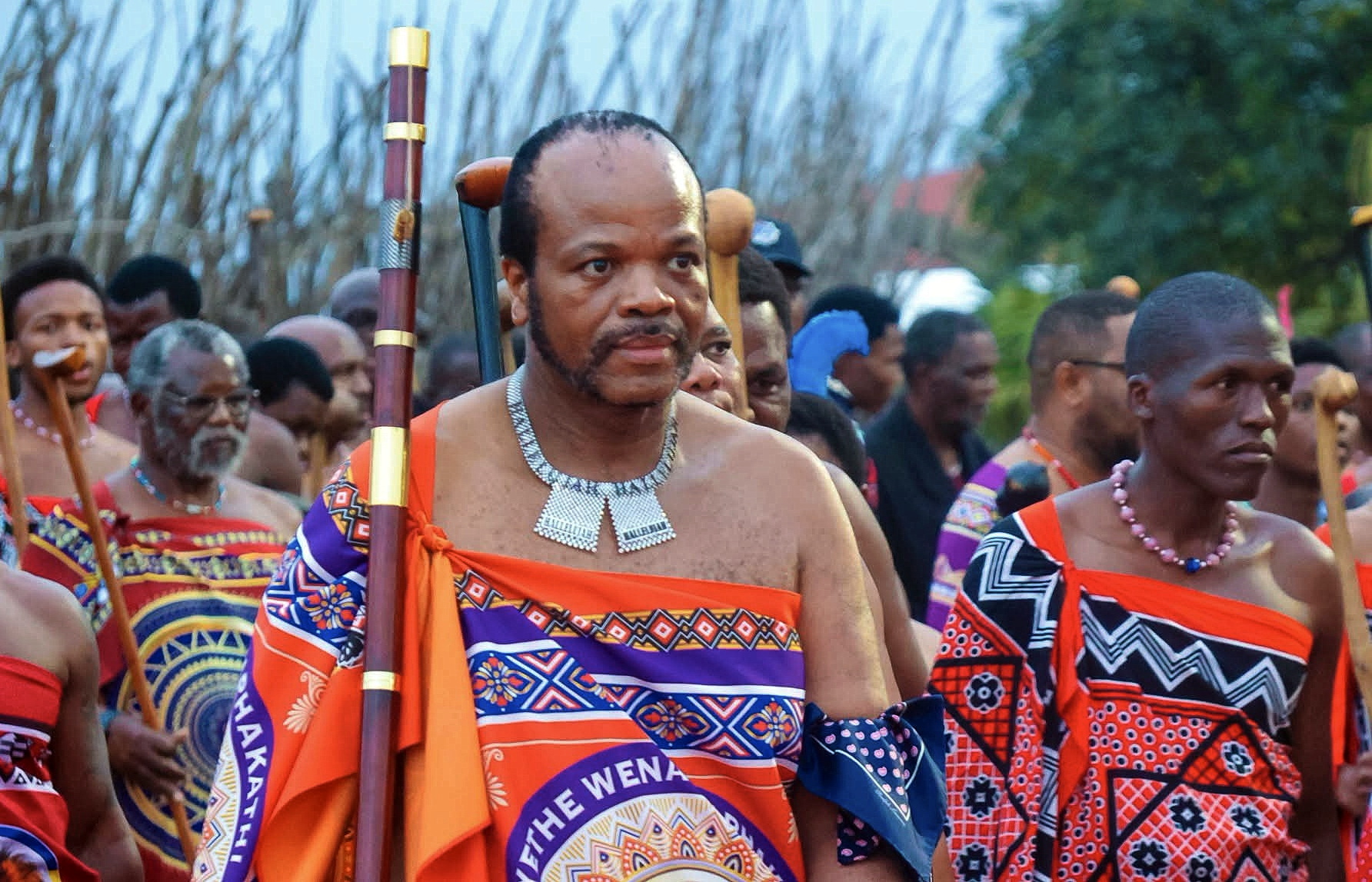
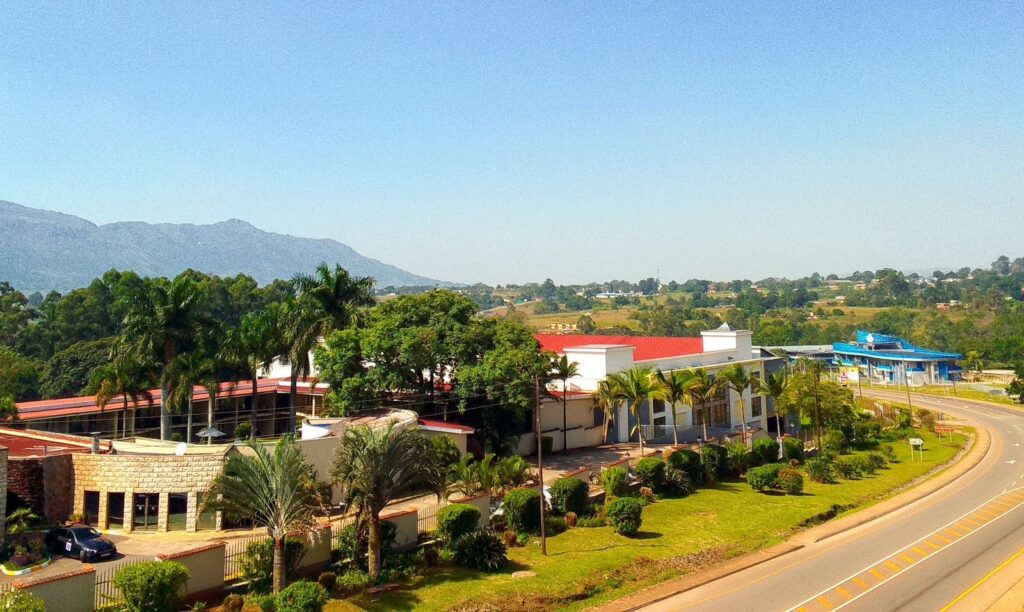
Visitors to eSwatini are greeted by portraits of a smiling trio: King Mswati III, LaTfwala, the Queen Mother, and Prime Minister Russell Dlamini. Majestic mountains welcome visitors, while tourists continue to return for the country’s lush hills, beautiful scenery and tranquillity.
At last count, eSwatini attracted almost 800,000 people per year, almost 1% of Africa’s tourist tally. It was only in 2018 that Mswati unilaterally reverted the kingdom’s name to eSwatini, undoing a corruption of an eponym of a pathfinder king that dated back to the 1800s.
Travellers, including politicians such as Duma Boko, president of Botswana, Andry Rajoelina, Madagascar’s ousted leader, and Taiwan’s Lai Ching-te, who arrived in May stowaway-style, are welcomed by the smiling trio. Mountains look on smilingly. The landscape is pretty. Now scratch the surface for the full picture.
“Swaziland is effective in instilling fear. That fear is immediately and deliberately interpreted to mean that the people of Swaziland are a happy and peaceful people,” a source said in an interview with political scientist Nqobile Mkhatshwa.
The silence after 2021
Talk about the fifth anniversary of the 2021 tragedy is confined to private spaces. The bloodshed was the state’s response to protests and petitions over issues such as acute teacher shortages, while the top brass was splurging amid a soaring cost of living.
The massacre claimed its first victim on June 29, 2021, and the death toll soon hit 60. Some liken the tragedy to the events of June 16, 1976, in Soweto in neighbouring South Africa.
In the wake of the 2021 massacre and subsequent killings, nobody can dare make a noise now, remarked editor Bheki Makhubu.
Why has nobody been punished? People ask quietly.
MPs who dared speak out after the bloodshed, Magawugawu Simelane, Bacede Mabuza and Mthandeni Dube, were instantly ejected from parliament. Simelane was forced into exile, where he leads a liberation movement. The other two MPs were imprisoned.
One of them, Mabuza, now serving a 25-year term for speaking out, fears the state will kill him while he is behind bars.
Another political activist, Mlungisi Makhanya, leader of the People’s United Democratic Movement (Pudemo), reportedly survived an assassination attempt in exile.
MTN was accused of complicity for shutting the internet for 216 hours at the outset of the massacre. The disproportionate and unnecessary shutdown, as the International Commission of Jurists put it, eroded US$15.8 million, almost R260 million, from the economy. MTN was not held accountable for the blackout.
Poverty, power and patronage
In what seems a repeat of the economic contradictions of 2021, lawmakers this year had a 54% salary hike to just above R1 million (US$60,000) per year, while cash-strapped civil servants have had to wait for months on end before protesting for overdue increments.
Even by Prime Minister Russell Dlamini’s admission, two-thirds of the population live under the poverty line. Education and health sectors have perennially suffered underfunding. Impunity is rife.
A question has to be asked: whose interests do lawmakers serve?
The Swaziland Solidarity Network blames patronage.
“The Senate of 30 members, all appointed by the king, hold veto power over the people’s representatives,” the network’s Sikhumbuzo Thomo noted in his review of the latest national budget.
Every cent allocated to security forces reduces funds spent “on clinics, on textbooks, on agricultural extension officers” who could help farmers double their yield, Thomo added.
Meanwhile, the king is preaching unity and peace.
Vusi Simelane, president of the Swaziland National Union of Students (SNUS), scoffs. Despite exile, preceded by kidnapping, torture and threats of detention, the axed electronic engineering student counts himself lucky.
He told The Continent that government mongers fear, citing his comrades, SNUS deputy secretary-general Zanele Dlamini and Nokwethu Mabuza, a union branch leader, among recent kidnapping cases.
“Some of the Swazis are abducted, jailed, exiled, killed for demanding freedom. The king talks about peace to look nice in the eyes of the international community,” Simelane remarked, citing cases such as the murder of human rights lawyer and columnist Thulani Maseko.
The latter’s widow, Make Tanele Maseko, told The Nation that the king knew who pulled the trigger.
“It was around 8pm when Thulani expressed his concerns about being killed. The king had spoken at around 3pm. At 10.15pm, he was shot dead in front of his family,” she said.
Repression and the missing dialogue
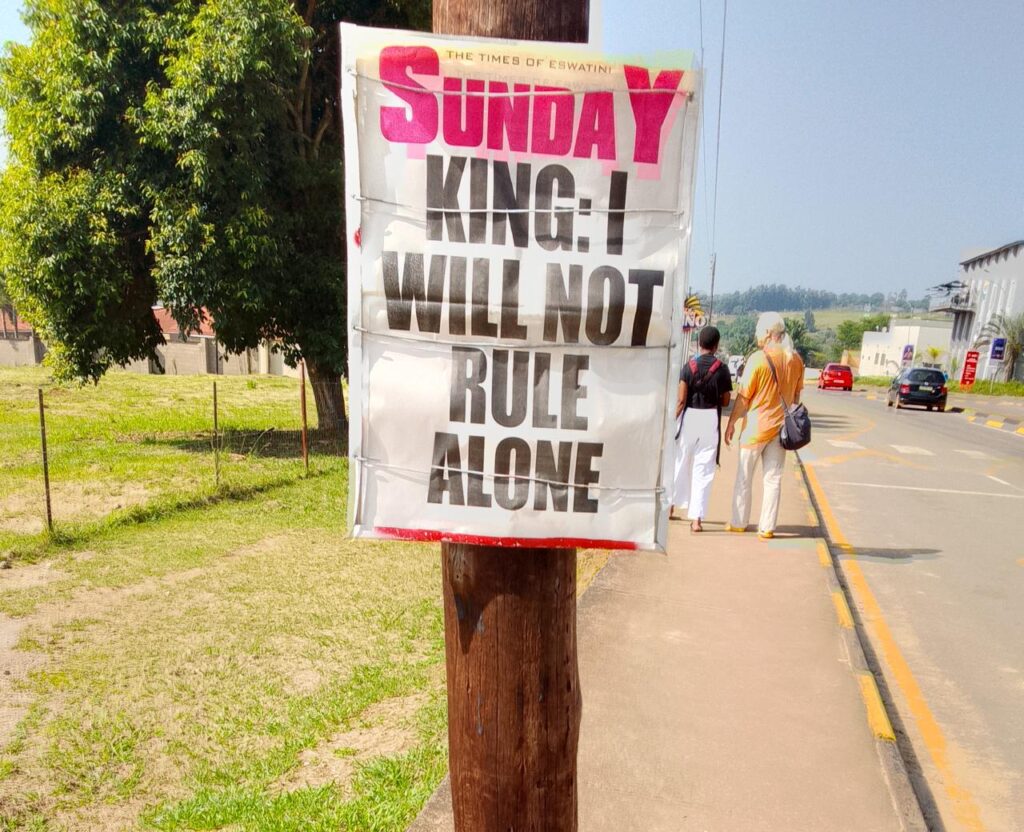
The monarch had, on that day in January 2023, threatened action to end the embers of 2021.
Leaning on euphemism, he warned, “ningabobese niyakhala, nasengicale kusebenta” (SiSwati for “don’t you dare cry when I start to work”).
So, start to work the king did.
“We are not children here. The king meant what he said,” asserted the widowed Maseko.
Her husband died while trying to kindle the national dialogue. President Cyril Ramaphosa and Mswati had agreed that the regional bloc’s secretariat “would work closely” with the eSwatini government to set up the national dialogue forum.
Ramaphosa’s talk about the dialogue has fizzled.
While the monarch routinely welcomes guests and trots the globe, he has symbolically failed to meet the survivors or families of the victims of the massacre.
Tradition requires the king, known as Ngwenyama, meaning Lion in SiSwati and other Ngoni and Nguni languages, to protect, let alone forsake or hurt, his subjects. Just like lions do in their pride.
The region’s envoys in the kingdom are mum about that tragedy and other human rights abuses here.
Beyond Southern Africa, Taiwan and the US, leaders of Ghana, Morocco and Uganda are cosying up to an openly dictatorial kingdom. Why?
Mmaikeletsi Dube, Ramaphosa’s new ambassador to eSwatini, waxed lyrically about enduring relations between the two nations but said nary a word about repression.
Media in SA, a nation in the throes of anti-African xenophobia, is active on matters that concern abuses in Zimbabwe but barely reflects on the plight of eSwatini.
Why?
Anyway, the massacre’s fifth anniversary, repression and ongoing abductions barely get a mention in the news. Just tune in.
With plenty of nations playing oblivious, Swazis would be justified to feel forsaken by Africa and the globe.
As if on cue, the Zambian High Commissioner Derick Livune, like Dube, sidestepped violations.
“I wish to assure you, Your Majesty, that during my tenure, I will work with your government in pursuing all possible avenues for cooperation.”
For investigative journalist Zweli Dlamini, a birds-of-a-feather mentality rules.
That is why, he argues, Mswati’s pals disregard the brutality gripping the land.
“If people are silenced by the barrel of the gun, who’ll speak out?”
A system built on control
In a country where political parties are banned, trade unions and student movements sustain the pro-democracy sentiment, but they too are restricted.
Cue the banning of this year’s May Day rally.
More chilling, a unionist going home after a May Day rally was once arrested for wearing a Pudemo T-shirt, then suicided in custody.
The state continues to attack people in political and trade union regalia.
Pudemo, which turns 43 this year, derides Mswati for auctioning eSwatini’s autonomy by granting diplomatic passports to two non-Swazi citizens: preacher Uebert Angel and Wicknell Chivayo, a tycoon who, Swaziland News reports, is a fraudster.
On that note, eSwatini this month received 11 unlawfully deported US detainees as part of the US$5.1 million prison-cell-for-cash deal. This was something that, despite questions of legality, Prime Minister Russell Dlamini keenly pursued with US President Donald Trump’s men.
Dlamini, the country’s seventh PM in 10 years, hand-picked by the king, insists that Swazis prefer Tinkhundla in place of political parties.
In contrast, University of Swaziland researchers found that people who favoured the Tinkhundla system outnumbered by far those who wanted to preserve it.
The debate dates to 1973, when King Sobhuza II, father of the reigning monarch, captured executive, legislative and judicial powers.
It was at that point that Sobhuza imposed Tinkhundla and presented it as a bridge between traditional and modern systems.
The 1970s were a testing period for Southern Africa
Namibia and then-balkanised SA still endured apartheid under John Vorster. Openly Nazist in his youth, Tel Aviv and a decolonised Malawi embraced Vorster.
Botswana and Zambia suffered Pretoria’s first known cross-border assassinations. Lesotho plunged into a coup, with Pretoria and its allies looming large in the background.
Angola, Mozambique and Zimbabwe were yet to defeat colonialism. The first two would later suffer proxy wars, the region’s bloodiest, stoked by Pretoria along with Portugal and the US.
Here, where delectable mountains smooch the sky, Sobhuza outlawed political parties to mute the opposition’s push for reforms.
For a century, the land has been under the respective rule of Sobhuza and Mswati. Two queens, including LaTfwala, mother to the reigning king, stood in as regents during the tumultuous four-year interregnum.
Continuing where his predecessor left off, Mswati rules by decree. Government uses brutality to maintain silence.
Still, the rights bloc is unrelenting.
Spurred by a series of petitions for basic rights, the masses were soon demanding democracy in 2021. Police swooped in on protesters and bystanders and opened fire.
An untold number of civilians were tortured, jailed and abducted. Others sought refuge elsewhere.
People recall the episode in whispers.
For Simelane, then a high schooler, 2021 galvanised the nation. He singles out the death of Thabani Nkomonye, a law student.
Youths, citing glaring discrepancies, refuted police claims that he had died in a car crash and blamed the state for killing him.
Many other mysterious deaths have rocked the nation since.
Fast-forward to this moment: fear and silence reign. – news@mukurukuru.co.za
Makhubu, the editor au fait with eSwatini’s modus operandi, was apt: nobody can dare make a noise now.
Shoks Mnisi Mzolo is a roving storyteller with a background in arts and culture and financial journalism. He also works as an independent researcher and is an avid traveller.

Be First to Comment