
As the first light creeps over Gauteng’s gold belt, police and security officers conduct a sweep around the perimeter of a long-abandoned shaft. Just metres away, groups of illegal miners, known as zama zamas, have already swooped into the earth, digging for gold in unsafe tunnels controlled by criminal syndicates. Scenes like this play out daily across South Africa, where illegal mining has grown into a multibillion-rand underground economy.
In 2024, the Minerals Council South Africa estimated that the practice drained at least R7 billion annually from the economy in lost tax revenue and export earnings.
In a recent briefing, Minerals Council’s Chief Economist Henk Langenhoven said illegal mining is no longer about desperate individuals scratching out a living, but it has become a highly organised criminal enterprise with links to an illicit trafficking network.
“The impact goes from environmental destruction to the destabilisation of communities,” he said.
Major-General Senaba Mathebula of the SAPS Economic Infrastructure Task Team said police raids in recent years have revealed the scale of syndicates behind illegal mining. He further explained that operations often involve cross-border smuggling routes, underground financing, and the use of armed gangs to control access to disused shafts.
“The men underground are often just the visible layer; behind them are people who supply explosives, weapons, buyers, and international contacts,” he said.
He said arresting zama zamas without tackling the syndicates is like cutting off branches while the tree grows stronger.
Many communities live in fear of zamas zamas, as this has increased crime, turf wars, and environmental hazards such as sinkholes.
“When there’s fighting between rival zama zamas, stray bullets don’t choose who they hit. No one is safe,” said a resident from Wattville (Ekurhuleni) who asked to be anonymous, fearing for her life.
She’s one of the residents whose house now has a sinkhole. Zamas zamas are operating just near her shack. She also said she’s dodged a bullet twice in one year.
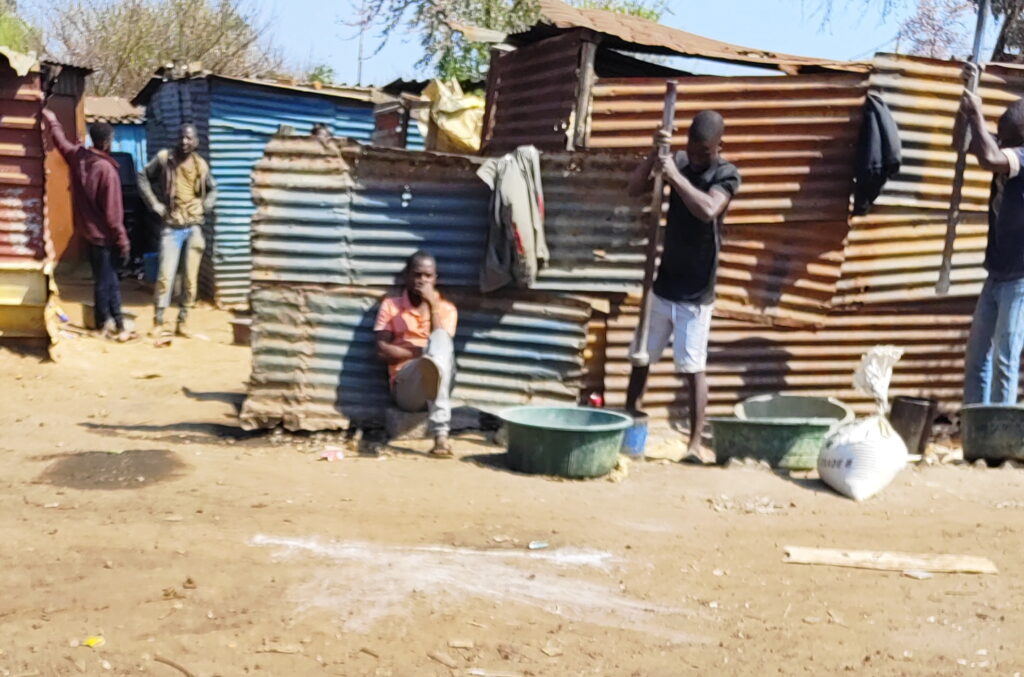
“The first time I dodged a bullet was when they were trying to fight back against the police, and the second time was in the middle of the day when they were fighting amongst each other,” she said. She said she tipped off the police a few times, but nothing really changes.
“They can run from the police today, but trust me, they’ll be back to work the following morning,” she said.
Legal analyst Dr Nomvula Radebe from the University of Pretoria said South Africa urgently needs a law that treats illegal mining as a specific crime, like copper theft, with penalties that fit the scale of the damage. She further explained that mining companies have begun to deploy new tools to protect assets and detect illegal activity.
She referred to AngloGold Ashanti, which has tested drones and thermal imaging cameras to monitor abandoned shafts, while several platinum producers are using AI-powered surveillance to track unusual movement near high-risk zones.
Security consultant Amos Ledwaba, whose firm works with several mines, explained that ground-penetrating radar can pick up illegal tunnelling, and biometric access systems are closing the door on unauthorised entry.
“We need strong partnerships with law enforcement; technology alone won’t solve the problem. A lot needs to be done,” he said.
Community activist Kgomotso Diale said enforcement must go hand-in-hand with community engagement. She said many zama zamas are unemployed locals who view illegal mining as the only option to feed their families.
“We’ve always said you can’t police poverty. If you want to stop illegal mining, you must create alternatives. That means skills training, legal small-scale mining permits, and opportunities that give dignity to people,” she said.
The Department of Mineral Resources and Energy (DMRE) issued community mining permits in Limpopo and Mpumalanga, allowing cooperatives to mine legally under regulated conditions. In a parliamentary session earlier this year, Minister of Mineral Resources and Energy Gwede Mantashe said there’s no quick solution, but through stronger laws, collaboration, and investment in alternatives, the mining sector and communities can be protected.
“Until then, the zama zamas will continue to descend into abandoned shafts at dawn, driven by desperation and sustained by syndicates. The question is whether South Africa can close the gaps before the damage becomes irreversible,” he said.
A report presented before Parliament in March revealed that Operation Vala Umgodi, which was established to combat illegal mining across the country, yielded a lot of positive results since its inception in December 2023.
The report by the National Joint Operational and Intelligence Structure (NATJOINTS) revealed that there were 16,645 cases and 20,367 arrests by Operation Vala Umgodi. The report further revealed that as part of Operation Vala Umgodi, the South African Police Service was “allocated R1,772,359,000 to acquire assets and deploy 4,302 personnel over 18 months, focusing on stabilising and normalising high-density illicit mining areas to mitigate revenue losses, environmental harm, and security threats linked to organised crime.”
It further revealed that 572 firearms, including 87 toy guns, 13,427 pieces of ammunition, 414 magazines, 298 trucks, 318 vehicles, and 86 big mining machineries were removed from the operations.
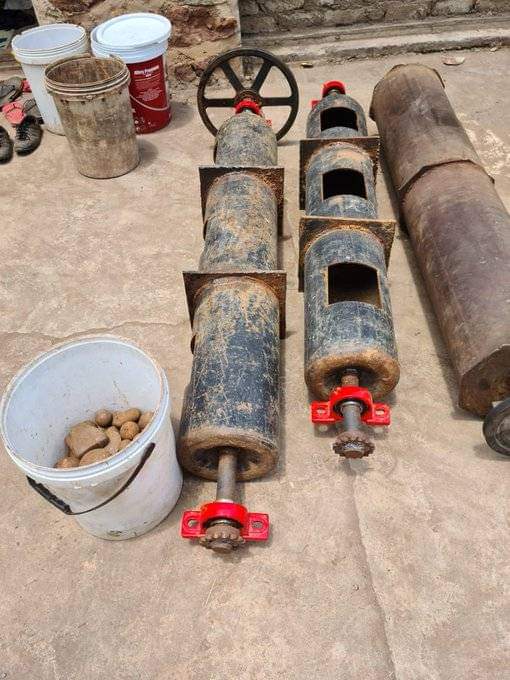
A further 7,577 phendukas, drums used to process gold, 342 phenduka stands, 1,687 generators, 5,349 spades, shovels, picks, axes, 231 drills, grinders, welding machines, 2,529 hammers, jackhammers, and 455 wheelbarrows were taken from the zamazamas. – news@mukurukuru.co.za

Be First to Comment