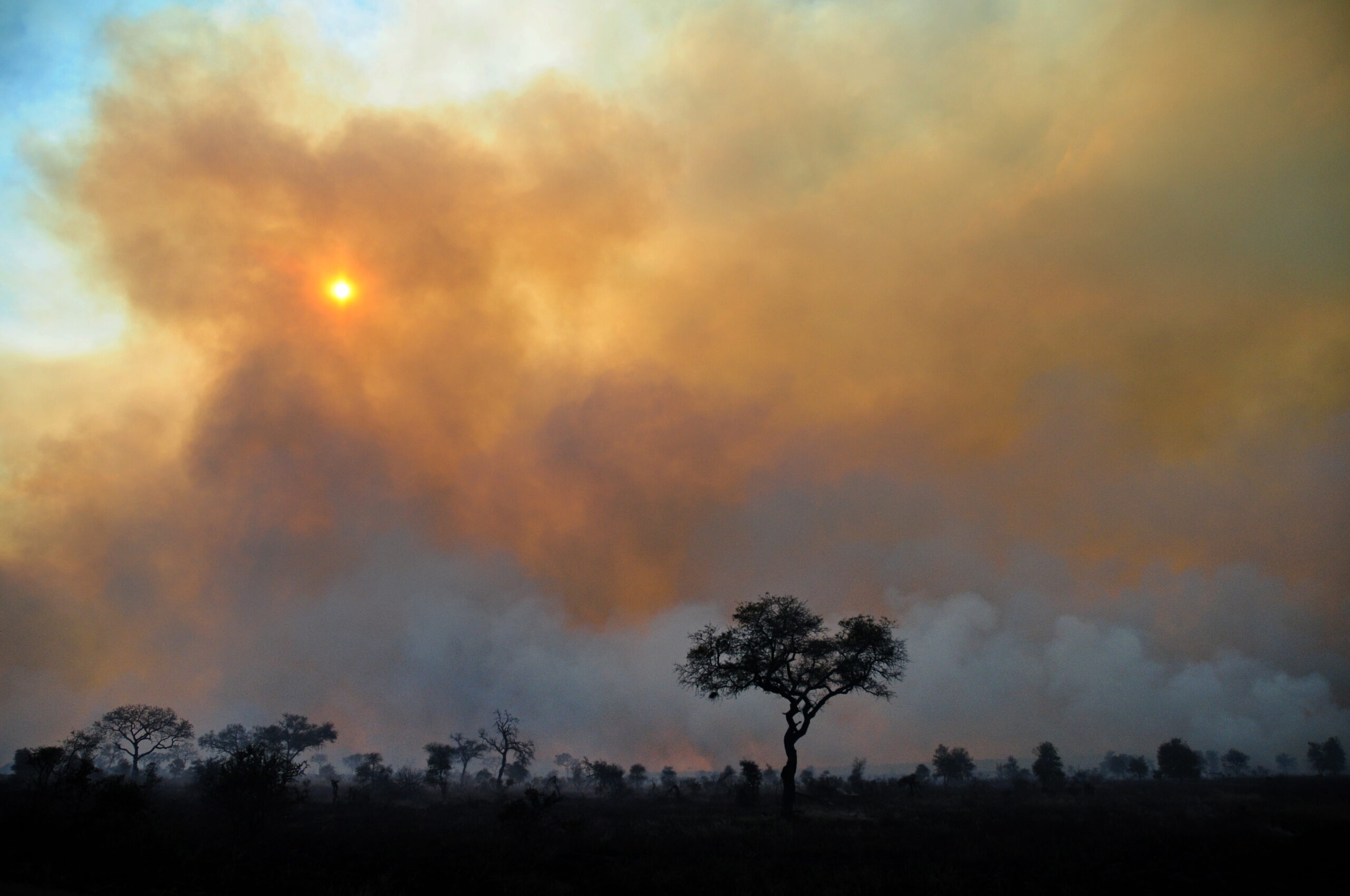
Amidst the growing concern over rampant fires engulfing rural communities, residents of Pinky-Sebotse village have found relief in the recent fire prevention and awareness campaign spearheaded by the Working on Fire programme (WoF).
Tribal authority leader, Lesiba Chokwe, said his community has experienced a sense of renewed reassurance.
For this community, these fires represent more than just a threat to their homes and livelihoods—they pose a significant danger to their way of life.
“The issue of fire has been a constant talking point at our tribal council. The timing of the campaign launch was perfect because we needed this intervention.
These fires aren’t a result of natural causes because they usually occur at night. Someone starts them and we don’t know who it is, in most cases,”Chokwe said.
Pinky-Sebotse, situated in Ga-Matlala falls within the Blouberg Municipality in Limpopo, is characterised by vast grasslands that serve as highly combustible fuel for fierce fires.
The village, primarily inhabited by maize farmers, faces a significant risk of wildfires due to the highly flammable nature of maize crops. As the threat of climate change continues to escalate, the vulnerability of the village to these fires becomes even more pronounced.
“Just two weeks ago, a young man threatened his mates during an altercation, that he would burn grazing land. Indeed a fire erupted in the said area. The community went out in numbers to extinguish the fire. When confronted, the culprit fled into the wilderness and the sad part is that he is from our very own soil,” he said.
Based on data from the World Health Organization (WHO) the number of fire-related deaths in South Africa amounted to 3,618, accounting for approximately 0.80% of the total fatalities. “The age adjusted Death Rate is 6.64 per 100,000 of population ranks South Africa number 4 in the world.”
Ofentse Letswalo, Working on Fires Limpopo spokesperson, said their visit to Pinky-Sebotse was propelled by the high number of fires reported in the Blouberg area.
“We saw it fit to visit the community and conduct risk assessment and fire awareness education in the area. The area is as well covered with a lot of vegetation.
Community members participated in the fire risks assessments and came up with fire management plans for their communities. They also participated in the fuel load reduction activities to reduce fire risks,” Letswalo said.
Hot, dry and windy weather combined with fuel accumulation are key factors in the damage wildfires cause, but there are also development trends that are increasing the risk of fires.
Fires damage soils by consuming the organic matter that binds the mineral particles, and creating conditions where rainwater is repelled and simply runs off over the soil surface.
“Over 90% of the fires are caused by human negligence. It is important to educate the communities to mitigate the fire risks. Now that communities are well informed, they will refrain from contributing to the habits that cause unnecessary fires,” Letswalo said.
Cattle farmer Bigman Mahapa, residing in Rosenkraantz—a village located three kilometres away from Ga Sebotse—expressed that his community has joined forces with neighbouring villages to establish local fire fighting structures.
“We decided to group ourselves into a team of fire fighters as on random nights of the week we would get reports that a fire has broken out.
We have made it our mission to follow up on these fires and put them out because failure to do so means more harm on our livelihoods, homes and infrastructure,” Mahapa said.
Mahapa suggests establishing firebreaks in the community due to the vast vacant farming land that connects the villages. These cleared zones act as natural barriers, preventing fire spread and safeguarding the communities
NASA’s Fire Information for Resource Management System (FIRMS) which provides near real-time active fire data states that there were “11,648 VIIRS fire alerts reported between 11th of July 2022 and 10th of July 2023 considering high confidence alerts only. This is unusually high compared to previous years going back to 2012.”
During the week-long fire awareness campaign, a high turnout of both young and old community members engaged in the workshops and training sessions focused on preparedness and resilience.
Among them was Rebone Kgatla, 34, expressed that the campaign has ignited a strong desire within her to pursue more information about fire programs.
“My peers and I had no idea what a fire belt was. All we knew was that depending on the scale of a fire, some fires need water while others can be put out using sand,” she said.
Operating as a program under the Department of Forestry, Fisheries and Environmental Affairs, Working on Fire has impacted 5000 young men and women employed as fully trained veld fire-fighters stationed in more than 200 bases across the country.
“Through the training we received, I am confident that our ignorance has been replaced with awareness. If available I would join fire fighting programs so that I can make a difference in other under-resourced villages that have no knowledge on what we now know,” Kgatla concluded.

Be First to Comment