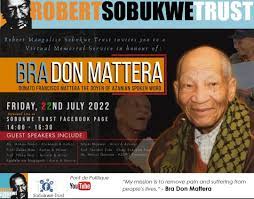
IT has been a week of mourning, appreciation and overflowing tributes cementing a resounding reverence for South African writer, poet and freedom fighter Donato Fransisco Mattera
It was only befitting that on Friday 22 July – the Robert Mangaliso Sobukwe Foundation hosted a memorial service in honour of Don Mattera, a long standing member of the Pan Africanist Congress and a self-proclaimed follower of its founder and anti-apartheid revolutionary Robert Sobukwe.
Acknowledging that “Bra Zinga”, as he was affectionately known, had the power to bring people together, literary giant Professor Zakes Mda gave a moving tribute for his old friend at the memorial service.
Mda who learnt of Mattera as a teenager, said it was Bra Zinga who through his poetry taught him that the same pen that can write about the freedom struggle can also write about love, and that the two are not mutually exclusive.
Mda remembered how he and Mattera travelled the world together on writing seminars, and how one such trip led them to forge a brotherhood with Nigerian writer and environmental activist Ken Saro-Wiwa.
Saro-Wiwa co-founded the Movement for the Survival of the Ogoni People (MOSOP), which fought for the rights of the Ogoni people against oil company Shell, which had exploited Ogoni land but left its population of 500 000 poverty stricken.
After MOSOP’s successful peaceable fight against Shell and Nigeria’s military regime, Shell withdrew its operations in 1993, leaving Saro-Wiwa vulnerable to the bitter dictatorship regime of General Sani Abacha, who seeked revenge on the activist.
“Whilst we were here [South Africa] we heard that Ken Saro-Wiwa was arrested …and sentenced to death. It was a very fast, makeshift trial, and he was sentenced to death,” Mda said.
In 1995, Mda and Mattera roped in Nelson Mandela who at the time had been President for a year and a half to appeal to Abacha and other African leaders to intervene in the execution of innocent Saro-Wiwa.
However, despite attempts to save their activist friend, Saro-Wiwa was hanged on 10 November 1995 and his loss deeply affected Mattera even into his elderly years.
“Even in our recent talks he would still talk about Saro-Wiwa and say, “hey man, do you still remember our Nigerian friend?” … And you would see the sadness in him at the murder of Ken Saro-Wiwa.
“I’m just telling this story to show that his [Mattera’s] pan- Africanism was not just theory, it was not just an ideology that is divorced from practice, it was tied in with who he was- a man of compassion,” Mda concluded.
The 87-year-old icon was laid to rest in accordance with Muslim burial rites at Johannesburg’s Westpark Cemetery on the night of Monday, 18 July. He died at his home in Soweto earlier that day.
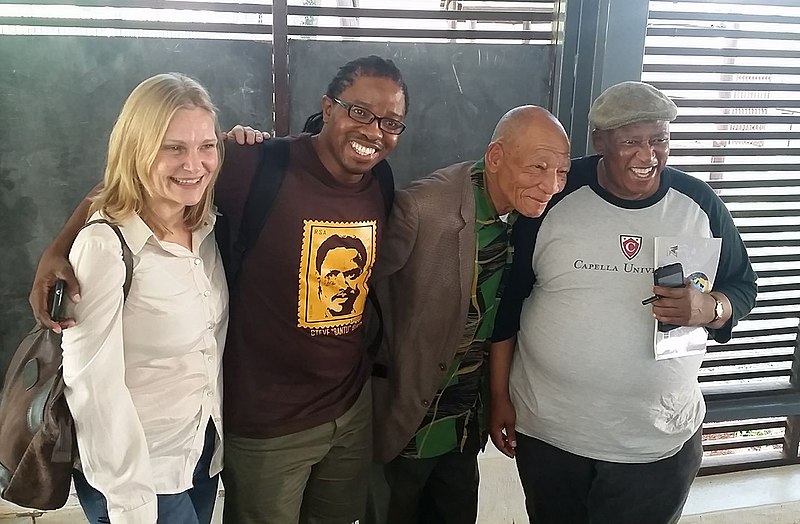
Before reciting his poem entitled I am an African at Friday’s memorial service; poet, sculptor and historian Professor Pitika Ntuli took the opportunity to thank Mattera’s son, Dr Teddy Mattera, for always keeping him abreast with all issues pertaining to his father.
“Bra Don loved this poem. Bra Don was a linguist… Now, the poem he loved because it involves languages,” Ntuli said.
With unforced flair Ntuli paid homage to the corners of Africa through his poem, perfectly moving between African languages but it was at the end of his spellbinding recital in isiZulu that Ntuli said, “Bra Zinga, I am in your soul”, before breaking down.
Ntuli’s lines from this poem, “Yes, I am an African reborn from hot chains, gurgling seas and burning deserts”, reminds one of Mattera’s war against the classification and segregation of black people by the apartheid regime in the 1950’s.
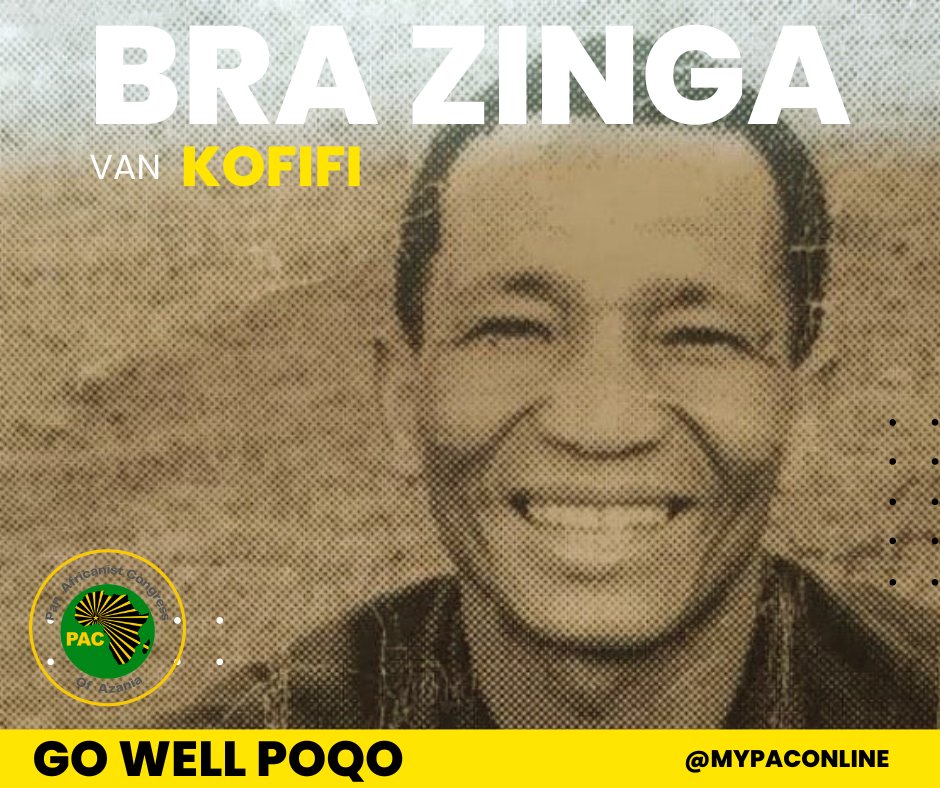
Mattera who was born in Westbury in 1935, had an Italian grandfather Franscesco Mattera who married a Griqua- Xhosa woman; and his mother was of Setswana descent.
The Nationalist government, which came into power in 1948, through their Population Registration Amendment Act made descent the main factor in determining race classification.
The government classified Mattera as “coloured”, a term, which he rebuked because of its cultureless nature. Mattera rather saw himself as a black South African.
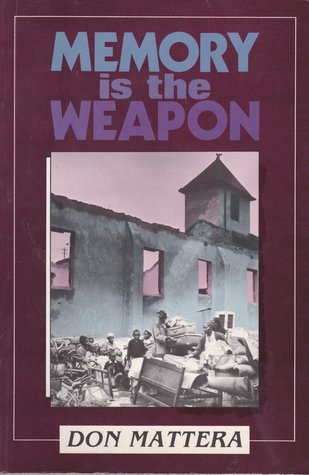
In his autobiography Memory is a Weapon, Mattera states: “In this country you are what they think you should be, what they want you to be, and all that through the stroke of a pen.”
Before taking up the pen Mattera was notorious for leading the Vultures, a gang known for terrorizing Sophiatown for seven years. Violence was not a new thing for non-white communities like Westbury or its neighbour Sophiatown, as the governments “white might was right and black lives expendable.”
However, the governments’ forced removals through the Group Areas act of 1950 aroused the political consciousness of the masses including that of Mattera’s.
It was the intervention of Father Trevor Huddleston- an Anglican priest from Sophiatown, and Nana Sita- leader of the South African Indian Congress, who Mattera writes had “transformed despair into hope; fear into understanding; cowardice into courage.”
Delivering a riveting tribute African Futurist Dr Mohau Pheko celebrated Mattera for his grand eloquence, his remarkable story of gangster turned community activist and role model to communities he served.
“He showed a boundless kindness and consideration of others. He read about Africa profusely and deeply understood the roots of racism.
“Bra Don etched in the finest history books of this country, this son of the soil will be remembered for standing in the breach against tyranny of our times,” Pheko said.
Pheko said Mattera’s unique ethnicity drove him to embody his infectious aura of Ubuntu.
“A gracious, decent, humble freedom fighter. A friend. A role model to many of us: to the journalists, the youth, to the communities that he served. A son of the soil who prophetically saw a future and sounded the alarm for us to take action,” Pheko said.
Other tributes included one from Chairperson of the Robert Sobukwe Trust Professor Gordon Zide, and poets Kgafela oa Magogodi and Ntsikelelo Mazwai who shared their poetry pieces in honour of the fallen hero.
Mattera’s son Teddy compared his father’s vast influence to that of an oak tree, which lives up to 200 years before collapsing to its demise.
“…But over the hundreds of years [oak trees] have shed many thousands of seeds to produce others of oak trees. I see that everywhere I go, but I’ve never really understood it until his death, the scope: the breadth, the depth of this man,” Teddy said. – news@mukurukuru.co.za

Be First to Comment