IN a world where young people are often discouraged from pursuing their creative passions, Chepape Makgato is breaking the mould by using art as a tool for education and community development.
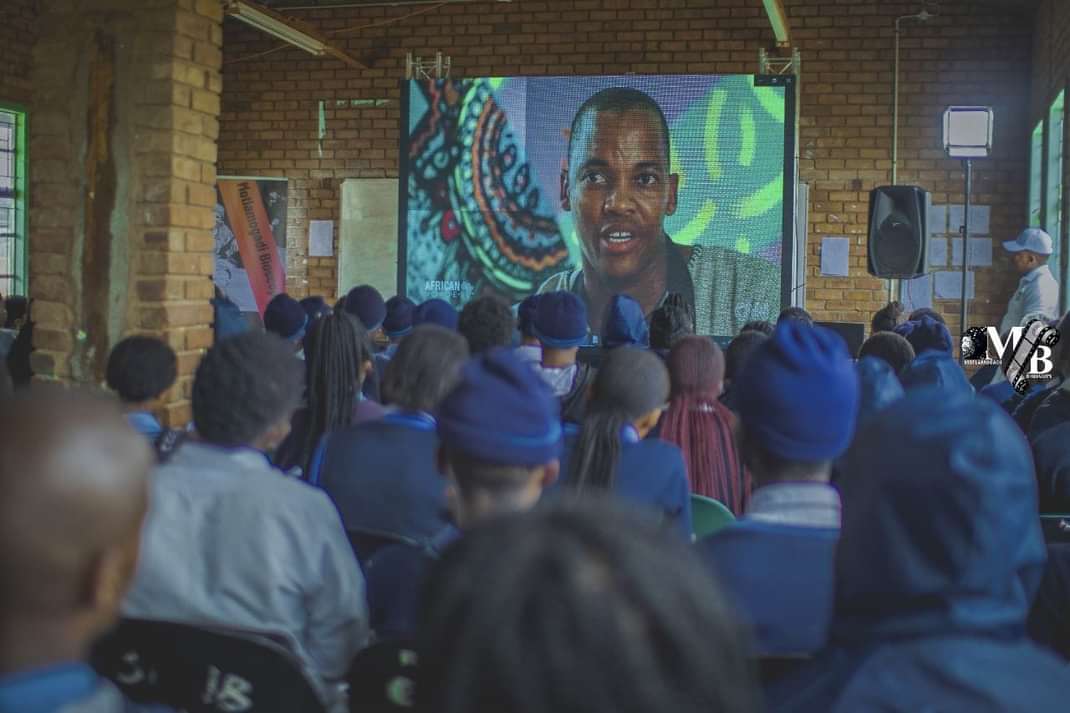
Makgato’s passion for community art development has touched youth and communities from five Limpopo villages through a film initiative aimed at conscientising youth to consider the creative industry as a career choice.
The Motlamogadi Bioscope screenings impacted communities of Makotopong, Ga-Mothiba, Solomondale, Ga-Mothapo and Seshego in Limpopo’s Capricorn District. The screenings were carried out over a five-week period that wrapped up earlier this month.
Learners from Phomolong, Ngwanlaka, Mafolofolo, Khaiso and Gerson Ntjie high schools formed part of the 3369 audience members that were reached.
Makgato, 34, remembered how growing up in Makotopong village pre 1994, entertainment was limited as there was no electricity in the area.
His late grandmother Raesetja Motlamogadi Makgato introduced him to the art of storytelling through ancient African tales around the fire.
“My siblings and I would huddle around the fire in the evening and have my grandmother tell us countless tales. She would have turned 103 years old this year and I am grateful to her for introducing me to the gift of storytelling,” Makgato said.
Makgato and his team members have been instrumental in inspiring thousands of rural youth to strive to build their careers in the arts and culture industry and catalyze the culture of film consumption in communities.
“Children are important and if ever I get an opportunity to share with them in the form of knowledge and skill transfer I always take that opportunity. And I understand them because I come from there,” he said.
Having been exposed to the arts at the tender age of seven, Chepape’s creative journey has been a remarkable one. When he was eight years old his artwork was featured on Mopani TV as part of an art segment following the news bulletin. With a Masters in Fine Arts under his belt, Chepape is now a well-known mixed-media artist, writer, and philanthropist, leaving an indelible mark on the industry.

The screenings were accompanied by panel discussions and question and answer sessions with leaders in the fields of film and television.
“They [screenings] were a tapestry of locally made short documentaries and the highlight was the screening of Sesadi sa Tsodio, a film by Rangoato Hlasane, and Man Alone by Roelf Matlala,” remarked Makgato.
Sesadi sa Tsodio is a film about the story of a fugitive who is being pursued by a ghost and the police, and he runs to Gauteng.
However, the essayistic film proposes an alternative interpretation of the story, suggesting that the fugitive, named Tsodio, may not be running from either the ghost or the police.
The video uses the kwaito classic song Tsodio by Lebo Mathosa and previous covers of the song to tell a story about movement, personal history, and ancestry. The song explores themes of triumph, defeat, reclamation, and naming.
Matlala’s Man Alone is about a man named Sam who lives alone with his potted plants, which have become his sole focus and source of affection. Through Sam’s story, the play explores the profound isolation of old age, with Sam having no companions, family, or friends, only neighbors who view him as mad. The play portrays how madness begins to take over Sam’s one-room world that he shares with his plants.
One of the key benefits of community art development is the sense of empowerment it provides. For young people in rural areas, access to resources and opportunities can be limited.
“I say they were a tapestry of locally made short documentaries is because they were aimed at concientising young people in high schools to start looking into the creative industry as a potential career choice.
“Children go to school everyday but they lack motivation and you find that they go through high school not thinking about their future,” Makgato said.
Supported by the department of Sport Arts and Culture, Presidential employment Stimulus and the National Film and Video Foundation, the programme employed 35 people including production managers, ushers and teachers.
Actor, theatre producer and teacher, Nat Ramabulana who formed part of the team that toured the schools said experiences such as these were vital to learners who are situated in an underdeveloped province as Limpopo.
“It’s silly that exposure to the arts is limited to people living in the big city metro’s. We should all have access to and be able to engage in creative industries
I loved spending time with the learners and you can see that they are desperate for people to come out and interact with them as they are fearless and keen to know,” said Ramabulana.
Despite encountering some obstacles such as poor communication from schools resulting in a few participants dropping out, the community arts development team remains optimistic about their future endeavors. They are excited to continue their mission of reaching out to more schools in the Waterberg region of Limpopo and are committed to nurturing young talents through their program.

Be First to Comment