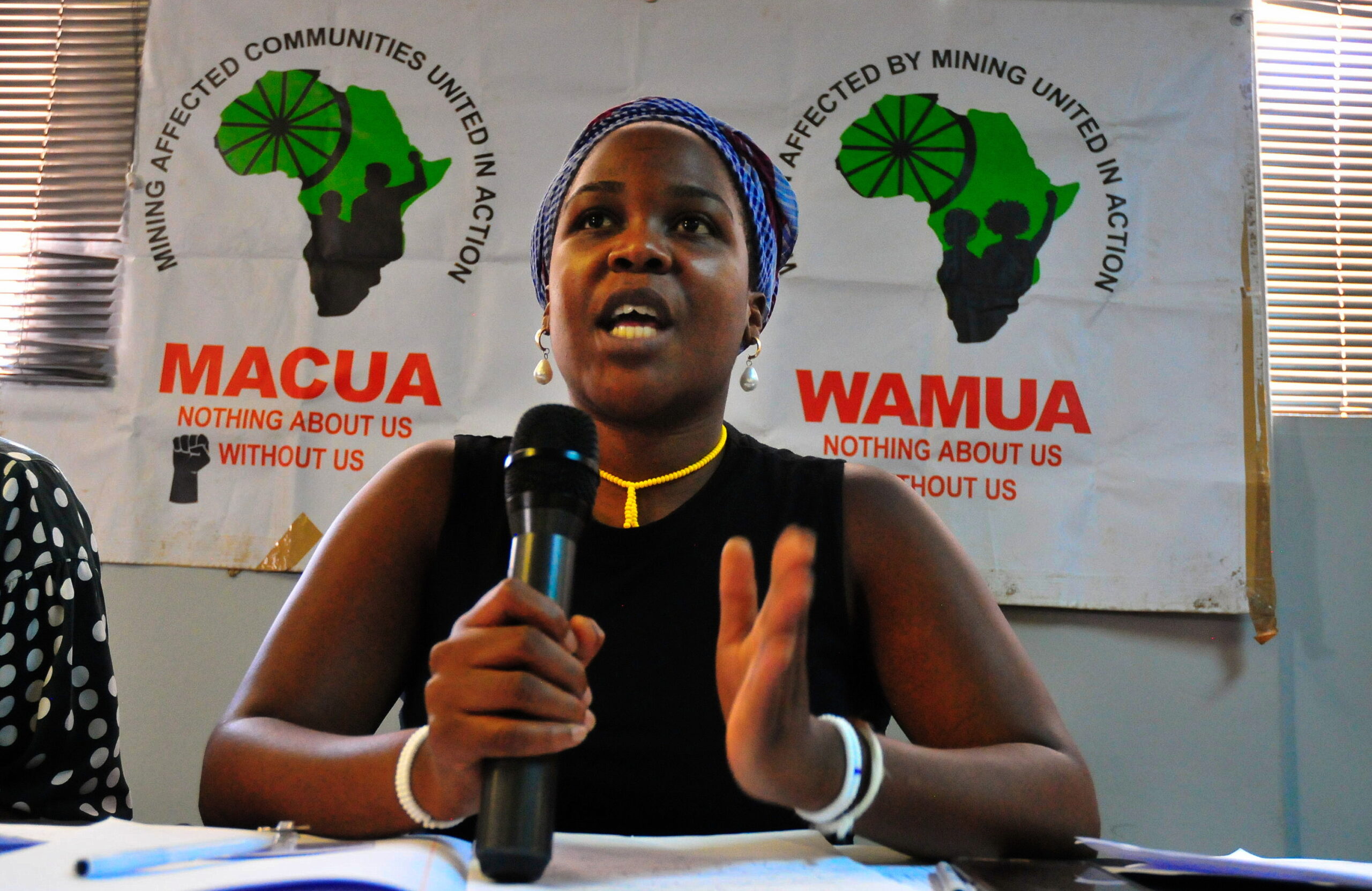
The loss of cultural heritage due to environmental degradation from mining activities represents not only an environmental issue but also a social, cultural, and human rights concern argues social and human rights activist Yolanda Dyantyi.
She told the Affected Mining Communities Summit currently underway in Pretoria on Wednesday morning that this underscores the importance of recognising and protecting the cultural rights and heritage of indigenous and local communities in the context of resource extraction as we continue to define our experience of living as black people in South Africa post 1994.
This a slightly edited version of her speech.
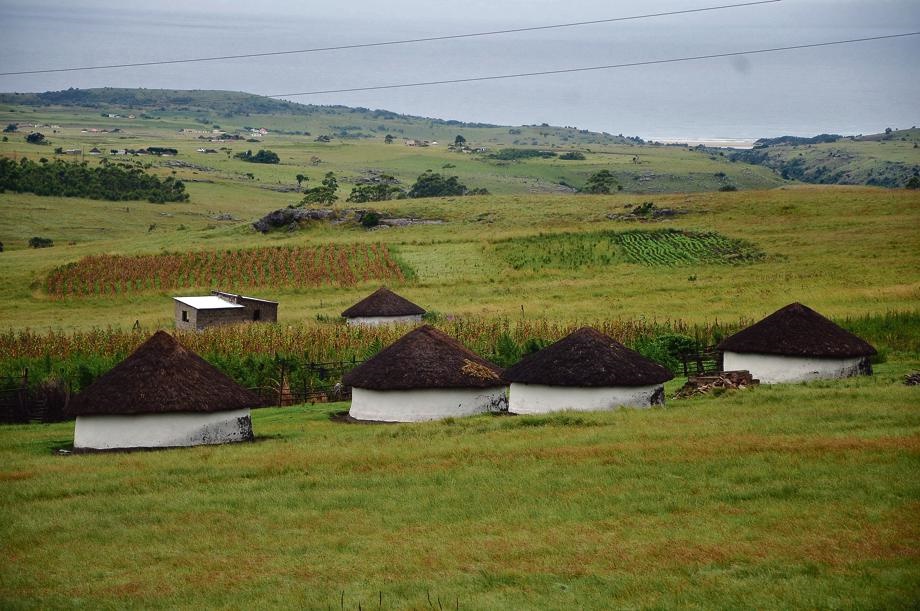
“I was born and raised in Johannesburg but my family home is based in a small village called eGubaHoek which is located on the outskirts of a little coal mining town called Indwe Town in the Eastern Cape along the R56 road route also known as the Molteno-Indwe coal field.
Indwe Town was ‘formally’ established as a coal mining town under missionary colonial rule approximately in the year 1895 as part of the British colonial rule’s territory which controlled and administered natural state resources or rather, natural resources that colonizers found natives already using and decided to steal.
Indwe was identified by an alleged ‘land surveyor’ called Gilbert Hall as a lucrative area for economic activity under Cecil John Rhodes’ administration particularly with the discovery of coal deposits in the region as a result of already existing mining activities that natives of the region had undertaken prior to the arrival of settlers.
lndwe originated as a planned corporate town in the historical context of struggles over the land and exhausting our ancestors labor for purposes of financial gain. Today it is home to over 20 000+ people including from its immediate surrounding rural communities in which present day coal mining activity still occurs.
In 2020 the parliamentary monitoring group released a report presented by the Council for Geoscience which suggested that the coal resource along the Molteno-Indwe coal field amounted to about 530 million tons, worth about R122 billion.
Elitheni coal mine is the name of one of the operational open mine casts specifically located in my rural area, in fact it is right in the backyard of my great-great-great grandfather’s land. Elitheni has been under great dispute and endless negotiation over the decades, seeing the rights to the coal mine being sold from one mining company to the next as its economic activity has been contested largely by the community members and rightful landowners in the area.
Contestations surround the historical prevalence of colonial settlers in the area and their failure to develop the community in which the mine exists. Elitheni mine has a history of underpaying local miners, sometimes the various mining companies opting to bring in their own miners from outside of our community, cutting off local residents as beneficiaries.
iGubaHoek – the mine affected rural community I am from – (of which I’ll refer to as eGuba henceforth) has one dilapidated high school in the entire rural community, no primary school, no functional early childhood development schooling for toddlers, we have poor network coverage meaning access to the internet and online activity is difficult for community members, whilst we live with incomplete gravel roads, not incomplete tar roads but gravel roads, that get further destroyed due to the heavy trucks transporting coal and by the general neglect of road maintenance from both the governing municipality and mining companies alike.
The water in my rural home is contaminated with toxins where sometimes you open the tap that you had to finance building yourself to be confronted by polluted water because the government has failed to provide clean and accessible drinking water for rural communities in this 30 years of democracy, where in fact the entire biodiversity of the land is threatened because the failure to comply with mining and environmental laws by these mining companies and the colluding of powers also known as corruption between the state and private business for profit continues to destroy the environment and the livelihoods of citizens in present day South Africa.
Multiple human rights violations are at play that threaten our heritage with the indigenous and the rightful landowners of iGuba facing the risk of loss of land and the risk of our traditional and cultural practices being eroded. The Eastern Cape province and my homeland specifically, is an ecologically rich area where the majority of landowners use the land for sustenance purposes such as farming and grazing for animals to healing purposes for spiritual divinity practices that are deeply rooted in our culture and our relationship with the land.
The issue of failure of compliance to environmental laws is not only political, but it also affects our day-to-day activities, influencing our socialization and our connection with the land. AmaXhosa and the sub ethnic groups that make up the cultural group of amaXhosa such as AmaBhele or AmaMpondo which I belong to, are known to have traditional beliefs that are embedded in our spiritual connection with the land and valuing the knowledge systems that exist within nature and the environment.
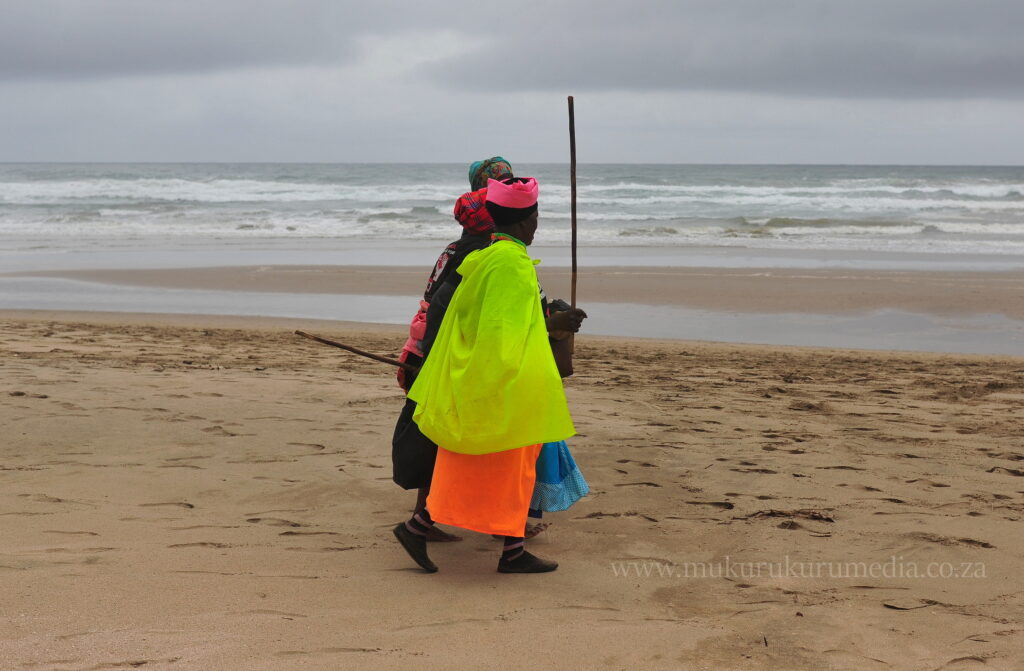
These traditional beliefs are also linked to one’s healing journey when sometimes troubled with what western science may term or regard under a broad scope of psychological or mental illness. Sometimes these traditional practices are also rooted in healing generational karma, healing the land so it continues to thrive as a place we call home, and further using the land and its resources to heal people.
AmaMpondo have amasiko, rituals and traditional practices encoded in our genealogical history that is passed down in our DNA and modified from generation to generation within every specific family that need to be observed and maintained as we continuously transition in this journey of life. All of these practices that are linked to our identity as amaMpondo are now threatened to cease to exist in the next near decades due to the rapid environmental changes occurring as a result of climate change, degradation and destruction.
As the conditions of the land and environment change due to poor management and corrupt leadership in government and traditional leadership, lack of accountability and zero implementation of sustainable development through frameworks such as the Social & Labour Plans that are meant to be executed by mining companies, we risk losing our heritage as families and as the community at large we risk losing the place we call home.
Failure to comply with the existing laws and guidelines under the Mineral and Petroleum Resources Development Act (MPRDA), is a result of having an uninformed, disempowered community that lacks access to public participation processes and decision making platforms. An example of such is the integrated development plan consultations that are meant to promote and protect democratization of our land and its resources as we work towards social development and cohesion.
However, many people such as our parents and our grandparents back at home do not even understand what is enshrined in the constitution or how to be empowered by it as they navigate these challenges.
This is an advantage to corporate mining companies, to capitalists who benefit from our people’s lack of information and lack of access to participation in such political spaces where grievances are meant to be elevated and alleviated.
There’s poor political participation and that is largely due to the fact that community members, heads of households who are usually women and the elderly, are inundated with the daunting task of navigating surviving every single day as poverty, unemployment, and overall structural systemic violence are the order of the day.
If you don’t have any cattle as a form of wealth or crops being grown, you’re either a social grant dependent scraping through each day or one of the few households who have family members that are absorbed into the state employment system either through teaching, nursing or policing.
The failure of compliance with mining and environmental laws in South Africa has created an environment where mine workers and affected communities face an array of abuse such as threats to their right to health and safety, unstable economic participation, because we primarily lack equity in the mining activities and lack of power in participating in discussions that concern the development of our communities.
The land is our equity and history will tell you that prior to the colonisation of the Transkei or the Eastern Cape, the land was never for sale. An ancestral home was and is anywhere your ancestors, abantu Abadala, laid claim to, without the use of the barbaric act of forceful takeover of another man’s land much alike as we’re seeing in Palestine and destroying their home.
Not to romanticise life before colonisation and to say that violence in our communities and wars over territory did not exist, but there was definitely enough land for all those who lived on it and very few reasons to steal another man’s land and resources.
I believe what we are experiencing today is the result of national state priorities that have shifted from the protection of our human rights as the people of this land and communities we exist in (facilitated by the implementation of democratic neoliberal capitalism) to instead the protection and promotion of business rights, corporate entities and mining companies that are owned and run by rich white men.
The issue of the land crisis viewed from both an environmental and a socio-economic perspective as a result of the existing legislature that doesn’t center human rights nor the power of the people in mine affected communities has been made possible by these policies and business deals that have occurred without the agreement of the majority. We may be marginalized, but we remain as the majority in terms of the rural and mine affected communities we represent and being the rightful owners of this land in which our history fully dictates and affirms our claims.
Modern day colonisation in post-apartheid South Africa has seen many young people leave their rural homes in mine affected communities such as back home in eGubaHoek due to the low opportunities of economic participation and prosperity.
Labour migration still continues where when young adults finish high school, or eventually drop out due to the uninspiring and violent learning conditions they are subjected to, they leave to join extended family or friends in cities across different parts of the country seeking more prosperous futures.
For example, most people living in the overcrowded and polluted townships of Cape Town have left behind actual homesteads on acres of land. Young people have continued the legacy of forced labor migration due to the human rights atrocities our elders back home continue to be subjected to. We only experience these conditions once a year in December when we go home briefly for the holidays.
Locating our struggles for environmental justice and protecting our human rights through forcing mining companies to comply with legal guidelines and to work with communities on the issues concerning our livelihoods within the greater struggle for economic freedom, as poor and rural mine affected communities, is a critical call to action for mobilizing and organizing the youth around understanding the importance of having our voices heard through solidifying our collective power as communities as we’re burdened with the responsibility to carry the baton forward towards realizing socio-economic justice in our lifetime and protecting our homes.
For example, I am what the economy would consider as ‘unemployed’ as I do not have a monthly salary that I receive from any job unfortunately. Contrasting that with the fact that I am from a mineral rich community where my family home is built on wealth in terms of what capitalism has assumed and assigned value over i.e the availability of coal, whilst the constitution and current governing policies have allowed for “private” white owned companies to drive out the locals in my community for the advancement of their own selfish extractive endeavors.
The loss of cultural heritage due to environmental degradation from mining activities represents not only an environmental issue but also a social, cultural, and human rights concern. It underscores the importance of recognising and protecting the cultural rights and heritage of indigenous and local communities in the context of resource extraction as we continue to define our experience of living as black people in South Africa post 1994.” – news@mukurukuru.co.za
*Yolanda Dyantyi is a social rights and human rights activist who fought against rape-culture on university campus and took on Rhodes University in a protracted legal battle after being banned for life from the institution in 2017. The internal inquiry’s decision was later overturned by the courts.

Be First to Comment