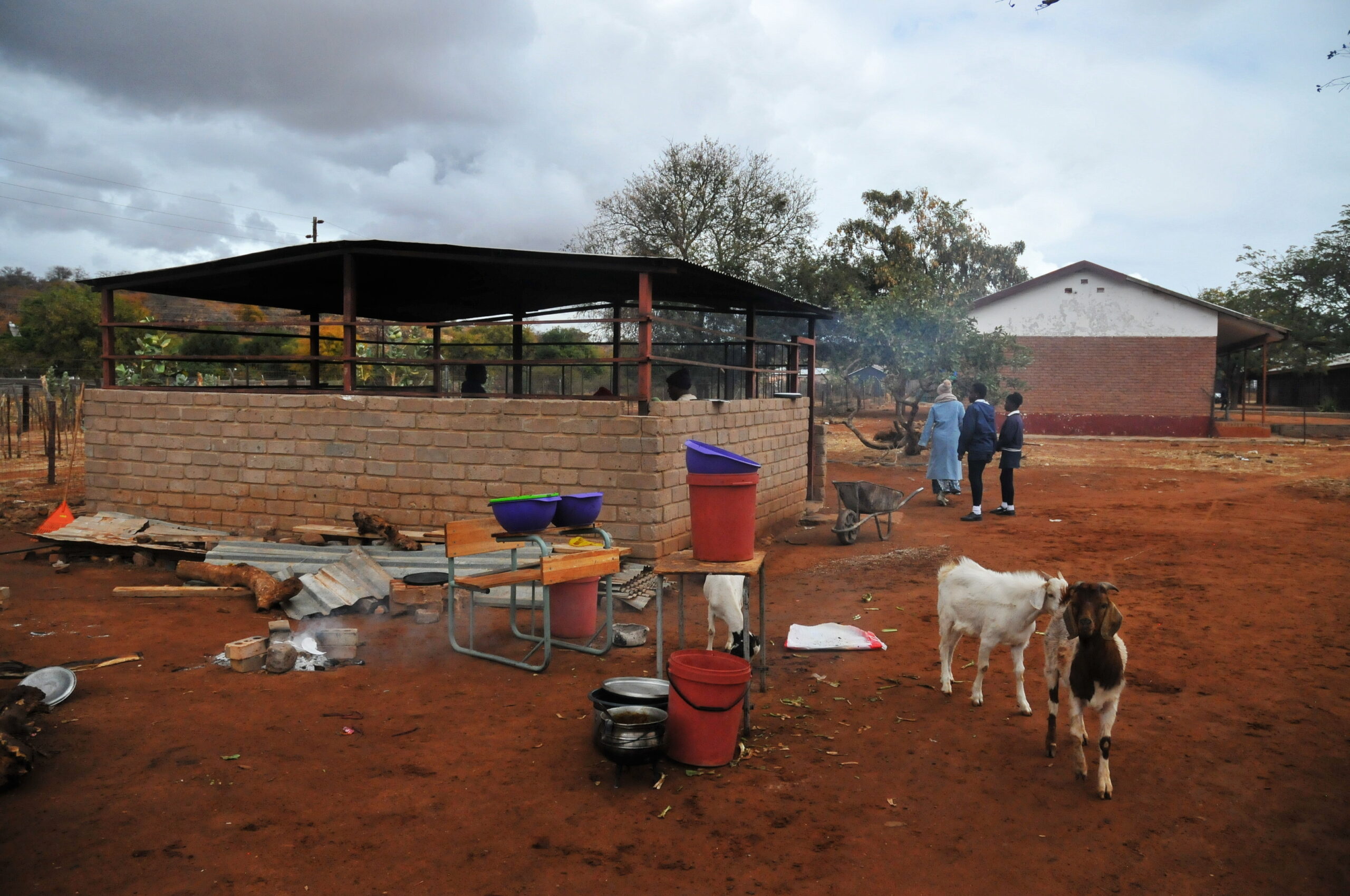
Members of Parliament who recently conducted an oversight visit in Limpopo to assess its readiness for the 2024 academic year gave the province the thumbs up but highlighted that serious challenges from overcrowding to infrastructure remain writes Lucas Ledwaba
Parliamentary Portfolio Committee on Basic Education member Nombuyiselo Adoons who led a team on an oversight visit to Limpopo recently recalled the chaos in the province when MPs conducted a similar mission there four years ago.
The Committee, accompanied by union and provincial Department of Education officials and members of School Governing Bodies (SGBs), visited schools in the Vhembe East and Sekhukhune South on Monday and Tuesday last week.
The focus of the visit to Eastern Cape, KwaZulu-Natal, North West, and Limpopo included a focus on infrastructure, ablution facilities, pit-latrine eradication, and flood-damaged schools among others.
The Committee said it was also looking into the delivery of learner-teacher study material, nutrition, learner transport, special schools support, and meeting with stakeholders to discuss the state of schooling in 2024.
Adoons who led the Limpopo leg of the visit, noted that while they did not visit all the districts in Limpopo, there appears to have been a marked improvement since the 2020 visit.
“There were many improper structures, aging infrastructure, and a shortage of classrooms. The overcrowding [in schools] at that time [2020] was even worse in all the schools, whether well-performing or less performing schools. So, there were a lot of challenges,” Adoons told Mukurukuru Media after the oversighvisit.
Limpopo which was notorious for being the worst performing province in the National Senior Certificate [matric] results made a notable leap in the 2023 exams, achieving a total average of 79,54% which saw them move to seventh place nationally.
Provincial premier Chupu Mathabatha said the result is the highest the province has achieved since 1994.
Adoons recalled that back in 2020 there also appeared to be a lack of accountability and general chaos.
“When we arrived we were told that the HOD was appointed about a week before we came. And there were so many vacancies, about 4, 000 vacancies in the province in basic education. So, you can just tell that there was no proper leadership at that time,” Adoons said.
In June 2022 Mavhungu Lerule-Ramkhanya, was appointed MEC of education following a cabinet reshuffle. She had previously served in the transport and community safety portfolio.
“There were a lot of challenges because there was no accountability. People that are responsible were not doing their job properly. But we see now there’s a lot of difference, there’s a lot of improvement,” said Adoons.
In 2018 Limpopo achieved a 69.4% matric pass rate, then improved to 73.2% in 2019 but regressed to 68.2% in 2020. The decline worsened when the province scored 66.7% in 2021. But the province achieved a 7,4% improvement in 2023 making it the most improved province.
The provincial government attributes the improvement to various measures applied in 2023. These include among others, study camps, extra lessons, monitoring programs, and accountability sessions led by senior department officials involving principals, teachers, learners, community members, and traditional leaders.
The improving results have however brought about new challenges, especially for the best-performing schools.
Adoons said many parents were now trying to enrol their children in these schools resulting in a scramble for space and overcrowding.
“They [schools] have this overcrowding that is happening because of their good performance. So, the parents around the areas want to bring their children to study or to be taught in such schools,” she said.
She said schools were compelled to enroll learners because the Constitution stipulates that no learner should be turned away from a public school.
“So, the principal must make efforts and means for those learners to get admitted,” she said.
At a technical school in Sekhukhune management and parents pleaded for assistance with the provision of security to secure the equipment on their premises.
She said the committee also found that there was a high participation rate by parents and School Governing Bodies in the running of schools.
“There’s an issue of security. Some schools have been vandalized, for instance at the technical school, they indicated that they need security because the area is not safe for the machines that they have,” she said.
Adoons said some schools also raised concerns with the high electricity bill, revealing that one school owed power utility ESKOM R2 million and serviced the debt with a monthly repayment of R100 000.
She said they have asked the provincial department to find ways of assisting such schools.
One of the pressing issues facing schools in Limpopo, where 80% of the population lives in rural areas under traditional authorities, is the eradication of pit toilets.
In November last year, the Committee met to consider a petition of over 5000 signatures calling for the eradication of pit latrines in schools in the Eastern Cape, KwaZulu-Natal, and Limpopo.
In September 2021 the Limpopo High Court in Polokwane compelled the provincial department of education to provide a list of schools with pit toilets and other inadequate sanitation together with a plan on how they planned to eradicate them.
The court also instructed the department to report progress on this program every six months. The case was brought by Section 27 following the horrific death of grade learner Michael Komape who drowned in a pit toilet at a Limpopo school in January 2014.
Adoons said this was one of the areas the Committee looked at during the oversight visit.
“In all the schools we were also checking whether there are appropriate and safe toilets,” she said.
She said the toilets at the schools visited by the Committee the toilets were safe. Lerule-Ramakhanya said at a recent event announcing matric results that the province has surpassed the 50% target set to eradicate pit toilets in schools. – Mukurukuru Media

Be First to Comment