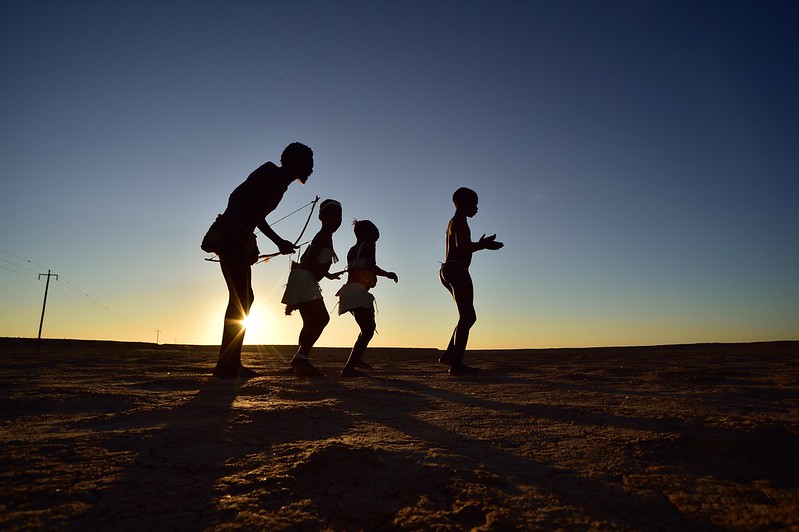
THE Khomani San community are using their rich heritage and the land restored to them as part of the restitution process to make a living and preserve their culture.
The community own 25 000 hectares of land within the Kgalagadi Transfrontier Park and six farms south of the park totalling about 370 000 hectares.
In 1995 the community lodged a land claim for the restitution of 45 000 hectares in the Kalahari Gemsbok Park after they were forcefully ejected from their land in the 1930s.
After their forced removal from the park, the eight Khomani San clans were scattered, with some settling in Namibia and Botswana. Others moved to nearby farms and further afield in the Northern Cape.
“After years of negotiation and verification, the claim was finally settled on Human Rights Day, 21 March 1999. The settlement agreement paved the way for the transferring of the title deeds of six Kalahari farms (approximately 36 0000 hectares) to the Khomani San CPA,” said Dirk Pienaar, the Tourism and Conservation Officer of the Khomani San CPA.
The six farms allocated and managed by the CPA committee include Miershoopan, Uitkoms, Andriesvale, Scotty’s Fort, Witdraai and Erin.
“The CPA membership is now at 1090 San descendants. Of them, about 600 live on the land while other members live elsewhere within the region as well as further afield in the Northern Cape,” said Pienaar.
The Erin Game Farm is one of the community’s flagship tourism operations. The main source of income is derived from sustainable consumption and eco-tourism projects taking place on the property.
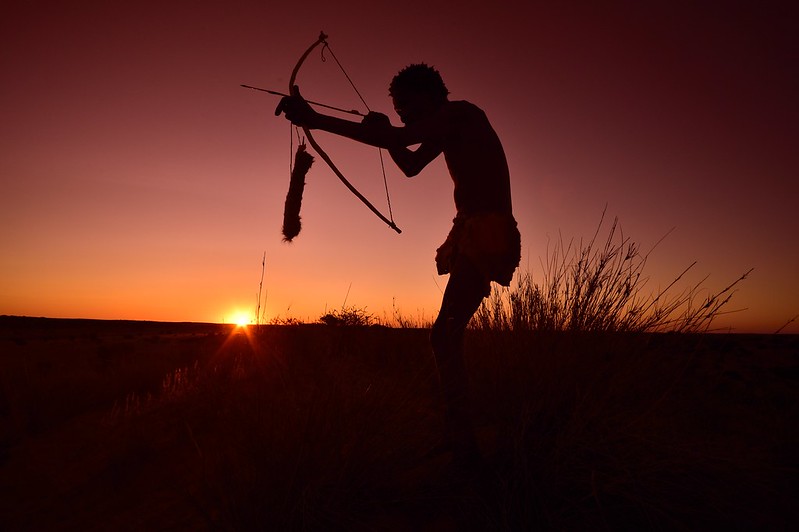
The community has been able to leverage other tourism opportunities on their land, including the creation of jobs through spoorsny (tracking) , guided walks and game drives. They include hunting guides, skinning and meat processing, storytelling, craft making and sales as well as accommodation.
Three women entrepreneurs also operate successful tourism businesses. They include Vinkie’s Kalahari Tours, Koera’s Farm Kitchen and Boesmanrust.
Furthermore, the community has launched skills enhancement programmes for community members and these have helped enhance the livelihoods of community members.
Peter Setou, chief executive of the Vumelana Advisory Fund, a non-profit organisation that helps land reform beneficiaries form partnerships with investors said the Khomani San’s project was a good example of what claimant communities can achieve if given the necessary post settlement support.
“Over the past 10 years working with land reform communities, we have observed that communities can thrive where they have access to their land, and the requisite support from stakeholders, including government and the private sector,” said Setou.
“Access to land alone is not enough, skills transfer, access to finance, access to markets and good governance are all important elements to enable the success of land reform,” he said.
Setou noted that to achieve this, partnerships with the private sector is crucial since they have access to capital, the skills and access to markets.
“These partnerships however do not happen naturally. Independent facilitation is required in order to ensure that the interests of the communities are safeguarded and the partnerships are sustainable,” he said.
“We are actively engaging with private sector players and other stakeholders who are willing to support our work to ensure sustainable land reform,” Setou said.
Setou argues that, where heritage land is involved in land restitution claims, it’s crucial that communities are adequately supported on finalisation of their land claims, provided with post settlement support, as well as ensuring that existing jobs are saved and new ones are created – so that they too can benefit from the tourism proceeds from their land.
“About 60% of the Khomani San people are semi-skilled. Communities have also engaged in acquiring basic filming, photography, skinning, game ranch assistant skills, guiding, tracking, and conflict management in order to take advantage of the opportunities that arise from the park activities.”
Efforts are also underway to get the park listed as a Unesco World Heritage Site.
“The community understands that this land is protected on a global level and that is very important for our future. We also understand that more benefits will accrue to the community, including job creation opportunities that will be derived from the WHS status, although that is still in process,” said Pienaar.
Deputy president David Mabuza recently a meeting with Khoi San traditional leaders that their leadership “is essential to our country’s development of a cohesive, unified, and prosperous society that is democratic, non-racial, and non-sexist in nature.”
“Together with Traditional and Khoi-San leaders, our government will make sure that ordinary people benefit from commercial land use and the extraction of natural resources in traditional communities,” Mabuza said.
“We will continue to strive to achieve the development and sustainability of rural communities by ensuring that land rights are provided and that ownership is transferred from the state to rightful owners. Additionally, we will focus more on improving inclusive land use management, building infrastructure, and providing targeted aid to rural populations,” he said.
“It is critical to prioritise access to land as a crucial asset for rural development and economic transformation, so that the land held in trust by Traditional and Khoi-San leaders may be effectively used for agricultural, human settlements, and industrial development,” he said. – news@mukurukuru.co.za

Be First to Comment