Township residents who lived at risk of contracting cancer express relief as government rolls out project to install corrugated iron roofing writes Mokgadi Mogy Mashako
SESHEGO township resident Wilson Phooko, 68, has lived under an asbestos roof since his childhood but he is fortunate to have never contracted any illness associated with the deadly material.
Asbestos roofing was erected over millions of township houses across South Africa under the Apartheid government, despite expert findings that the material could cause deadly lung cancers.
“I don’t have any health issues, other than having had experienced a heart attack a few years ago. So thankfully I am healthy,” said Phooko recently.
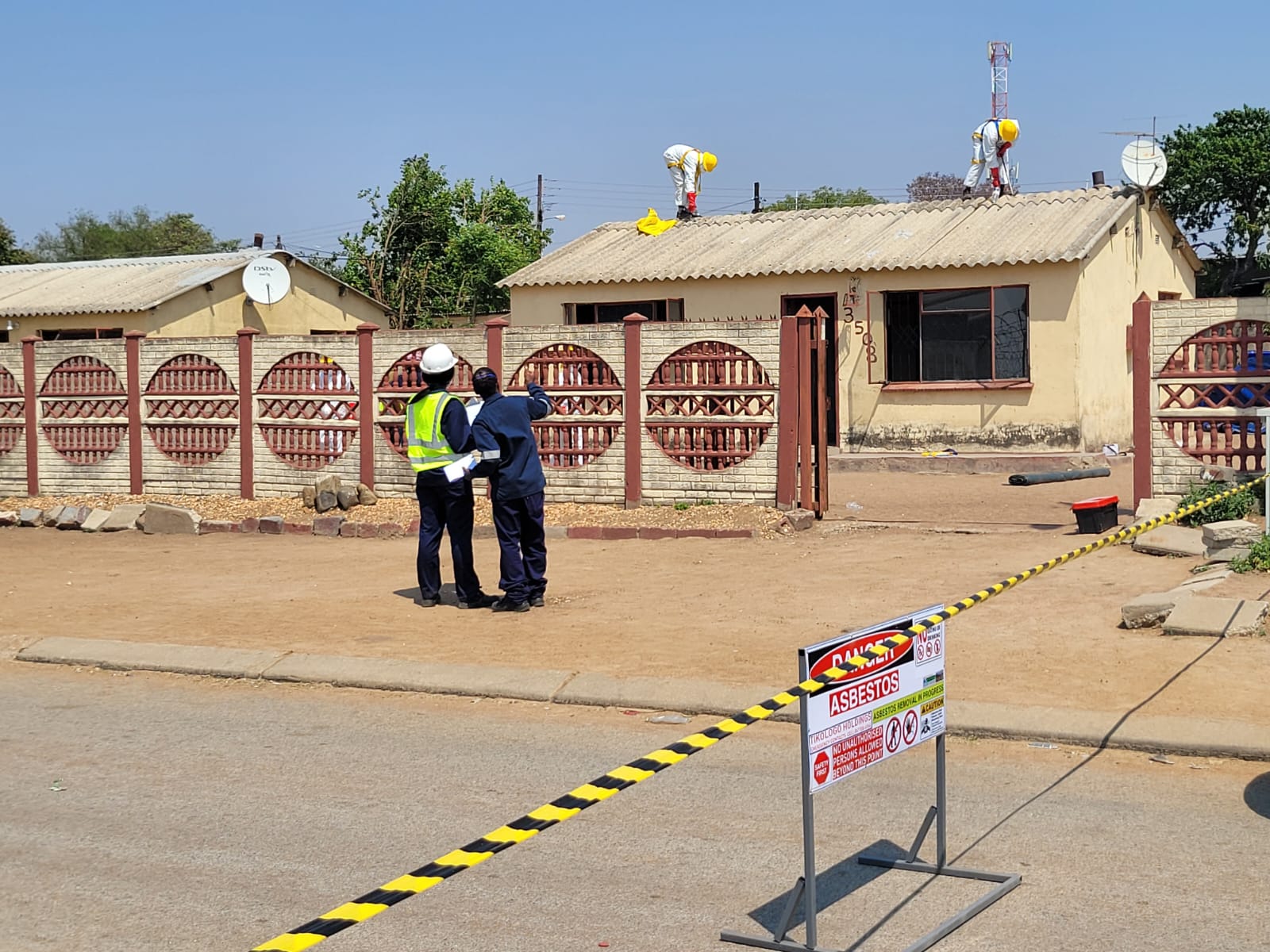
The Limpopo department of co-operative governance, human settlements and traditional affairs has embarked on a project to replace thousands of the ageing asbestos roofing from houses in Seshego.
MEC Basikopo Makamu said after a 2020 hailstorm caused much damage to infrastructure in the township intervention was required.
“In Seshego…there are 2225 houses that have asbestos roofs. We are removing 1500 roofs for now and immediately when we start the financial year, we will complete the other set. We are correcting the houses that were built here in 1970 which had asbestos and posed a health risk,” Makamu said.
The department has partnered with the Housing Development Agency (HDA) to carry out assessment of asbestos roofs and the eradication of 1500 of those roofs identified so far at a budget of R33 million.
Makamu said he expects 70%- which equates to 1000 roofs, to be replaced by the end of March.
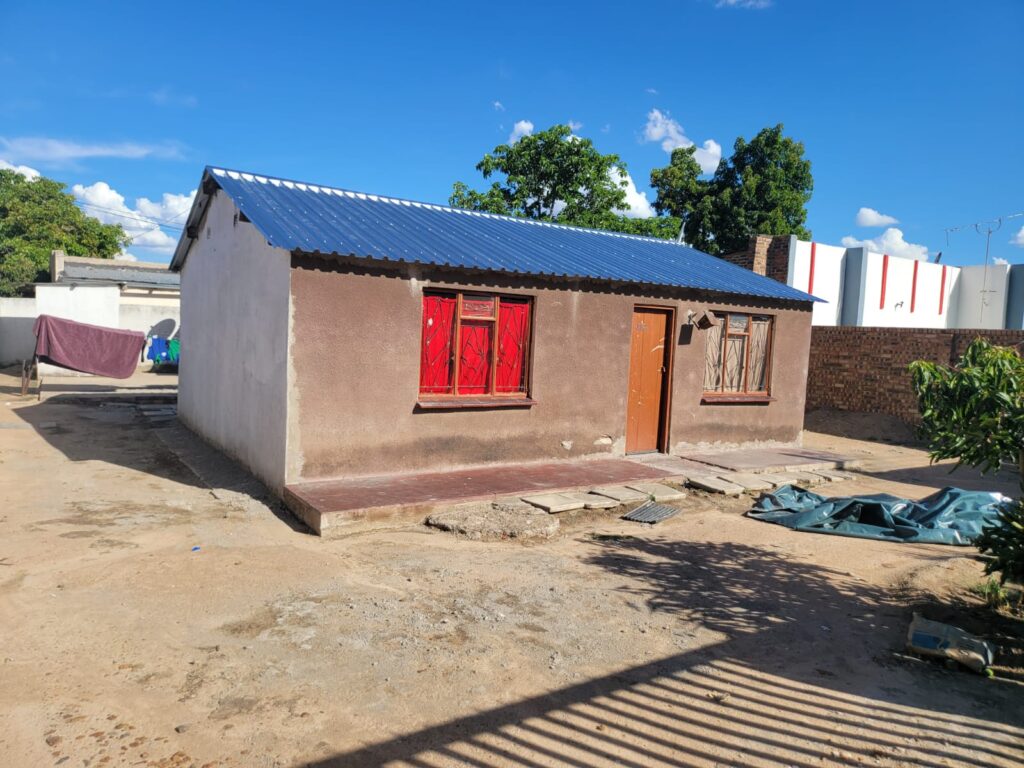
So far, close to 400 of the targeted 1,500 households in the township located just 7km west of Polokwane have received corrugated iron rooftops.
The first leg of the provincial asbestos roofing removal project is anticipated to impact about 5,000 houses.
Seshego resident Wilson Phooko, 68, said that he has lived under an asbestos roof since his childhood.
“This used to be my mother’s house, who passed away a few years ago. I have since inherited it. This move by the government was at first surprising, but when it came into fruition, I was so thankful as I had come to learn that it can be hazardous to one’s health,” said Phooko.
Phooko who said he was planning to resurrect another structure in his yard using asbestos sheets, halted these plans when he heard of the potential dangers.
The World Health Organization (WHO) estimates that worldwide there are more than 100 000 asbestos related deaths per year and that, currently, 125 million workers are exposed to the deadly fibre.
Asbestos is a hazardous material that can cause cancer and other serious illnesses when inhaled. But for decades, black communities have been exposed to this detrimental substance where the situation was compounded by the fact that many of these communities lacked access to proper healthcare and sanitation.
“Exposure to asbestos fibres is extremely dangerous as it leads to the development of mesothelioma, lung cancer, asbestosis and pleural thickening,” the Cancer Association of South Africa (CANSA’s) says about asbestos.
Being exposed to asbestos is by far the biggest risk factor for mesothelioma, and the best way to reduce the risk is to limit exposure to asbestos in homes, in public buildings and at work.
According to CANSA’s Health Specialist and cancer survivor Professor Michael Herbst, South Africa reports approximately 200 cases of mesothelioma per year.
Nearly 30 percent of mesothelioma cases in South Africa are tied to environmental exposure.
“More than 70 percent of reported environmental cases affect women and children, who most likely were exposed when miners brought home the fibres on their hair and clothes,” states Herbst.
Medical doctors say that making a correct mesothelioma diagnosis is often difficult as the disease usually presents with symptoms that mimic other common ailments.
Medical practitioner Dr Prudence Buthelezi said there is no cure for asbestosis as the damage of the lung is irreversible.
“Therefore earlier detection and intervention is recommended as one can reduce symptoms and improve quality of life by giving pulmonary rehabilitation, oxygen therapy and an inhaler.”
Limpopo and the Northern Cape are the two provinces that housed the majority of asbestos mines in the country respectively, followed by Mpumalanga.
In early 1984 authorities were found to have under-reported the cases of exposure to hazardous levels of asbestos by mineworkers at Penge mine situated in Limpopo’s Sekhukhune district.
The cover up went so far as the Health Minister, Carel de Wet, telling the public that the “so-called dangerous effects” of asbestos on the human body were greatly exaggerated, based on insufficient knowledge or misrepresentations, and calculated to cause sensation. As a result most hospitals diagnosed many cases as tuberculosis.
In 2018, then Minister of Environmental Affairs, Marthinus van Schalkwyk, announced the regulations for the “prohibition of the use, manufacturing, import and export of asbestos and asbestos containing materials.”
This was seen as a triumphant move for the health of citizens as SA once supplied 97% of the world’s crocidolite, 100% of its amosite and was the 5th largest producer of chrysotile asbestos, which are all asbestos minerals.
The department developed a national secondary asbestos remediation plan that identified the two provinces as needing intervention due to significantly high levels of secondary asbestos contamination.
According the National Cancer Registry (2019) the frequency of histologically diagnosed cases of mesothelioma in South Africa indicated that black males of ages 50-59 accounted for the majority of cases in comparison to their white, coloured and Asian counterparts.
Histologically diagnosed means that a tissue sample (biopsy) was referred to a recognized laboratory where a specially trained pathologist confirmed the cancer diagnosis. – Mukurukuru Media

Well written Mogy