
“Photography has always been the great love of my father’s life. He went about his business with great stubbornness and determination,” Fukile Magubane says about her celebrated photojournalist father Dr Peter Magubane.
The Department of Sport, Arts and Culture celebrated Dr Magubane’s life and work on March 10 at the Freedom Park Heritage Site and Museum in Pretoria.
The occasion formed part of the van Toeka Af Living Legends Recognition Series (VTALLRS).
The VTALLRS is an initiative of the Department of Sport, Arts and Culture and serves to honour such living legends who have played a pivotal role in society and have made a significant contribution towards the arts and culture sector.
Previous recipients of the VTALLRS Ministerial honour include Professor Pitika Ntuli, Dr James Matthews and the late Dr Latozi ‘Madosini’ Mphahleni.
Dr Magubane, who was born in Sophiatown in 1932 is best known for his journalistic and photographic work under the repressive Apartheid regime. His coverage of the 1976 June 16 student uprising in Soweto earned him worldwide acclaim and led to a multitude of international photographic and journalistic awards.
His work landed him in trouble with the authorities who were bent on censoring voices that sought to expose Apartheid. Between 1969 and 1971 he was held in solitary confinement and charged under the Terrorism Act.
The law then defined terrorism as “any act committed with the intention of endangering law and order or inciting to or conspiring in the commission of such an act, a separate offence and equated it to treason.”
However his coverage of the 1976 Soweto Uprising brought him international acclaim and led to several international awards.
“His 2016 book commemorating the 40th anniversary of the Soweto uprising is regarded as one of the most important books in contemporary Afrikaner to appear in the last two decades. Not only did Magubane photograph for numerous European agencies, but his photographs also appeared in National Geographic, Life, The New York Times, The Washington Post, Paris Match, and Sports Illustrated. The United Nations has also been one of his clients,” Lebogang Mashile, poet and performing artist said about Magubane’s work.
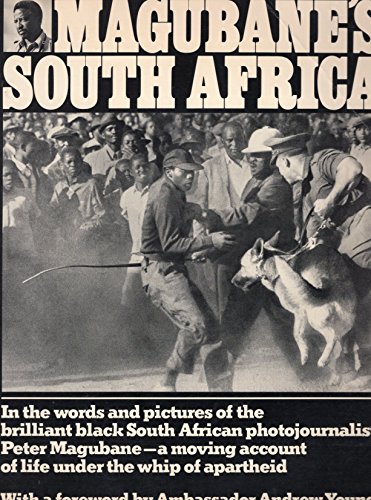
Mashile lauded Magubane as “the embodiment of South Africa’s creative genius and a truly living legend. He is not only a photojournalist; through the lens, he exposed the atrocities of Apartheid.”
“He is also rooted in his identity, and we hope that by being so, he inspires others to do the same. He is the perfect example of how to be rooted in your culture, your identity, and all you do,” said Mashile.
ANC veteran activist and former Umkhonto we Sizwe commander Dr Snuki Zikalala said he met Magubane in 1967 at the age of 16 and knew him as a photographer of Nelson Mandela’s family.
Magubane’s relationship with Nelson and Winnie Mandela began in the 1950s, but he only became Mandela’s official photographer in 1990.
Zikalala said that their views on how to fight against the Apartheid regime were completely different. His was to use violence, going against the police with guns, knives and stones, whereas Magubane approached the regime through a lens.
“When we discussed our struggles against the Apartheid government, Peter told me that his struggle was with the camera. That his images are more powerful than the walls that I wanted to destroy. He told me that the way he will contribute is through pictures, as images tell a million stories.
“He said everyone has a role in their life, mine is to show the world apartheid brutalities through the lenses that I carry,” said Zikalala.
His granddaughter Lungile Anele Magubane thanked the department of sports, arts, and culture and the deputy minister for creating the initiative to celebrate and recognise the lifetime achievement of her grandfather.
“Today is a special day because we get to give this man his flowers while he is still alive, an opportunity to bear witness to the work of a man who gave his life’s work to better the next generation of photographers, black photographers, coloured photographers, and Indian photographers, to continue to represent and elevate the status of South Africa around the world,” said Lungile.
Lungile said her grandfather decided to go from photojournalism to a more documentary type of art photography after being selected as Madiba’s official photographer upon his release.
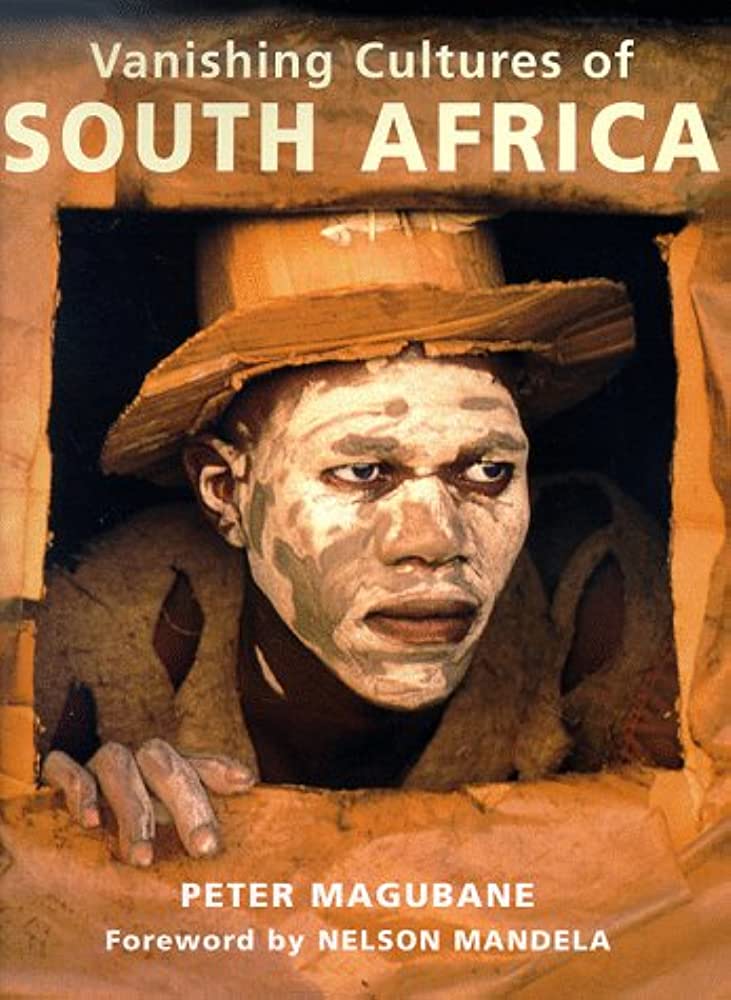
This was in order to capture the positive characteristics of a free-spirited, post-Apartheid South Africa. During this time, he started to make quick and beautiful photography documentaries on some of South Africa’s indigenous cultures, their rituals, and traditions.
“My grandfather is the kind of man who, despite the alienation of the rest of other races in the country, made it a point to not exclude Afrikaner culture. This is significant because it demonstrates that he is more than simply a photojournalist and that he is properly regarded as a multilinear artist who is building visual archives for South African culture’s,” added Lungile.
She stated that despite the difficulties that the Apartheid system had erected against him, such as burning down his home and murdering his youngest son, her late uncle Charlie; and having spent so much time in solitary confinement and not having the opportunity to watch his children grow up, Dr Magubane sacrificed everything to show the world what life was actually like for black people in South Africa.
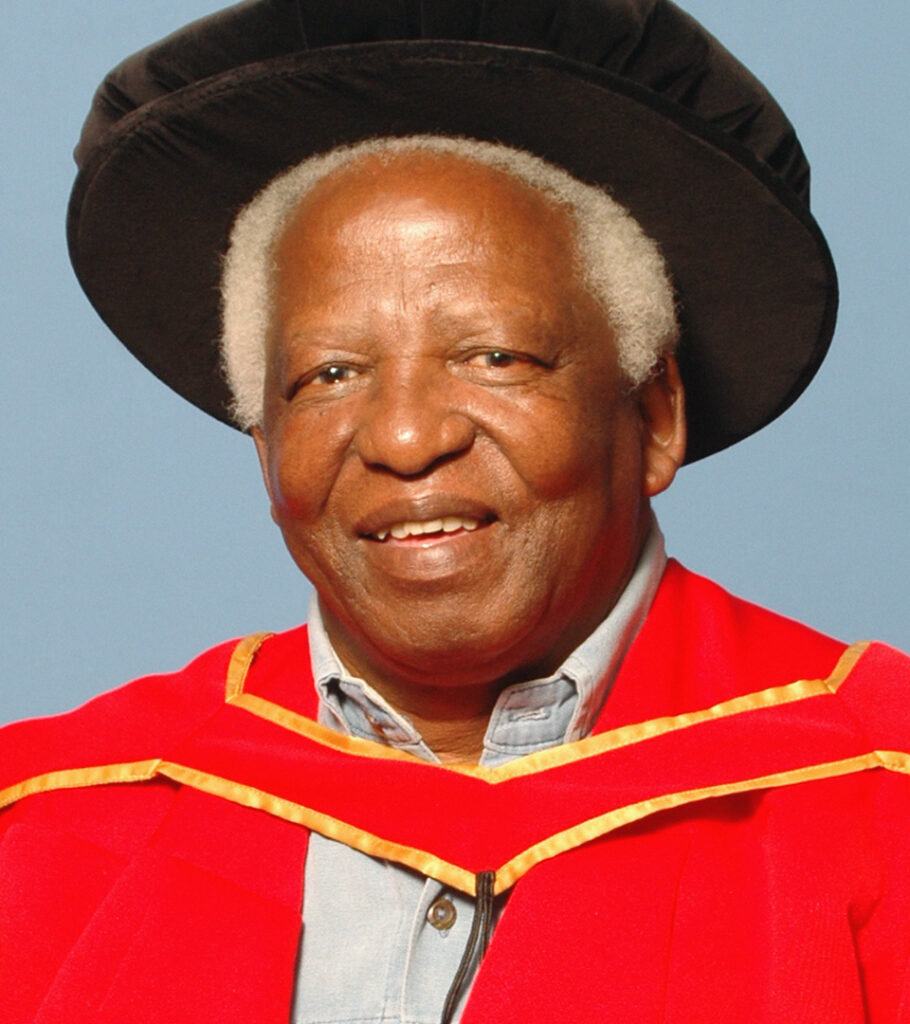
“My grandfather’s strong love for his country, the urgency of his time, and his daring personality all shaped him into a storyteller, fine artist, and anthropologist,” said Lungile.
Dr Magubane has published 17 books, two of which were banned by the Apartheid regime.
“Photography has always been the great love of my father’s life. He went about his business with great stubbornness and determination. And no one could dissuade him from taking his pictures, for he always had some kind of trick that he used to disguise himself in places where his camera was forbidden. He is very fond of telling the story of how he used to hide his tools in the inner walls of his bread and in the carton of milk, both of which he used as props to hide the camera from the police,” said Fukile Magubane, his daughter.
Fukile said that her father was a renegade, a truth seeker at all costs. As time passed and she grew older, she came to understand her father’s work and purpose and realized that her father had the kind of work ethic that was needed to survive back then.
“The kind of work ethic to be able to think on your feet, to be able to understand the urgency of the moment and the need of the people to see this moment documented as one of the leading lights of history. That is the work of genius, and that is the work that we are here to celebrate today,” said Fukile.
Peter Magubane, although retired, still remains a living legend to all. His work and passion will always continue to inspire and teach the world and his people in South Africa. His work will show the people that a struggle without determination is no struggle at all. – news@mukurukuru.co.za

Be First to Comment