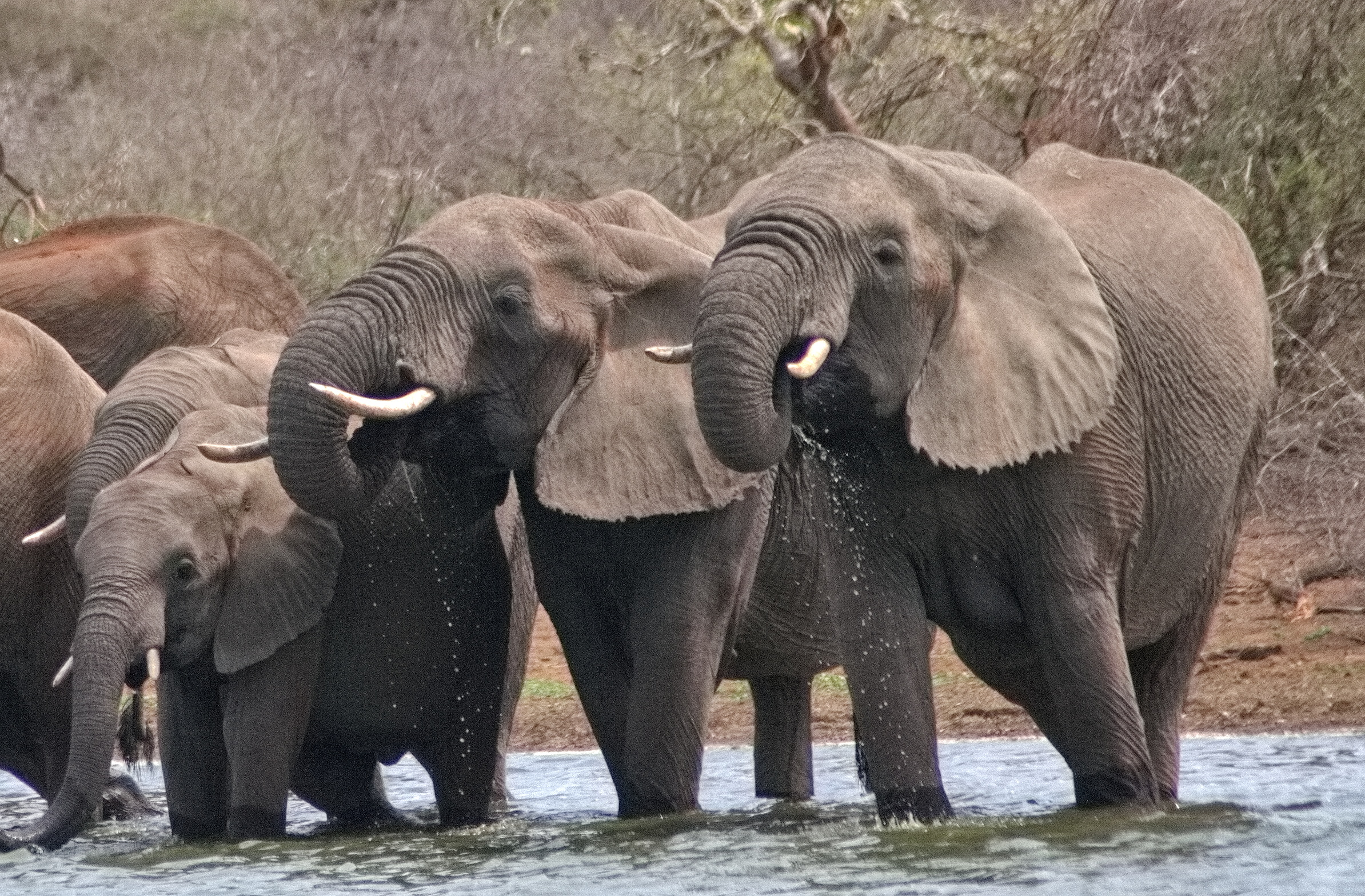
When elephants enter Samuel Nkuna’s fields at night, they are not the gentle giants that tourists hope to photograph in golden light. They are hungry, powerful animals, able to flatten crops, break fences and erase months of work before sunrise.
For visitors, an elephant crossing a river in Kruger National Park can feel like the very image of wilderness. For families living along the park’s boundary, the same animal can represent danger, loss and a bill they cannot afford to pay.
That tension sat at the centre of a recent webinar marking a century of conservation in Kruger. Danie Pienaar, Senior General Manager for Conservation and Area Integrity Management at the park, described the divide with striking simplicity.
“Opinions vary from my good friend Chris Bacchus, who’s got a very strong emotional and philosophical connection with elephants, to a guy like Samuel Nkuna from Lillydale, where the elephants damage his crops at night and he loses a lot of money,” he said.
In that contrast lies one of conservation’s hardest questions: how do you protect wildlife without forcing neighbouring communities to carry the heaviest cost of protection?
Kruger’s history shows that conservation is rarely a straight line. The park’s roots date back to the Sabie Game Reserve, established in 1898, and it was proclaimed Kruger National Park in 1926. By then, rhinos had already vanished from much of the landscape.
Their return became one of South Africa’s great conservation achievements. White rhinos were reintroduced in the 1960s, followed by black rhinos in the 1970s. Through decades of protection, research and management, the population grew dramatically. By 2010, Kruger held more than 10,000 white rhinos and over 500 black rhinos, making it one of Africa’s most important strongholds for the species.
Then the poaching crisis changed everything. Demand for rhino horn soared, and criminal networks turned Kruger into a frontline.
“The price for rhino horn went through the roof, and the poachers responded,” Pienaar said.
The park had to rethink its entire security response. Rangers who had once focused mainly on patrols, field craft and conservation monitoring found themselves facing organised syndicates, armed incursions and a battle that extended far beyond the boundary fence.
“We had to respond on the ground with our ranger corps, sort of almost turned our ranger corps into a paramilitary unit, and really invested heavily in technology and equipment,” he said.
Despite those efforts, the losses have been severe. Today, Kruger is home to approximately 1,700 white rhinos and 300 black rhinos. A population built over half a century has been pushed into a far more precarious state, and the work of recovery continues under intense pressure.
Elephants tell a different story, but one no less complicated. Their numbers have grown from about 6,000 in the 1960s to roughly 30,000 today. For many people, that growth is proof that protection works. For managers, scientists and communities, it has also raised urgent questions.
Large elephant populations can reshape the landscapes they inhabit. They push over trees, open thickets, influence fire patterns and alter habitats used by birds, insects and other mammals. Their movements can also bring them into conflict with people beyond the park, especially when crops stand between hungry animals and a night’s feeding.
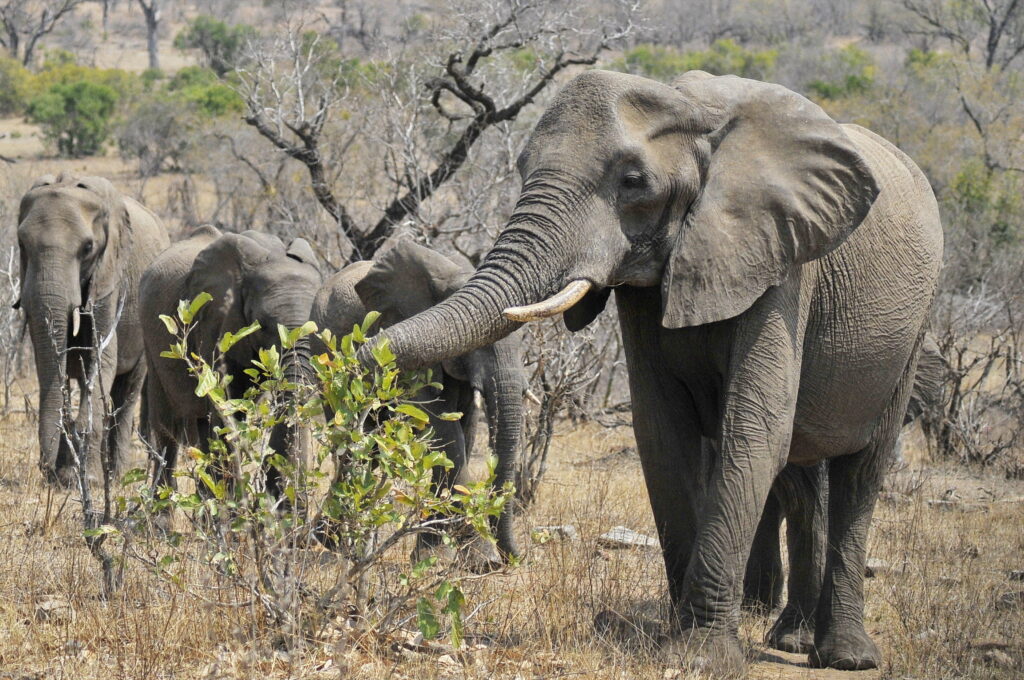
For Pienaar, the central mistake is to imagine Kruger as a still picture. Many visitors carry a memory of the park from childhood or from a first safari, and assume conservation should preserve that image forever. But ecosystems are not museums.
“The Kruger Park is a dynamic system,” he said. “It’s impossible for managers to manage for a fixed state.”
Historical photographs show why. Some areas have lost large trees over time, while others have become denser. Rainfall, drought, fire, soils, people, herbivores and elephants all shape what the park becomes. Change is not an exception to Kruger’s story; it is the story.
Dr Sam Ferreira, a specialist scientist in large mammals at SANParks, said the elephant debate cannot be reduced to ecology alone.
“The ecological impact that elephants have, the conflict that they have with people, and of course we realise that they also provide a lot of benefits for us,” he said.
Those benefits are real. Elephants help attract tourists whose spending supports jobs, businesses and conservation budgets. They also play ecological roles, moving seeds and opening habitats. Yet the costs are real too: damaged crops, broken infrastructure, frightened communities and changing habitats within the park.
That is why conservation managers often find themselves caught between competing values.
“What then happens is you end up as a manager asking a question about whose ethics should matter most,” Ferreira said.
Should conservation give priority to animal welfare, even when growing populations affect other species? Should it focus on biodiversity, even when interventions disturb people who love individual animals? Should tourism income carry more weight than crop losses? Should communities living next to wildlife have the strongest voice?
Ferreira argues that any answer must begin by accepting that humans are not separate from nature.
“We have to use biodiversity. That is an unavoidable requirement,” he said. “That means that we should do that with respect.”
After a century of conservation, Kruger’s elephants and rhinos reveal a difficult truth: saving wildlife is not only about keeping animals alive. It is about helping tourists, farmers, rangers, scientists and communities share an ever-changing landscape, even when their needs and futures collide in painful, daily ways. – news@mukurukuru.co.za

Be First to Comment