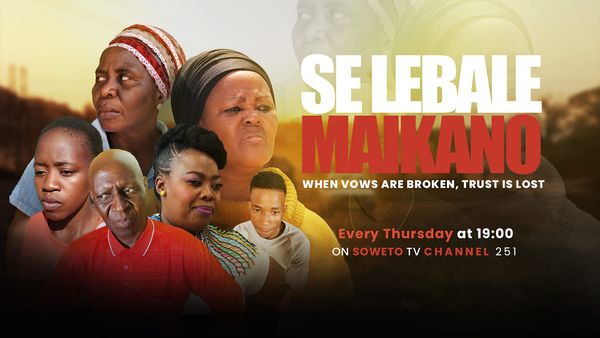
AFTER failing to convince the 18 mining companies operating in rural Sekhukhune to support his film project Anthony Thobejane donated his home to the aspirant youth of Moroke village to learn the ropes.
“We have about 18 mine houses in our area. We initially approached all of them to assist with the project, but none of them came to the party,” said the veteran producer and director.
In the 1980s Thobejane set the local television drama scene alight with the award winning series Bophelo ke Semphekgo which aired on SABC.
Now he is giving back by making the dreams of youths from rural Sekhukhune in Limpopo come true through a new television series.
“In fact most community members were very negative, telling the crew that I was just a bored old man who was wasting their time. I am happy today that my crew stuck by this old man,” Thobejane said.
He taught unemployed youths from the area the finer points of television production, scriptwriting and acting. This resulted in Loveless, a one-hour film that was shot in Moroke.
The production came about after a brainstorming session with the young people who live in the village. They expressed some of the social issues they face, such as peer pressure forcing young women into sexual relationships, HIV/Aids and low self-esteem caused by society’s definition of sexiness in women.
The young team has now adapted the film into a drama series called Se lebale Maikano, which is centered on the story of a rural wife who raises her daughter on her own, while her husband is captured by the hustle and bustle of Johannesburg. Se lebale Maikano airs every Thursday on Soweto TV at 7 pm.
He said it was after a successful run of his 2017 film Loveless, that he took the recommendation of the National Film and Video Foundation (NFVF) to expand the film into a drama series.

“It was after I saw the youth in their numbers, wandering the dusty streets, that I thought of uplifting them with a knowledge-transfer program using the medium of television production,” Thobejane said.
To his pleasant surprise the youth of about 18, showed keen interest in the ins and outs of screenwriting, acting, and stepping in as a production crew.
“I wanted something that would be sustainable, and this year we hit our five-year mark, I’m just grateful that it comes at a time when all the naysayers can see the kids’ work on national TV,” he said.
The youth of Moroke and surrounding villages under the Fetakgomo-Tubatse municipality, who had no prior education or experience in television production, received intensive hands-on training through Thobejane’s Ibokashe film company.
“I always encourage the youth to create memorable characters that they see in their . The late Patrick Shai would always call me up and tell me that no matter how many gigs he got, people always referred to him as Nkwesheng from Bophelo ke Semphekgo,” Thobejane said.
Limpopo MEC for Sports Arts and Culture (DSAC) Thandi Moraka said artists will receive assistance through the Silapha Project.
Moraka said Silapha is a wellness programme which is intended at creating a conducive environment for sport, arts and culture professionals to lead a sustainable livelihood and help with their mental wellbeing.
Moraka said the sector was hardest hit by the restrictions of the National lockdown, and the budget for 2022/23 of R533 million will go a long way.
Thobejane believes that this is the opportune time to knock on doors for investors to come on board as finally, the young creators are being taken seriously.
“This is exemplary for all the youth of Limpopo to believe and follow their dreams. It is proof that your own language can compete with Nguni dramas on national TV channels,” he said.
“We already have a standing agreement with the youth of Mokopane, Botlokwa, and other parts of the province to uplift them to make a mark in the industry. It is possible to move from not being known to being world-renowned,” Thobejane said. news@mukurukuru.co.za

Be First to Comment