Last updated on 9 October 2022
IT’s all hands on deck at the Maswele Farm – a group of women are busy harvesting green beans on a vast field. Not far from them a pair of men are preparing crates of tomatoes for collection by a client.
Elsewhere, in a makeshift pack house women are carefully packaging green beans into boxes in preparation for delivery to clients. Adjacent the pack house a herdsman oversees a herd of cattle feeding in the troughs.
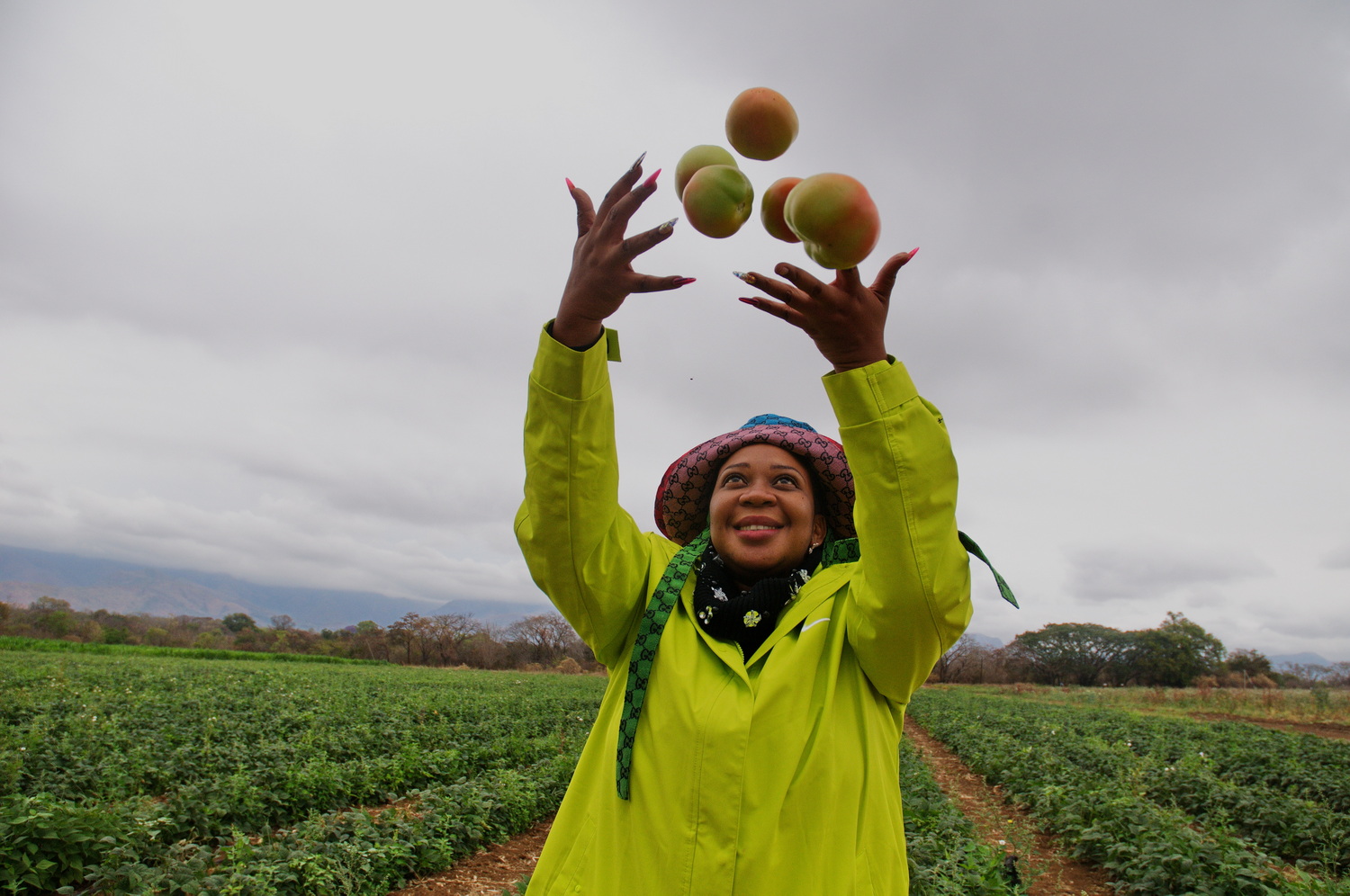
The farm owner is not a white man in khaki shorts. It’s Tshepiso Mametja, 36, a well groomed woman who could be easily mistaken for a corporate business executive.
Mametja runs the 287 hectare Maswele Farming in Trichardtsdal in Limpopo.

While in the main the picture of a black female farmer has been that of a subsistence farmer working a small patch, Mametja is part of a growing number of black female farmers making inroads in the commercial sector.
She is on a mission to make her mark in the world of large scale commercial farming and prove that not all land reform projects result in failure.
Mametja was allocated the farm on a 30 year lease in 2014 after the Department of Agriculture, Land Reform and Rural Development bought it for R8million as part of its Proactive Land Acquisition Strategy (PLAS) programme. PLAS forms part of government’s land redistribution programme.

The land redistribution programme is part of efforts to reverse the adverse impact of racially skewed land ownership dynamics. In 2017 a Land Audit by the Department of Agriculture, Land Reform and Rural Development revealed that Africans owned only 4% of the country’s total farms and agricultural holdings.
Deputy minister of the department of agriculture, rural development and land reform Mcebisi Skwatsha said in his budget vote speech in May that government has improved its acquisition by over 100% from the previous financial year by acquiring 57 000 hectares of land through the Pro-Active Land Acquisition Strategy (PLAS) in the 2021/22 financial year. The department had reported acquisition of 22 000 hectares of land in the 2020/21 financial year.

Skwatsha said in furtherance of the recommendations of the Presidential High Panel on Agriculture and Land Reform, the department has commenced with the development of a Land Redistribution Policy and Land Redistribution Bill.
“The Bill is envisaged to be introduced for approval toward the end of the current financial year, as extensive consultations will have to be undertaken. This will mark the country’s first over-arching Land Redistribution Legislation,” he said.
In February 2015 Maswele Farming allocated R3,6 million under the Recapitulation and Development programme for infrastructure development, mechanisation and inputs.
The farm currently employs 50 full time staff and a further 120 seasonal workers.
Mametja who was a smallholder farmer prior to the acquisition of the farm, has an off-take agreement with a distributor that supplies her produce to major retailers across Limpopo.
She also sells some of her produce to the Johannesburg Fresh Produce Market and the Tshwane Fresh Produce Market in Gauteng and in Europe. She now aims to grow her operations to exporting beef.
The farm specialises in small short crops that include green beans, baby corn, baby marrow, patty pan, tomatoes, yellow and green pepper. She also keeps and breeds cattle, goats and sheep.

While some land reform projects have collapsed within a few years, Mametja is among those that have overcome the odds and is still growing eight years on.
“The secret is that in farming you need to be committed. You need mentors to guide you. I have a mentor, my dad (Rex Mametja) who has taught me farming for over 30 years and still guides and works with me today,” she says.

“I engage with agricultural bodies, I attend training and workshops. I try to learn from the big farmers. Otherwise if you sit in the field and you don’t know what the outside world is doing you will struggle,” she says. – Mukurukuru Media

I so much envy Tshepiso and I am looking for a land and funding so I can also start farming.Farming is my passion and just don’t know where to start.
[…] Tshepiso’s success proves commercial farming is not only for white men in khakis […]