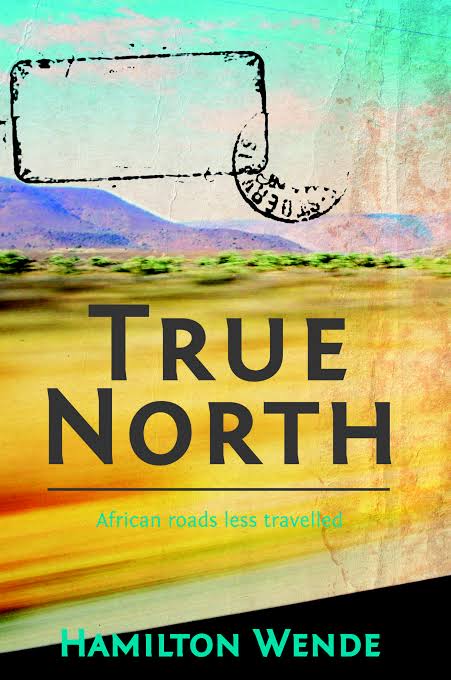
As South Africa was preparing for its first democratic election in April 1994 – in Rwanda a genocide in which almost a million people were brutally killed was unfolding. South African journalist Hamilton Wende witnessed the aftermath of the brutal killings. His account of the horror is captured in this excerpt from a chapter of his celebrated book True North – African Roads Less Travelled.
THE ROAD TO BUTARE
The next section of our journey was to be in what remained of the government-controlled area of Rwanda. Unlike in RPF territory, we would have to travel on our own without guides or military protection.
Rizu had, as far as was humanly possible, organised everything we needed. The visas, the laissez passer, all the things that we heard about – it seemed months ago now – on the balcony at the Norfolk Hotel in Nairobi. We had again hired two vehicles, but without drivers this time – it simply would be too dangerous to risk the life of anyone – Hutu or Tutsi – from this region by taking them into the heart of interahamwe-controlled Rwanda.
So much of what has happened in Rwanda (and Burundi) remained a blur of horror and dark, unfathomable motives. In this section of the journey we were going back into Rwanda to hear the other side of the story; we were going try to understand the fear and the hatred that made so many Hutus rise up and try to exterminate their Tutsi neighbours.
There were 14 roadblocks on the road from the Burundi border to our destination, the town of Butare. At the military or police roadblocks, some form of discipline prevailed, and we had very little problem passing them once we had shown our laissez passer and passports.
It was the interahamwe roadblocks that were frightening. There were just a few logs scattered across the road. You would draw up slowly and stop just before the primitive barricade. Men and teenagers armed with rusty machetes and crude huge-headed clubs would come up to the car and leer in at you through the windows. Often they were drunk, or worse, and their eyes were red and lined with alcohol and marijuana and gleaming with the memory of blood and madness.
Each barricade along the road was different. Some were two or three kilometres apart, some were only 200 metres apart, and each time we had to renegotiate our passage. Here three teenagers stuck their heads in the windows of the car and demanded cigarettes and beer; here a boy about ten years old with a machete was carving a huge club out of a piece of wood with the same nonchalant air one might see a country boy somewhere else whittling a toy animal out of wood; here a man with a club in his hand and a handgrenade on his belt staggered over and wanted to know if we had guns.
Everywhere there was the unremitting low-level menace exuded by men who were armed, and many of whom had killed before. You would hand them your documents, and often, here in the countryside, they couldn’t even read them. That was always the worst moment, because then your lot was totally in their hands. There was no way of appealing to the larger sense of authority handed down from above by the written word. They could decide on the basis of anything to kill you. For the few remaining Tutsis – and the many terrified Hutus – who did try to flee down this road, the fear must have been virtually indescribable. Their fate at these roadblocks was decided by the most arbitrary of guidelines: one’s height, the look on one’s face, the shape of one’s nose or the length of one’s fingers . . .
It was at moments like that, facing the irrational, drunken, hate-filled menace of the roadblocks, that one recalled that intermarriage between Hutu and Tutsi was common in Rwanda. When the killings began, what happened to the children of these marriages? And what happened when they faced these roadblocks?
We stopped at one village where the people were friendly because we had managed to persuade a government soldier to accompany us for part of the way. The villagers were simple, desperately poor people who had to scrabble in these overcultivated valleys for an existence. Here, seeing these poverty-stricken Hutus, the glimmer of pity that one had felt in Benacco for their vulnerability to the Rwandan government propaganda machine was strengthened. And yet, there is still the troubling question of personal choice – one must remember that their Tutsi neighbours were just as impoverished.
It was here, then, that at least part of what Abdallah had told us in Burundi was vindicated. Seeing this overcrowded land was a small revelation. Here we could see how critical the battle for the last remaining squares of arable land was in explaining the part of the origins of the massacres. With an economy largely dependent on agriculture and the highest birthrate in the world – the average Rwandan woman bears 8.6 children – and ever-diminishing patches of fertile soil, there simply was hardly any land left to live on; the country, and its people, were choking to death.
From this, one thing emerges clearly from the morass of horror and incomprehensibility that has surrounded us so far: Rwanda’s ethnic bloodbath was, in part, a Malthusian apocalypse – a nightmare vision of what an overpopulated world could face.
There was no talk here, in the Hutu-controlled countryside, of ‘political’ problems. The equation was frighteningly simple and, in it, we heard echoes of both the modern, manipulative government radio, and of the ancient humiliations expressed by the legend of Gihanga: “The Tutsis always want to kill Hutus and live alone in this country,” one man told us. “We cannot allow that; we are human beings too.”
“It was after the agreement at Arusha that the Tutsis in the area became arrogant,” another man said. “They told us, ‘we will come back to power again, you’ll see’.”
Vitaro, an intellectual from Kigali, came up to where we were doing the interviews: “The trouble began when the Tutsis started hearing that the RPF was coming nearer, they started becoming arrogant and aggressive. But the real problem is that there is not enough land for everyone in Rwanda.”
There was, predictably, no one who had taken part in, or even seen, any massacres. But Vitalo did venture a comment when we asked him what would happen if Tutsis came through the village now.
“This is war. They would not be well-treated.”
We left our government soldier behind at the village and travelled the last few roadblocks to Butare on our own. We arrived in the late afternoon, and as we drove down the main road past the lengthening shadows that crossed the street, we noticed that everybody turned to stare at us before continuing along their own way.
It was in this city in 1973 that Hutu fanatics attacked Tutsis at the National University. This led to another wave of Tutsi refugees fleeing to Burundi, and brought the two countries to the brink of war. It was this chaos that provided Habyarimana with the excuse to take power in 1973, and which led, ultimately, to the present holocaust. That evening we made brief contact with the local prefect, Sylvain Nsabimana, and were given a government minder, Cyprien to accompany us the next day. Without him, of course, it would be impossible to work.
Just before the sunset curfew, we found rooms at the Hotel Ihuliro. The war was close – the RPF was only 20 kilometres away according to the prefect – but it had not yet come to Butare, so the rooms were clean and neat. The electricity supply was erratic, but the beer was, somehow, always cold.
There was a military roadblock right on the road in front of the hotel and, as dusk fell, we could see men in civilian clothes armed with machetes and soldiers with R1 rifles walking up and down the road. Someone started a fire at the edge of the roadblock and the men and soldiers gathered around it, talking and laughing softly as the smoke from the fire drifted up into the sky. Somewhere in the violet and rust of the empty twilight that hung over the town, a single shot rang out. Almost in answer, there was the cough and distant thud of an outgoing mortar shell. And then there was only the shrill chorus of the insects calling endlessly to one another in the darkness.
This was going to be much easier, physically, than the previous part of our journey, but mentally we were very fragile. That night, as I lay in bed, every slight sound made me start up in fright. When I did finally fall asleep, I dreamt constantly of men with machetes breaking down our door or, more strangely, of huge crocodiles hiding under the brown surface of Lake Victoria.
The others talked of similar experiences. On one level, it was an indication that we had brought our own paranoia to Butare, that, after only a few days of exposure, we had inherited part of the fear and suspicion that plagues Rwanda. And that, too, would help us in our battle to understand the killings. On the other hand, all night the watchfires of the roadblock flickered in the darkness outside our window while the men with rifles and machetes kept their fanatic, unceasing vigil.
“Absolutely.”
The RPF spokesperson in Brussels was being interviewed on BBC radio. He was replying to the question of whether the RPF would fire on French troops if they intervened in Rwanda. In the same report it was confirmed that Gitarama, a government stronghold only 55 kilometres to the north of Butare, had fallen to the RPF. The government was on the run, and the RPF would be advancing from the north as well now. The noose was tightening around Butare; it would not make our job any easier.
Here we entered the world of code and obfuscation. Cyprien took us (at our request) to film the roadblocks close to town. Here the people were intellectuals. Unlike in the countryside, they all spoke fluent French and had a dozen answers for each one of our questions. What are the roadblocks for? To catch the RPF and infiltrators. What do you do when you find them? We hand them over to the authorities, of course. And if a Tutsi came through here? The answer was somehow lost in translation. It was ‘infiltrators’ they were looking for.
But there was suffering on this side of the madness too. “They have killed three members of my family,” said one man, a skinny, ostensibly mild-mannered man who was a schoolteacher six weeks ago, and now wore handgrenades on his belt and was the leader of one of the roadblocks.
It struck me then, suddenly – everybody we had met in Rwanda had lost someone, often more than one, in their family through murder. We all know the grief of losing relatives from sickness, perhaps, or old age. Fewer of us know the heartache and the unresolved anger of, say, losing someone in a car crash. But very few of us have experienced the devastating emotional mix of shock, guilt, anguish, rage, fear, hatred . . . that would all come with knowing that someone close to you had been murdered.
And imagine if you had witnessed that murder? And, even worse, if it had been carried out by someone you knew well?
The whole country of Rwanda is suffocating on this pain and this hatred. There are only two types of people living in Rwanda: killers and the families of their victims.
About the author – Hamilton Wende is an author and television producer based in Johannesburg. He is the author of 11 books and a number of documentaries.
The books are available through Amazon https://www.amazon.com/True-North-African-Roads-Travelled/dp/0620407662
Or through the author at – hwende@netactive.co.za

Be First to Comment