Last updated on 5 November 2025
In this second instalment of a three part series Mokgadi Mogy Mashako looks at the staggering cost of hunger among learners
When 19-year-old *Nkosinathi Gumede, who lives with his grandfather, eats the small bowl of pap served at his school in KwaMashu C Section ,KwaZulu-Natal (KZN), he is immediately conflicted. He feels gratitude for the meal, but deep guilt that his friends have nothing.
He recalls a day he brought a packed lunch from home and felt bad that he was eating while classmates went without. Nkosinathi knows that many of his peers arrive without breakfast or a dinner from the night before—a reality faced by more than nine million children across South Africa. According to the World Bank, the extreme child poverty rate in South Africa has almost doubled between 2014 and 2024, increasing from 7.2 per cent to 13.3 per cent.
Nkosinathi has seen what hunger does to them and how it turns noise and concentration into silence and restlessness.
“The food is keeping them coming to school,” he says softly. “Because we come from different families.”
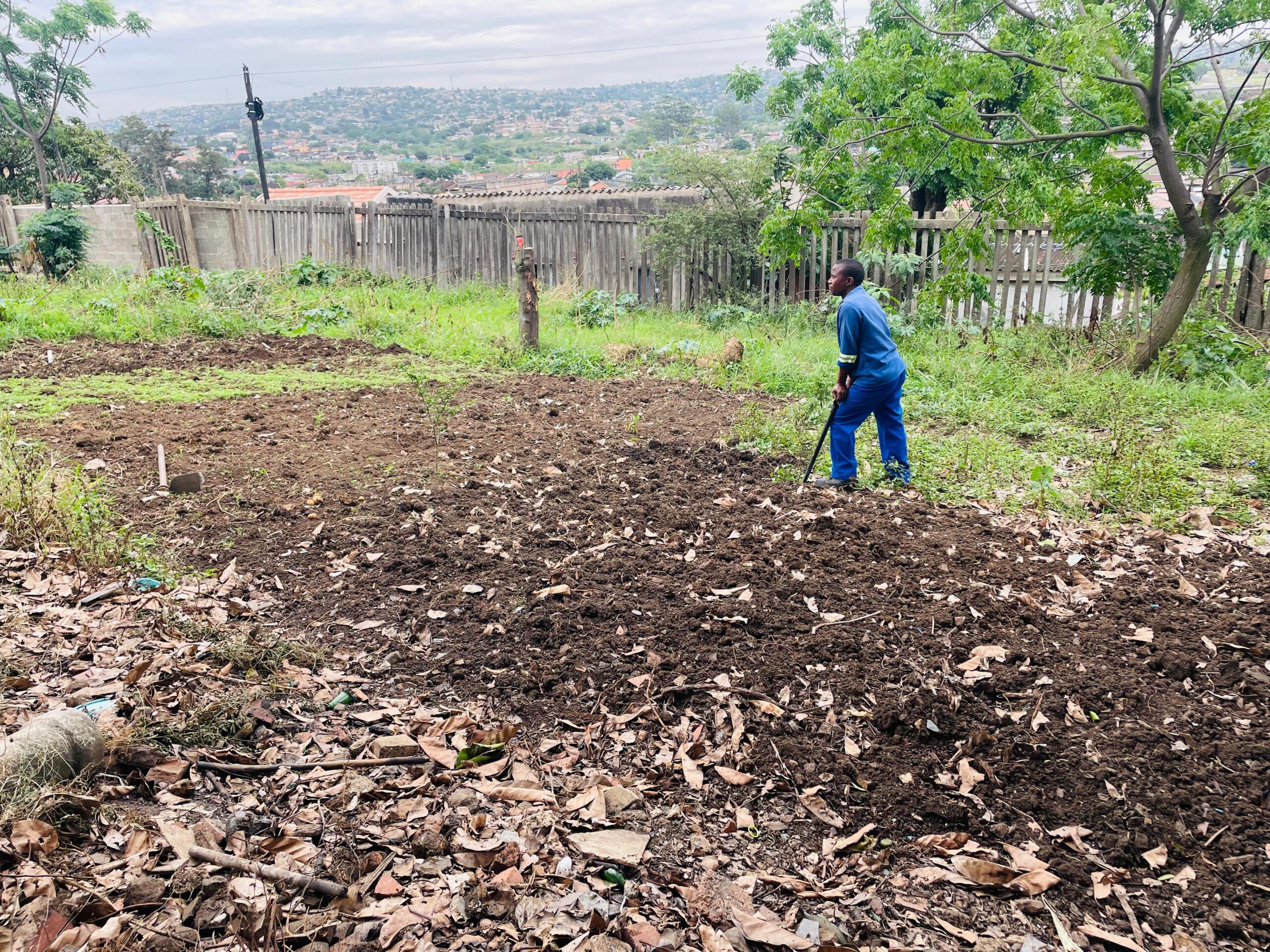
Behind the classrooms in Nkosinathi’s school, an untended patch of land grows spinach and cabbage. He is unsure who owns it.
“I hardly see anyone from our school in there, but different aunties and uncles,” he explains.
The staggering cost of hunger
Despite its lush landscape, KZN carries South Africa’s largest poverty gap, with 32.9 per cent of its population food-deprived. This stark disparity is reflected nationally, where over one in four South African children face chronic malnutrition.
The extreme child poverty crisis
The challenge faced by children like Nkosinathi reflects a global crisis. Globally, while Sub-Saharan Africa is home to just 23 per cent of the world’s children, it is home to about three-quarters (over 312 million)of all children living in extreme poverty.
This extreme pressure on households is why the National School Nutrition Programme (NSNP)is key. It feeds over 9.6 million learners every day at a cost of under R5 per child, serving a meal meant to improve nutrition, attendance, and concentration. But logistical failures, supply delays, and bureaucratic hurdles continue to starve the system—and, by extension, the children it serves across all nine provinces.
Research by Dr Dale Langsford and others found that payments to service providers are often delayed, crippling efficiency. Langsford described the system as“a chain that hinders itself from achieving its aims”—an effort so bureaucratic that it undermines its own survival.
Nkosinathi’s own experience living with his grandfather underscores the vulnerability of many children. The NSNP is their primary safety net, which makes its failures catastrophic. Sandy Bukula, CEO of Operation Hunger, which has fought malnutrition for over four decades, emphasized that the NSNP is built on three pillars, one of which is sustainable food production in schools.
Sandy Bukula, however, points out why garden solutions often fail as a poverty alleviation mechanism in rural settings.
“We’ve got infrastructural problems like access to water. So even if a person does have a small land where they can implement a corporate strategy [homestead garden], it cannot work in most rural areas that lack infrastructure.”
Children show the way forward
Despite these challenges, learners instinctively look to the soil. In Limpopo’s Capricorn District, *Lesiba Letsoalo, a Grade 10 learner, highlights the underutilised potential at his school. His school does have a garden with spinach, yet he rarely sees the produce.
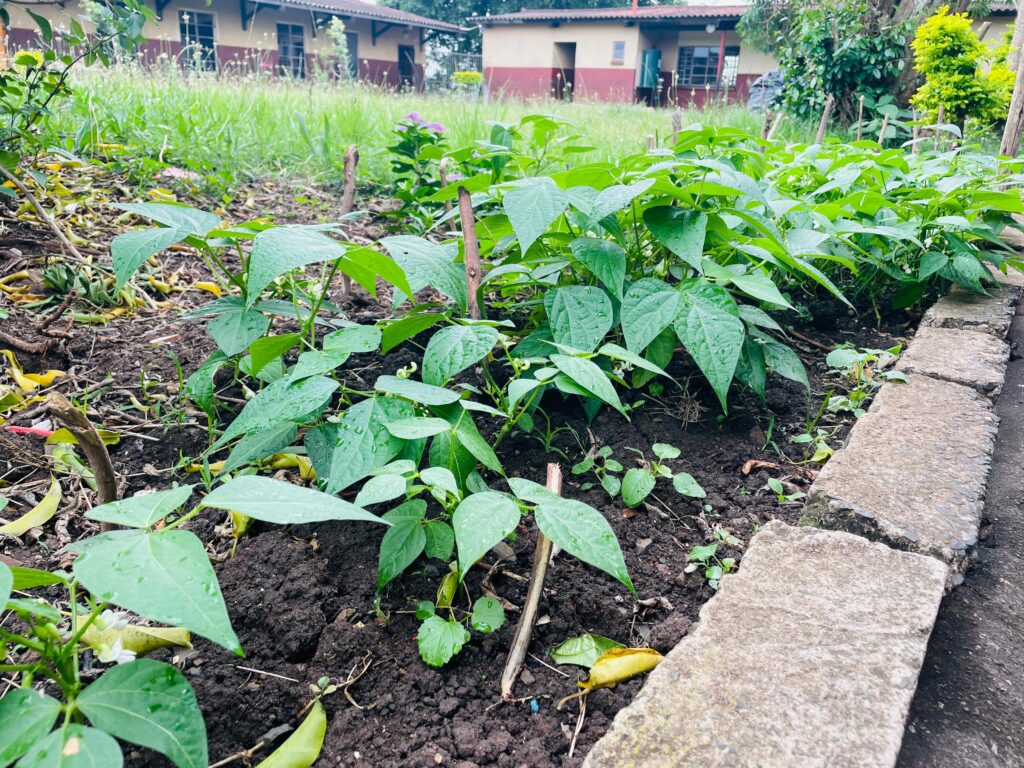
“We are fed the spinach after a very long time,” Lesiba recalls.He envisions a simple fix.
“If the garden were bigger, they could grow cabbage, rice, and fruits. If someone doesn’t get a meal, they can have fruit from the garden instead.”
Lesiba’s favourite meal is fish and pap, which is served at his school on Fridays. On days they have some money, he and his friends put together R2 to buy atchaar from the school tuck shop.
“We even buy atchaar together,” he laughs, “so the food tastes better.”
In Letsokoane villagein Limpopo,*Nana Makgoka, 16, echoes the same thoughts.
“I think the solution to secure food for school learners is to create school gardens. If schools grow their own veggies and fruits, it could feed learners and reduce hunger.”
The children’s struggle is not just physical, but deeply emotional. Clinical Psychologist Dr Maredi Mothapo explains that chronic hunger breeds deep emotional distress.
“Children facing hunger often experience heightened anxiety, low self-esteem, and visible frustration in the classroom. Even a child who has food among those who do not can feel guilt and shame, leading to social withdrawal.”
This need for emotional safety underscores the importance of dignity in relief efforts. Learner *Zinhle Mthembu mentioned the need for targeted, discreet assistance: she suggested that if social workers could liaise with schools, they could “arrange food parcels for the family secretly,” shifting the support system from public shame to private relief.
Bukula explains why relief alone cannot win the fight.
“Providing relief alone will never end malnutrition or hunger because the drivers of hunger are systemic structures.”
Operation Hunger’s approach, therefore, blends relief with systemic solutions.
“We also have your food rescue processes where we work with other retail shops like Pick’n Pay, Spar, and Woolworths. What we do is we rescue the food that is almost close to shelf life and distribute it within 24 hours to homes that we know are in need.”
Global lessons for SA
The NSNP struggle aligns with the United Nations Sustainable Development Goal 2: Zero Hunger.
These young voices point instinctively toward sustainability—the same path global hunger experts advocate. Mozambique’s Lunchbox Programme and Brazil’s Zero Hunger model both integrate local farmers into school feeding contracts, proving that coordination between education, agriculture, and community is possible. Locally, the Edu-Plants Initiative is adopting this model, building sustainable school gardens to strengthen the food supply chain.
Ghana’s School Feeding Programme, launched in 2005, now reaches over 3.8 million children daily, showing what can be achieved with clear policy and local engagement.
Other regional NGOs provide psycho-social support and discreet nutritional food parcels to vulnerable families, directly addressing the link between hunger and dignity.
The Gap on Accountability The Department of Agriculture, Forestry and Fisheries (DAFF) has adopted the Zero Hunger Programme as part of its Integrated Food Security Strategy. Yet, on the ground in provinces like Limpopo and KZN, implementation remains uneven.
The cost per learner per day remains under R5. When the Limpopo Department of Education was asked if they had explored partnerships with local farmers in the NSNP, Department of Education Head of Communications, Mike Maringa, clarified the structural distance.
“NSNP service providers are on a 3-year contract, and food is delivered in advance. The department is not involved in the daily or weekly procurement of food; it is the responsibility of the appointed service providers.”
To shift the NSNP from a feeding scheme to a food-security system, experts stress policy alignment across Education, Health, and Agriculture. For children like Nkosinathi, Lesiba, and Nana, hunger is not just about empty plates, but it’s about interrupted potential. Their solutions echo a wisdom policymakers often overlook.
“If business people can come and help, it would help greatly,” Nkosinathi concludes.
- Names changed yo protect identities of minor learners
This story was produced with the support of Media Monitoring Africa for the Isu Elihle Awards 2025.

Be First to Comment