Last updated on 20 April 2026
A proposed amendment to the Tshiamiso Trust Deed threatens to shut even more former mineworkers who contracted silicosis out of the compensation they were promised after a succesful class action.
For decades, gold mineworkers from South Africa and neighbouring countries toiled thousands of meters underground, inhaling silica dust that scarred their lungs and cut their lives short.
Today, more than 100,000 current and former mineworkers and their dependents have lodged claims with the Tshiamiso Trust for silicosis, a preventable but incurable lung disease or related tuberculosis.
Yet, as of October 2024, only about 25,500 of roughly 147,000 claimants had received payouts totalling R4.6 billion, according to Trust data. Many others remain in the system, while thousands are believed to have died waiting.
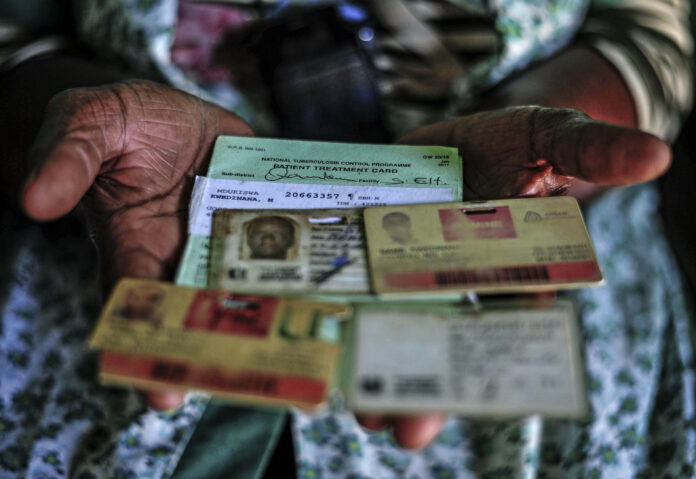
Now, amendment No. 9 seeks to eliminate Occupational Diseases in Mines and Works Act (ODMWA) certificates as valid proof for compensation claims. These certificates, issued by the state, formally confirmed that a miner’s lung disease was directly linked to their underground work. For thousands of former mineworkers, they remain the only official evidence of illness.
Under the proposed changes, living claimants would be required to undergo new Benefit Medical Examinations (BMEs), while dependents of deceased miners would need to provide alternative documentation, including death certificates and historical medical records.
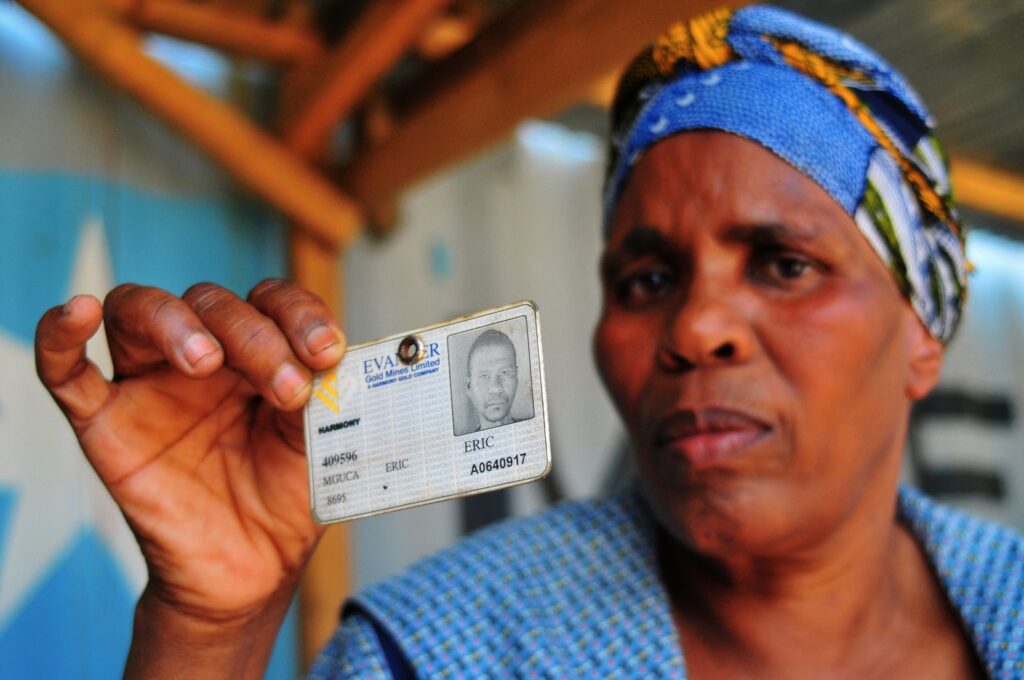
For many rural, elderly former miners, particularly those from Lesotho, Mozambique, Zimbabwe, and South Africa’s Eastern Cape, ODMWA certificates are often the only paperwork they possess. Travelling to assessment centres presents significant barriers, including long distances, physical frailty, and the high cost of transport.
“This amendment could shut out thousands who have waited years, some dying without justice,” said Bishop Jo Seoka, chairperson of Justice for Mineworkers and Others (JFMO). “These certificates ended men’s livelihoods. How can they now be dismissed when it comes to compensation?”
https://www.justiceforminers.org
The Tshiamiso Trust was established following a landmark 2019 settlement worth R5 billion between gold mining companies, including AngloGold Ashanti, Gold Fields, Harmony and Sibanye-Stillwater and affected mineworkers. The agreement was seen as a major step towards addressing decades of occupational harm in the mining sector.
Research, including findings from the Lancet Commission, shows that silicosis prevalence among long-serving former miners ranges between 22% and 36% in affected communities. The disease is progressive, incurable and often fatal, and significantly increases vulnerability to tuberculosis.
According to the World Health Organization, mineworkers face tuberculosis infection rates up to five times higher than the general population, compounding the health crisis.
Compensation awards vary depending on disease severity, ranging from about R200,000 for early-stage silicosis to over R500,000 for advanced cases. Critics warn that requiring new medical examinations could lead to reclassification at lower stages, effectively reducing payouts for claimants who have already waited years.
Approximately 60% of claimants are cross-border migrants, according to Trust figures, further complicating access to medical assessments and administrative processes. Health workers in rural areas say many former miners are too ill to travel.
For families of deceased mineworkers, the implications are even more severe.
Widows and dependents often rely entirely on ODMWA certificates as proof of occupational disease. Without them, they may be forced to reconstruct medical histories from fragmented or missing records a near-impossible task for many.
“With one amendment, thousands of legitimate claimants could be erased from a system built specifically for them,” JFMO said in a statement.
However, the Trust Chairperson, Dr May Hermanus, acknowledged the challenges faced by claimants but said the Trust is bound by strict medical and legal criteria.
https://www.tshiamisotrust.com
“Many who approach the Trust with hopes of compensation do not meet the strict medical and legal criteria. These criteria are binding on the Trust and were established in the settlement agreement that gave rise to its mandate,” she stated in a recent update.
Trust data also indicates that a significant portion of claims fail re-examination due to non-occupational diagnoses or irregularities, raising concerns about fraud and the need to safeguard funds.
Still, advocacy groups argue that tightening the process risks excluding legitimate claimants and deepening an already long-standing injustice. – news@mukurukuru.co.za

Be First to Comment