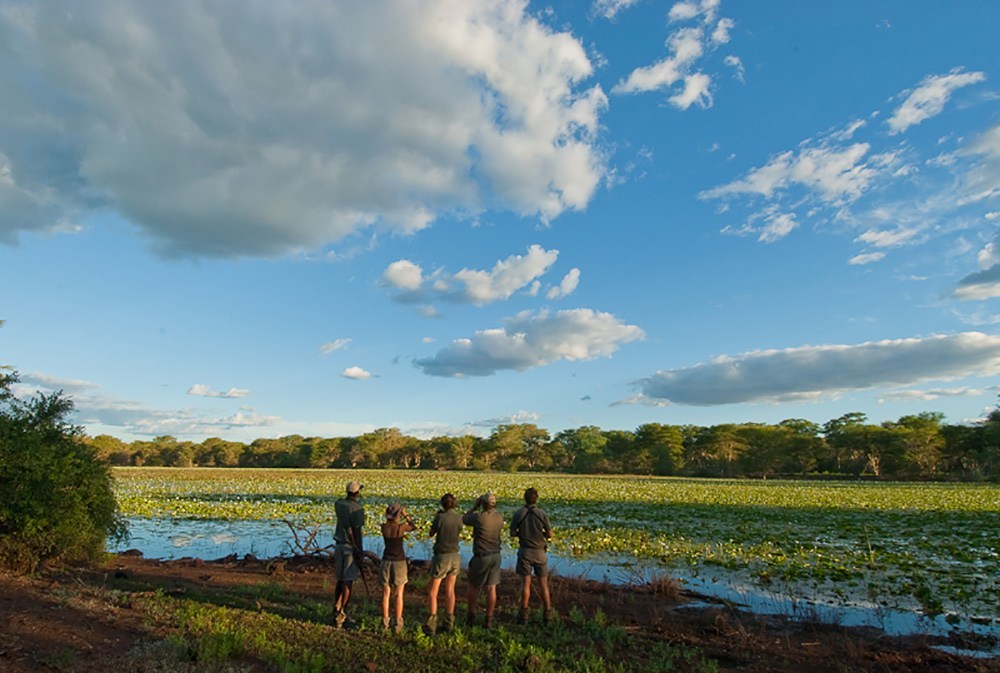
Land restitution residents defy the odds to make land returned to them work in supporting business and jobs
WHEN the community of Makuleke’s land claim was finally settled in 1998 they were not in support of efforts to get involved in nature conservation initiatives – the scars from a past that saw them forcefully evicted from their ancestral land in 1969 were still too raw.
When the land was returned to the community after a claim lodged with the Commission on Restitution of Land Rights Act, the Makuleke Communal Property Association (CPA) sought advice from a number of organisations.
Mavis Hatlane, the CPA chairperson said several suggestions were made based on the land’s biodiversity status with options varying from hunting to farming to mining.
“After thorough consideration, we resolved to get involved in photographic tourism,” Hatlane said.

However, the decision was not a seamless one, Hatlane said, noting that there were a number of niggling issues to deal with.
These included differences in interests with some community members wanting to pursue hunting and others farming.
As a result, community members initially opposed the notion of conservation – because of the previous racist approach to conservation that saw them being removed from their land.
However the Makuleke community is now at the forefront of cutting-edge, socially conscious approaches to conservation. The community is now a beneficiary of tourism projects in the Kruger National Park where they own 24 000 hectares of land.
As part of the agreement, the CPA and the SA National Parks (SanParks) have a joint management board, with three members from each organisation. The board deals with strategic decisions, with a focus on both conservation and business opportunities on the land.
“The community has also established partnerships with private partners,” Hatlane says.
The benefits of the CPA’s decision to focus on conservation and tourism are obvious. The Makuleke CPA currently has two lodges, Return Africa and The Outpost, and a training institution, Makuleke Eco-Training. Some 70% of the workers at these three facilities come from the local community.

Hatlane said this came after the joint management board had looked into the matter, taking into consideration that the private partners would retain the conservation status of the land while at the same time contributing towards improving the livelihoods of community members. SanParks’ role is to ensure the conservation of the land, while the community can use the land for commercial purposes while taking care to maintain conservation measures, Hatlane explained.
“The community has come a long way in this process, and it has been crucial for the Makuleke Traditional Council to find a balance in meeting the needs of the community members while at the same time ensuring the protection of a biodiverse zone – bearing in mind that the land the community owns is a central part of the greater eco-system of the Kruger National Park,” said Hatlane.
The CPA has also established partnerships with training institutions that focus on conservation and hospitality. These include the South African College for Tourism which offers hospitality training; the Southern African Wildlife College which provides field ranger and conservation-related studies like community-based natural resource management and responsible resource use); and the Tracker Academy which focuses on field guiding.
The Makuleke situation is one of the positive examples of what a functional CPA working with the community can achieve.
CPAs have gained notoriety for contributing to land reform projects through infighting and mismanagement of funds among others.
Deputy minister of agriculture, rural development and land reform Mcebisi Skwatsha alluded to this in his budget vote speech earlier this year.
“Another major worry is that when beneficiaries have acquired land through the various land reform programmes, they defeat the very same objectives of land reform, by not using the land or not leasing it out for meagre rental income,” Skwatsha said.
Skwatsha said currently, more than 1 500 CPAs have been established and registered nationally.
“In the past financial year 2021/22, we supported 581 CPAs against our target of 577 and we will further train 585 members on governance of these CPAs in the current financial year. Although we over achieved in terms of the target set, we remain uneasy about the performance of CPAs,” he said.
Peter Setou, chief executive of the Vumelana Advisory Fund noted that “maintaining the conservation of protected lands and heritage sites in land reform requires a fine balance as land remains a highly emotive issue.
Vumeland Advisory Fund is a non-profit organisation that works with land reform beneficiaries to make their land productive by facilitating partnerships between communities and investors.
“Conservation of restituted land and the need to develop the land for communities should not be mutually exclusive, but should complement each other. Communities should be able to reap the economic benefits from their ancestral land while maintaining the integrity of the land and the value of heritage sites,” Setou said. – news@mukurukuru.co.za

Be First to Comment