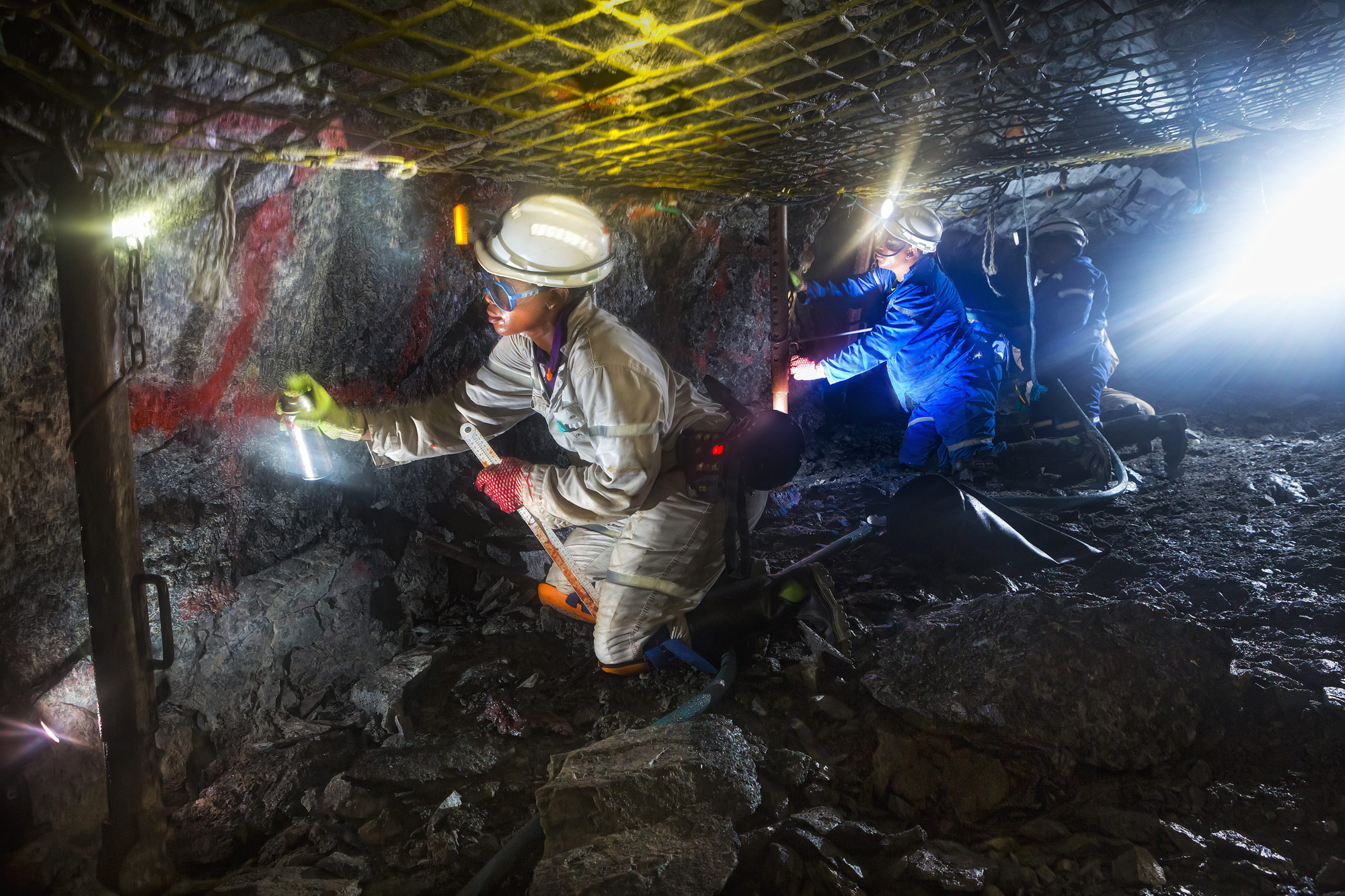
In the late hours of Friday night in late March, deep underground at Valterra Platinum’s Mototolo Mine in Limpopo, a routine task turned fatal.
Michael Pheagane Ramodike, 55, had spent nearly two decades working as a Load Haulage Operator. On 27 March, he was carrying out panel cleaning as part of the everyday work that keeps operations moving when the machine he was operating reportedly failed. Minutes later, he was dead.
Ramodike’s death has left a family grieving in Tzaneen. But beyond the personal loss, it raises a harder question: how does a worker with 18 years of experience die while simply getting out of a machine?
For years, Ramodike worked in an environment defined by risk, confined spaces, heavy machinery, and conditions that can change without warning. Like many mineworkers, he showed up every day knowing the dangers. The job paid the bills and supported a household. In communities such as Tzaneen, that income often sustains extended families.
When a worker dies, the impact does not stop at the mine gate. It follows families home in lost income, in unanswered questions, and in the long shadow of what could have been prevented.
According to preliminary information, the Load Haulage Dump (LHD) machine experienced an engine shutdown while articulated. As Ramodike tried to exit the cabin, the machine allegedly tilted, trapping him between the door and the frame.
An investigation is underway, but the explanation has already raised concerns. Machines fail; that is not new in mining. The question is what happens when they fail, and whether workers are adequately protected when they do.
The General Industries Workers Union of South Africa (GIWUSA) has been blunt in its response. The union argues that this was not simply an accident, but a failure of systems meant to keep workers alive.
“Mechanical failures of this nature should not result in loss of life if proper safety systems and maintenance protocols are in place,” the union said.
The concern reflects a broader reality in South Africa’s mining sector. According to the Department of Mineral Resources and Energy, the industry recorded 42 fatalities in 2024, the lowest on record, continuing a long-term decline from earlier decades. Yet deaths linked to machinery and transport underground remain among the most persistent causes of fatal incidents.
While companies often point to improved safety systems and a commitment to zero harm, incidents like this continue to test those claims. Valterra Platinum had not responded to requests for comment at the time of publication.
Ramodike was not new to the job. He understood the risks. He had worked underground for 18 years. And yet, experience did not save him.
That reality unsettles many workers in the sector. It suggests that danger in mining is not only about human error, but also about the limits of control in an environment shaped by machinery, pressure, and production demands.
For workers, the message can feel stark: even doing everything right may not be enough.
Mining remains one of South Africa’s most important industries, supporting jobs and local economies. But its history is also marked by loss, even as safety conditions have improved over time.
Behind every fatality is not just a number, but a person, someone with a family, a routine, and responsibilities that do not disappear when a shift ends in tragedy.
Ramodike’s death is now part of that count.
As investigations continue, the outcome will matter. But for many, the bigger question is whether anything will change or whether the next incident is already waiting underground.
In March, the Minerals Council of SA said after two years of regressions in fatalities related to falls-of- ground incidents, the mining sector started 2026 with no deaths from this cause.
Japie Fullard, Chair of the Minerals Council South Africa’s CEO Zero Harm Forum, told the fifth Elimination of Falls of Ground Action Plan (FOGAP) Day of Learning that since the record low of 6 fatalities resulting from falls of ground in 2022, the mining sector had regressed to 15 in 2025.
“These numbers are not just statistics. They present people, families and their futures, which
have been forever changed. They remind us why this work of fall of ground demands our
unwavering commitment. Despite these setbacks, the industry has not retreated. Instead, we
continue to push forward with the determination through the implementation of FOGAP,”
Fullard said.
“We are investing heavily, we are learning continuously, and yet the full impact of our efforts
is not immediately visible. This does not mean the strategy is failing. It means we are in the
steepest part of achieving Zero Harm, a place where progress requires resilience, discipline
and collective resolution,” he said.
The South African mining sector’s safety interventions and collaboration with its key
stakeholders, the regulator and organised labour have delivered two successive years of
record safety performances in 2025 and 2024.
The mining sector has reduced fatalities in
three decades by 91% to 41 in 2025 from 484 in 1994. Serious injuries have fallen by 80% to
1,693 from 8,347 in that period, with a specific sector focus on the leading causes of fatalities. – news@mukurukuru.co.za

Be First to Comment