Last updated on 23 April 2022
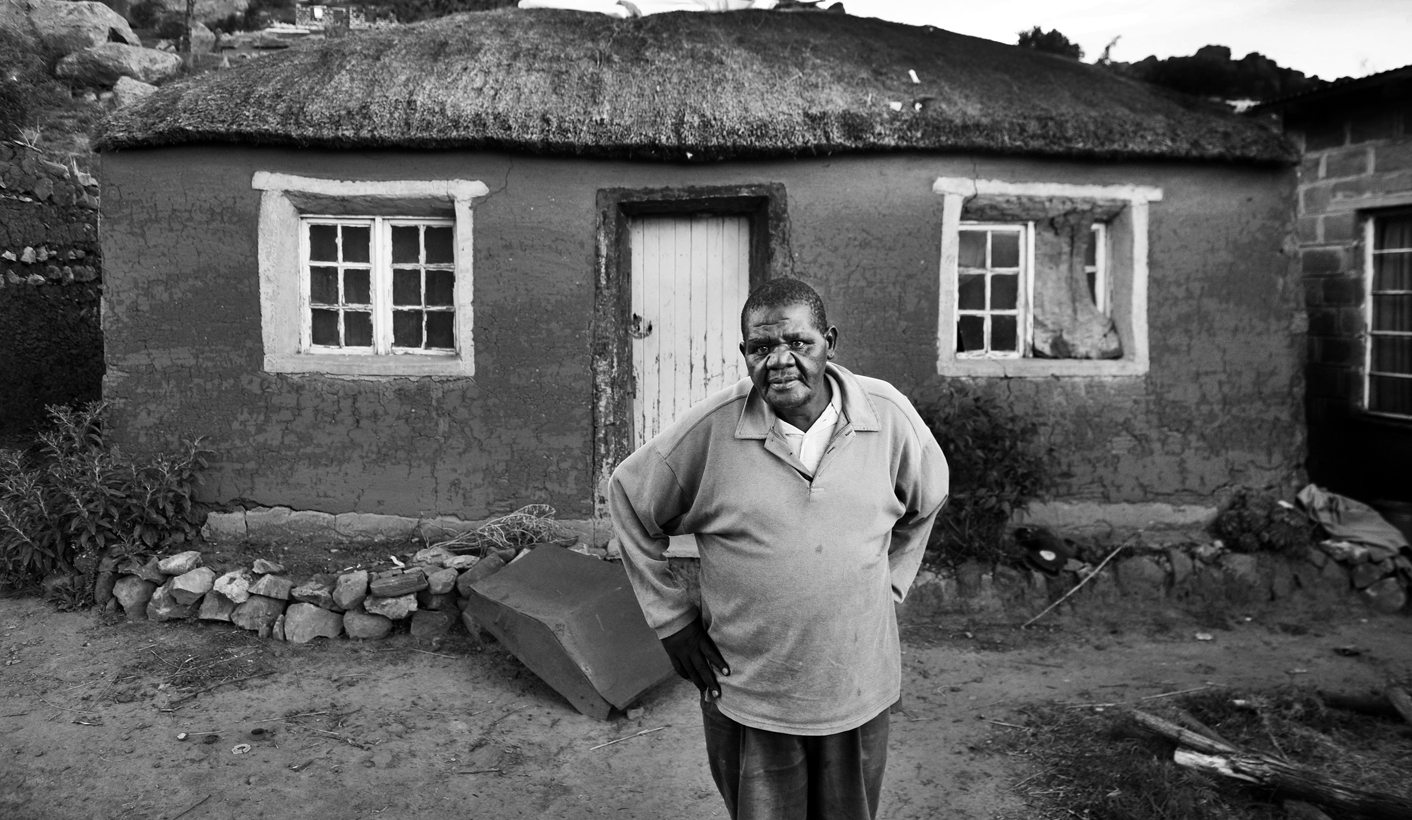
They spent the best years of their lives digging for gold on SA mines – but now sickly and dirt poor Lesotho’s ex-miners are fighting red tape and long delays to get compensation for contracting the lung disease silicosis
Masentle Mokiti
BOOI Mohapi is haunted by the deep expressions of disappointment he often sees on the broken faces of his compatriots.
Every day he meets dozens of men and women who often travel long distances from rural villages to the Lesotho capital Maseru hoping for an update on their applications for compensation from the Tshiamiso Trust.
The Trust was set up by an order of the high court to pay out various amounts of compensation to former gold miners who contracted or died from silicosis and Tuberculosis after working on South Africa’s gold mines.
Mohapi is the executive secretary of the Catholic Commission for Justice and Peace and chairperson of Lesotho Justice for Miners Campaign, a programme comprising the Catholic Commission for Justice and Peace, the Ex Miners Association and the Mine Workers Agency.
According to Tshiamiso Trust, the compensation process should take between 30 and 90 days but it has been years of pain and agony for the claimants and their families.
Mohapi said that one of the biggest problems claimants face occurs when a victim dies before completing the claim process.
“It becomes a huge struggle for the families to do autopsies on the deceased and the transportation of the organs between Lesotho and South Africa [for testing] is so expensive that some of the beneficiaries decide to quit this tiring process,” he said.
The Tshiamiso Trust acknowledged in response to a media enquiry from Mukurukuru Media that “there are legal and logistical challenges in transporting bodies across borders. In addition, we are also mindful of the cultural sensitivities that come into play. We are committed to finding solutions, that may include performing these services in-country while still adhering to the requirements of the Trust Deed.”
“Currently, Tshiamiso does not carry out autopsy services. We are reliant on the National Institute for Occupational Health services in this regard.”
For a claimant to qualify for compensation, they should have worked in a gold mine owned by one of the mining companies cited in the lawsuit that resulted in the establishment of the Tshiamiso Trust. An industrial number and medical certificates are among the other requirements needed to claim. But many ill, retired miners suffer and die in silence in their homes as the compensation process drags on.
“It’s heartbreaking to see the families of the victims suffer and struggle to get what’s due to them,” lamented Mohapi.
He said the Lesotho government’s non-engagement in the affairs of the former miners is another hindrance that delays the compensation process.
“The department of health and labour should see to it that the cases of those Basotho men are sorted. Our people are indeed struggling.”
The Campaign has some 1000 claimants across Lesotho. The campaign claims none of them have been compensated since the Trust deed became effective on 26 July 2019.
However, in response to our enquiry the Tshiamiso Trust said “the Trust has paid 457 claimants from Lesotho, translating to a total value of R41 820 975.”
As per the High Court judgement, R5 billion was set aside to compensate 500 000 ex-miners within a time frame of 12 years. However, two years commencing, Tshiamiso has paid only 102 claimants out of the 500 000 ex-miners to the tune of R9 07 523.
Mohapi said the Campaign voiced its complaints and demands to Tshiamiso in August 2021.
In the statement the Lesotho Justice for Miners also expressed concern about the delays in the allocation of funds by the Trust. They urged Tshiamiso to critically review and improve the performance of TEBA bank officials and medical service providers at Tshiamiso Trust lodgment sites.
During its practice, the Campaign revealed serious problems in the treatment of claimants, the handling of lodgings, the execution of medical examinations, and the accessing of employment records.
The Tshiamio Trust said it has “leveraged TEBA’s extensive footprint and experience, which has enabled us to gain good ground in Lesotho. We have extended lodgement sites beyond TEBA offices and will continue to do so. We are also constantly holding all our service providers, including TEBA, accountable for providing quality service delivery and living out the Trust’s values, including treating our beneficiaries with care, compassion, dignity and respect.”
Mohapi further lamented that communication to the claimants needed to be improved and it should be in a language understood by Basotho.
Added to that, the toll-free number provided by Tshiamiso is not free in Lesotho and the claimants find it costly to call an international number.
The Tshiamiso Trust said in response that individuals calling from neighbouring countries, including Lesotho, are not charged for calling them.
“Instead, our call centre disconnects incoming calls and calls them back to ensure that claimants do not incur high communication costs. There are no costs to contacting Tshiamiso Trust through the call centre.”
However, Mohapi lamented that those who managed to do so were answered in English, leading to a breakdown in communication. The Lesotho Justice for Miners has since become the link and interpreter between the claimants and the Trust. “Many Basotho come to our offices asking for our help and we guide them on what to do to get their money. We do not work as a middleman nor charge for our services,” Mohapi added.
The Tshiamiso Trust said in response that they translate all essential documents and communicate to claimants through their call centre agents in several languages, including isiXhosa, Sotho, Setswana, Zulu, Siswati, Afrikaans, English and Portuguese.
Amidst the Covid-19 pandemic, Mohapi recalled how many ex-miners affected by silicosis died. He said that the Covid-19 virus became the catalyst which ended the lives of slowly dying miners. Being at home and with no money to take care of their families, most ex-miners’ lives are cut short.
“The stress and depression brought by the sickness are unbearable,” Mohapi explained.
Although silicosis is not contagious, a person with the disease might develop signs of TB, which is transmittable to the rest of the family.
“There are high risks involved while taking care of a patient of this kind. Money is needed for medical check-ups and transportation of the patient to and from the clinics. This takes a huge toll on the family affected. I wish these people would get what is rightfully theirs and not die bitter.”
Tshiamiso Trust said on its website it had paid out R191.5 million to claimants from across all regions by February 24. –news@mukurukuru.co.za
further reading on the subject:
http://goldminersilicosis.co.za/wp-content/uploads/2018/05/2018-05-03-settlement-statement-final.pdf

Be First to Comment