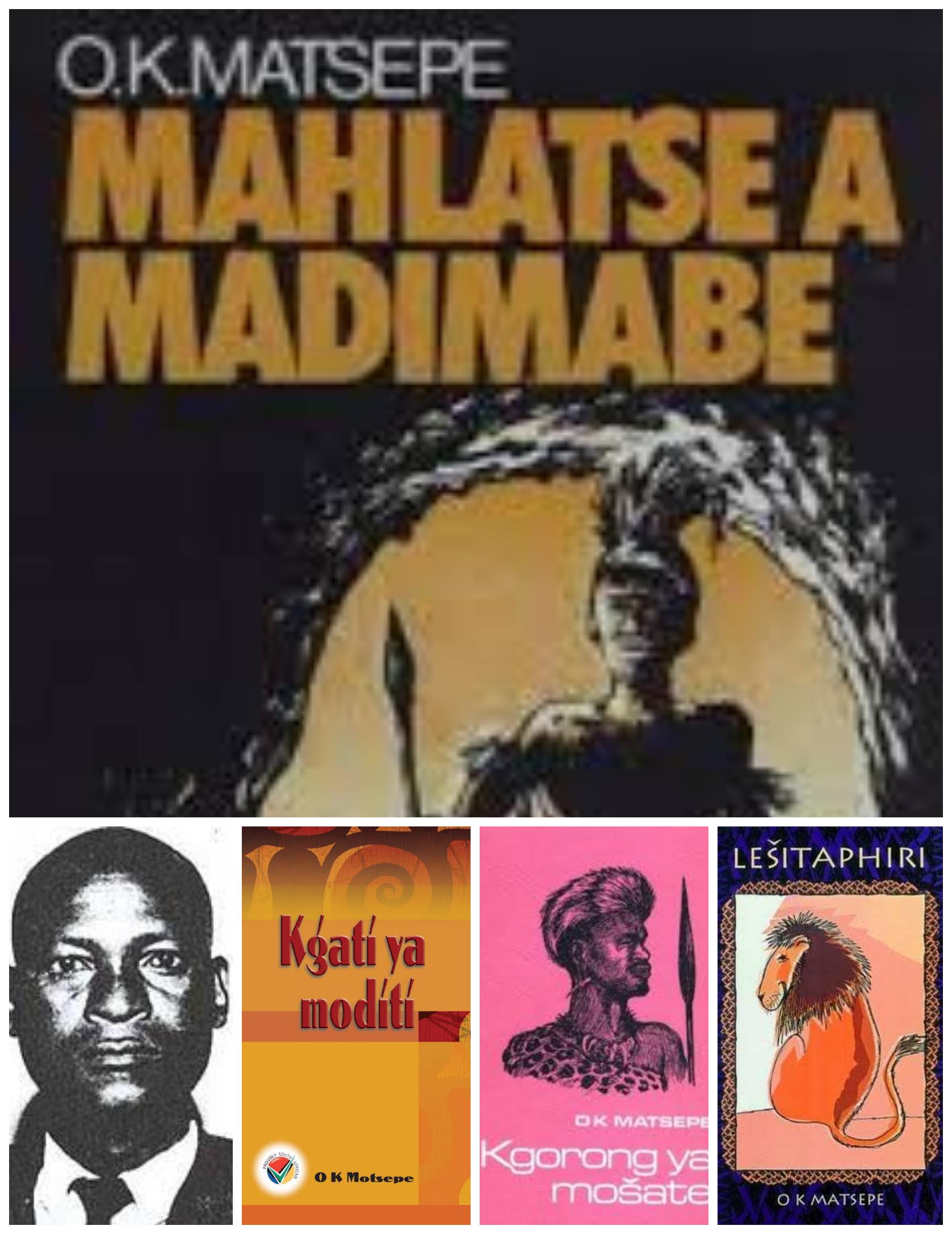
Northern Sotho author OK Matsepe’s legacy goes a long way in preserving the language, cultures, and tradition in the global village in line with the goals of UNESCO’s International Decade of Indigenous Languages writes Malesela Maubane
The right of South African citizens to use the language and to participate in the cultural life of their choice is enshrined in Section 30 of the Constitution, with Sign Language recently added as the country’s 12th official language on the eve of celebrating 30 years of freedom.
Language forms part of people’s culture, hence the United Nations Educational, Scientific and Cultural Organisation’s (UNESCO) proclamation of 2022-2032 as the International Decade of Indigenous Languages (IDIL) “to mobilise stakeholders and resources for their preservation, revitalisation and promotion” is a welcome decision.
I recently attended the 4th OK Matsepe Memorial Lecture organised by the University of South Africa (UNISA) North-Eastern Region in Polokwane.
The public lecture was held in honour of the late Northern Sotho language novelist and poet, Oliver Kgadime Matsepe, with the 2023 edition presented under the theme Maintaining OK Matsepe’s Legacy: Preserving the African cultures, tradition, and languages in the global village”.
Matsepe was born into the Bakgaga-Ba-Kopa royal family in Magagamatala, Groblersdal district on 22 March 1932.
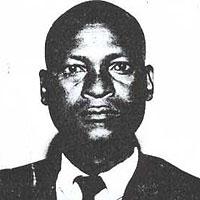
He died on 4 October 1974 in Tafelkop. According to the New Dictionary of South African biography (1995), Phukubjane received his primary school education in mission schools and finished his secondary studies in 1955 when he enrolled at Kilnerton Institution, a Methodist college in Pretoria.
Sebatakgomo, his first literary effort, was written in 1954 during his stint at Kilnerton Institution. He also worked at the Department of Bantu Administration and Development as a clerk and interpreter.
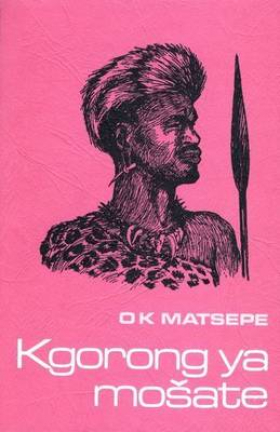
For his work, he twice received the S.E Mqhayi Prize from the South African Academy of Arts and Science: Kgorong ya Mošate in 1964 and Megokgo ya bjoko in 1974. The award is named after Samuel Edward Krune Mqhayi, a Xhosa dramatist, essayist, critic, novelist, historian, biographer, translator, and poet whose works are credited with standardising and conserving isiXhosa grammar in the 20th century.
Northern Sotho, also known as Sesotho sa Leboa, is a language spoken mostly by the Bapedi, Bakoni, Bahananwa, Balobedu, Babirwa and various other clans in Limpopo, Mpumalanga, and Gauteng.
Back to the 4th OK Matsepe memorial lecture, I must agree with UNISA Principal and Vice-Chancellor, Professor Puleng LenkaBula that OK’s writings were evidence of his “radicalism and activism through literature.”
Furthermore, Prof LenkaBula is spot on with the observation that Matsepe was “a product of history grounded in Sepedi tradition wherein we can draw on him as a source of the usage of ‘kgoro’ or ‘royal courtyard’ as a traditional place of resolving societal issues and disputes including gender-based violence and femicide (GBVF) and all forms of women abuse.”
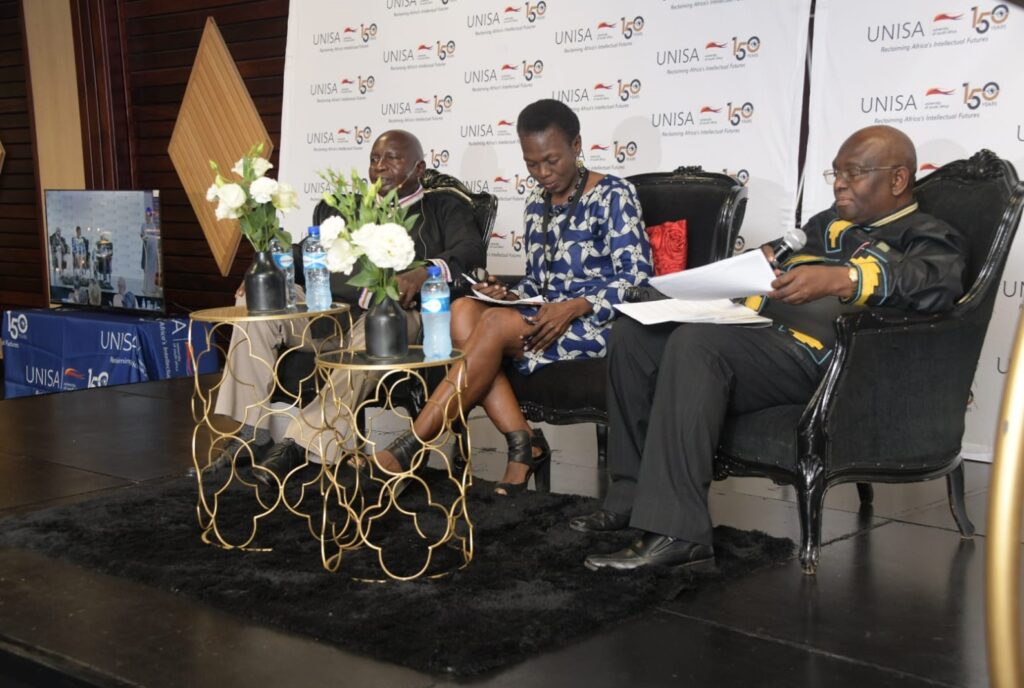
The lecture was suitably delivered by Professor Mokgale Makgopa, a C 3 National Research Foundation (NRF) rated researcher in language, literature, and folklore from 2016 to 2027. He is a retired full Professor and a former Dean of School of Human and Social Sciences at the University of Venda.
Prof Makgopa is currently a research fellow in the College of Humanities, UNISA and a Board member of the Creative and Advisory Panel (DHET), where he chairs the literary panel, member of the Responsible Research and Innovation Team, LSME College, United Kingdom, as well as Founder and Director of MMM Youth Empowerment Project.
Professor Makgopa rightfully highlighted the significance of having the lecture in honour of the literary giant in the month of May, which is Africa month, this while further conscientising the audience that Matsepe’s writings were influenced by the philosophy of African life and the Ubuntu concept in general.
In his presentation, the decorated Lenyenye born Professor focused mainly on the African philosophy and the Ubuntu concept as a way of nation building as written in Matsepe’s three novels: Kgorong ya Mošate (1962), Lešitaphiri (1963), and Megokgo ya bjoko (1968).
GBVF cases are reported to be at crisis levels in South Africa while there are still remnants of patriarchal behaviour bordering on women oppression in our society.
On this, Professor Makgopa unpacked the story of an abusive man, Lekoloboto in Kgorong ya Mošate, who beat his first wife and later murdered her on accusation of not being able to bear children. This is demonstrated in Matsepe’s text, “Lekoloboto o bolaile mosadi wa gagwe wa pele, gomme a mmolaela ditiro tša Modimo.”
Matsepe wrote in the same book, “Bafokotšana ba rotoša dimakatšo”, in this regard Prof Makgopa drew similarities between the warrior, Boditsi and South Africa’s first democratic president, Nelson Mandela in terms of their social standing, especially in relation to land, politics, banishment or exile and collective leadership.
On Lešitaphiri, Prof Makgopa postulates thatthe novel focuses onjealousy, greed, and trickery including corruption and bribery, a regular occurrence in our current epoch.
Prof Makgopa further indicated that Megokgo ya bjokoshone the spotlight on selfishness, greed characterised by jealousy, GBV and femicide.
I can attest to his view, as the book was our prescribed Sepedi home language reading in 1992 when I was in Form Two or Standard Seven at Dr MJ Madiba secondary school in Ga-Madiba village, Ga-Mashashane area.
The school is named after another colossal Sesotho sa Leboa author, linguist, educationist, and community leader, Moses Josiah Madiba who has a connection to the university of the land which is this year celebrating 150 years of existence and in service of humanity.
During our Northern Sotho lessons, the late Lekuku Ditshehla Mphahlele colloquially known as Jarara, brought the character of Leilane in the book to life. Mokgaga a-Mphahlele drew a picture with his words, of the man beating his wife, Mohlatša, for vomiting when he was eating his meal containing serapolotšwana or cow calf embryo meat. Leilane leila lethabo also beat his father-in-law when he tried to intervene, hence the matter was brought before the kgoro or traditional court for resolution.
In his parting shot, Prof Makgopa made a passionate plea for Matsepe’s teaching to be made compulsory for grade 10-12 learners while encouraging more postgraduate research on Mokgaga’s body of work.
After all, Section 29 (2) of Constitution prescribes: “Everyone has the right to receive education in the official language or languages of their choice in public institutions where that education is reasonably practicable.”
Matsepe’s other books include Todi ya dinose, Molodi wa thaga, Kgati ya Moditi, Kgotla o mone, Tša ka mafuri, Molodi wa mogami, Letsofalela, Mahlatse a madimabe, and Tšhelang gape.
Indeed, OK’s legacy goes a long way in preserving the Sepedi language, cultures, and tradition in the global village in line with the goals of UNESCO’s International Decade of Indigenous Languages. Books represent art, they are thus part of cultural heritage.
Maubane is former convenor of UNISA alumni: Polokwane chapter, and currently a development studies postgraduate student at the university. He writes in his personal capacity.

Be First to Comment