A community displaced by Apartheid celebrate proclamation of ancient hill as heritage site but uncertainty lingers over their wish for return of the land their ancestors called home from the 1600s writes Lucas Ledwaba
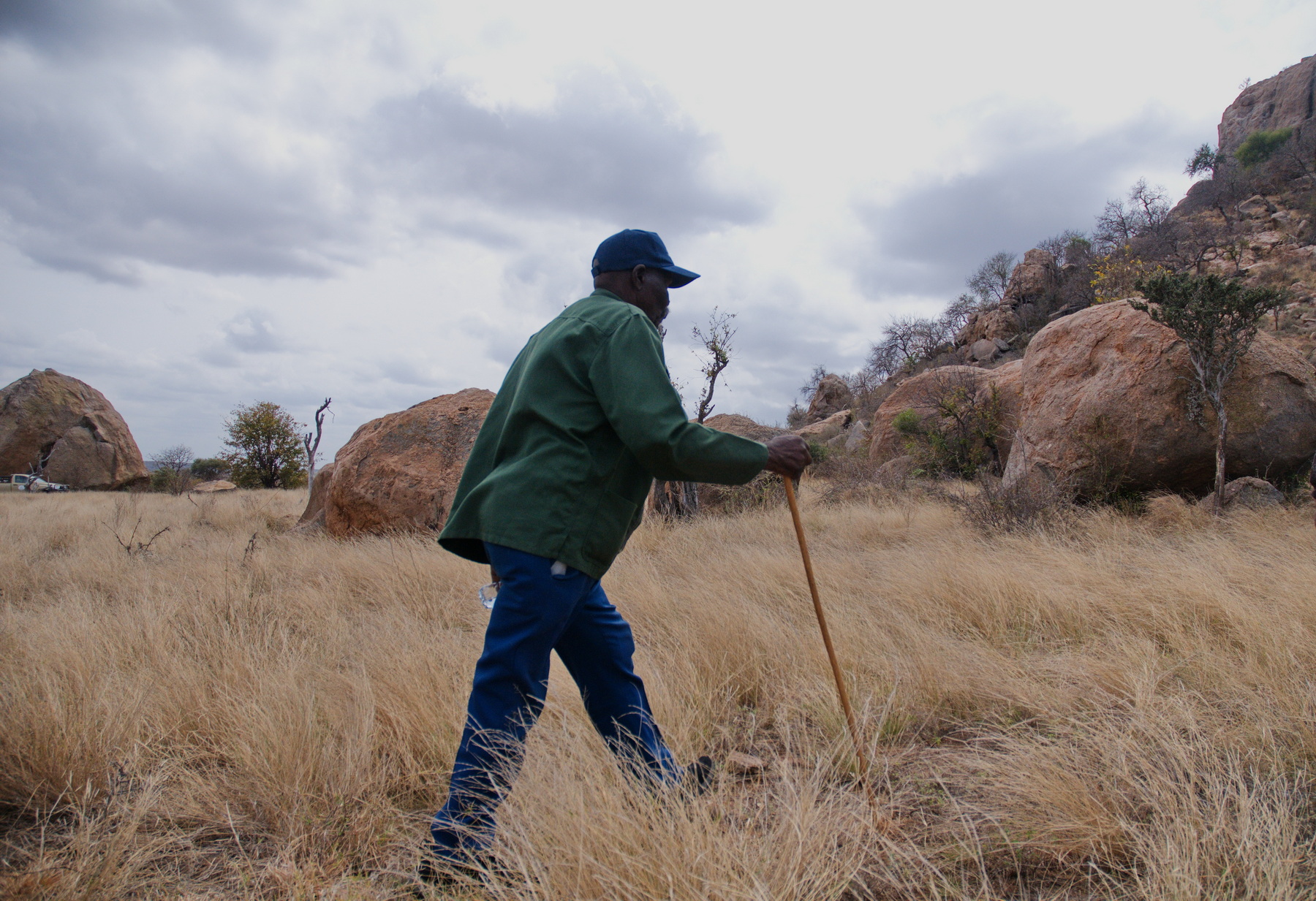
Elder Maduke Machete moved purposefully in long strides, balancing carefully on his cane behind a crowd of other silver haired elders heading atop the historic Tshikumbu Hill in the north-central Kruger National Park.
“My mother was born up there on that hill in 1912,” the septuagenarian said, pausing almost in confusion, gazing up the imposing hill.
“No, actually, I mean, she was born on the hill in 1910,” he corrected himself, again looking up at the giant boulders that bedeck the hill.
It was as though he was seeking confirmation from the rocks, which like his ebony dark face with silver eyebrows, seem to carry the wisdom and secrets of time.
The boulders, stacked precariously one over the other, tower over the rugged landscape like silent keepers of time, custodians of secrets from long, long ago. The hill carries with it a mythical aura, like others around the area which seem to hide classified knowledge from the beginning of time.
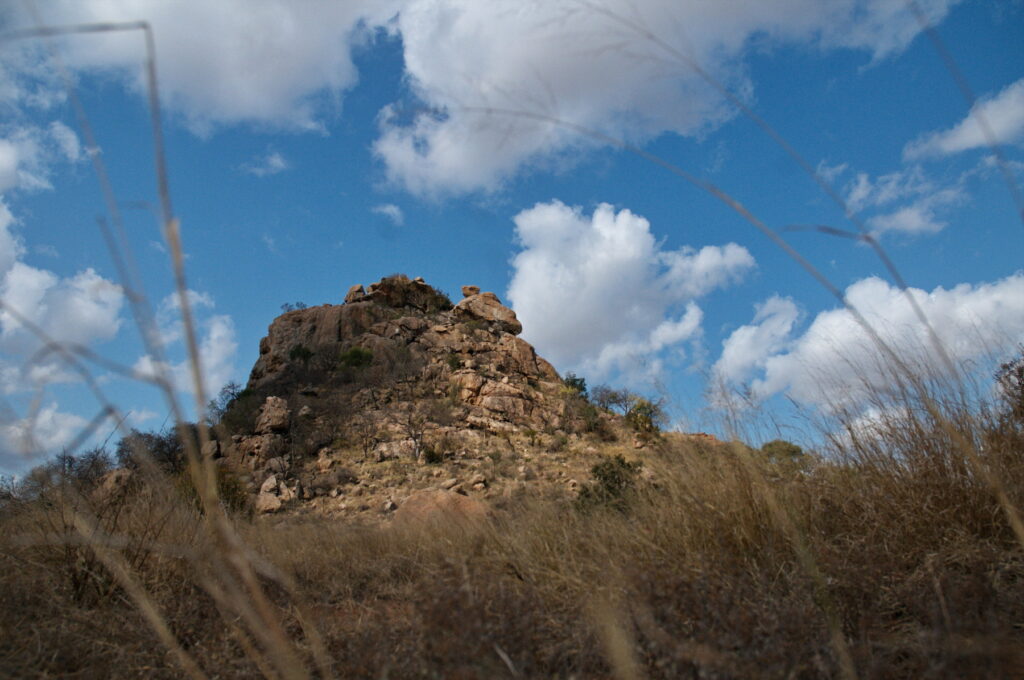
Machete, 79, was among a group of about two dozen members of the Tongogara clan, making a symbolic return to the hill recently to perform traditional rites.
This was ahead of an official ceremony by the SA National Parks (SanParks) to declare the mount as a heritage site and open it to the public.
Ascending the hill is a tough undertaking which requires a careful balancing act over loose rocks and slippery grass. But Machete was not deterred, often pausing to get the right balance with his cane or getting a helping hand up from one of the younger clansmen.
He has been to the hill before, but this was the first time he was ascending it from the southern side.
“I learnt about this hill from my mother many years ago when I was a little boy. I feel complete today that we are coming here,” Machete said.
He did not want to speak further about the hill. He wanted time to reflect on the visit, and perhaps a past that will not return. “I am only one of the grandchildren. The elders who came before us knew much more,” he said before walking away to chat to another elder.
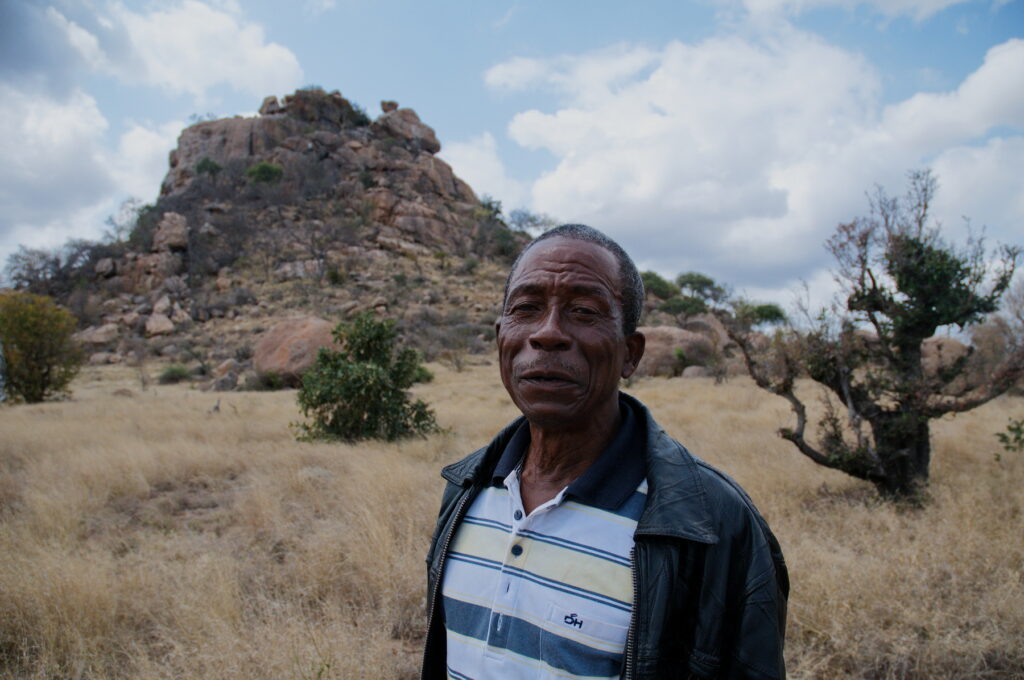
Among the members of the clan was John Tlhoba Mokgalaka, 75, a stocky and agile Robert Mugabe lookalike with the memory of an elephant.
Mokgalaka also learnt about the history of the hill and the subsequent forced removal of his ancestors from his grandmother.
“I was a little boy. It must have been around 1952 or somewhere there. I wanted so much to know where we came from. Then I was told about this hill, Tshikumbu,” said Mokgalaka after taking part in the mophaso ritual up the hill.
The ritual entails the symbolic offering of gifts of sorghum beer, water and maize meal while communicating with the spirits of the custodians of the land.
“Our ancestors did not leave this place out of their own will. They were forced to leave. And those who refused to leave were killed,” Mokgalaka recalled the history passed down on him by his elders.
“Our ancestors were smelting iron. They were very resourceful and intelligent. That is why the white people found a way to destroy them,” he said.
His grandmother also told him how they used to sleep during the day to escape the notorious searing temperatures of the area, working only in the late afternoon until the early hours of the morning fashioning out copper bangles from earth built furnaces.
Mokgalaka now lives in GaSelwane, one of the tribal trust areas bordering the park. It is one of the settlements that resulted from the forced removals of communities from land that makes up the Kruger National Park in the late 1800s to the mid 1950s.
The Kruger National Park, though today a national treasure revered worldwide as a shining beacon of nature conservation, was built on the tears of native communities that were brutally removed forcefully from the land which has evidence of occupation dating back to the iron age.
The park was proclaimed on 31 May 1926 by the Union of South Africa following an initial proclamation by the Zuid Afrikaansche Republiek on 26 March 1898. Both governments whose decisions impacted hugely on the native people, were by white people, for white people.
The Tongogara clan who trace their roots to the Lemba, black Jews who formed part of the great Kalanga kingdom in mordern day Zimbabwe, say they settled at Tshikumbu Hill around 1658.
Samson Mokgalaka, spokesperson for the Tongogara clan said they are a Semitic people descended from the great Bakalanga/Kalanga kingdom which reigned in present day Zimbabwe over 500 years ago.
The Bakalanga migrated and settled in different parts of present day Zimbabwe, Botswana, Mozambique and South Africa after the demise of the Great Zimbabwe kingdom around 1450, adopting different names along the way.
Those like the Tongogara descendants who relocated to areas in proximity to Northern Sotho speakers in present day Limpopo, were called Bakgalaka by their Northern Sotho speaking neighbours. The name has stuck and the descendants of the Bakalanga have adopted it as their identity.
The Zimbabwe based Kalanga Language and Cultural Development Association (KLCDA), says on its website “the people now called Kalanga or Bakalanga have been in Western Zimbabwe and Eastern Botswana for over a thousand years.”
The KLCDA says it advocates for “the development and growth of TjiKalanga language and Culture in Kalanga Communities.”
“For most of that time, they herded cattle, mined gold and copper and had extensive trade with states to the east. The ancestors of the Bakalanga are linked archaeologically with farmers who lived throughout the Shashe-Limpopo valley around 1000 AD, under a small chiefdom (or several) that controlled trade in the area,” the organisation says on its website.
Now the history of the Tongogara Bakgalaka is preserved on information boards at the interpretive centre, a simple PVC roof structure balanced on wooden poles. The structure was built by Honorary Rangers from the Highveld region in 2021.
The interpretive centre, located about 300m west of the hill is accessible to visitors along the Phalaborwa – Mopani road in the park.
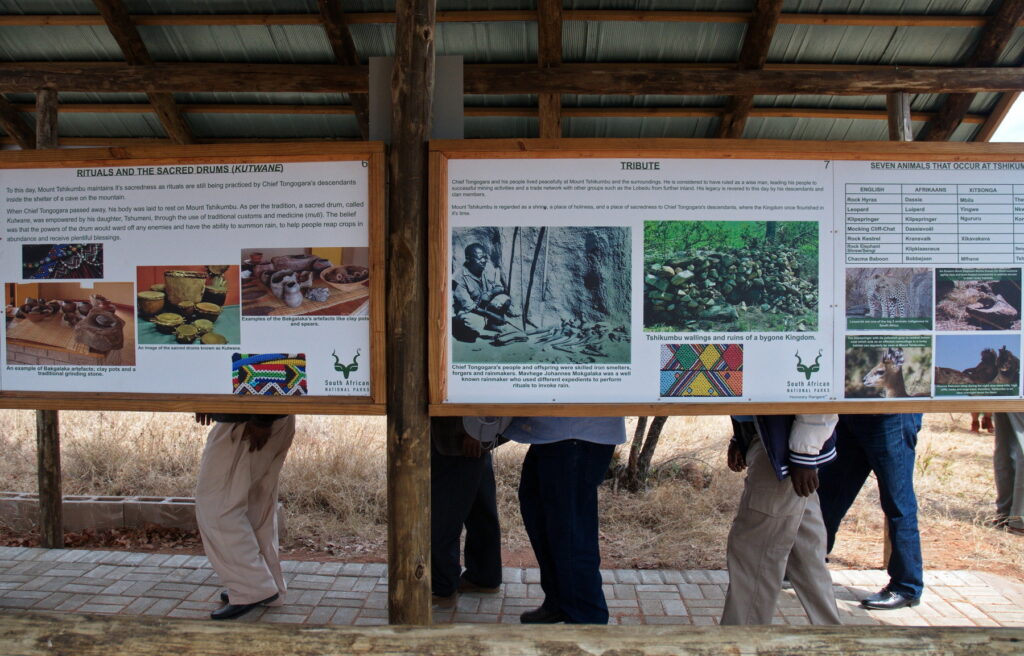
The initiative is part of a broader programme by SanParks to preserve the historical heritage of communities that once lived in the park. According to SanParks there are about 280 archaeological sites in the Kruger National Park. But only four of these, Masorini, the Joao Albasini ruins and Thulamela and now Tshikumbu Hill are open to the public.
While SanParks has acknowledged the Tongogara clan’s connection to Tshikumbu Hill and partnered in efforts to preserve their heritage, Samson Mokgalaka said their struggle is not over.
“The colonisers came up with a plan to dislodge Bakgalaka by declaring the areas as a national park. We know that now this park belongs to government. We are saying, give it [Tshikubumu] back to the right people, Bakgalaka,” he declared.
Mokgalaka said the clan wants their land claim to be gazetted and the portion they are claiming restored to them.
But SanParks spokesperson Ike Phaahla said the organisation is guided by decisions made by government on how to deal with land claims in conservation areas. He said at present communities which have a validated claim in the park benefit through various programmes paid for by proceeds from the tourism levy paid by visitors to the park. Communities also benefit from development projects identified by their own structures and traditional leaders. Some of these included purchase and supply of water purification equipments and computer laboratories for schools.
In 2008 cabinet resolved to award financial compensation to communities who had lodged successful claims for land within the Kruger National Park. As phase two of the resolution, government initiated a beneficiation scheme “aimed at stimulating much needed economic activities within the affected municipal areas where the claimant communities reside.”
In May 2016 president Jacob Zuma handed over R84 million in cash to six communities, three from Mpumalanga and three from Limpopo, as part of phase one of the settlement of their claims on land located within the Kruger National Park. This was in respect of land measuring in total extent of 318 000 hectares from which the communities had been forcibly removed previously. The Bakgalaka whose claim has not been gazetted were not part of this settlement.
“Although Kruger National Park is considered a conservation flagship, its treasure also constitutes a collective memory, culture and tradition of those who were dispossessed of this land,” Zuma said at the event.
It is high unlikely that the Tongogara will ever return to Tshikumbu to live like their forebears once did. But the recent acknowledgement that they are indeed originators of the land gives them hope their heritage will never be lost.
“We are happy that today we are invited here because in the past we were not allowed here. I feel like a weight has been lifted off my shoulders after being on the hill. It’s like those old people are here with us,” said John Tlhoba Mokgalaka.
He was alluding to the fact that prior to the end of legislated apartheid in 1994, communities forcibly removed from the park were not allowed to set foot there under any circumstances. Now communities are stakeholders in the park and are given access to visit sacred sites to perform spiritual and traditional rites.
William Mabasa the park’s general manager of community liaison and land claims told the gathering to inaugurate Mount Tshikumbu: “It is a blessing in disguise that this area is located in a conservation area. This heritage will never be lost. Heritage sites are living monuments and a connection to the past.” – ©Mukurukuru Media

Be First to Comment