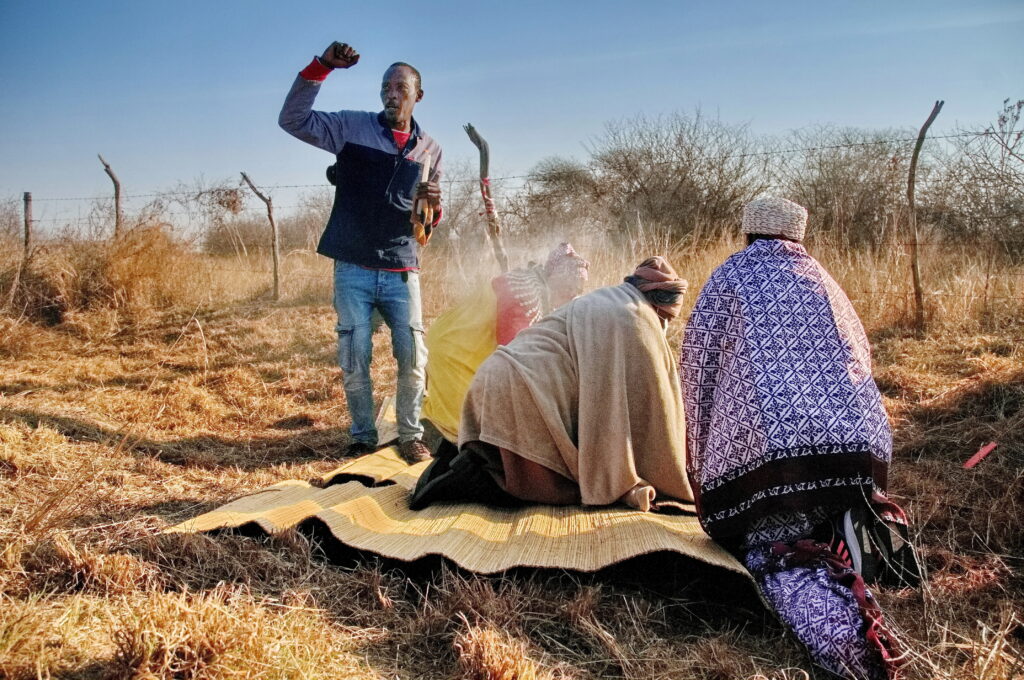
As morning broke on Friday – Thabo Ledwaba burst into a haunting rendition of the struggle song Shona malanga at the site where his brother was strangled and his body blown into pieces by members of the Apartheid death squads 37 years ago.
Before him, his frail mother Joyce Ledwaba flanked by two spiritual healers sat on a grass mat laid out in the dry grass along the deserted road.
The family had arrived at the site on the outskirts of Kgomo Kgomo, a village in the Moretele Local Municipality just as the rays of early morning lit up the space that will remain a dark spot in their lives.
In 1986 members of the Apartheid police death squad abducted Samuel, who was only a 17-year-old driven by dreams of freedom, and drove him to this spot away from the village but convenient enough for village residents to find what remained of his body.
There, according to records from the Department of Justice and Correctional Services, Samuel was tortured, strangled and once his killers were satisfied he was dead, they tied explosives to his body and detonated them.
The next morning village residents who had heard the explosion the night before, were shocked to be met by the gruesome sight of human remains strewn across the scene.
Samuel’s remains were suspected to have later been buried as a pauper in Winterveldt cemetery. But with the passage of time and mix up of records the exact spot of his burial, after an extensive search by the Missing Persons’ Task Team, has never been found.
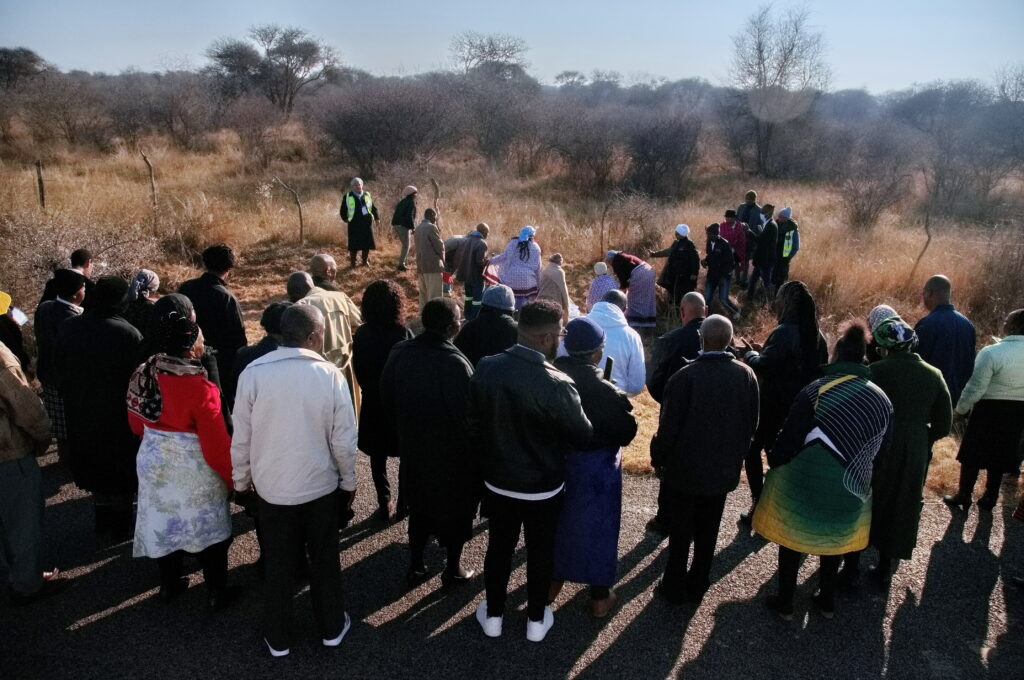
On Friday morning his mother Joyce, brother Thabo and family friend Mmanoko Mokgonyana arrived at the scene, flanked by staff from the Moretele local municipality, Department of Justice and Correctional Services, friends and families of other three youths who met a similar fate.
The other three activists are Oupa Mohale, Jeffrey Sibaya and Matthews Lerutla. The four Mamelodi activists at were murdered at different locations in Kgomo Kgomo, Mmukubyane and Cyferskuil which were under the Bophuthatshwana homeland. Lerutla and Sibaya were abducted from Mamelodi on 16 June 1987.
The Department of Justice and Correctional Services said about the activists: “They were tortured and ultimately strangled to death. Explosives were placed on their bodies and detonated on the road near Mmukubyane. Mohale, also abducted from Mamelodi, was strangled to death with a coat hanger. The security police placed his body in a field and set it on fire using a tyre to make it appear as if he had been killed by local comrades.”
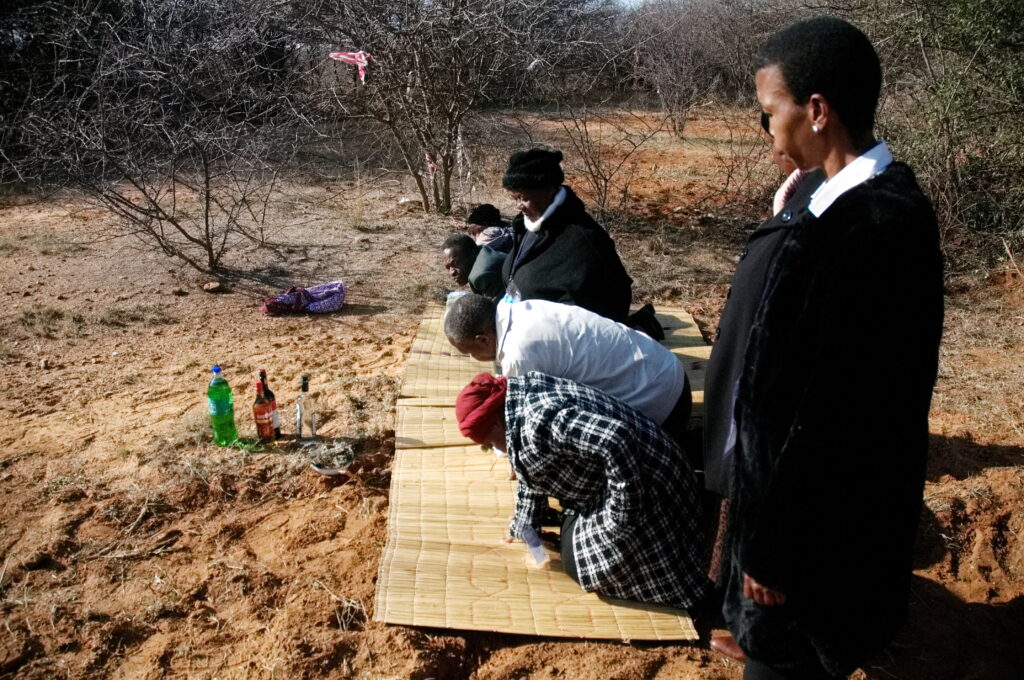
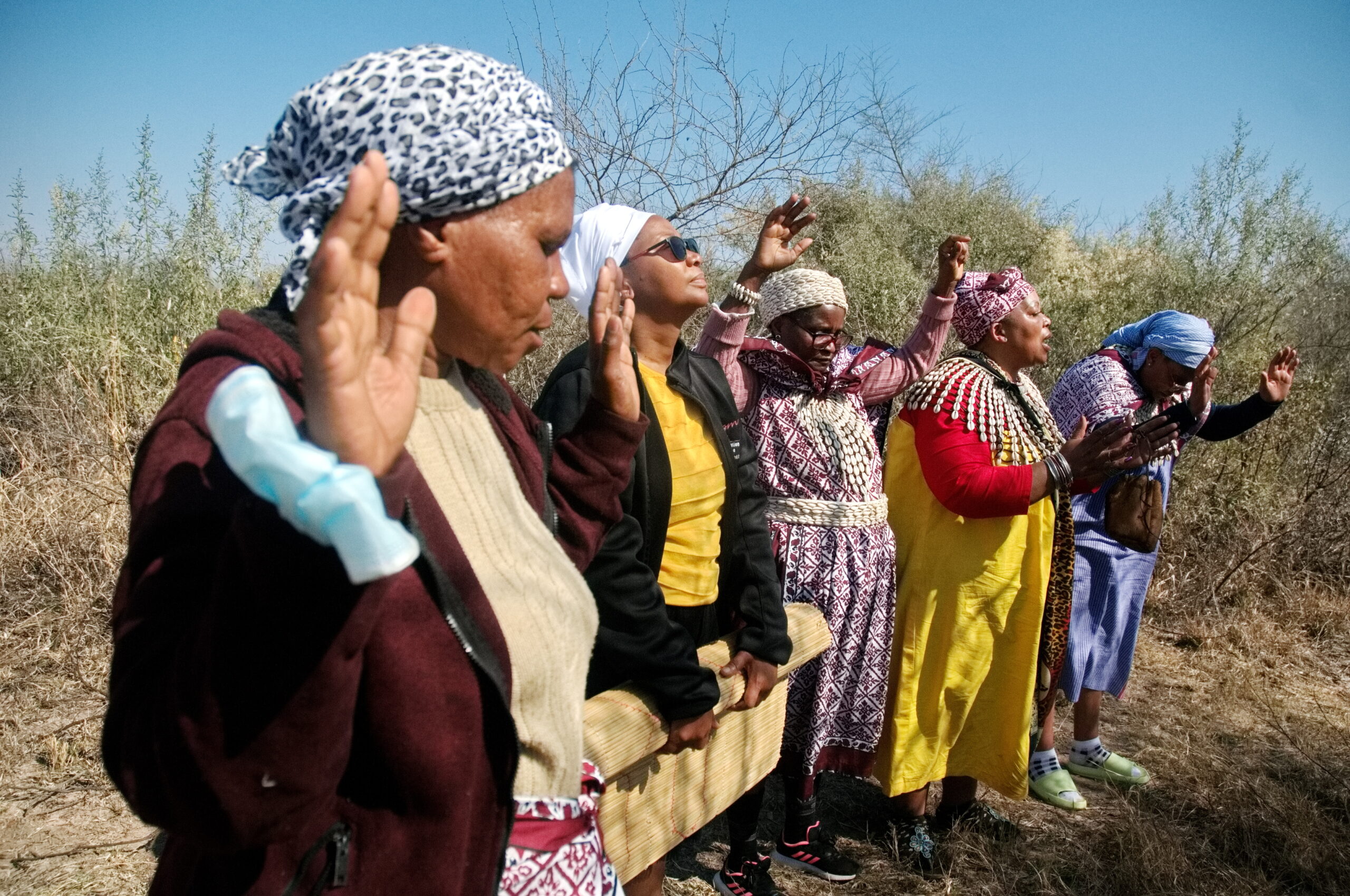
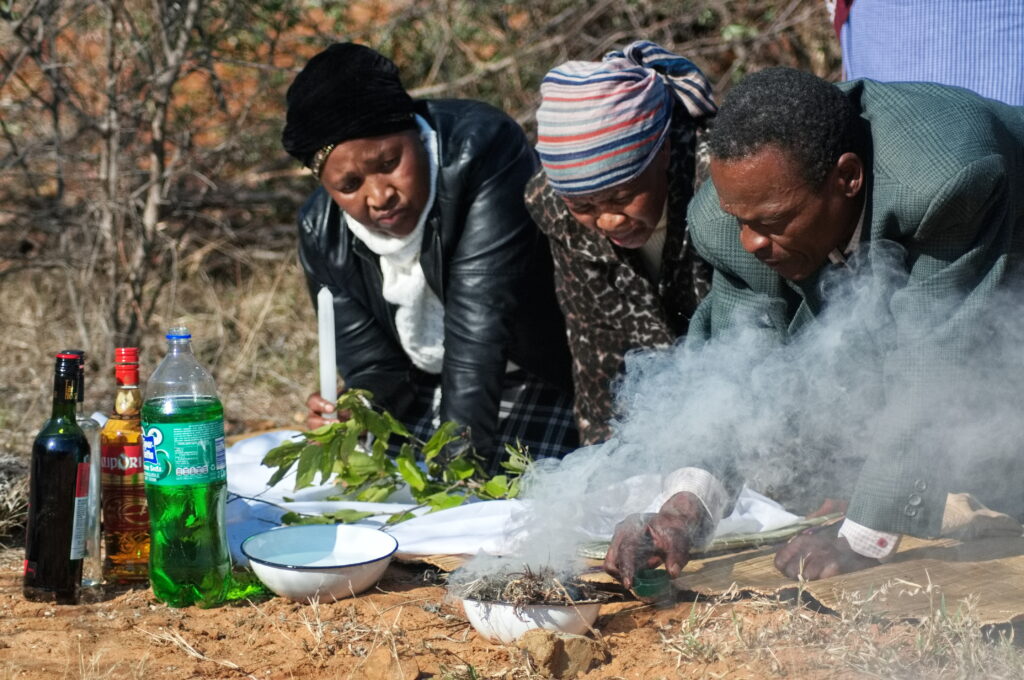
The families were there to participate in the sacred ceremony of repatriating the spirits of their loved ones. Assisted by spiritual healers who acted as intermediaries communicating with the spirits of the slain youth, Thabo and his mother sat on grass mats laid out in the grass.
For the better part of an hour, as the gathered two dozen other people sang hymns and revolutionary songs in support, Thabo and Joyce engaged in spirited chants to summon Samuel’s spirit.
The aromatic smoke from burning impepho, the sacred incense that carries the power to communicate with the spirits carried the melancholic voices into the atmosphere.
“Bonginkosi my son, Bonginkosi, come home now. It is I, your mother, I have come to fetch you,” Joyce’s broken voice rose through the singing and chanting.
The healers urged her to raise her voice higher, but the old woman, battling ill health and broken by many years of endless searching for her son, just couldn’t.
Thabo, younger and stronger, raised his voice higher, his powerful words echoing through the cool morning air.
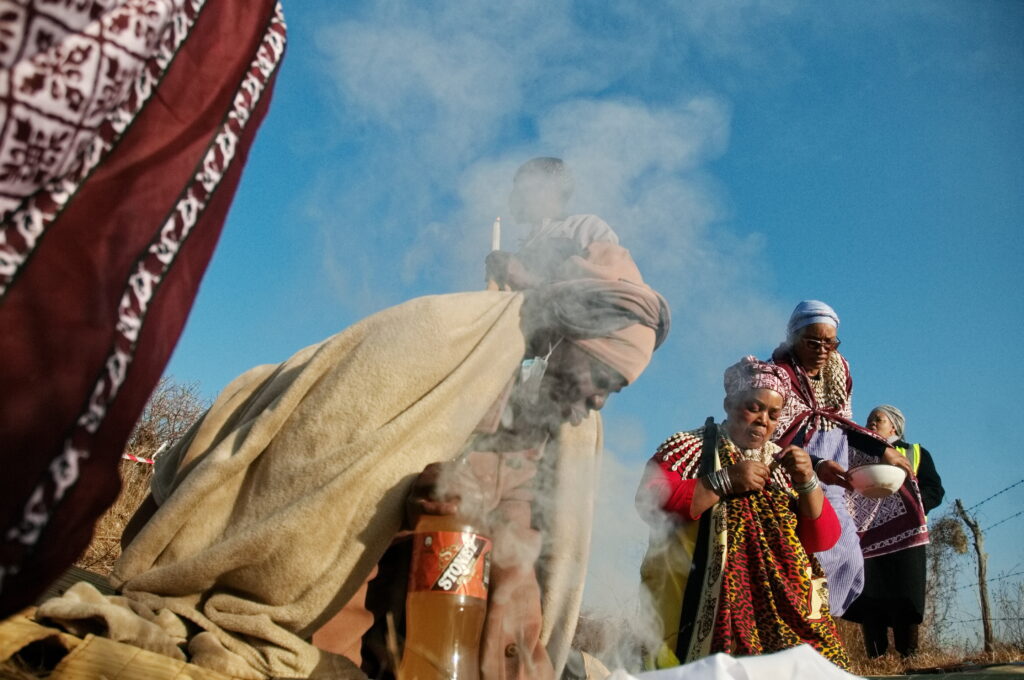
“Sammy Zintos my brother, Sammy, come home! We are here to fetch you. You have been gone a long time. It is I your little brother, Thabo, come home, I am here to fetch your spirit…”
Sammy Zintos was the monicker his brother had been known by in Mamelodi’s D1 section.
Urged on by the healers, Thabo, clutching a burning candle rose and broke into song, the song his brother often sang to him back at home in Mamelodi.
Shona malangaaaa shoooonaaaa…
shona malangaaaa shona malanga shonaaa
Se sizo dibana…nge bazaooka ehlathini
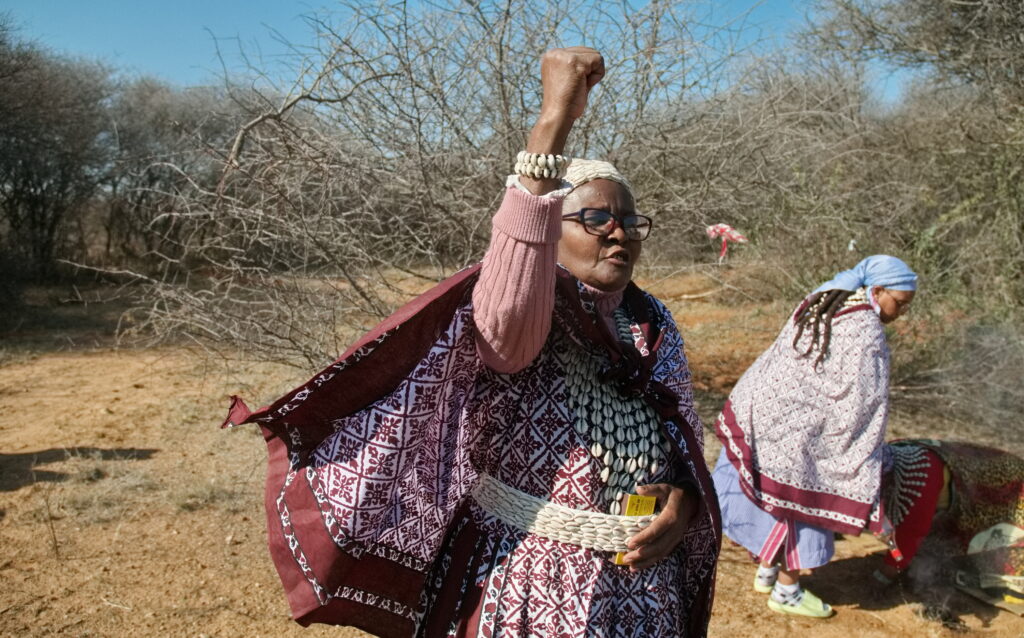
The gathering joined with much enthusiasm. Thabo, his right hand clenched into the black power salute, sang buyoued by the other dozen voices joining in, took the song to another level.
For a moment as he sang, Thabo seemed lost in a different world, to the spiritual depths only understood by the broken heart of a younger brother longing for a sibling that has been long gone.
“Shona malanga was his favourite,” Thabo said later that afternoon following the conclusion of the symbolic reburial of the four comrades at Freedom Park in Pretoria.
“He would sing it to me and then say, the sun will set, and before it sets, we will achieve our freedom,” he said.
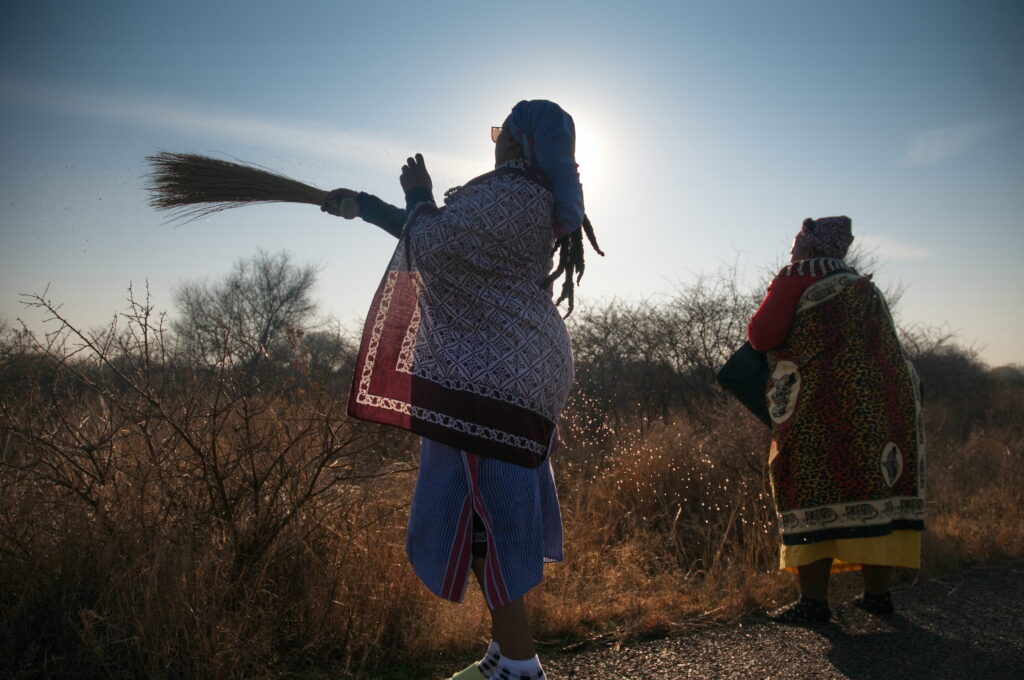
Thabo recalled his brother as a passionate and dedicated activist. But his disappearance and the long search for the truth about his fate left his family deeply scarred emotionally.
“I was only 12 years old when he left. He was my big brother he was always looking out for me. All these years I have never stopped thinking about him. Sometimes I wonder what life would have been like had he not disappeared,” he said.
“His disappearance affected our family so much. Even our father died without finding closure. My mother is not in good health. She is deeply troubled because we have been searching and searching,” Thabo said.
“We have provided DNA samples. We have attended exhumations of other activists hoping to find his bones, but that has not happened,” Thabo said.
Minister of Justice and Correctional Services Ronald Lamola who attended the symoblic burial at Freedom Park, told Mukurukuru Media that the department has put dedicated resources in the National Prosecuting Authority (NPA) to prosecute matters arising from the Truth and Reconciliation Commission (TRC). Lamola said these measures include appointing special prosecutors and investigators.
There has been an outcry accusations of a lack of political will over the state’s failure to bring perpetrators of Apartheid era crimes against political activists to book as prescribed by the TRC.
“I was still a student [when the TRC concluded its work]. We have made a decision [to pursue these cases]. We have put resources since we took over, The Hawks [Directorate for Priority Crimes] have forwarded investigators. Unfortunately when it comes to prosecution, you can’t put a time frame,” Lamola said responding to concerns about the delay in prosecuting the cases and whether there was a time frame set to complete the matters.
Lamola described the repatriation of spirits and symoblic burial process undergone by families as “a painstaking and emotional exercise.”
“We hope that this process will bring closure to families,” he said.
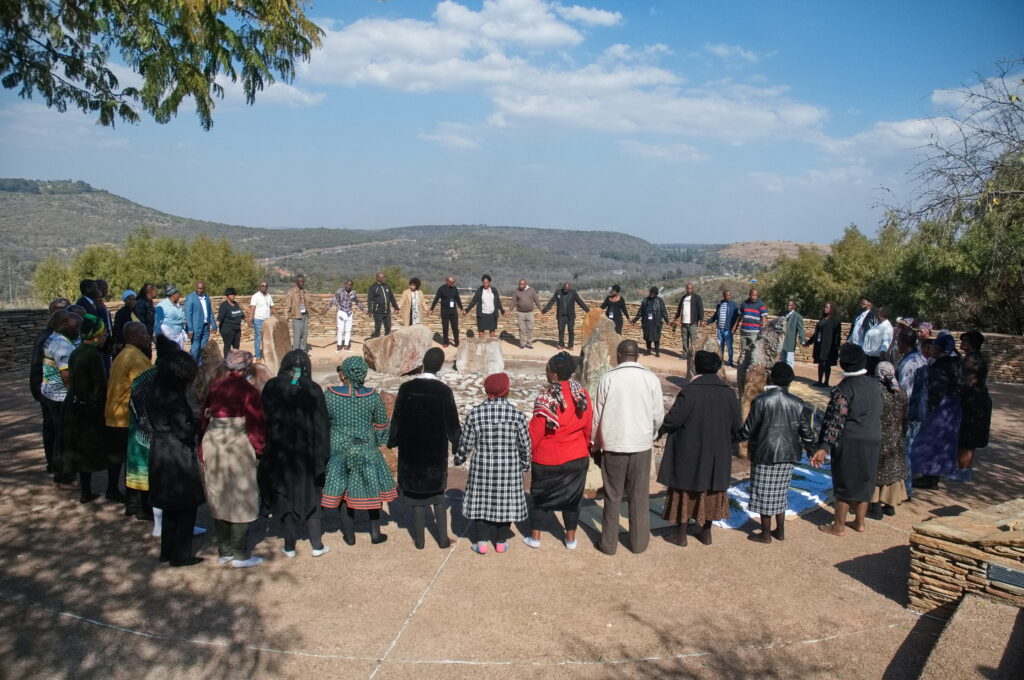
Thabo said the family has gone through a deeply taxing emotional journey in trying to find closure.
“I was looking forward to find closure because we have been running around, attending exhumations, providing DNA samples. I really hope this helps us to find closure, especially for my mother who is old. It is my wish that she finds closure before she leaves this world,” he said.
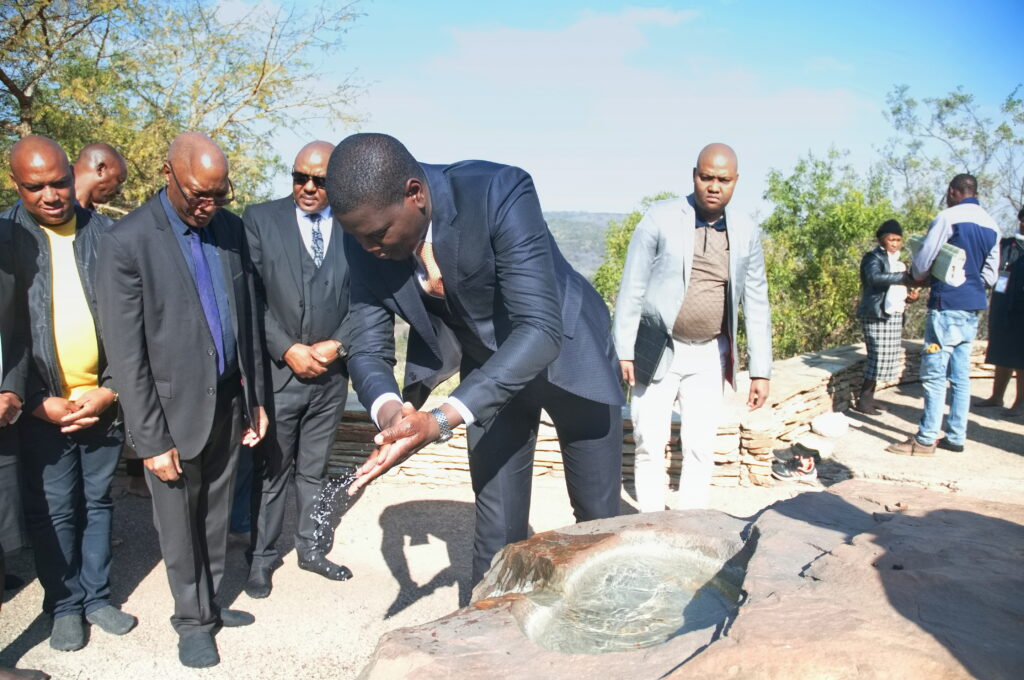
“At least for us now, even though we still don’t know where his remains are, we have repatriated his spirit. That helps me find some closure. My mother wants the perpetrators arrested. In my heart I have forgiven them, but I will never forget,” he said. – news@mukurukuru.co.za

Well written piece summarizing the families’ journey of loss, pain, suffering and closure.
Thank you Ntate Lucas Ledwaba, for expressing the event in such a beautiful poetic manner. With this well executed ceremony I pray to the creator and our Ancestors to help the families to have closure. This was quiet an emotional journey for families. Modimo ke oo! Pula!!!!