Last updated on 27 August 2022
Women who had to travel a long distance to buy chickens to sell by the roadside now only have a short distance to go. This benefits them in two ways: they don’t have to spend as much of their hard-earned money on travelling, and they save time, sometimes a lot of time.
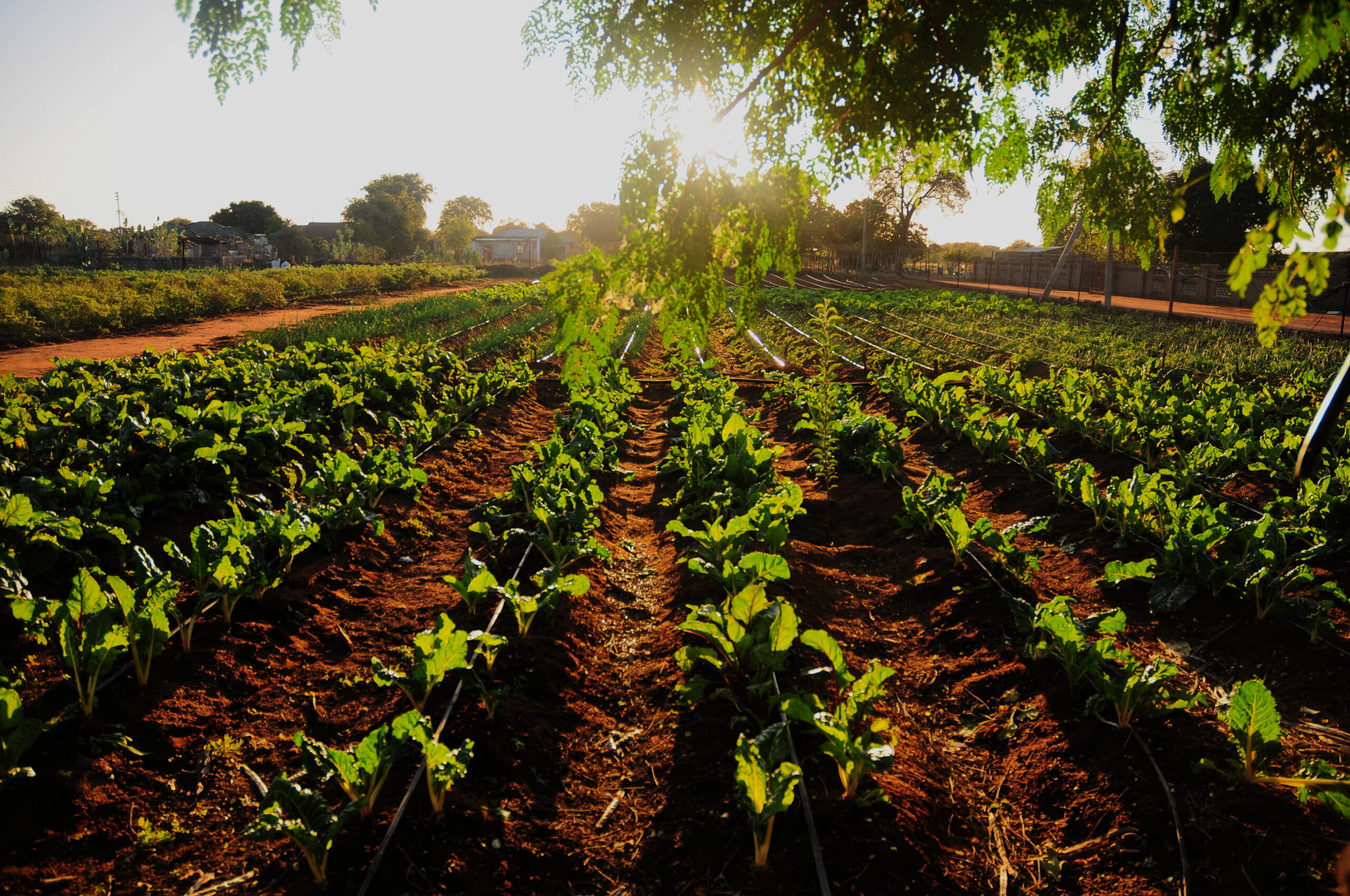
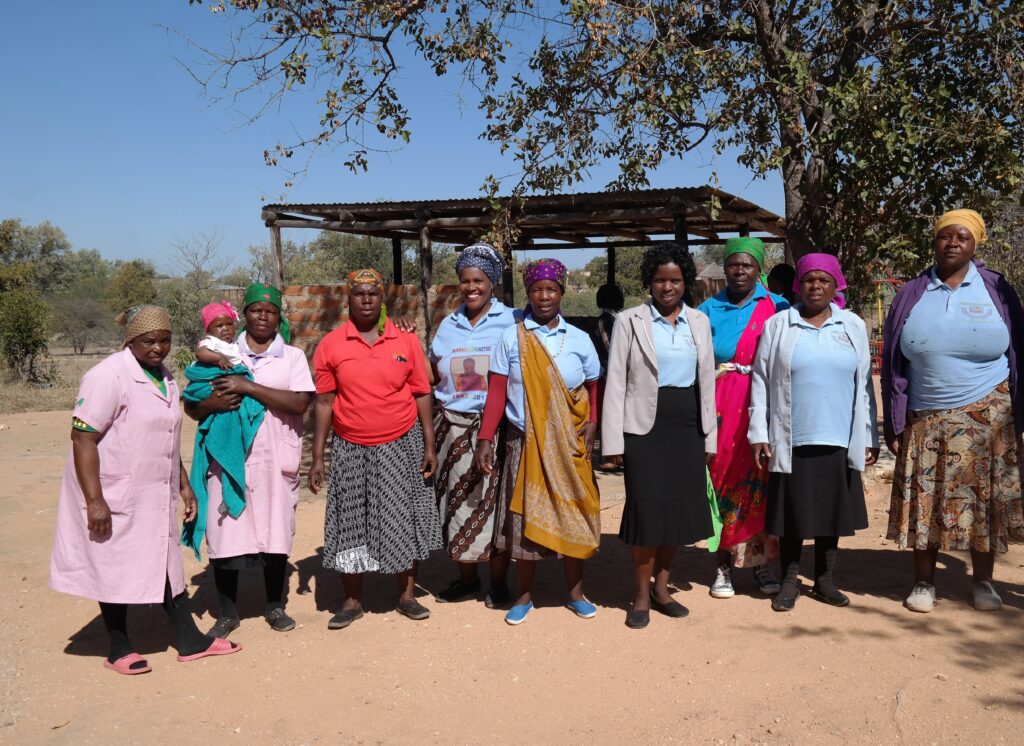
The group of eight Limpopo women are using climate-smart methods to farm cash crops in an 18 200 square metre communal garden and rearing about 2 000 chickens.
The project is funded by the South African National Biodiversity Institute’s Community Adaptation Small Grants Facility project which was funded by the Adaptation Fund.
The women work at the Modjadji Climate Smart Agricultural Project in the Mamanyoha village in the Mopani District of the Limpopo Province.
The project is one of 12 community-based climate change adaptation projects that have been awarded funds though the Community Adaptation Small Grants Facility (SGF) project.
The SGF projects are aimed at countering the effects of climate change by building communities’ ability to adapt to the phenomena and have delivered a range of tangible local benefits for 1 921 direct and 9 006 indirect beneficiaries in the Mopani and Namakwa district municipalities.
The women grow cabbages, mustard leaf, green beans, chillies, okra, tomatoes, maize, peanuts and bambara groundnuts. Bambara groundnuts are a grain legume indigenous to sub-Saharan Africa and are grown primarily for the seeds, which are used as a food that is most commonly boiled and eaten as a pulse, ground into flour, or used as an animal feed.
They use climate-smart farming methods to grow these crops in the midst of climate change impacts such as extreme weather conditions that previously made it difficult to farm.
In the second part of the project, about 2 000 chickens at a time are reared in a climate smart poultry house which has two compartments, each of which houses about 1 000 birds. At six weeks the chickens are sold to the local market.
The chicken business has had a large, positive impact on the local community, says project director Fhatuwani Nemalamangwa.
“Travel is not easy. If you miss the bus or the last taxi you are not going anywhere. Then you have to sleep over. It is very difficult. Having chickens to buy nearby is a big convenience,” says Nemalamangwa.
Because of water scarcity in the area, many people in the local community had stopped growing vegetables, says Fhatuwani. That meant there were no vegetables to be had, unless money was spent travelling to an urban area to buy them – money that people often did not have. Now they are readily available.
Another benefit is that the local community has begun to see market gardening as a viable livelihood industry if it is done properly.
There are a range of climate-smart features to the Modjadji Climate Smart Agricultural Project. For starters, the programme uses underground water storage tanks that have a 50 000 litre capacity.
This water allows the drip-irrigation of the crops for six or seven months, helping the project get through the dry winter months. The tank refills during the rainy season, and a solar-powered pump is used for the drip-irrigation. Drip irrigation is a water-saving method.
In addition, water for the poultry is harvested from the chicken house gutters into tanks with a 20 000 litre capacity.
Apart from this rainwater harvesting, the Modjadji Climate Smart Agricultural Project uses climate-proof infrastructure in the form of shade-netting to protect its crops from the heat of the sun, hail and even heavy rain.
Also, the crops are planted on top of soil ridges. This allows for the water run-off to be collected in the underground water storage, while also ensuring that the plant roots get the water they need. Another water-saving device deployed is the contouring method of laying out the fields. This also allows water to run off, meaning the crops are not waterlogged and water collects in the groundwater tanks, to be saved for drier days.
“We augment all that with mulching to reduce evaporation,” says Fhatuwani.
Then there’s the composting, for fertiliser. For that the project uses chicken manure, plant material, kitchen scraps and even paper.
Along with composting techniques, the project’s soil is improved by the peanut and bambara nut crops, says Nemalamangwa. Both plants are not actually nuts, they are legumes, and as such they release nitrates into the soil – a primary source of the nitrogen that is essential for plant growth.
The project also has a cold room, where harvested crops are stored before they are sold. This was built using climate-smart design techniques. It has a steel frame and the walls are composed of charcoal that is constantly kept damp due to a pipe in which holes have been punched, and which runs underneath the roof.
“It’s always cold in there,” says Fhatuwani. “It’s inexpensive. The pipe is fed from a 1 000-litre JoJo tank, and there is a small turbine to circulate air and extract the warm air that does get in.”
Over the years those who run the project realised that they could extend the use of some of their crops by drying them so that they could be sold in their off-season months. A solar drier was erected, and now produce can be stored for about a year.
On top of that, the Modjadji project is creating its own seed bank, and has discovered that its seeds are increasingly drought- and disease-resistant. Plus, agroecologist training has led to the farmers using organic pest control methods, such as spraying crops with an extract of chilli.
The Modjadji project has its roots in a non-governmental organisation that Fhatuwani has run in the area since 2000, and that is aimed at reducing the prevalence of HIV/Aids. Looking for ways to strengthen social cohesion, reduce poverty, unemployment and nutrition, the organisation applied to SANBI’s Community Adaptation Small Grants Facility project for funding.
“We had to look holistically at the causes of the high prevalence of HIV/Aids in the area,” says Fhatuwani. “If we wanted to tackle HIV/Aids, we needed to tackle poverty and unemployment.”
In 2010 Fhatuwani’s HIV/Aids organisation – the Ramotshinyadi HIV/Aids Youth Guide – was dealing with a HIV prevalence of 26.2% in the Mopani district in which Tzaneen is located.
The farming project kicked off in 2015, with 25 employees, says Fhatuwani. Many were unemployed youth, who have subsequently moved on to other things, leaving the Modjadji Climate Smart Agricultural Project with a core of eight women.
In addition to the broader impact on the community, with nutritious food now more readily available, the project has changed the lives of the eight women who have formed its staff since 2019.
“You can look at it this way,” says Fhatuwani. “One of the women who works with us was living, as an adult, with her parents when we started. Now she’s built herself a three-room house with an indoor toilet. She’s moved out of her parent’s home. There’s another woman who did that too, building her own home.”
SANBI is currently investigating opportunities to secure international climate finance for integrated landscape approaches that build the capacity of additional vulnerable communities to adapt to climate change. news@mukurukuru.co.za

Be First to Comment