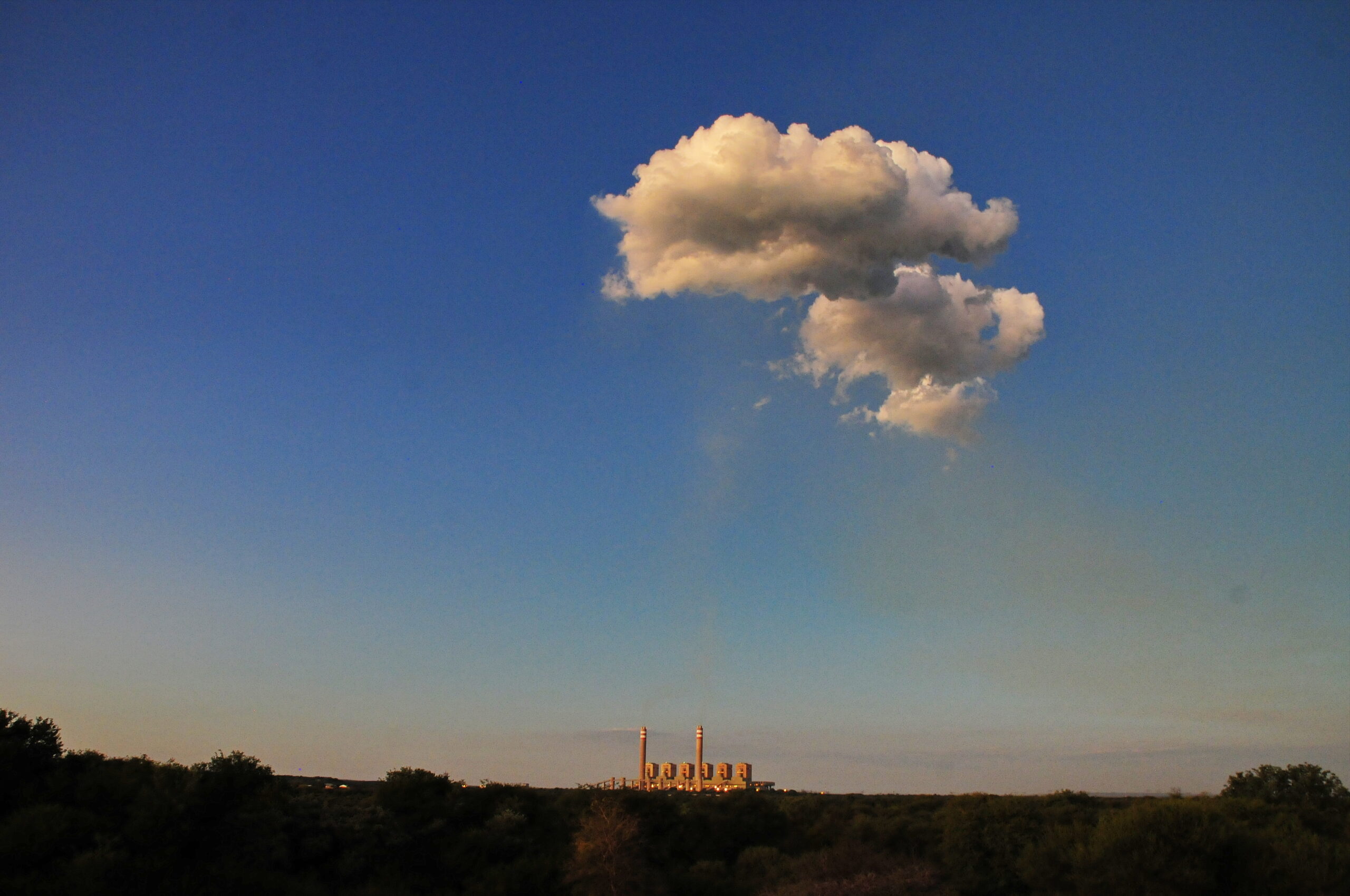
Call for world leaders to guarantee climate change financing
Mokgadi Mogy Mashako
While climate adaptation policies that are currently in place indicate that global warming will rise by up to 2.8°C by 2100, South Africa is pushing for climate change grants to materialize into guarantees.
As all eyes are set on the United Nation’s Climate Change Conference (COP27), that kicked off in Egypt this week, President Cyril Ramaphosa urged developed economies to consider making good on past funding promises setup to tackle the climate crisis.
Climate change poses a greater risk for the African continent, which is prone to natural disasters and among the most vulnerable to the impact of climate change.
In South Africa’s case, this year alone, drought ravaged the Eastern Cape’s Nelson Mandela Bay municipality leaving dam levels at less than 15 % capacity, and flooding in KwaZulu-Natal left over 400 dead and more than 8500 people displaced.
Ramaphosa, who joined global heads of states in Sharm El Sheik, said that any climate transition funding approach that disregards the realities of African countries would be unproductive.
“African economies are losing between 3 and 5 % of their GDP due to the effects of climate change. We need to acknowledge that the multilateral development banks and international financing institutions need to be reformed to meet the climate financing needs of developing economies,” Ramaphosa said.
His remarks come after the Presidential Climate Commission released South Africa’s Just Energy Transition Investment Plan , which outlines financing interventions meant to meet the countries decarbonisation targets.
The five year plan stipulates that an investment of R 1.5 trillion will go into the electricity, new energy vehicle and green hydrogen sectors.
The country’s dependence on coal for electric power supply stands at more than 80% where 90,000 citizens are employed at coal mines.
“Ultimately, our investment plan stresses that workers and communities must share in the benefits of the climate transition and the creation of new industries and jobs. Among other things, this calls for reform of the multilateral development banks and international financing institutions – and the mobilisation of commercial banks – to meet the climate financing needs of developing economies,” Ramaphosa added.
Eskom has already begun with decommissioning efforts by closing down Komati coal plant in Mpumalanga, which the World Bank has offered to contribute R9 billion towards repurposing it into a green energy plant.
The latest World Bank report states that if no action is taken “it is estimated that about 1 million South Africans will be driven into poverty by 2030”.
This is attributed to the symbiotic relationship that exists between the most climate vulnerable nations and these nations being reported as having the highest poverty rates.
Experts have urged that in order to avert further climate crises, adaptation and mitigation policies including financial resources, access to technology, and availability of technical expertise need to be prioritized.
According to the Emission Gap Report 2022 (EGR), the Intergovernmental Panel on Climate Change recommended that cutting the consumption of Green House Gas- intensive uses could be significant, reducing 40–70 % of the gap in low-carbon transition.
The EGR further goes on to say that “central banks could also consider green quantitative easing and making transition plans mandatory for commercial banks”, through net zero targets.
COP27 President, Sameh Shoukry, admitted that there were hectic shortfalls on delivering on pledges which were brought about by the global economic crisis.
“… we should not detract from our ability to move forward to undertake our commitments to raise the level of ambition to meet that challenge,” Shoukry said.
Shoukry also confirmed that the controversial issue of loss and damage would be a major talking point for the remainder of the climate conference.
A move lauded by many developing countries as a milestone, with hopes that vulnerable nations like South Africa will walk away financially empowered to face the looming climate catastrophes. – news@mukurukuru.co.za

Be First to Comment