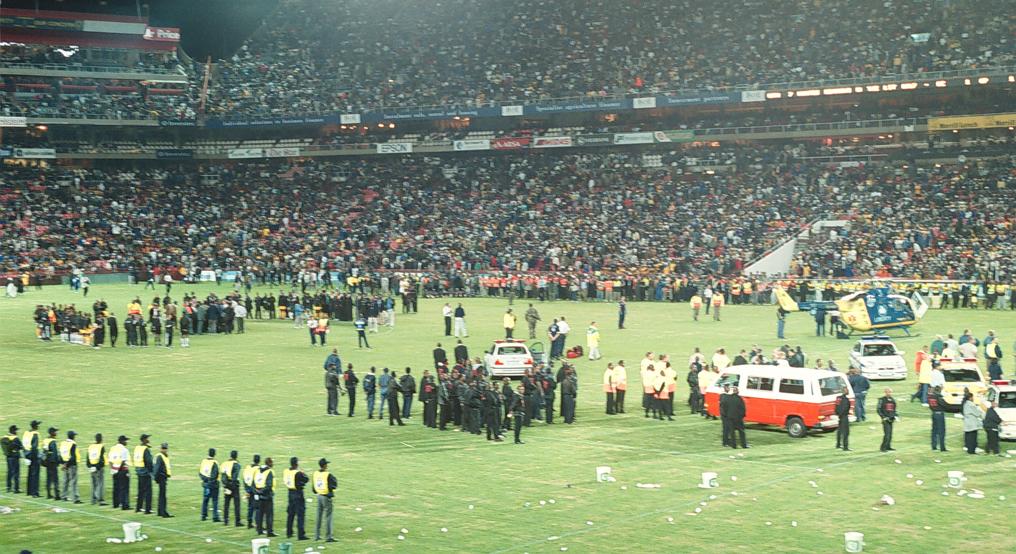
There is something deeply unsettling about watching thousands of football lovers return to our stadiums with passion and excitement, only to find themselves trapped in unsafe and poorly managed conditions.
Overcrowding at the Orlando Pirates vs Durban City match on 16 May 2026 at the Orlando Amstel Arena was not merely an inconvenience. It was a serious public safety concern. At certain points, movement became difficult, access points like stairways were blocked, and the environment felt unsafe, especially for children and families.
What disturbed me most was the growing sense that this has become normalised during major matches. Similar scenes were observed at the Orlando Pirates vs Kaizer Chiefs match, which took place on 26 April 2026 at the FNB Stadium, despite commitment from the South African Police Service (SAPS) and Stadium Management to undertake stricter measures to prevent overcrowding.
For years, South Africa worked hard to encourage supporters back into stadiums. Campaigns promoted live football experiences, family attendance, and supporter culture. The return of fans should be celebrated as a success for our football ecosystem. But with that success comes responsibility. Crowd management cannot be treated as an afterthought.
Globally, history has shown that overcrowding at sporting events is not simply uncomfortable it can lead to loss of lives. The 1989 Hillsborough disaster in England, where 97 football supporters lost their lives due to overcrowding and poor crowd control, remains one of the clearest warnings.
Closer to home, South Africa witnessed tragedy in 2001 at Ellis Park Stadium, where 43 people died in a stampede during a Soweto derby. These incidents were not isolated accidents, they were the result of preventable failures in planning, coordination, and crowd monitoring. Unfortunately, those warning signs are frequently dismissed until lives are lost.
What is deeply concerning is that many supporters have repeatedly raised these issues after big matches, yet meaningful public accountability seems limited. Stadium management, event organisers, football authorities, municipalities, and security stakeholders all have a responsibility to ensure that safety measures evolve alongside growing attendance numbers. Families should not have to choose between supporting their teams and protecting their safety.
However, responsibility does not rest solely with institutions. Football fans themselves are key stakeholders in creating a safe stadium environment. Overcrowding is often exacerbated by behaviours such as pushing through entry points, ignoring designated seating or standing areas, attempting to force access without valid tickets, or rushing to the gates shortly before kick-off. International best practice increasingly recognises that fan behaviour management and education are central to stadium safety.
In countries with strong stadium safety records, supporters are regularly educated on crowd safety through ticketing conditions, stadium announcements, steward guidance, and public campaigns. Fans are encouraged to arrive early, follow access instructions, respect capacity limits, and avoid dangerous surges.
Fédération Internationale de Football Association (FIFA) and other governing bodies emphasise that effective crowd management relies not only on infrastructure and policing but also on informed and cooperative spectators.
South Africa should invest more deliberately in educating supporters about their role in preventing overcrowding. Public awareness campaigns, clear communication before and during matches, and consistent enforcement of stadium rules can help shift behaviour. Building a culture of safety is not about blaming fans, it is about empowering them to act responsibly within shared public spaces.
Supporters are not asking for luxury. They are asking for functional crowd control, organised entry systems, visible emergency preparedness, safe movement routes, and realistic capacity management. These are basic expectations at large public gatherings.
The media also has an important role to play. Incidents of overcrowding should not only become headline news after tragedy occurs. Consistent reporting on unsafe conditions can create the pressure needed for preventative action and improved standards.
South African football deserves full stadiums. But it also deserves safe stadiums.
If we genuinely want to grow football culture, attract families, and create positive sporting experiences, supporter safety must become non-negotiable rather than reactive. We should not wait for a disaster before treating overcrowding as the urgent issue it already is.
Neo Molefi-Kau is an academic and public interest writer based in Johannesburg.

Be First to Comment