When heavy rains tore through Limpopo earlier this year, rivers burst their banks, roads vanished under water, and families across the province began counting the cost of the disaster.
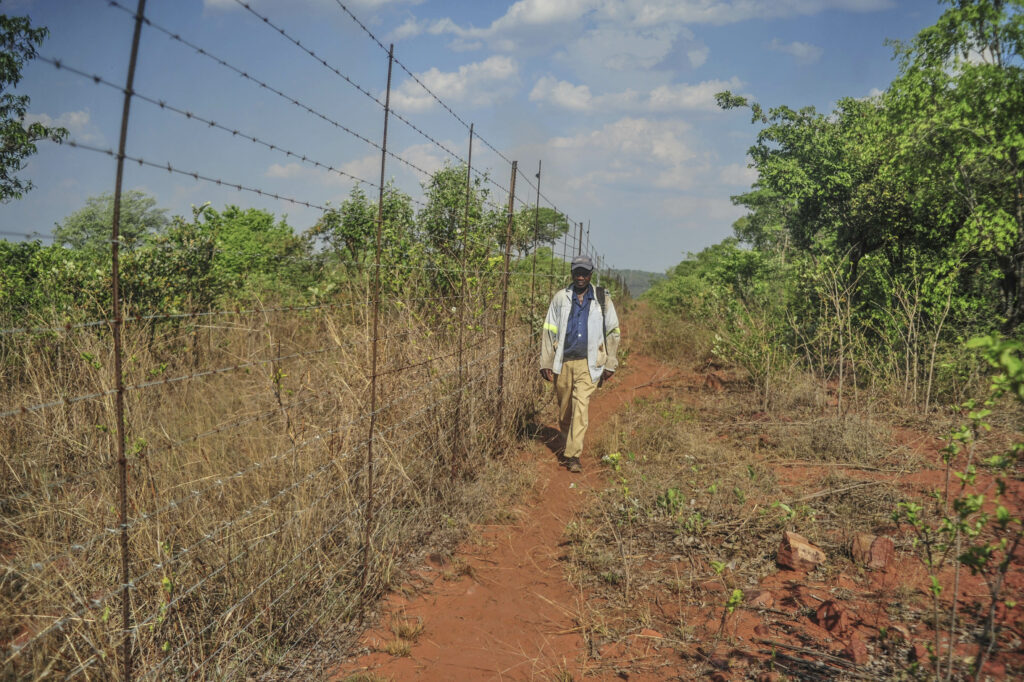
In villages bordering wildlife reserves linked to the Kruger National Park, however, the floods left behind a danger that did not recede with the water: compromised fences and other damaged infrastructure that normally help keep wildlife separated from homes, grazing land, schools and busy rural roads.
In parts of the Mopani District Municipality, residents say sections of game fencing were damaged or washed away during the storms, increasing the frequency of wildlife sightings and encounters in residential areas in the months since. Community members describe a lingering sense of fear and financial strain, on top of the property losses and transport disruptions they are still trying to recover from.
Preliminary provincial assessments indicate the scale of the disaster is enormous. Earlier this year, Limpopo Premier Phophi Ramathuba said the province would require more than R4 billion to repair flood-damaged infrastructure, including roads, bridges, clinics and other public facilities across several districts, including Mopani.
At the height of the rainfall, the Department of Water and Sanitation warned that several dams in Limpopo had exceeded 100% full supply capacity, heightening flood risks along riverbanks and low-lying crossings.
For communities near conservation areas, those same floodwaters also weakened the physical barriers intended to separate people from dangerous wildlife. During the Limpopo Department of Economic Development, Environment and Tourism (LEDET) 2026/27 budget speech, MEC Tshitereke Baldwin Matibe acknowledged growing public concern.
“We have heard the concerns of community members, including Mr Jonathan Ngoveni from Mbawula village outside Phalaborwa, whose community borders a game reserve,” Matibe said.
“Recent floods, coupled with damage caused by wildlife such as elephants, have compromised the fence, placing both residents and wildlife at risk.”
To address the problem, the provincial government has allocated R20 million to repair the electric game fence at Letaba Ranch.
Residents say the consequences of broken fencing are already visible. Manganye Pilot, who lives near conservation zones linked to Kruger National Park, said wildlife incursions have become a recurring source of anxiety, and many community members feel unprepared to respond safely when animals enter villages.
“About two weeks ago, an elephant was killed, and recently a zebra was also killed,” Pilot said. “These situations happen because communities are afraid and often do not know what to do when animals enter residential areas.”
He also raised concerns about safety near rivers and fishing areas, saying, “We often have people being attacked while fishing. Some have been killed by crocodiles.”
Limpopo authorities say they do have systems in place to respond to what they term “damage-causing animals” in what officials describe as an “open landscape” between some communities and conservation areas.
Keleabetswe Tlouane, Deputy Director-General for Environment and Tourism in Limpopo, said designated field rangers who are also environmental management inspectors are the first point of contact when dangerous wildlife is reported near communities.
“Officials assess each situation individually. Some animals are relocated, while others may be put down where there is a serious threat to human safety,” Tlouane said. L
She cautioned residents not to consume meat from wild animals before veterinary inspections are completed.
“There has to be veterinary certification confirming that the meat is disease-free before it can be consumed by communities,” she said, noting that one of the department’s challenges is that animals are sometimes butchered and meat distributed before health checks can take place.
Tlouane also said communities seeking longer-term environmental protection for vulnerable areas may apply to have land formally declared a nature reserve or protected area under the National Environmental Management: Protected Areas Act. Such a declaration requires a public participation process, gazetting, and inclusion in the provincial protected areas register.
Matibe framed the current crisis as part of a broader climate reality.
“Recent floods have demonstrated that climate change is no longer an abstract concern, but a direct fiscal and developmental risk affecting infrastructure, settlements, tourism and agriculture,” he said.
For residents living along Limpopo’s conservation boundaries, the message is less abstract. Until fences are repaired, response systems are consistently accessible, and communities are meaningfully included in long-term land-use and safety planning, many say they will continue living with the daily fear that, after the next heavy rain, the boundary between village and wild may simply disappear.

Be First to Comment