Before the sun even rises, commuters across rural Limpopo gather along dusty roads and informal stops, waiting for a ride that may never come. For learners, workers, and patients, public transport is the only lifeline connecting them to schools, jobs, and healthcare.
But the ongoing collapse of Great North Transport (GNT) has severed this critical link, leaving entire communities stranded.
Limpopo MEC for Economic Development, Environment and Tourism (Ledet), Tshitereke Matibe, told a sitting of the Limpopo Provincial Legislature in his budget vote speech this week that he has instructed GNT to submit a six-month turnaround plan, with progress to be reported on a biannual basis.
“Furthermore, we will strengthen institutional capacity within the entity to ensure it is managed efficiently and sustainably from the 2026/27 financial year onwards,” Matibe said.
Matibe acknowledged the crisis and promised tangible relief.
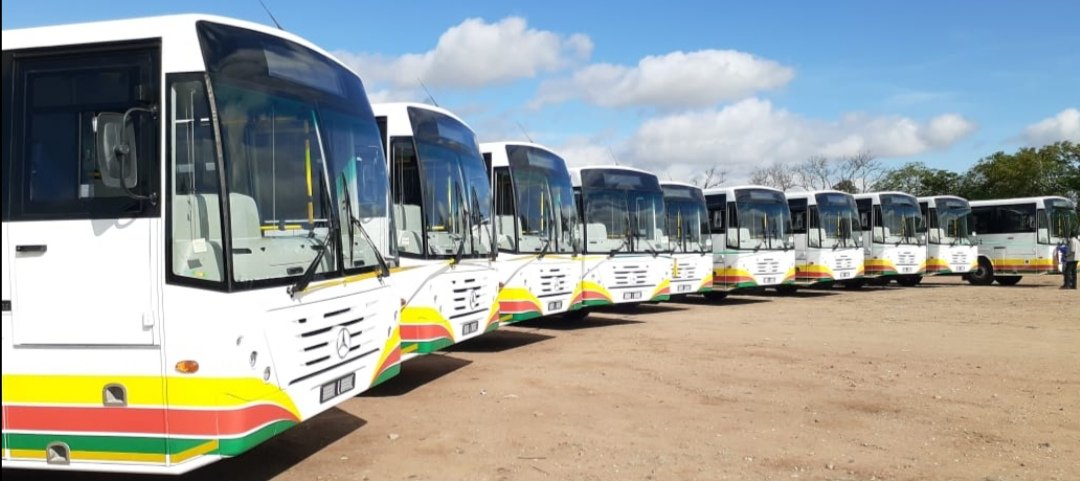
“In the 2026/27 financial year, the entity will begin receiving new buses from May, alongside the refurbishment of its existing fleet to improve operational reliability,” Matibe said.
Backed by the provincial government, GNT has purchased 71 new buses. These are expected to be delivered in batches and fully integrated into the network before the end of the financial year. Furthermore, GNT has been mandated to submit a strict six-month turnaround plan and report its progress regularly to the provincial legislature.
But the reality remains for many rural based residents. A missed bus is not just a morning inconvenience, it is a daily crisis that fractures education, drains limited incomes, and cuts off basic services.
Prince Mohale, a Limpopo resident in Bochabela village, sees the toll it takes on the province’s youth firsthand. He notes that students are forced to navigate gruelling distances on foot due to the inconsistent service, particularly in areas plagued by poor road infrastructure.
“Kids often walk between 5 and 10 kilometres to school because buses and taxis don’t operate on some dirt roads or simply don’t show up. During the rainy season, some learners miss weeks of school,” Mohale said.
The chronic lateness inevitably leads to students missing early classes or being sent home, devastating the academic performance of matric learners.
The risks extend beyond the classroom. Navigating rural routes in the dark exposes vulnerable commuters to safety hazards, while workers commuting to urban hubs like Polokwane, Mokopane, and the mining belt face the constant threat of job loss.
“If taxis don’t arrive, people lose a full day’s wage. Some are even forced to move closer to workplaces, leaving their families behind in rural areas,” Mohale explained.
In low-skilled sectors where replacements are easily found, this transport instability directly fuels job insecurity. Households are pushed to rely on expensive private taxis, further straining already impoverished communities.
Ntshuxeko Makwakwa, a regular commuter in Malamulele, pointed out that the transport crisis is deeply entangled with the province’s failing infrastructure.
“Public transport would be a better option, much more reliable and stable, especially with rising transport costs,” he said. “But the roads are in bad condition after the rains, so buses struggle to operate properly. The infrastructure still needs urgent attention.”
The daily struggles on Limpopo’s dirt roads are the direct fallout of a much larger, systemic collapse within Great North Transport (GNT).
GNT has been battling operational and financial instability for over a decade. The entity was effectively placed under administration during the national government’s intervention in Limpopo between 2011 and 2015. Since then, numerous turnaround strategies have failed to pull the transport provider back from the brink.
The physical decay is stark. In Makhado, locals describe the local depot as a “graveyard of buses.”
The scale of the fleet crisis was laid bare during a recent depot visit by Limpopo Premier Phophi Ramathuba, where it was shockingly revealed that, at one point, a mere 23 operational buses remained to service the vast province.
Behind the rusting fleets lies deep financial turmoil. Last year, GNT suspended its CEO, CFO, and COO amid damning allegations, including that the company owed R6.78 million to three pension fund schemes and R3.21 million in employee medical contributions.
The financial rot nearly sank the company entirely. In July 2025, just hours before a scheduled liquidation application in the Polokwane High Court, the government was forced into a desperate scramble, with R93 million redirected at the eleventh hour just to cover operational costs and keep the entity afloat.
Matibe, however, has promised action.
“Despite sustained efforts, including interventions supported by law enforcement authorities, to stabilise Great North Transport (GNT), it has become evident that a more decisive, firm, and urgent intervention is now required,” he said. – news@mukurukuru.co.za

Be First to Comment